The idea is captivating, isn't it? Stepping out into your own backyard, firing up a high-end grill, and preparing a meal for friends and family as the sun sets. It’s more than just cooking; it’s an experience. For years, this vision was often associated with sprawling, fully custom-built outdoor living spaces that carried an equally sprawling price tag. But there's been a significant, sometimes dramatic shift in how homeowners can achieve this dream, and a huge part of that is the rise of the modular outdoor kitchen.
At Modern Yardz, we've designed and installed countless outdoor living areas, and we’ve seen modular systems evolve from a niche option to a formidable contender for almost any project. They offer a fantastic blend of quality, speed, and design flexibility. But—and this is a big but—jumping in without a clear plan is a recipe for frustration. We've seen it happen. The allure of a 'plug-and-play' solution can sometimes mask the critical thinking required to get it right. So, before you start picking out stainless steel finishes, our team wants to walk you through what to know before buying a modular outdoor kitchen. It’s about ensuring the final result isn't just functional, but truly transformative for your home.
So, What Exactly Is a Modular Outdoor Kitchen?
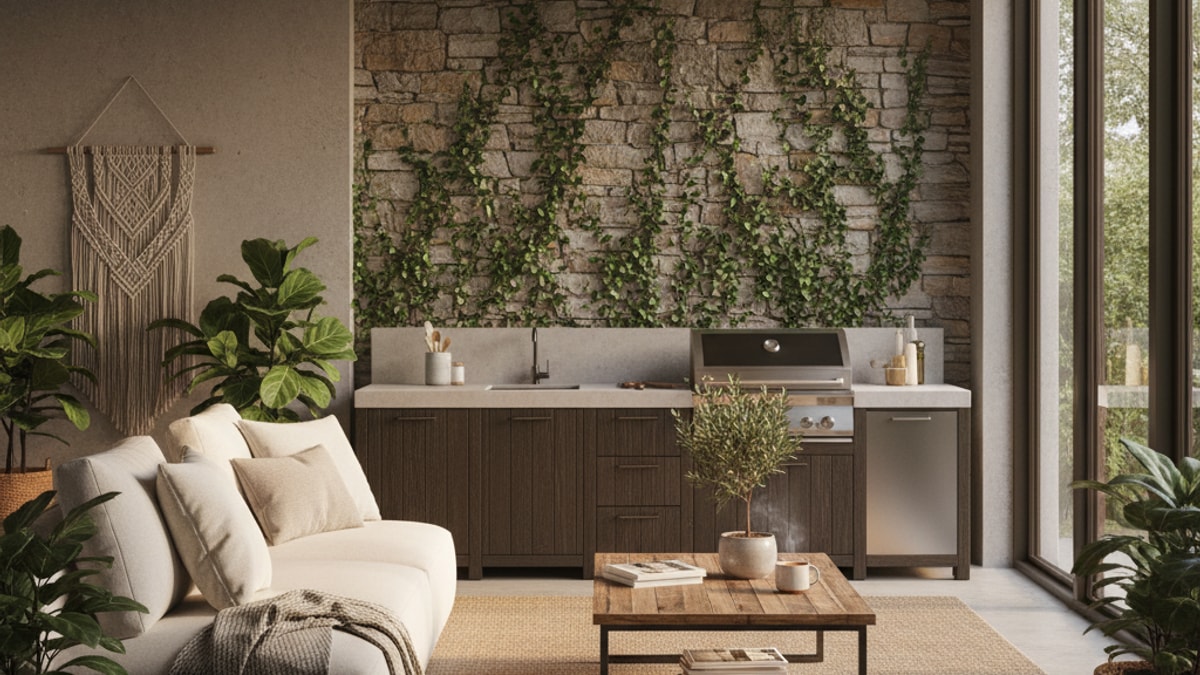
Let’s clear this up right away, because the term gets thrown around a lot. A modular outdoor kitchen isn't a single grill on a cart. Not even close. Think of it as a system of high-end, prefabricated building blocks designed specifically for the outdoors. Each 'module' is a self-contained unit that serves a purpose: one module might house the grill, another a sink, a third could be a refrigerator, and others might simply be cabinet storage or a corner piece.
These individual sections are built off-site in a controlled environment and then delivered and assembled in your backyard. They fit together to create a seamless, cohesive kitchen island or L-shaped layout that looks and functions just like a custom-built one. The primary difference lies in the construction process. A traditional custom kitchen is built from the ground up on-site—framing is erected, concrete board is attached, stone or stucco is applied, and then appliances are installed. It’s a labor-intensive, weather-dependent process. Modular streamlines this significantly. We can’t stress this enough: the quality of modern modular systems is impeccable, often utilizing welded steel or aluminum frames that are incredibly durable.
This approach brings some compelling advantages. The speed of installation is a major one. Since the core components are pre-built, on-site time is drastically reduced. This means less disruption to your home and life. It also offers a degree of predictability in cost and timeline that can be harder to nail down with a fully custom project. You're not just buying appliances; you're investing in a complete, engineered system. It’s a smart way to get a luxury result, but the planning phase is just as crucial as it would be for any major home renovation.
The 'Space' Question: Planning Your Layout is Non-Negotiable
This is where dreams meet reality. You can have the best appliances in the world, but if the layout is awkward, you'll never truly enjoy using your kitchen. Our design team has a mantra: function dictates form. Before you fall in love with a particular modular set, you have to be unflinching in your assessment of your space.
Start with the basics. Get out a tape measure. Seriously. Measure the total available area on your patio or deck. Now, think about how people will move around it. You need clear pathways—at least 36 to 48 inches—around the kitchen island and between the kitchen and other zones, like your dining table or a seating area with one of our custom Fire Features. Consider the flow from your indoor kitchen to your outdoor one. Will you be carrying platters of food back and forth? The path should be short and unobstructed.
Next, think in zones. Every great kitchen, indoors or out, has four key work zones:
- The Hot Zone: This is your grill, side burners, or pizza oven. It needs proper ventilation and should be placed away from combustible materials and high-traffic areas.
- The Cold Zone: Your refrigerator and ice maker. This should be easily accessible for guests grabbing a drink without getting in the cook's way.
- The Wet Zone: The sink and faucet. Absolutely critical for prep and cleanup. Proximity to your home's water lines will be a major factor in its placement.
- The Prep Zone: This is pure, uninterrupted counter space. We've seen clients regret skimping on this more than almost anything else. You need a dedicated spot for chopping, seasoning, and plating. Don't let your grill and sink modules eat up all your valuable real estate.
Mapping these zones out in your designated space will help you determine the ideal shape—a straight run, an L-shape, or a U-shape—and which modules you truly need. This foundational work is a core part of our Landscape Design process, ensuring the kitchen integrates perfectly with the rest of your yard's ecosystem.
Materials Matter More Than You Think
An outdoor kitchen wages a relentless battle against the elements. Sun, rain, humidity, and temperature swings are constantly trying to break it down. This is why material selection is a critical, non-negotiable element of your decision.
It starts with the frame. The internal structure of the modules must be robust. We typically see frames made from galvanized G90 steel or welded aluminum. Both are excellent choices that resist rust and corrosion. What you want to avoid are wood-framed modules, which, no matter how well they are 'treated,' are simply not a permanent solution for an outdoor structure that houses heat-producing appliances.
The exterior finish is what defines the kitchen's style. Modular systems offer a huge range of cladding options, from sleek stainless steel panels to stacked stone veneer, brick, stucco, or contemporary composite siding. Your choice should complement your home's architecture and the overall feel of your backyard. Is your patio made of beautiful Pavers? Maybe a stone finish that picks up on those tones is the right move.
And then there’s the countertop. This is your primary work surface, and it takes a beating from hot pans, sharp knives, and UV rays. Let's be honest, this is crucial.
| Countertop Material |
Durability & Scratch Resistance |
Heat Resistance |
Maintenance & Staining |
Typical Cost |
Our Take |
| Granite |
Excellent. Very hard to scratch. |
Excellent. Can handle hot pans directly. |
Requires annual sealing to prevent stains. |
High |
A timeless, premium choice. The natural patterns are beautiful but sealing is a must. |
| Quartzite |
Superior. Even harder than granite. |
Excellent. Not affected by heat. |
Requires sealing, similar to granite. |
Very High |
The peak of natural stone durability and beauty, with a price tag to match. |
| Poured Concrete |
Good, but can chip or crack. |
Excellent. Unaffected by heat. |
Must be sealed meticulously to prevent stains. |
Moderate-High |
Offers a fantastic modern or industrial aesthetic. We often pour custom Concrete countertops for a seamless look. |
| Tile (Porcelain) |
Very good. Porcelain is tough. |
Excellent. |
Grout lines are the weak point; they can stain and are hard to clean. |
Low-Moderate |
A budget-friendly option, but our team generally steers clients away due to the long-term headache of maintaining grout. |
Our experience shows that investing in a high-quality, durable countertop like granite or quartzite pays dividends for years. It's the part of the kitchen you interact with most, and you don't want to be constantly worried about damaging it.
Choosing Your Appliances: The Heart of the Kitchen
This is the fun part for many people, but it’s also where budgets can quickly spiral. The grill is the centerpiece, of course. You'll choose between built-in models that drop into a module or freestanding grills that can be integrated. But a truly functional outdoor kitchen is more than just a grill.
Think about how you entertain. Do you want a side burner for heating sauces or boiling corn on the cob? An outdoor-rated refrigerator is practically a necessity for keeping drinks and ingredients cold without constantly running inside. A sink, as we mentioned, transforms the space from a grilling station into a true kitchen. Other popular additions include:
- Ice Makers: For those who entertain frequently, an under-counter ice maker is a game-changer.
- Warming Drawers: Keep finished food warm while you grill the next course.
- Pizza Ovens: From wood-fired to gas-powered, these are becoming incredibly popular.
- Storage: Don't forget modules with doors and drawers for storing tools, platters, and grill covers.
Another huge consideration is your fuel source. Will you use propane tanks, or do you have a natural gas line available? Running a dedicated natural gas line is an upfront investment but offers incredible convenience—no more last-minute runs to the store for a new propane tank mid-party. This is a job for licensed professionals, something we coordinate seamlessly when building our complete Outdoor Kitchens.
Understanding the True Cost: Beyond the Sticker Price
When you browse modular kitchen packages online, you're often seeing the price for the modules and appliances alone. That's rarely the final number. It's essential to budget for the entire project, and that includes several other key costs.
Site Preparation: Your modular kitchen needs a perfectly level, stable foundation. If you don't already have a suitable concrete slab or paver patio, that's your first added cost. The ground must be graded, and a proper base installed.
Utility Hookups: This is a big one. Running electrical lines for refrigerators, lights, and outlets, a water line for the sink, a drain line, and potentially a gas line requires licensed plumbers and electricians. The cost can vary dramatically depending on the distance from your house's existing utilities. This isn't a DIY job. We mean this sincerely: safety is paramount.
Delivery & Installation: Modular units are heavy. Getting them from the truck to your backyard and assembling them correctly often requires specialized equipment and a skilled crew. Make sure you get a clear quote for this service.
Permits: Depending on your local regulations, projects involving gas and electrical work may require a permit and inspections. This adds time and cost to the project.
When you're ready to get a clear picture of your project's total investment, that’s the perfect time to chat with professionals who do this every day. Our team can help you see the full scope. BOOK MY FREE CONSULTATION and we can walk you through every line item.
The Surrounding Environment: It's an Entire Outdoor Room
A great outdoor kitchen doesn't exist in a vacuum. It's the anchor of a larger outdoor living space. To truly maximize your investment, you need to think about the elements around it.
Where will your guests sit and eat? The kitchen should have a good relationship with the dining area. What's underfoot? A beautiful patio surface elevates the entire experience. We often design kitchens to sit on expansive surfaces built with high-quality Pavers that define the 'room' and provide a durable, stylish floor.
And what's overhead? An uncovered kitchen is at the mercy of the midday sun and unexpected rain. Integrating one of our custom Patio Covers & Pergolas not only provides essential shelter but also helps to define the space architecturally. It turns a collection of modules into a true outdoor room. Plus, it gives you a structure to mount fans and lighting.
Speaking of which, don't forget the lighting! Task lighting directly over the grill and prep areas is essential for cooking after dark. Ambient Landscape Lighting around the seating areas creates a warm, inviting atmosphere that encourages guests to linger. It's these thoughtful layers that separate a good project from an unforgettable one.
DIY vs. Professional Installation: A Realistic Look
The appeal of DIY is strong. Modular systems, by their nature, seem more approachable for a handy homeowner than a full custom build. And for some very simple, straight-run setups with no utilities, it might be feasible. Maybe.
Honestly, though, for most projects, the complexity is higher than it appears. The modules are incredibly heavy and require several people or equipment to move without causing damage to the units or your property. Leveling them perfectly so that countertops meet seamlessly and doors hang straight is a precision task. Then you have the utility connections, which, as we’ve mentioned, are firmly in the professional-only category.
Our team has been called in more than once to fix a DIY installation that's gone wrong—uneven surfaces, improper appliance connections, or drainage issues. Hiring a professional team like Modern Yardz isn't just about labor. It's about experience. It's about knowing how to anticipate problems, manage the logistics of delivery, coordinate the various trades (plumbers, electricians), and ensure the final installation is safe, secure, and built to last. It’s an investment in peace of mind.
Planning your dream outdoor kitchen should be an exciting process. By thinking through these critical areas—your space, materials, appliances, and the total project scope—you can move forward with confidence. A modular system can absolutely be the perfect foundation for years of amazing outdoor memories. It’s all about doing the homework first.



.webp)
.webp)