An outdoor kitchen is more than just a grill on a patio. It's the heart of your backyard, a place where friends gather and memories are forged over sizzling food and cold drinks. We've designed and built countless outdoor living spaces, and our team has found that the most successful projects are the ones that nail the details. And one of the most frequently underestimated details? The refrigerator. It seems simple, but getting this choice right is absolutely fundamental to the functionality and longevity of your entire setup.
Let’s be honest, the temptation to grab a cheap mini-fridge from a big-box store and slide it under the counter is strong. We get it. But we've also seen the unfortunate aftermath of that decision: a rusted-out box, warped seals, and a compressor that surrenders after one hot summer. Knowing how to choose the best fridge for an outdoor kitchen isn't just about convenience; it's about making a smart investment that complements the quality of your entire outdoor project, from the custom Pavers SAN Diego underfoot to the elegant Patio Covers Pergolas SAN Diego overhead.
Why Your Indoor Fridge Is Not an Outdoor Fridge
This is the single most important concept to grasp. We can't stress this enough: an indoor refrigerator, no matter how well-made, is simply not engineered to survive outside. The difference isn't just marketing hype; it's a fundamental divergence in design and construction meant to handle two completely different environments.
An indoor fridge operates in a climate-controlled paradise. Your home likely stays between 68 and 78 degrees Fahrenheit, with relatively stable humidity. An outdoor kitchen, however, is a battleground of extremes. It faces blistering sun, torrential rain, fluctuating humidity, and temperatures that can swing dramatically in a single day. An indoor unit's compressor is designed to cool things down from that stable 70-degree baseline. Ask it to fight against 100-degree ambient heat, and you’re forcing it into relentless, non-stop operation. This leads to catastrophic failure. Quickly.
Beyond the compressor, the materials are all wrong. The powder-coated or plastic-wrapped steel of an indoor unit offers virtually zero resistance to moisture and UV radiation. Rust will begin to form, first as small blemishes and then as a full-blown corrosive attack. The plastic components will become brittle and crack. The rubber door seals, not designed for temperature swings, will warp and fail, letting warm air seep in and forcing the already overworked compressor to run even harder. It's a vicious cycle that ends with a dead appliance and a costly replacement. The initial savings are a mirage.
The UL Rating: Your Unflinching Quality Standard
So, what separates a true outdoor warrior from an indoor pretender? It starts with three letters: U-L. Underwriters Laboratories (UL) is an independent safety science company that tests and certifies products. When you see a refrigerator marked as "UL-rated for outdoor use," it means it has survived a gauntlet of tests specifically designed to simulate outdoor conditions.
This isn't just a suggestion; it's the absolute baseline for any appliance you consider. A UL outdoor rating certifies that the unit's electrical components are sealed against moisture, preventing short circuits and electrical hazards during a rainstorm. It confirms the compressor and cooling system are robust enough to function efficiently and safely across a wide spectrum of ambient temperatures, from chilly evenings to scorching afternoons. It also means the construction materials have been verified for durability against the elements. Choosing a non-UL-rated fridge isn't just a bad investment; it's a potential safety risk. It's a non-negotiable feature, and the first question you should ask about any model you're considering.
Built-In vs. Freestanding: Form Meets Function
The next major decision point revolves around how the refrigerator will integrate into your space. This choice has significant implications for both the aesthetics and the construction of your Outdoor Kitchens SAN Diego project.
Freestanding units offer flexibility. You can place them wherever there's an outlet, move them around as your needs change, and take them with you if you move. They are often more affordable upfront. However, they can disrupt the clean, integrated look of a high-end outdoor kitchen. They stand apart from the cabinetry, which may not be the seamless aesthetic you're aiming for.
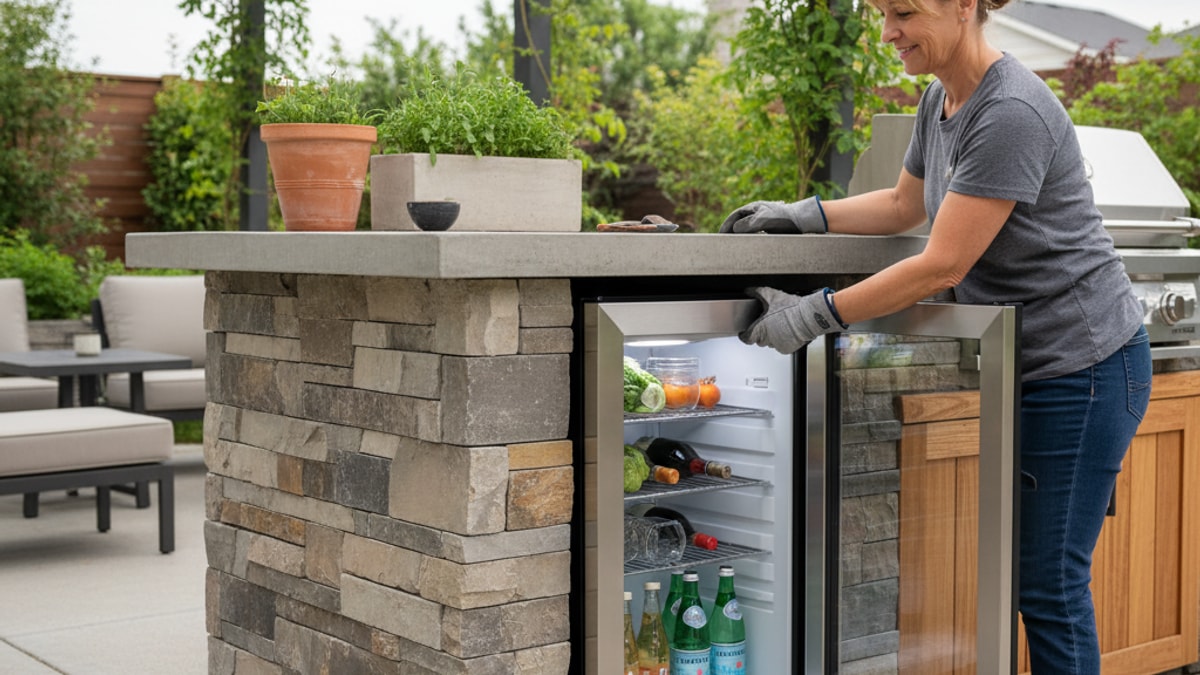
Built-in units, on the other hand, are the key to a sleek, professional-grade appearance. They slide directly into your custom cabinetry, creating a flush, continuous line with your drawers and access doors. This is the look most of our clients desire. But this streamlined beauty comes with a critical technical requirement: ventilation. We have to be meticulous about this. Built-in refrigerators generate heat, and if that heat can't escape, the unit will overheat and fail. Most outdoor-rated built-in models are designed with front-facing ventilation systems, drawing cool air in and exhausting hot air out through grilles on the front of the unit, typically at the bottom. This design is brilliant because it allows the unit to be fully enclosed on the top, back, and sides without suffocating. Ignoring these ventilation specs is a recipe for disaster, and it's something our design team plans for from the very first draft of your Landscape Design SAN Diego.
Sizing It Up: How Much Cold Storage Do You Really Need?
It's easy to get caught up in features and finishes, but the practical consideration of size and capacity is paramount. Think honestly about how you plan to use your outdoor kitchen. Your answer will dictate the ideal refrigerator size and configuration.
Are you the neighborhood entertainer, famous for hosting large weekend barbecues? You'll need substantial space for drinks, condiments, and large platters of food waiting to hit the grill. In this case, a larger 5.5 cubic foot model or even multiple units (like a refrigerator and a separate beverage center) might be the right call.
Or perhaps your outdoor space is more of a personal retreat for quiet family dinners. A more modest compact refrigerator might be perfect for keeping a six-pack, a bottle of wine, and some grilling essentials chilled and at the ready. The goal is to match the appliance to your lifestyle, ensuring it's a helpful tool, not an oversized, energy-wasting monument. Don't just buy the biggest one; buy the right one. Our process always involves a deep dive into how you live and entertain to ensure every element, from the fridge to the placement of Seat Retaining Walls for extra guest seating, is perfectly tailored to you.
Exploring Your Options: A World Beyond the Mini-Fridge
The market for outdoor refrigeration has exploded with fantastic, specialized options. Gone are the days when your only choice was a single, squat cold box. Now, you can configure a setup that perfectly matches what you eat, drink, and serve.
Here's a breakdown of the most common types our team incorporates into designs:
- All-Refrigerators: These units maximize cold storage space by forgoing a freezer compartment. They are perfect for storing drinks, large food trays, salads, and condiments. Their simple, open design with adjustable shelving offers incredible flexibility.
- Refrigerator/Freezer Combos: These offer the versatility of a small freezer section, which is fantastic for storing ice, frozen appetizers, or even some ice cream for the kids. The trade-off is slightly less refrigerator space, but for many, the convenience is worth it.
- Beverage Centers: Designed specifically for drinks, these often feature glass doors (UV-protected, of course) and specialized shelving for cans, bottles, and wine. They maintain a precise temperature perfect for serving beverages and are a stylish addition for the host who loves to entertain.
- Refrigerator Drawers: This is a game-changer for ergonomics and design. Two stacked, pull-out drawers offer surprisingly ample storage and make it incredibly easy to see and access everything inside without having to bend down and dig through the back of a conventional fridge. They integrate flawlessly into cabinetry for an ultra-clean, modern look.
- Kegerators: For the beer aficionado, an outdoor-rated kegerator is the ultimate luxury. It keeps a keg of your favorite brew perfectly chilled and ready to pour on tap. It’s a statement piece that instantly elevates the party.
- Wine Coolers: If you're a wine lover, an outdoor wine cooler is essential. It's engineered to maintain a consistent temperature (typically between 45-65°F) and humidity, protecting your collection from the damaging temperature swings of a standard refrigerator.
| Appliance Type |
Primary Use |
Design Footprint |
Key Advantage |
| All-Refrigerator |
General food & drink storage |
Standard (24" width) |
Maximum flexible cold storage space |
| Beverage Center |
Cans, bottles, wine |
Standard (24" width) |
Optimized shelving & precise temp control |
| Refrigerator Drawers |
Food & drinks |
Standard (24" width) |
Superior ergonomics & seamless integration |
| Kegerator |
Dispensing draft beer |
Standard (24" width) |
The ultimate party appliance; fresh tap beer |
| Wine Cooler |
Storing wine collection |
Varies (15" - 24" width) |
Protects wine from temperature fluctuation |
Material Matters: The Fight Against Corrosion and Wear
An outdoor appliance lives a hard life. To ensure it looks great for years to come, you need to pay close attention to its construction materials. The gold standard for outdoor kitchen appliances is 304-grade stainless steel. This particular alloy contains high amounts of chromium and nickel, giving it excellent corrosion and rust resistance. It’s tough, durable, and has that classic professional look.
If you live in a coastal area with salt in the air, you might even consider upgrading to 316-grade (or marine-grade) stainless steel. It contains an added element, molybdenum, which provides a dramatic increase in resistance to chlorides, like salt. It's a more significant investment, but one that pays dividends in preventing the pitting and corrosion that salty air can inflict. When we're designing projects near the coast, this is a conversation we always have with our clients. It's about building for the specific environment, not just for a generic backyard.
Beyond the steel, look at the other components. Are the shelves coated wire, which can chip and rust, or are they full-length stainless steel or tempered glass? Is the handle sturdy and solid? These small details are often indicators of the overall build quality and the manufacturer's commitment to longevity. It's the difference between an appliance that feels solid and one that feels flimsy. That feeling matters.
Features That Elevate the Experience
Once you've nailed down the essentials—UL rating, type, size, and materials—you can start looking at the features that enhance day-to-day use.
- Digital Thermostat: Precision is key. A digital thermostat allows you to set and monitor the exact temperature inside your fridge, ensuring food safety and perfectly chilled drinks. It's a massive improvement over the vague analog dials of cheaper models.
- Door Locks: This is a crucial safety feature, especially if you have children. A lock prevents unsupervised access to alcoholic beverages and ensures the door is always securely shut, preventing temperature loss and spoilage.
- Interior Lighting: Good LED lighting makes it easy to find what you're looking for, especially during evening gatherings. It adds a touch of sophistication and is incredibly practical. We often coordinate this with the overall Landscape Lighting SAN Diego scheme for a cohesive, beautifully illuminated space.
- Door Alarms: A simple but brilliant feature. An audible alarm will let you know if the door has been left ajar, saving your food and preventing the compressor from working overtime.
- Energy Star Rating: An outdoor refrigerator runs 24/7, so its energy consumption adds up. Look for an Energy Star certification to ensure the unit operates efficiently, keeping your utility bills in check without sacrificing performance.
Making the right choice is about balancing your budget with your performance expectations. Our team can help you navigate these options, finding the sweet spot that delivers the features you'll actually use and appreciate. Thinking about how all these pieces fit together is what we do best. If you're ready to start planning your dream backyard, BOOK MY FREE CONSULTATION and our experts can guide you through every decision.
Choosing the right refrigerator is a critical step in creating a truly functional and enduring outdoor kitchen. It’s an appliance that will work harder than almost any other in your home, silently keeping your ingredients fresh and your beverages ice-cold through every season. By prioritizing a UL outdoor rating, selecting the right type and size for your lifestyle, and investing in quality materials, you're not just buying a cold box. You're investing in convenience, safety, and countless future moments of enjoyment in the beautiful outdoor space you’ve created.



.webp)
.webp)