There’s something primal and deeply satisfying about cooking over charcoal. It’s a ritual. The smell of the smoke, the sound of the sizzle, and that unmistakable, smoky flavor it imparts—it’s an experience that gas grills, for all their convenience, just can’t replicate. So, when you’re planning the ultimate backyard escape with one of our custom Outdoor Kitchens SAN Diego, the question inevitably comes up: can you put a charcoal grill in an outdoor kitchen? It’s a question our team at Modern Yardz gets all the time.
The short answer is a resounding yes. Absolutely. The long answer, however, is that it’s not as simple as just dropping a kettle grill into a countertop cutout. Unlike its gas-powered cousins, a charcoal grill is a different beast entirely. It produces more intense, radiant heat, generates a significant amount of smoke, and leaves behind ash that needs to be managed. Doing it wrong isn't just an inconvenience; it can be a catastrophic fire hazard. But doing it right? That’s where the magic happens. It requires a thoughtful approach to design, materials, and, most importantly, safety. We’re here to walk you through exactly how to do it right.
The Unflinching Rules of Safety
Let's be honest, this is the most critical part. We can't stress this enough. When you're dealing with live fire just steps from your home, there is zero room for error. Our experience shows that cutting corners on safety is the single biggest mistake homeowners make. It’s a mistake with serious consequences.
First and foremost: clearance. Charcoal grills throw off an immense amount of radiant heat in all directions—up, down, and sideways. This heat can and will ignite combustible materials. Your grill needs breathing room. We're not talking about a few inches; we're talking about a significant, planned buffer zone. The manufacturer's guidelines are your starting point, but in a custom-built environment, we often recommend exceeding them. This means no flammable structures directly above, behind, or beside the grill. This includes wooden walls, vinyl siding, deck railings, and even low-hanging trees. Your beautiful new patio cover is fantastic, but it needs to be designed with the grill's position and heat output in mind. When we design spaces with Patio Covers Pergolas SAN Diego, we meticulously calculate heights and materials to prevent any risk of fire or heat damage.
Next up is ventilation, and this is the big one for charcoal. The smoke from charcoal contains carbon monoxide, a colorless, odorless gas that is incredibly dangerous in enclosed spaces. An outdoor kitchen might feel open, but if it's tucked under a covered patio with three walls, it can easily trap these fumes. Proper airflow is non-negotiable. You need a design that allows smoke to dissipate quickly and effectively away from gathering areas and your home's windows or doors. For more integrated setups, a commercial-grade, outdoor-rated vent hood is often necessary. We mean this sincerely: a standard indoor range hood will not cut it. It’s not built to handle the grease, smoke volume, or weather conditions of an outdoor environment.
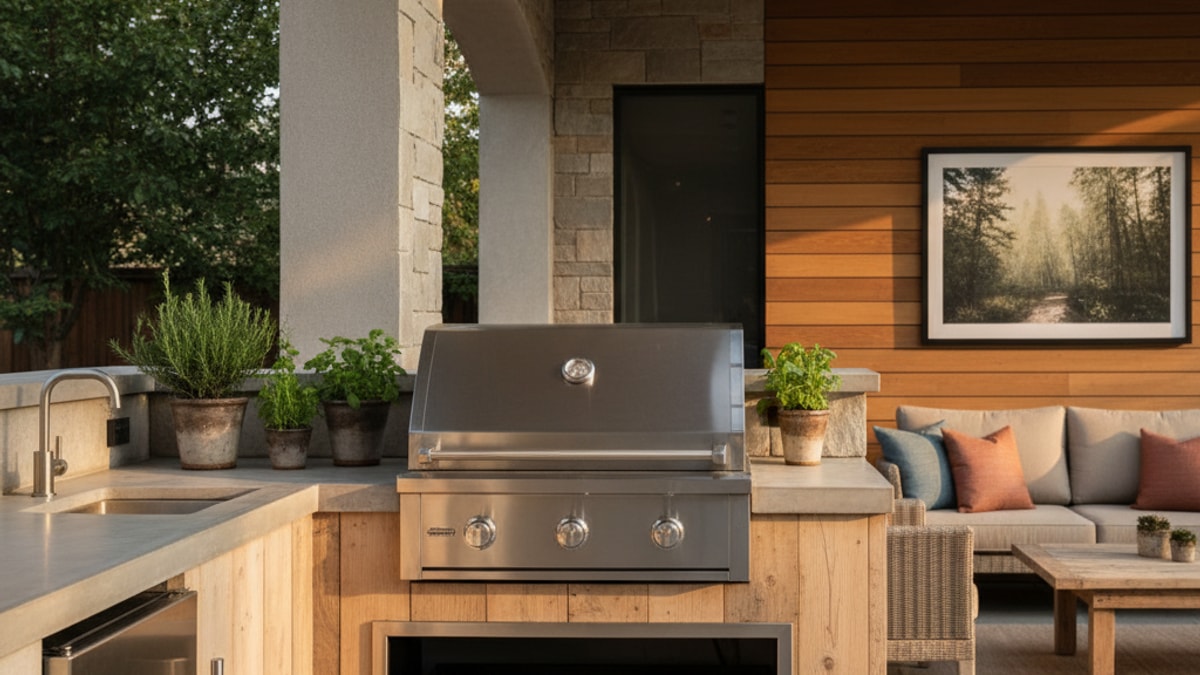
Finally, the entire grill island and its immediate surroundings must be constructed from non-combustible materials. This is foundational to a safe design. The structure supporting the grill should be made of metal studs or concrete blocks, not wood. For countertops, we recommend materials like granite, soapstone, or poured concrete. These can withstand the high temperatures without cracking, scorching, or, in the worst-case scenario, catching fire. The ground beneath should be equally robust. A beautiful deck of Pavers SAN Diego or a professionally poured slab of Concrete SAN Diego provides a stable, fire-safe foundation that a wooden deck simply can't offer.
Making it Look Like It Belongs
Once safety is locked down, we can focus on the aesthetics. A charcoal grill shouldn't look like an afterthought. The goal is seamless integration, making it feel like a core, intentional part of your outdoor living space. The entire process starts with a holistic view of your yard, which is why our Landscape Design SAN Diego process is so comprehensive.
One of the first decisions you'll make is whether to use a built-in unit or a freestanding grill. Built-in charcoal grills offer that sleek, custom look. They slide into your counter structure, creating a continuous, high-end appearance. Brands like Kamado Joe and Big Green Egg offer models designed specifically for this purpose, complete with insulated jackets to protect the surrounding structure from heat transfer. This is the premium option, and it looks phenomenal.
A freestanding grill, on the other hand, offers more flexibility. You can design a dedicated nook for your favorite kettle or cart-style grill to slide into. This approach can be more budget-friendly and allows you to easily upgrade or replace the grill down the line without a major renovation. The key is to make the nook feel deliberate. We often design these spaces with the same high-end materials as the rest of the kitchen, perhaps with a custom backsplash or a countertop segment on either side for prep space. It frames the grill, elevating it from a simple piece of equipment to a feature.
Storage is another huge consideration for charcoal users. You need a place to keep your charcoal, chimney starter, wood chunks, and grilling tools. And it needs to be dry. We design custom, weather-sealed cabinets and drawers directly into the kitchen island. A designated, non-combustible pull-out bin for your bag of lump charcoal is a game-changer. No more lugging a heavy, dusty bag from the garage every time you want to cook. It’s these small, thoughtful details that transform a good outdoor kitchen into a great one.
Taming the Smoke and Ash
Let’s talk about the practical realities of charcoal: smoke and ash. They are inherent to the experience, but they need to be managed to keep your outdoor kitchen clean and enjoyable for your guests.
Smoke management goes beyond basic ventilation. It's about strategic placement. Think about the prevailing winds in your backyard. You don't want the grill positioned where smoke will constantly blow back into your seating area or towards the house. Our design process includes a site analysis where we observe these patterns to place key features like grills and Fire Features optimally. It’s a simple step that makes a dramatic difference in usability. If your setup is under a deep patio cover, a powerful vent hood becomes less of a luxury and more of a necessity. It actively pulls smoke and grease up and away, protecting your overhead structure from staining and keeping the air clear for you and your guests.
Ash disposal is the other messy part of the equation. Modern charcoal grills have become much better at this, with removable ash catchers and cleaning systems. Your outdoor kitchen design should accommodate this. We recommend incorporating a dedicated, fire-safe waste receptacle nearby—specifically a metal can with a tight-fitting lid. You never want to dispose of ash in a regular plastic trash can, even if you think it's cool. Embers can remain hot for a surprisingly long time, posing a serious fire risk. Having a designated, safe spot for ash makes cleanup quick, easy, and secure.
Regular cleaning is also key. The soot and grease from charcoal smoke can build up on surfaces over time. Choosing durable, easy-to-clean countertop and backsplash materials will save you a world of scrubbing. Non-porous materials like polished granite or stainless steel are much easier to wipe down than porous stone or wood.
Built-In vs. Freestanding: A Head-to-Head Look
Deciding between a built-in grill and a freestanding model is a pivotal choice in your outdoor kitchen design. Each has distinct advantages and disadvantages. Our team has installed hundreds of both, and we've found that the best choice really depends on your budget, long-term plans, and desired aesthetic.
Here’s a breakdown to help you compare:
| Feature |
Built-In Charcoal Grill |
Freestanding Charcoal Grill (in a Nook) |
| Aesthetics |
Seamless, integrated, high-end look. Becomes a permanent fixture of the countertop. |
Can look very intentional if framed properly, but is still a separate appliance. |
| Cost |
Higher initial cost for the grill unit, insulated jacket, and custom cabinet fabrication. |
Lower initial cost. You can use an existing grill or buy a standard model. |
| Flexibility |
Permanent installation. Replacing or upgrading often means significant modifications. |
Very flexible. You can easily swap out the grill for a new model or different fuel type. |
| Functionality |
Creates a unified workspace with countertops flush against the grill. |
May have small gaps between the grill and counter. Cart models offer side tables. |
| Resale Value |
Can add significant perceived value to a home's outdoor living space. |
Generally seen as personal property and may not add as much direct value. |
| Complexity |
Requires professional design and installation to ensure proper insulation and ventilation. |
Simpler to incorporate into a design, but still requires a non-combustible landing zone. |
Ultimately, there's no wrong answer here. It's about what works for you. A fully integrated kamado-style cooker looks absolutely stunning and functions as the centerpiece of the kitchen. But a well-designed nook for a classic kettle grill can be just as functional and offers a timeless appeal. Getting these complex design choices right is what we do. If you're weighing your options and need expert advice tailored to your space, you can always BOOK MY FREE CONSULTATION with our design team.
Materials That Make or Break the Design
The materials you choose for your outdoor kitchen are about more than just looks; they are a critical component of safety and longevity, especially with a charcoal grill in the mix.
For the structure itself, as we mentioned, wood framing is an absolute no-go. We build our outdoor kitchen islands using galvanized steel frames or masonry blocks. These materials are impervious to fire, rot, and pests, ensuring the foundation of your kitchen is solid for decades. It's the unseen framework that provides peace of mind.
For the countertops, you need a surface that can handle a hot chimney starter or a stray ember without damage. Granite is a popular and excellent choice; it's durable, heat-resistant, and comes in countless styles. Concrete is another fantastic option, offering a modern, industrial aesthetic that can be customized with different colors and finishes. Our Concrete SAN Diego artisans can create truly unique surfaces. Soapstone is a more traditional choice that is completely non-porous and develops a beautiful patina over time. We generally advise clients to steer clear of quartz for outdoor kitchen counters, especially near a grill. While durable indoors, the resins used in quartz can yellow and discolor with prolonged UV exposure, and they are not rated for the high, direct heat a charcoal grill can produce.
For the finishing veneer, you have plenty of fire-safe options to match your home's style. Stacked stone, brick veneer, and stucco are all popular choices that add texture and character to the kitchen island. They are durable, weather-resistant, and, most importantly, non-combustible.
Creating the Perfect Grilling Environment
An outdoor kitchen is more than just a place to cook; it's a destination. The final touches are what elevate it from a utility space to the heart of your backyard. Proper lighting is essential for both ambiance and safety. Grilling after dark shouldn't involve a headlamp. We incorporate task lighting directly over the grill and prep areas, often using discreet, downward-facing fixtures installed in the overhead patio cover. Ambient Landscape Lighting SAN Diego throughout the surrounding area ensures safe passage and creates a warm, inviting atmosphere.
Comfortable and convenient seating is also a must. A bar-height counter extension on the kitchen island invites guests to pull up a stool and chat with the chef. Nearby, thoughtfully designed seating areas, perhaps around a cozy fire pit or built into custom Seat Retaining Walls, give people a place to relax and enjoy the fruits of your labor. The layout should feel connected but not cramped, allowing for easy flow between the cooking, dining, and lounging zones.
So, can you put a charcoal grill in your outdoor kitchen? Not only can you, but with careful planning and an unwavering commitment to safety, you can create a truly exceptional cooking experience that becomes the centerpiece of your backyard. It combines the raw, authentic flavor of charcoal with the sophistication and convenience of a fully equipped kitchen.
It’s a project that requires expertise to get right, blending the art of design with the science of construction. It’s about understanding heat, airflow, and materials in a way that ensures your beautiful new space is as safe as it is stunning. That's the challenge our team loves to solve, creating spaces where you can make memories for years to come.



.webp)
.webp)