Do I Need a Vent Hood for My Outdoor Kitchen? We Answer.
You can picture it perfectly. The sizzle of steaks on the grill, the aroma of sautéed vegetables, and the laughter of friends gathered in your backyard oasis.
You can picture it perfectly. The sizzle of steaks on the grill, the aroma of sautéed vegetables, and the laughter of friends gathered in your backyard oasis. It's the dream of the ultimate outdoor kitchen, a space that extends your home and your hospitality into the fresh air. But as you move from dreaming to planning, a very practical, and frankly, very important question emerges: do I need a vent hood for an outdoor kitchen?
It’s a question our design team at Modern Yardz gets all the time. On the surface, it seems almost silly. You're outdoors, right? The whole sky is your ventilation system! If only it were that simple. The truth is, the answer is nuanced, and getting it wrong can lead to some seriously unpleasant—and costly—consequences. As a company that specializes in crafting high-end Outdoor Kitchens SAN Diego, we've seen firsthand what happens when ventilation is overlooked. It's not just about a little smoke. It’s about safety, cleanliness, and protecting the significant investment you've made in your beautiful outdoor living space.
Let's Be Clear: When a Vent Hood Isn't a Choice, It's a Requirement
Let's cut right to the chase. In certain situations, an outdoor vent hood is not a luxury item or an optional upgrade. It is a critical, non-negotiable component of a safe and functional kitchen design. Our experience has shown, time and time again, that underestimating the power of trapped smoke, grease, and heat is a mistake homeowners come to regret.
Here are the scenarios where we consider a vent hood absolutely essential:
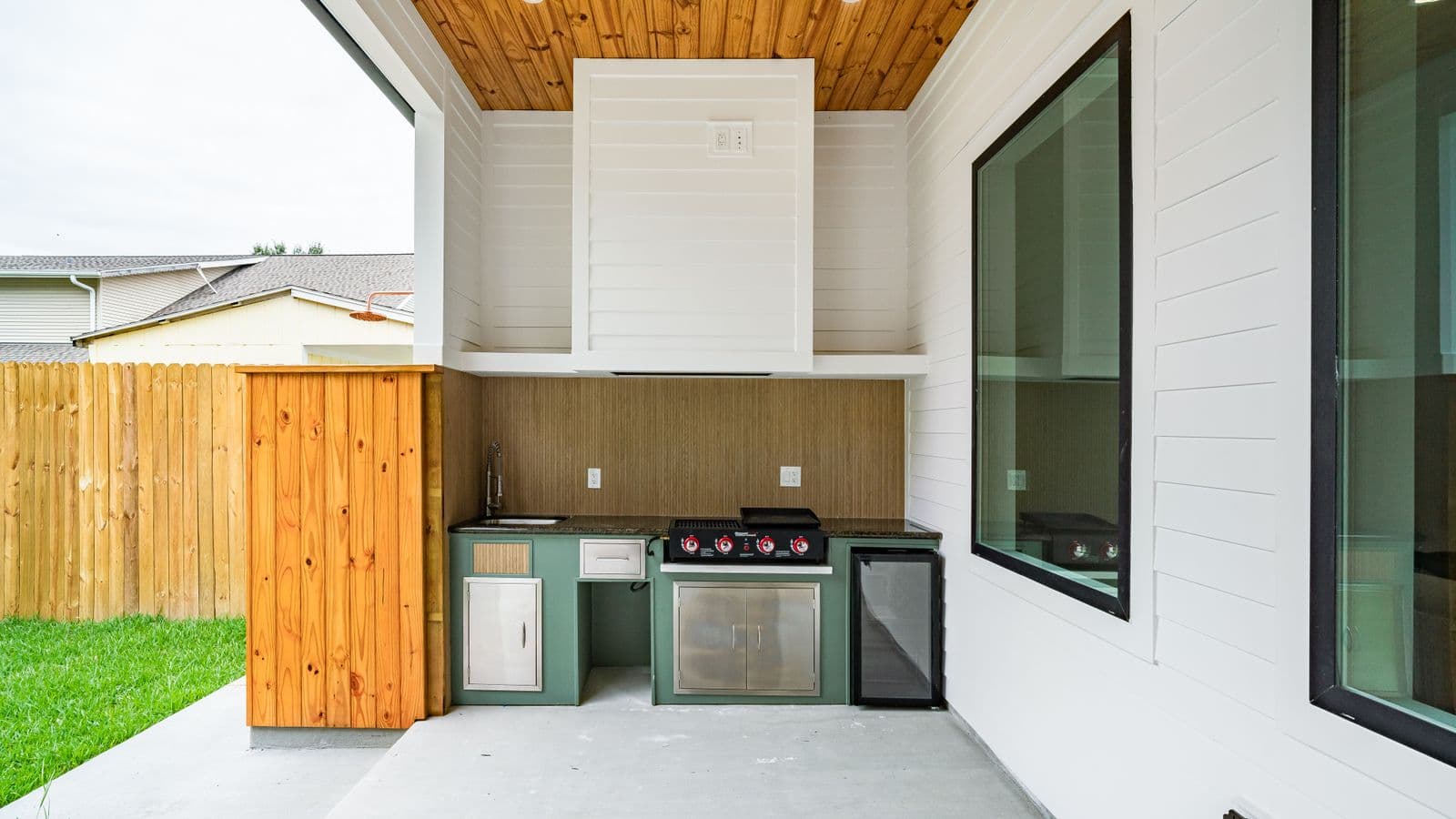
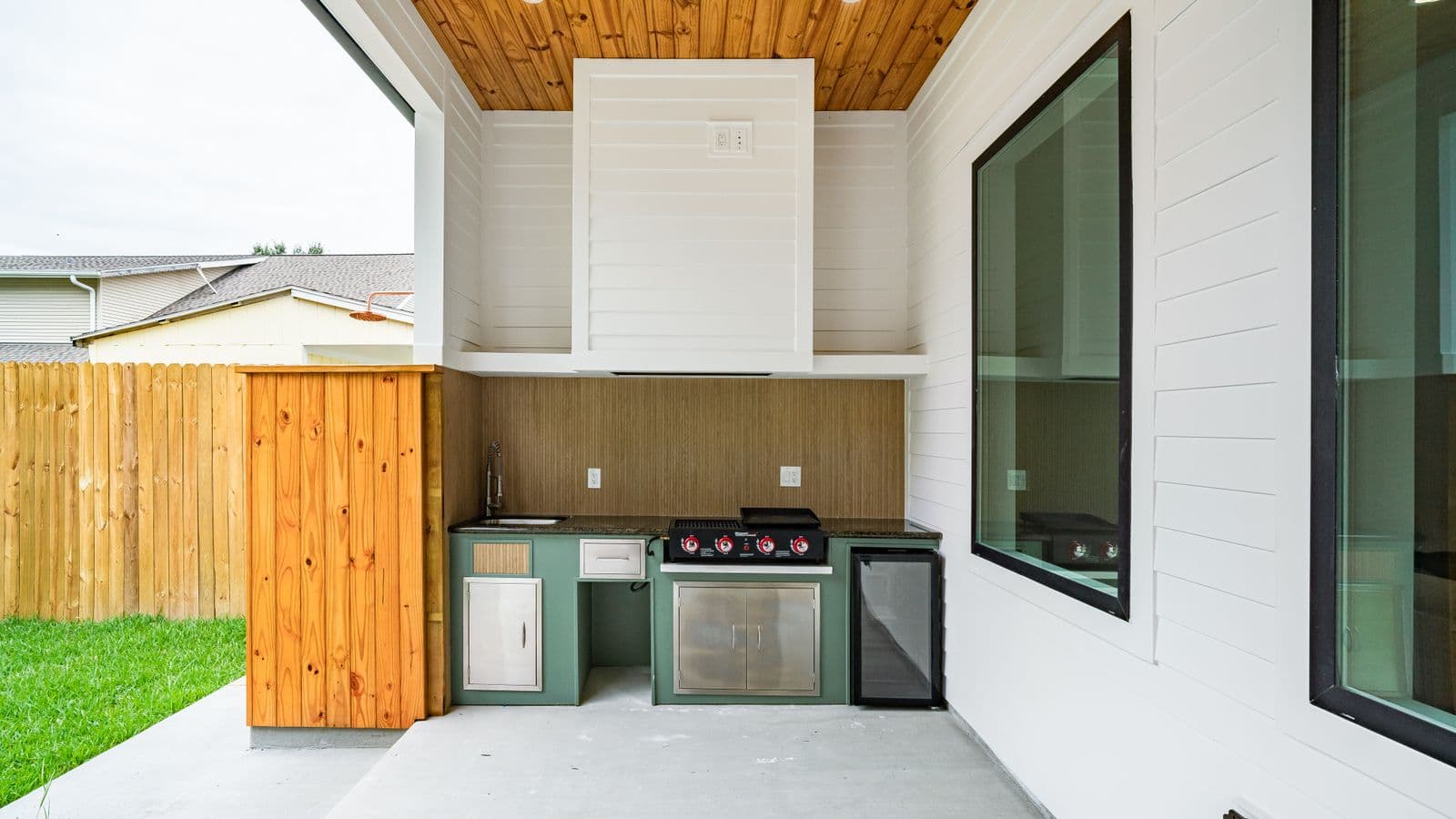
1\. Your Kitchen is Under a Roof. This is the big one. If your outdoor kitchen is located under any kind of solid overhead structure, you need a hood. Period. This includes a covered patio, a California room, a gazebo, or even a deeply overhanging eave of your house. Smoke and heat rise, and without a clear escape path, they get trapped. We've seen the catastrophic results: ugly, stubborn grease stains that permanently discolor expensive wood ceilings, peeling paint, and a buildup of flammable creosote. That beautiful tongue-and-groove ceiling on your new patio cover? It will be ruined in a season. The heat buildup can also become a legitimate fire hazard, warping materials and creating a dangerous environment. It’s a simple law of physics that no amount of wishful thinking can overcome.
2\. The Space is Semi-Enclosed. Maybe you don't have a full roof, but your kitchen is nestled into a U-shaped courtyard or backed by two or three walls. Homeowners often assume cross-breezes will be enough. They rarely are. Wind is fickle. On a perfectly still day, that space becomes a smoke box. The walls prevent the smoke and grease from dissipating naturally, causing it to linger, choke your guests, and coat every surface in a sticky film. We design stunning Seat Retaining Walls that often define these kinds of intimate spaces, and the last thing you want is for them to become grimy backstops for grill exhaust.
3\. The Grill is Near Your House Structure. Placing your grill directly against an exterior wall of your home is a common space-saving tactic. It’s also a recipe for disaster without proper ventilation. The intense heat can damage siding—melting vinyl, charring wood, and discoloring stucco over time. The smoke and grease will stain the wall and can easily waft into open windows or doors, defeating the whole purpose of cooking outside. You don't want your living room smelling like last night's salmon for three days. A vent hood captures that exhaust at the source and directs it up and away from your home's vulnerable surfaces and interior.
4\. You're Using a High-Powered, Professional-Style Grill. Today’s outdoor grills aren't your grandpa's old charcoal kettle. We're talking about serious cooking machines with multiple high-BTU burners, infrared sear zones, and rotisseries. These units produce an immense amount of heat, smoke, and aerosolized grease, far more than a basic grill. To pair such a powerful appliance with no mechanical ventilation, especially under a structure, is asking for trouble. It’s like putting a commercial restaurant stove in your indoor kitchen without a range hood—you just wouldn't do it.
The Open-Air Exception: Can You Ever Skip the Hood?
So, is there ever a time when you can safely forego a vent hood? Yes, but the circumstances are quite specific. It helps to know where the obligation actually sits: per the ICC's Building Safety Journal, there are no specific code requirements for built-in BBQ grills beyond following the manufacturer's instructions and using listed appliances — when a hood is required, it is the appliance's listing that says so, not a code section. If your outdoor kitchen is truly in the open air—meaning it's on a patio with no overhead cover whatsoever and is situated a reasonable distance from the main house—you might be able to get by without one.
In this scenario, the prevailing winds and open sky can do the work of dissipating smoke and heat. It's the ideal situation for a more minimalist setup. However, there are still crucial factors to consider. Think about the type of cooking you'll be doing. If your menu consists mostly of grilling lean proteins and vegetables, the smoke output will be manageable. But if you love searing fatty ribeyes, cooking on a flat-top griddle, or doing a lot of wok cooking, you're going to generate a substantial amount of greasy smoke regardless of how open the space is. That grease has to land somewhere, and it might be on your beautiful new Pavers SAN Diego or your pristine outdoor furniture.
Even in a completely open setting, our team often advises clients to at least consider the future. What if you decide to add one of our custom Patio Covers Pergolas SAN Diego in a few years? Retrofitting a vent hood later is always more complex and expensive than planning for it from the beginning. It's a classic 'ounce of prevention' scenario.
Beyond the Smoke: The Hidden Benefits of Outdoor Ventilation
Honestly, focusing only on smoke is missing the bigger picture. A high-quality outdoor vent hood does so much more. It’s an investment in comfort, cleanliness, and the longevity of your entire outdoor living area. We can't stress this enough.
Here’s what you're really getting with a proper ventilation system:
- Grease Management: This is the unseen enemy. When you grill, tiny droplets of grease become airborne. Without a hood, they settle everywhere, creating a sticky, grimy film that attracts dirt and is incredibly difficult to clean. It gets on your countertops, your cabinets, the floor, nearby furniture, and even on the leaves of surrounding plants. A powerful vent hood captures the majority of this grease in its baffle filters, which can be easily removed and cleaned.
- Heat Control: A high-BTU grill can create a punishingly hot zone directly around it. If you're under a patio cover, that heat gets trapped, making it uncomfortable for the chef and anyone nearby. A vent hood actively pulls that super-heated air up and away, creating a much more pleasant and comfortable cooking environment.
- Enhanced Lighting: Let's be practical. Most outdoor vent hoods come equipped with powerful halogen or LED lights. This provides essential task lighting directly over your cooking surface, which is a massive upgrade from relying on ambient Landscape Lighting SAN Diego alone. No more using a flashlight with one hand while trying to flip burgers with the other.
- Protecting Your Investment: This is the bottom line. You've invested in a beautiful outdoor space. Maybe it includes stunning stonework, custom cabinetry, and high-end appliances. A vent hood is the insurance policy on that investment. It prevents the costly, and sometimes irreversible, damage that grease and smoke can cause to the very structure of your outdoor room.
- Guest Comfort: Nothing clears a patio faster than a giant plume of acrid smoke. A vent hood ensures your guests can enjoy their time without their eyes watering or their clothes smelling like a bonfire. It elevates the entire experience from a simple cookout to a sophisticated outdoor dining event.
Product Spotlight: Warehouse Sale
This video provides valuable insights into do i need a vent hood for outdoor kitchen, covering key concepts and practical tips that complement the information in this guide. The visual demonstration helps clarify complex topics and gives you a real-world perspective on implementation.
Not All Hoods Are Created Equal: What to Look For
Okay, so you're convinced. A hood is the right call. But you can't just install any old vent hood and expect it to work. Outdoor environments are unforgiving, and outdoor vent hoods are specialized pieces of equipment designed to withstand the elements and handle a much tougher job than their indoor cousins.
Here’s what our team looks for when specifying a hood for a project:
- Durable Materials: This is non-negotiable. The hood must be constructed from high-quality, corrosion-resistant stainless steel. Look for 304-grade stainless steel, which has a higher nickel and chromium content, making it exceptionally resistant to rust and corrosion from humidity, rain, and salt in the air.
- Serious Power (CFM): CFM stands for Cubic Feet per Minute, and it measures the volume of air the hood can move. Because outdoor hoods have to compete with cross-breezes and a lack of contained walls, they need to be significantly more powerful than indoor models. We typically recommend a minimum of 1200 CFM for an outdoor grill, with higher ratings needed for larger cooking surfaces or very powerful grills.
- Proper Size and Capture Area: The hood should extend beyond the edges of your cooktop by at least 3 to 6 inches on all sides. This creates a larger 'capture area' to effectively trap smoke, grease, and heat that might otherwise escape from the sides. A hood that's the same size as the grill is almost always too small.
- Baffle Filters: Look for hoods with stainless steel baffle filters, not mesh ones. Baffle filters are made of interlocking channels that force the air to change direction, causing the grease to separate and collect in a tray. They are far more effective and durable than mesh filters and can be easily washed in the dishwasher.
- Professional Installation: The performance of even the best vent hood depends entirely on its installation. It needs to be mounted at the correct height (typically 30-36 inches above the cooking surface) and ducted properly to exhaust the air completely out of the space. This is not a DIY project; it requires expertise to ensure safety and effectiveness.
| Kitchen Location | Vent Hood Recommendation | Key Risks Without a Hood | Our Professional Insight |
|---|---|---|---|
| Fully Covered Patio | Absolutely Essential | Severe grease/smoke staining on ceiling, fire hazard, structural damage from heat/moisture, poor air quality. | This is a non-negotiable safety and maintenance requirement. The cost of a hood is minimal compared to repairing a damaged patio structure. |
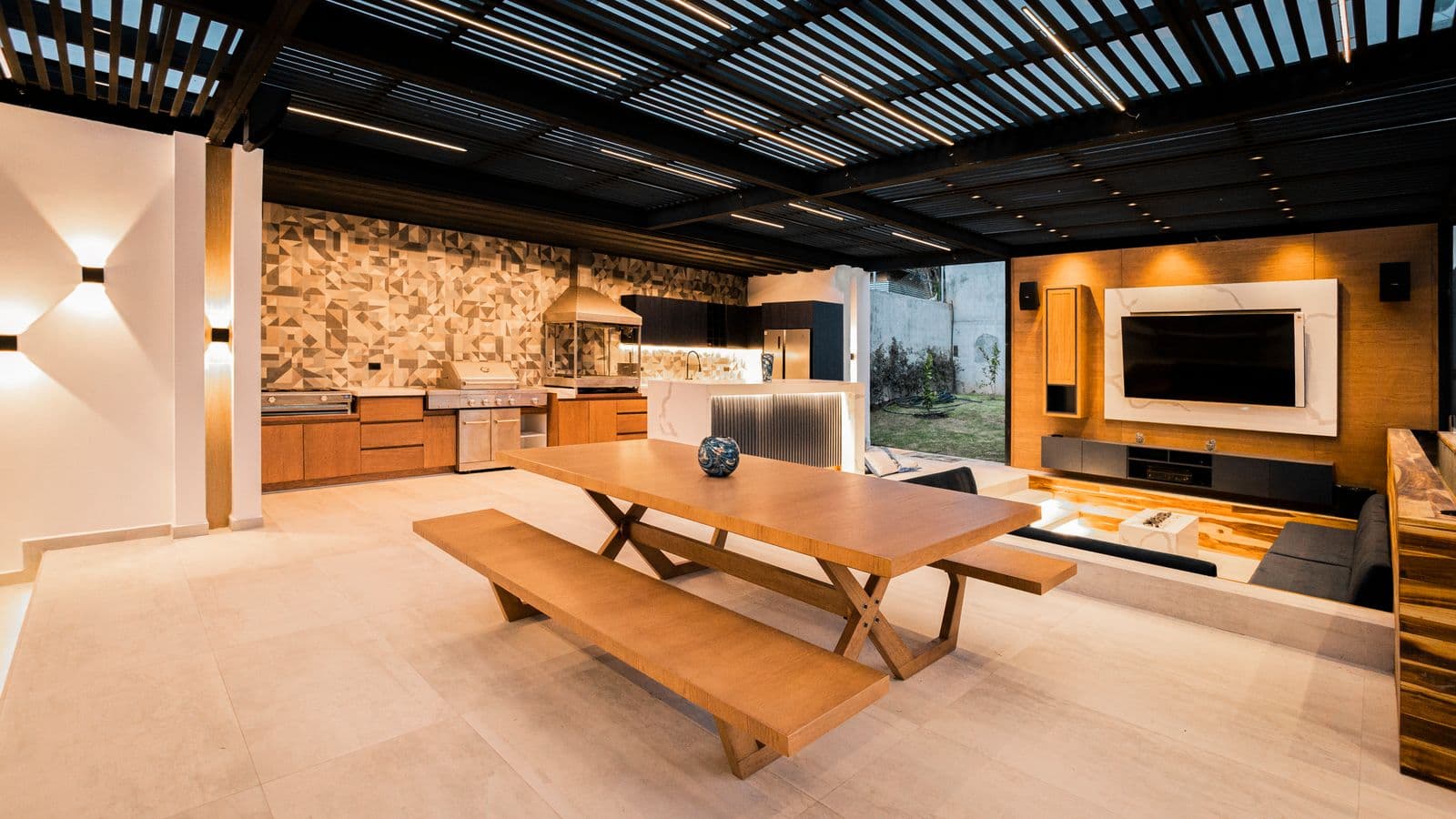
| Under a Pergola | Strongly Recommended | Grease buildup on beams, smoke trapping on calm days, discoloration of the structure over time, reduced guest comfort. | While some smoke escapes, grease and heat still rise directly into the structure. A hood protects the pergola's finish and longevity. |
| Against the House Wall | Essential | Staining/damage to siding (stucco, wood, vinyl), smoke entering windows/doors, potential fire risk to the home's structure. | This is about protecting your primary residence. The risk of costly damage to your home's exterior makes a hood a wise and necessary investment. |
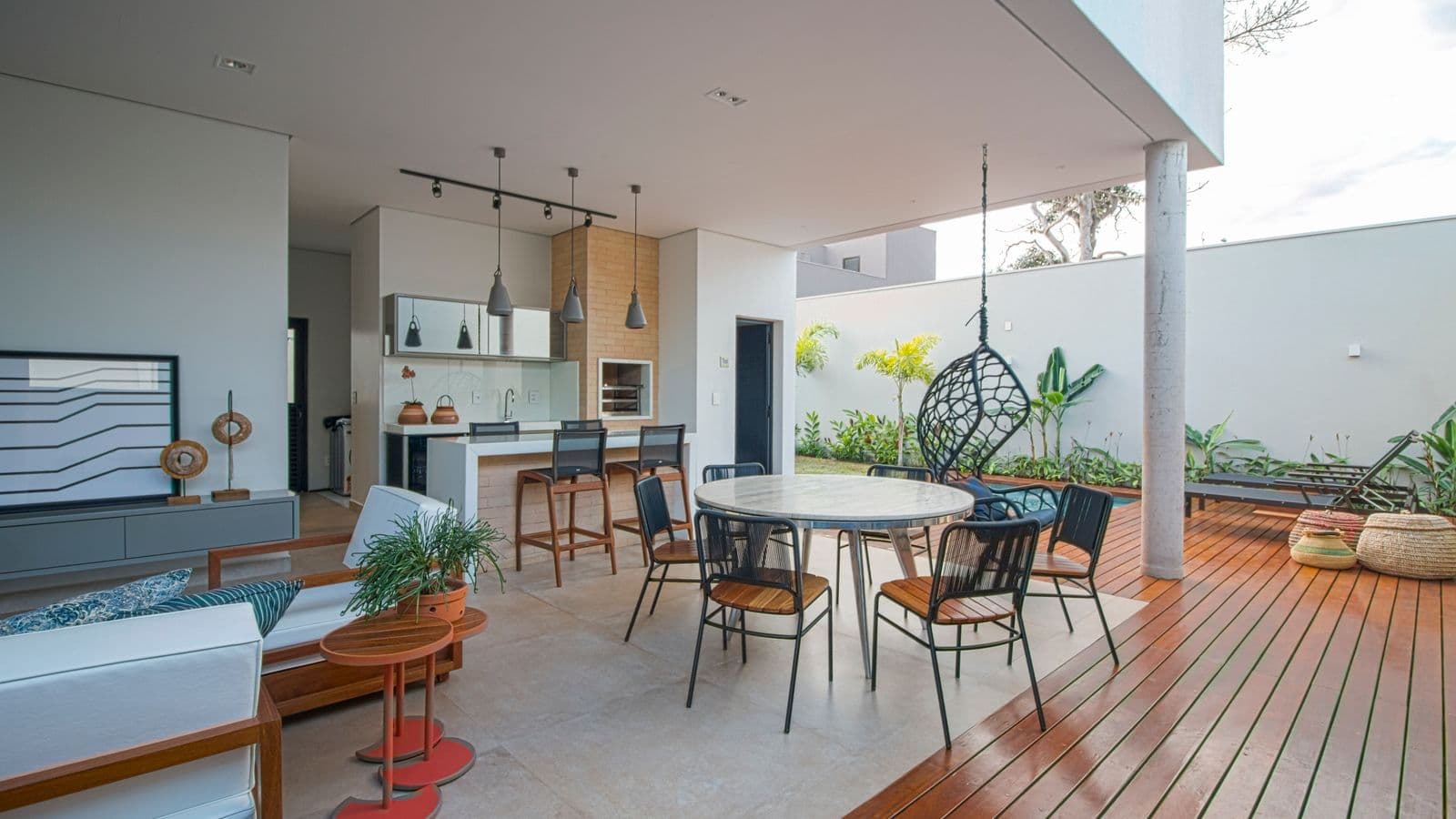
| Fully Open-Air Patio | Optional, but Recommended | Grease film on furniture and flooring, unreliable smoke control depending on wind, potential for future limitations. | This is the one case where it's a 'maybe.' However, we advise planning for one if there's any chance you'll add a cover later. It enhances the cooking experience regardless. |
Making It Look Good: Integrating a Hood into Your Design
We understand that for many homeowners, the concern isn't just functional—it's aesthetic. The word 'vent hood' can conjure images of a clunky, industrial appliance that will ruin the look of your carefully planned outdoor retreat. But it doesn't have to be that way.
Modern outdoor vent hoods come in a variety of sleek, stylish designs that can complement any aesthetic, from ultra-modern to rustic. Furthermore, a hood can be clad in materials that match your outdoor kitchen's finishes, like stone, brick, or stucco. This transforms it from a simple appliance into a beautiful, integrated architectural feature. It can create a stunning focal point for your cooking area, much like a grand fireplace or one of our custom Fire Features does for a seating area.
This is where a holistic approach to Landscape Design SAN Diego becomes so important. When we design an outdoor kitchen, we're not just thinking about where to put the grill. We're considering airflow, sightlines, material harmony, and the overall experience. The vent hood is a key part of that comprehensive plan, integrated seamlessly from the very beginning.
So, back to the original question. Do you need a vent hood for your outdoor kitchen? If your kitchen has any kind of cover or is close to your home, the answer is an unequivocal yes. It's an investment in the safety of your family, the comfort of your guests, and the longevity of your beautiful outdoor space. For those with truly open-air kitchens, it may be optional, but it's an option that still brings significant benefits in cleanliness and convenience.
Ultimately, building an outdoor kitchen is about creating a space for effortless enjoyment. It's about maximizing pleasure and minimizing problems. A properly selected and installed vent hood is one of the most effective tools for achieving that goal. If you're ready to design an outdoor kitchen that's as safe and functional as it is stunning, our team is here to help. BOOK MY FREE CONSULTATION and let's start planning the details that will bring your vision to life.
Start Your Free Design Consultation
Tell us about your project and we'll be in touch within 24 hours. No pressure, no obligation.
Common questions
- Do I need a vent hood if my outdoor kitchen is under a covered patio?
- Yes—if your outdoor kitchen sits under any solid cover like a covered patio, California room, gazebo, or deep eave, a vent hood is non-negotiable. Trapped smoke and heat cause stubborn grease stains, peeling paint, flammable creosote buildup, and warped materials. Modern Yardz considers a hood absolutely essential in these covered scenarios to protect your ceiling and prevent fire hazards.
- How much CFM does an outdoor kitchen vent hood need?
- Plan for a minimum of 1200 CFM for an outdoor grill, with higher ratings for larger cooking surfaces or very powerful grills. Because outdoor hoods compete with cross-breezes and lack contained walls, they need significantly more power than indoor models. CFM measures cubic feet per minute—the volume of air the hood moves to clear smoke, grease, and heat.
- Can I skip the vent hood for a fully open-air patio?
- Possibly. If your kitchen is truly open-air—on a patio with no overhead cover and a reasonable distance from the house—prevailing winds and open sky can dissipate smoke and heat, making a hood optional. But if you sear fatty ribeyes, use a flat-top griddle, or wok cook, you'll generate greasy smoke that lands on your pavers and furniture regardless.
- How high above the grill should I install an outdoor vent hood?
- Mount an outdoor vent hood 30 to 36 inches above the cooking surface for proper performance. The hood should also extend 3 to 6 inches beyond your cooktop's edges on all sides to create a larger capture area. This isn't a DIY job—it needs professional installation and proper ducting to exhaust air completely out of the space.
- Are baffle filters better than mesh filters for an outdoor hood?
- Yes, choose stainless steel baffle filters over mesh ones. Baffle filters use interlocking channels that force air to change direction, separating grease so it collects in a tray. They're far more effective and durable than mesh, and can be easily washed in the dishwasher. Also look for corrosion-resistant 304-grade stainless steel construction to withstand humidity, rain, and salt air.
Ready to design your dream yard?
Tell us about your project. We'll send back a real plan, not a templated quote.
Book My Free Consultation→