Ready to Design your dream yard? get started!

Build Your Outdoor Kitchen with Metal Studs: A Pro's Take

An outdoor kitchen isn't just an addition to your backyard; it's a fundamental shift in how you live outside. It becomes the heart of your home during beautiful weather, the central hub for gatherings, and the place where memories are seared in right alongside the steaks. But the foundation of that dream—literally—is what determines whether it lasts for a few seasons or for decades. While wood framing has been a go-to for years, our team has seen a significant, sometimes dramatic shift toward a more resilient material. We’re talking about steel.

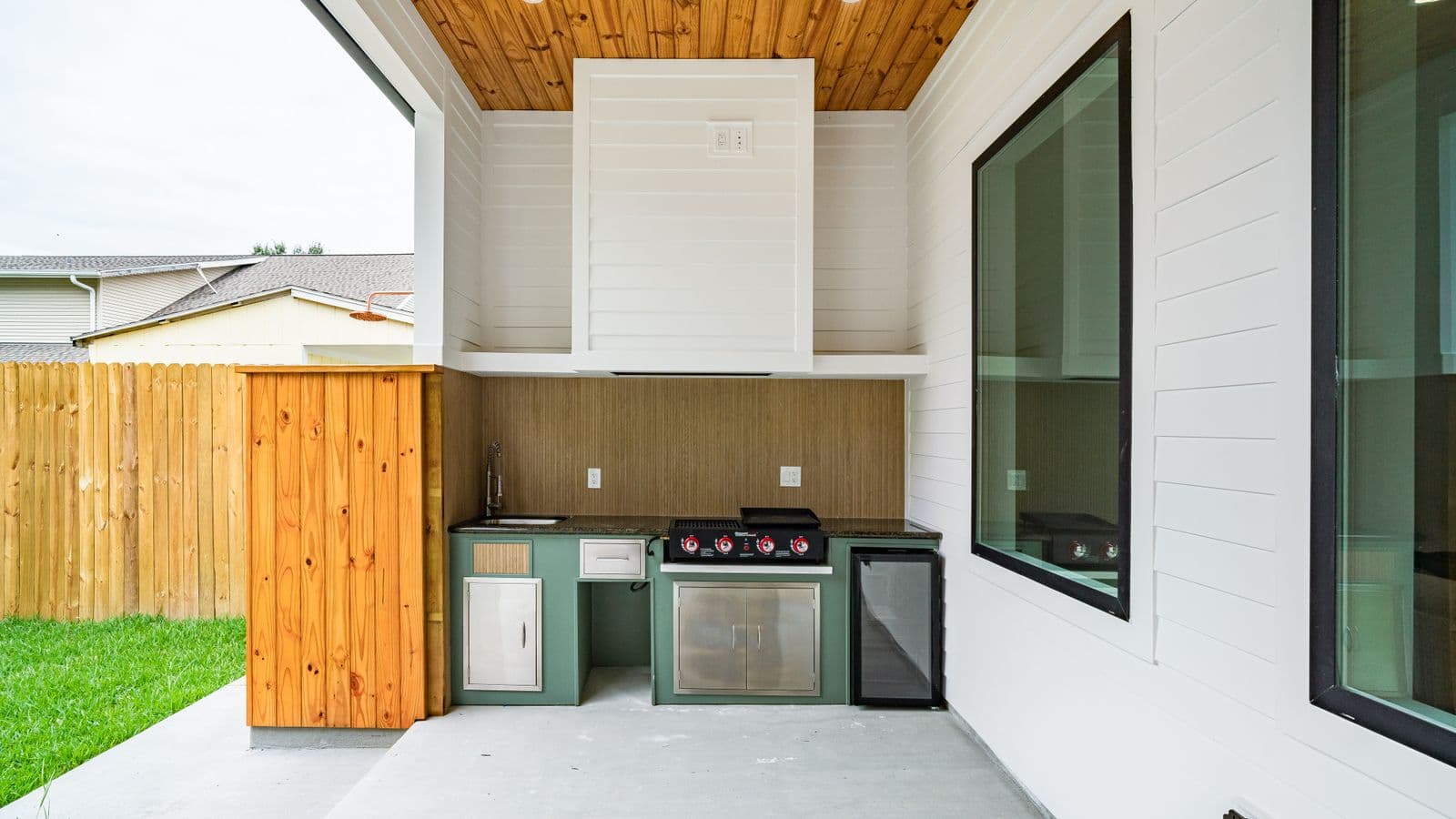
Learning how to build an outdoor kitchen with metal studs is more than just a construction project; it’s an investment in permanence. It’s about building something that can unflinchingly face the elements, the heat from your grill, and the test of time. It’s a professional-grade solution that’s surprisingly accessible for the dedicated DIYer. We've built countless custom Outdoor Kitchens SAN Diego over the years, and our experience has consistently shown that a steel frame is the superior backbone for a truly lasting structure. Let’s walk through how it’s done right.

Why Metal Studs Are the Pro's Choice for Outdoor Kitchens

Let’s be honest, when you’re building something that will house a fiery grill and be exposed to rain, sun, and everything in between, your choice of materials is critical. Wood has its place, but in this specific application, it comes with a list of compromises. Metal, on the other hand, solves almost every single one of them. It's a clean, decisive upgrade.

First and foremost is the fire-resistance. It's a non-negotiable element. We’ve seen catastrophic failures with wood-framed islands where improper insulation or a simple flare-up led to disaster. Steel studs are non-combustible. That simple fact provides an incredible amount of peace of mind, allowing you to focus on grilling instead of worrying about the structural integrity of the island beneath it.

Then there's the issue of longevity. Wood rots. It swells and contracts with moisture, it warps under the sun, and it's a five-star buffet for termites and other pests. Metal studs do none of these things. They are impervious to rot, insects, and moisture damage. They remain perfectly straight and true, year after year, which means your beautiful stone veneer or tile finish won't develop cracks because the frame underneath is shifting. This stability is something we can't stress enough; it protects your entire investment in the kitchen's finish work.

Here’s a quick breakdown our team often uses to explain the choice to clients:

Feature Metal Stud Framing Traditional Wood Framing
Fire Safety Non-combustible, Class A fire rating. Combustible. Requires extensive insulation and clearances.
Durability Impervious to rot, moisture, and pests. Susceptible to rot, warping, and insect damage.
Weight Lighter than wood, easier to handle. Heavier and more cumbersome.
Consistency Perfectly straight, uniform dimensions. Can have crowns, twists, and knots.
Environmental Impact Often made from recycled steel, 100% recyclable. A renewable resource, but treated lumber has chemicals.

Finally, there's the sheer precision of it. Every steel stud is identical. There are no crowns to worry about, no knots to work around. This uniformity makes the framing process faster and far more accurate. Your lines will be cleaner, your corners will be perfectly square, and the entire structure will be impeccably level. That’s the kind of foundation you want for expensive countertops and built-in appliances.

Planning Your Metal Stud Kitchen: The Blueprint for Success

Great projects don't happen by accident. They are born from meticulous planning. Before you cut a single stud, you need a comprehensive plan that accounts for workflow, appliance placement, utility runs, and overall aesthetics. This is the stage where you save yourself from costly mistakes down the road.

Start by thinking about how you'll use the space. Where should the grill go in relation to the sink or refrigerator? You want to create a functional work triangle, just like in an indoor kitchen. Consider the 'hot zone' (grill, side burners), the 'cold zone' (fridge, ice maker), and the 'wet zone' (sink, prep area). A logical flow between these areas makes cooking outside a joy, not a chore. Our Landscape Design SAN Diego process always begins with these functional questions, ensuring the final layout is as practical as it is beautiful.

Next, get precise with your appliance specifications. You need the exact cutout dimensions for your grill, access doors, refrigerator, and anything else you plan to install. These specs are non-negotiable. Frame the openings based on the manufacturer's requirements, always allowing for any specified clearances for ventilation and heat dissipation. We've seen people eyeball this. It never ends well.

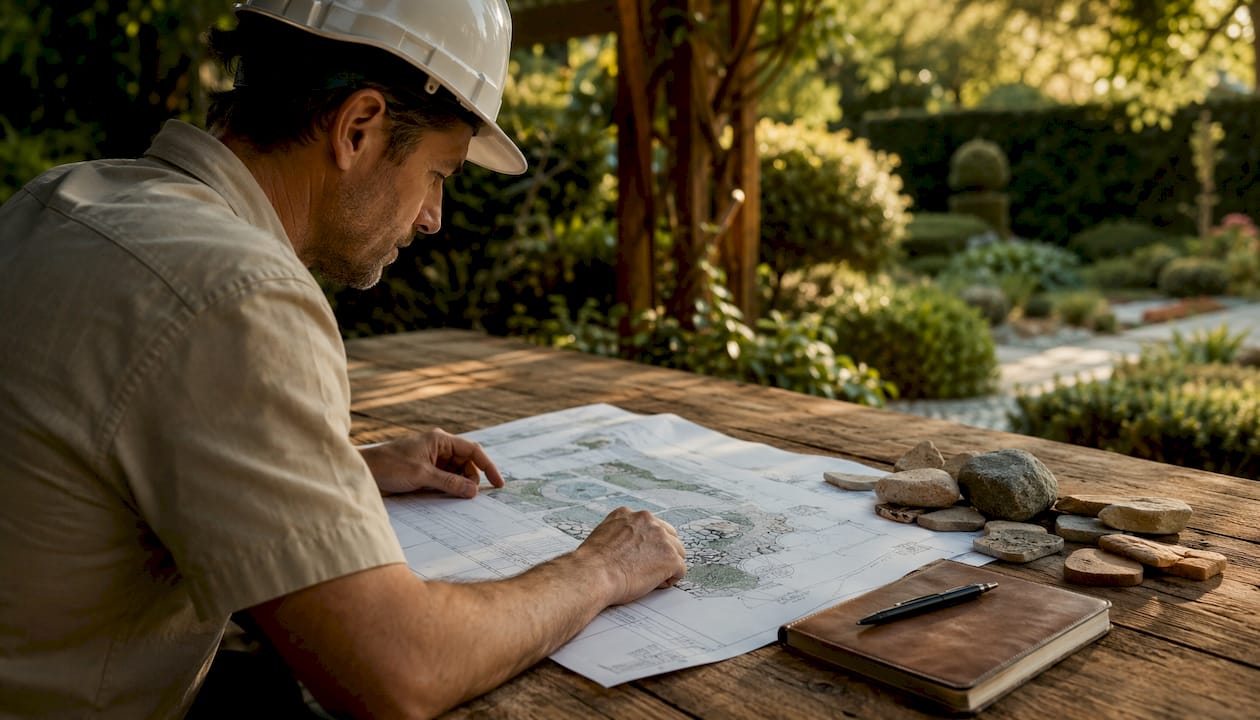
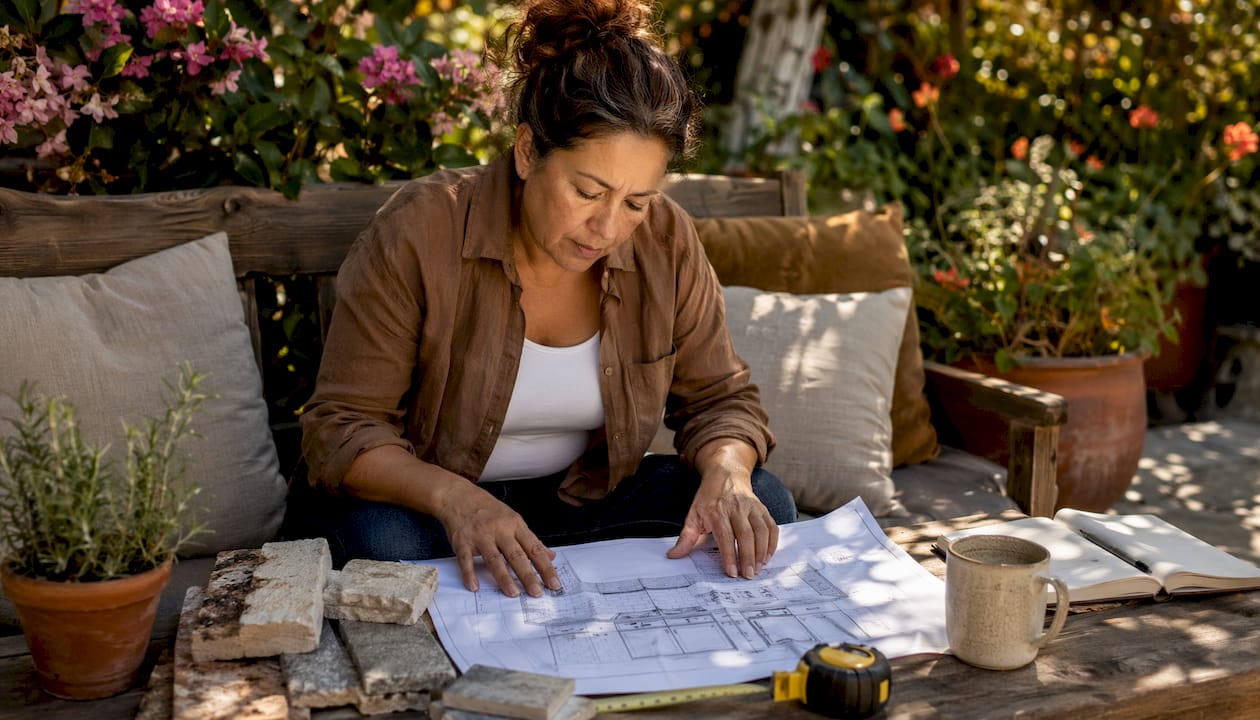
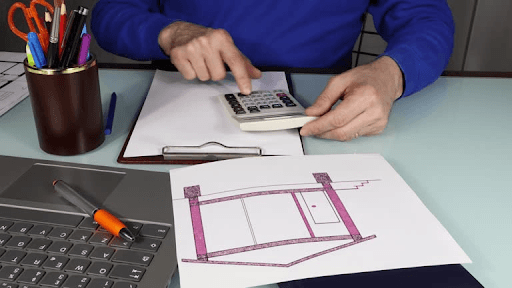
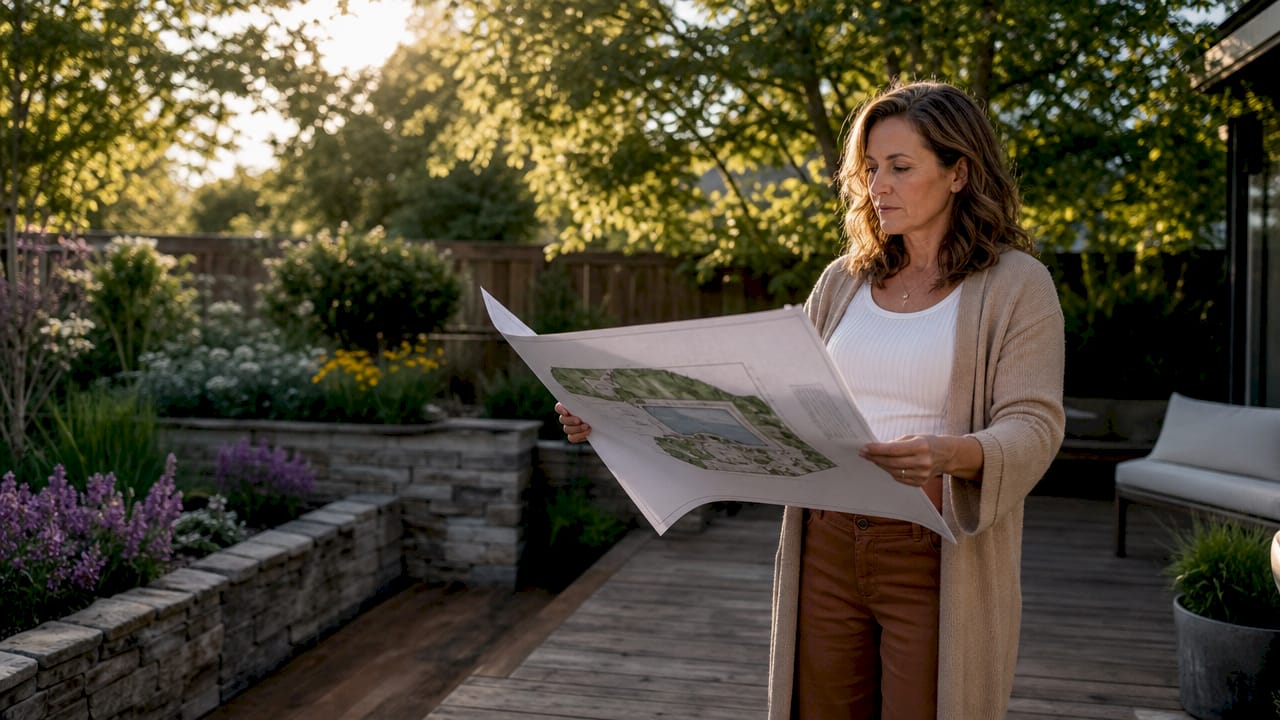
Draw it out. A detailed sketch, even if it's not professionally drafted, is invaluable. Mark the center lines for each stud (typically 12 or 16 inches on-center), map out your exact appliance cutouts, and plan for any special features like a raised bar counter or a corner turn. This drawing becomes your roadmap. It helps you visualize the project and calculate the exact amount of materials you’ll need.

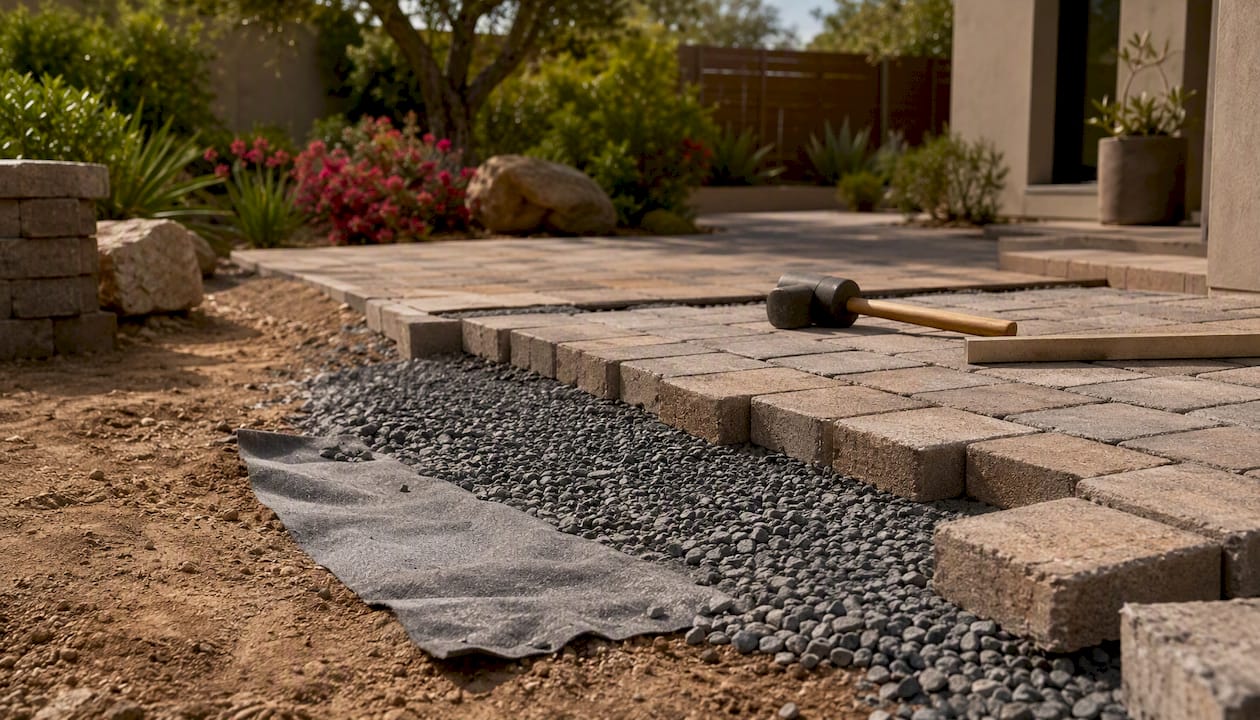
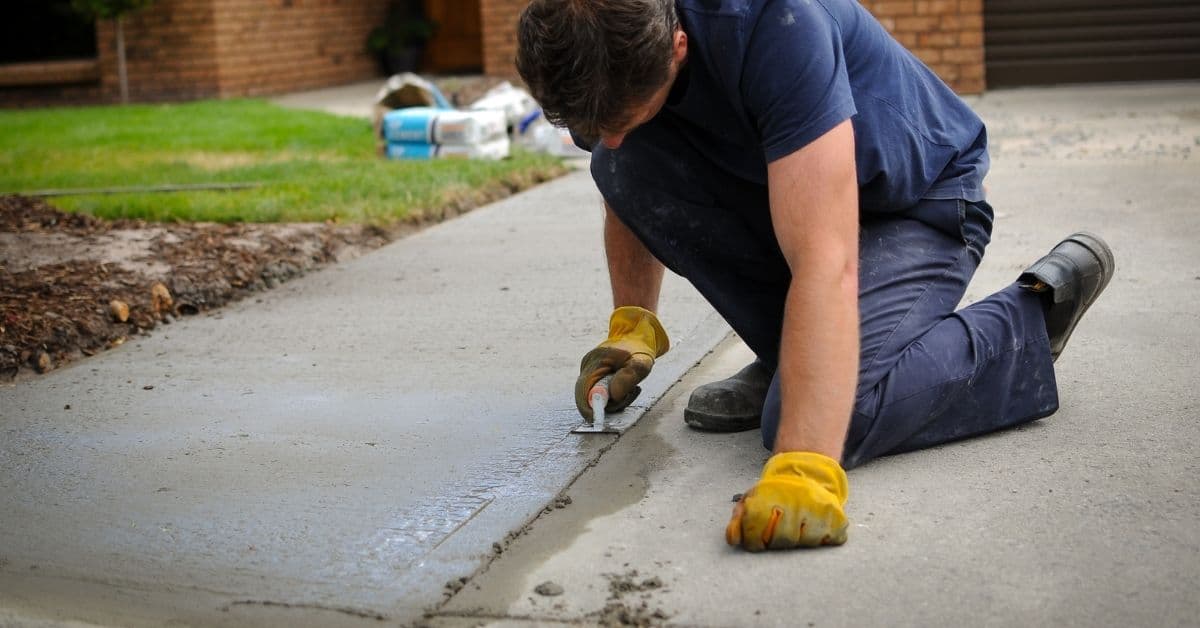
And what about the foundation? Your outdoor kitchen needs to sit on something solid and level. A reinforced concrete slab is the gold standard, providing a stable, permanent base. High-quality Concrete SAN Diego work is essential here. Alternatively, a robust patio built with interlocking Pavers SAN Diego can also work, provided the base was properly prepared for the concentrated weight. Don’t even think about building this on bare ground or flimsy deck boards.

Tools and Materials: What You'll Actually Need

Working with metal studs requires a few specialized tools, but most are readily available and not outrageously expensive. Having the right gear makes the job smoother, safer, and yields a much more professional result.

Essential Tools:

  • Aviation Snips (Tin Snips): You'll need a set of left-cut (red handle), right-cut (green handle), and straight-cut (yellow handle) snips. These are your primary tools for cutting studs and track to length.
  • Impact Driver or Drill: A good cordless impact driver with a magnetic hex-head bit is your best friend for driving the thousands of self-tapping screws you'll be using.
  • C-Clamps or Vise-Grip Clamps: Absolutely essential for holding studs and tracks together securely while you drive screws. You'll want at least four of these.
  • Speed Square and Framing Square: For marking perfectly square cuts and ensuring your corners are 90 degrees.
  • Tape Measure & Permanent Marker: Obvious, but critical.
  • Level: A 4-foot level is ideal for ensuring the entire structure is plumb and level from base to top.
  • Safety Gear: Don't skip this. You need safety glasses, gloves (cut-resistant are best), and hearing protection.

For more complex cuts or larger projects, you might consider a metal-cutting circular saw blade or a portable band saw, but for a standard kitchen island, snips will get the job done.

Core Materials:

  • Steel Studs and Track: The heart of your project. We strongly recommend using 20-gauge structural steel studs (S-studs). While lighter 25-gauge is available, it's meant for interior, non-load-bearing walls and lacks the rigidity needed for an outdoor kitchen that will support heavy countertops and appliances. The track (T-track) is used for the top and bottom plates of your frame.
  • Self-Tapping Framing Screws: You'll need #8 or #10 hex-head, self-tapping screws, typically ½-inch long. These are designed to pierce the metal and create their own threads. Buy a big box. You'll use more than you think.
  • Cement Backer Board: This will be the skin of your frame. Brands like HardieBacker or Durock are excellent choices. They are dimensionally stable, weather-resistant, and provide the perfect substrate for your chosen finish (stone, tile, stucco).
  • Backer Board Screws: Use screws specifically designed for cement board; they have a special coating to resist corrosion.
  • Construction Adhesive: A high-quality exterior-grade adhesive adds another layer of strength when attaching the backer board.

Metal Stud Framing & Drywall In The Mountains Jasper AB

This video provides valuable insights into how to build an outdoor kitchen with metal studs, covering key concepts and practical tips that complement the information in this guide. The visual demonstration helps clarify complex topics and gives you a real-world perspective on implementation.

Step-by-Step Framing Guide: From Base to Countertop Height

Alright, this is where the planning turns into reality. The process is methodical. Work patiently, measure twice, and check for level and square at every single stage. Precision here pays off immensely in the final product.

Step 1: Build the Base Frame

First, lay out the bottom track on your level concrete or paver base. This track will form the complete footprint of your kitchen island. Use your aviation snips to cut the track pieces to size. To create corners, you'll snip the two side flanges of the track and bend the back into a clean 90-degree angle. It's a simple trick that creates a strong, continuous corner. Secure these corners with a few self-tapping screws. Once your entire rectangular (or L-shaped) base is laid out, double-check that it’s perfectly square by measuring the diagonals. They must be equal. This is critical.

Step 2: Anchor the Base

Once you're 100% certain the base frame is square and in its final position, you need to anchor it to the foundation. Use concrete screws (like Tapcons) or wedge anchors to securely fasten the bottom track to your patio slab. Place an anchor within a few inches of each corner and then every 24-36 inches along the straight runs. Your island should feel absolutely immovable.

Step 3: Cut and Install Vertical Studs

Now it's time to build upwards. Determine your final countertop height (a standard height is 36 inches). Your vertical studs will need to be cut to the height of the island minus the height of the top and bottom tracks combined (typically 1.25" each, so 2.5" total). So, for a 36" countertop height, your studs would be 33.5" long.

Cut all your vertical studs to this uniform length. Start by placing a stud in each corner, ensuring it's perfectly plumb (vertically level) with your level. Use C-clamps to hold it tightly against the inside of the track, then drive two screws through the outside of the track into the stud flanges. Place the remaining studs at your planned interval—we recommend 12 inches on-center for maximum strength, especially if you're planning for heavy stone countertops. Sixteen inches is acceptable, but 12 is better.

Step 4: Install the Top Track

With all your vertical studs in place, you'll install the top track. It's essentially a mirror image of the bottom track. Place the top track over the studs, ensuring each stud fits snugly inside. Clamp it in place and screw down through the track into each vertical stud, just as you did at the bottom. Your basic box frame is now complete. It should already feel surprisingly rigid.

Step 5: Frame Your Appliance Cutouts

This step requires careful attention to your appliance spec sheets. You’ll build 'headers' and 'sills' for each opening using pieces of stud and track. For a grill cutout, for example, you'll frame a box within your main frame. This involves adding horizontal studs (headers) at the top and bottom of the opening and vertical studs (jacks) on the sides. Everything must be perfectly level and square. We can't stress this enough: build the opening to the exact dimensions required by the manufacturer. There's no room for error here.

Step 6: Add Cross-Bracing and Access

For added rigidity, especially on long spans, you can add horizontal cross-bracing (blocking) between the studs at mid-height. This prevents any twisting or flexing. Also, think about access. You'll need to get to your gas and electrical connections later. Frame an opening for an access door in a convenient location, usually under the sink or grill.

Sheathing and Finishes: Bringing Your Vision to Life

With the steel skeleton complete, it's time to give it a skin. This is where your outdoor kitchen starts to look less like a construction project and more like a piece of custom furniture for your backyard. The standard and best practice is to use ½-inch cement backer board.

Cutting the backer board is straightforward. You can score it with a utility knife and snap it along the line, similar to drywall. For more complex cuts around openings, a jigsaw with a carbide or diamond blade works well. It's a dusty job, so wear a mask. Attach the cement board to the steel studs using the specified backer board screws, placing them every 6-8 inches. The screws should be driven flush with the surface. We also recommend running a bead of exterior construction adhesive on the studs before attaching the panels for a bond that is absolutely rock-solid.

Cover every exposed surface of the frame. Now you have a durable, waterproof, and stable substrate that's ready for almost any finish you can imagine. This is where the personality of your kitchen emerges. Popular choices include:

  • Stacked Stone Veneer: Offers a classic, high-end look that pairs beautifully with natural surroundings.

  • Stucco: A versatile and durable finish that can be colored and textured to match your home's exterior.
  • Tile: Porcelain and ceramic tiles offer endless design possibilities, from modern sleek to rustic charm.

This is also the point where you integrate the kitchen into the broader landscape. A beautiful finish can be complemented by surrounding Landscape Lighting SAN Diego to create a stunning evening ambiance, or a Patio Covers Pergolas SAN Diego to provide shade and protection.

Integrating Appliances and Utilities: The Technical Details

This is one area where we strongly advise caution. While framing the kitchen can be a rewarding DIY project, running gas lines, high-voltage electrical, and plumbing is a job for licensed professionals. Period.

The steel studs actually make running utilities quite easy. They come with pre-punched holes (knockouts) designed for this exact purpose. When running electrical wiring, it's critical to use plastic grommets in these holes to protect the wire sheathing from the sharp metal edges. All exterior outlets must be GFCI-protected for safety.

For plumbing, you'll run your supply and drain lines through the frame before the backer board goes on. Plan the location of your sink carefully to ensure proper drainage slope. For gas, a licensed plumber will run a black iron or flexible gas line to the grill location, installing a necessary shut-off valve inside the island for safety and service access.

Once the utilities are stubbed out, and the finishing material (stone, stucco, etc.) is complete, you can finally install your appliances. Most drop-in grills simply rest on the countertop, while others have a flange that sits on the frame itself. Refrigerators and doors slide into their framed openings and are secured to the structure. Finally, the countertop is installed by a professional fabricator, who will template the layout and make the precise cutouts for your sink and grill.

Common Pitfalls and How to Sidestep Them

We've been called in to fix a few DIY projects that went sideways. They almost always stem from a few common, avoidable mistakes. Here’s what we've learned to watch out for:

  1. Using the Wrong Gauge Studs: This is the most common error. Using flimsy 25-gauge interior studs is a recipe for a wobbly, weak frame that can't support a heavy countertop. Insist on 20-gauge or even heavier 18-gauge for a truly bombproof structure.
  2. Inadequate Planning: Not having the appliance specs on hand before you start framing is a huge mistake. It leads to having to re-frame openings, which is a massive waste of time and material.
  3. Forgetting Level and Square: Rushing the base layout is a classic blunder. If your base isn't square and level, nothing else will be. Every error gets magnified as you build up.
  4. Poor Fastening: Not using enough screws or not using the right kind of self-tapping screws can compromise the entire structure. Every connection point between stud and track should be secure.
  5. Ignoring Utility Access: Once the kitchen is finished, you need to be able to access shut-off valves and junction boxes. Plan for and install access doors from the very beginning. Don't wall everything in permanently.

Building an outdoor kitchen with metal studs is a formidable project, but it’s absolutely achievable. It demands patience, precision, and a respect for the materials. The result is a structure that isn't just beautiful, but is built with the kind of permanence and safety that our team at Modern Yardz champions in every project we undertake.

It’s a foundation you can count on for countless seasons of enjoyment. If you're ready to take the next step in creating your dream backyard but want an expert hand to guide the process, feel free to BOOK MY FREE CONSULTATION. We’re here to help bring that vision to life, from the first sketch to the final sizzle on the grill.

Recent Posts

Got Questions?

Frequently Asked Questions. Here are some common questions. Find the answers you're looking for below.

What gauge metal studs are best for an outdoor kitchen?

We exclusively recommend 20-gauge structural steel studs for outdoor kitchen frames. While lighter gauges exist, 20-gauge provides the necessary rigidity to support heavy countertops like granite or concrete and withstand the elements without flexing.

Do I need a permit to build an outdoor kitchen?

This depends entirely on your local building codes. Often, projects involving permanent structures with gas, electrical, and plumbing lines will require permits. We always advise checking with your local building authority before you begin construction.

How far apart should I space the studs in the frame?

For maximum strength and minimal flex, our team spaces vertical studs 12 inches on-center. While 16 inches on-center is acceptable in some cases, the 12-inch spacing provides superior support for heavy finishing materials and countertops.

Can I build a metal stud kitchen on top of a wooden deck?

We strongly advise against it. An outdoor kitchen is incredibly heavy, and most standard decks aren't engineered to support that concentrated load. The best foundation is a reinforced concrete slab or a properly installed paver patio.

What's the best way to waterproof the kitchen island before finishing it?

The cement backer board itself is highly water-resistant. For an extra layer of protection, you can apply a liquid-applied waterproofing membrane over the seams and entire surface of the backer board before you apply your stone or tile finish.

How do you create curved sections with metal studs?

To create curves, you snip through the two flanges of the steel track, leaving the back intact. This allows the track to bend into a smooth curve. You then anchor the curved track and place your vertical studs along the arc.

What kind of screws are best for assembling the metal frame?

You should use #8 or #10 self-tapping hex-head screws. They are designed to drill their own pilot hole and tap threads as they are driven, creating a very strong and tight connection between the metal components.

How do I run utilities like gas and electric through the metal studs?

Steel studs come with pre-punched knockouts. When running electrical wiring, it's critical to insert plastic bushings into these holes to protect the wire's sheathing from sharp metal edges. All utility work should be performed by licensed professionals.

Can I attach heavy granite or concrete countertops to a metal stud frame?

Absolutely. A properly constructed 20-gauge steel frame is more than strong enough to support heavy countertops. The key is proper stud spacing (12 inches on-center) and ensuring the frame is perfectly level.

Do I need to ground the metal frame for electrical safety?

Yes, proper grounding is a critical safety measure. Your licensed electrician will ensure the entire metal structure is correctly bonded and grounded as part of the electrical installation, per local codes.

Is a metal stud frame significantly more expensive than a wood frame?

The initial material cost for steel studs can be slightly higher than for wood. However, when you factor in the longevity, fire safety, and resistance to rot and pests, our experience shows the total cost of ownership is much lower over the life of the kitchen.