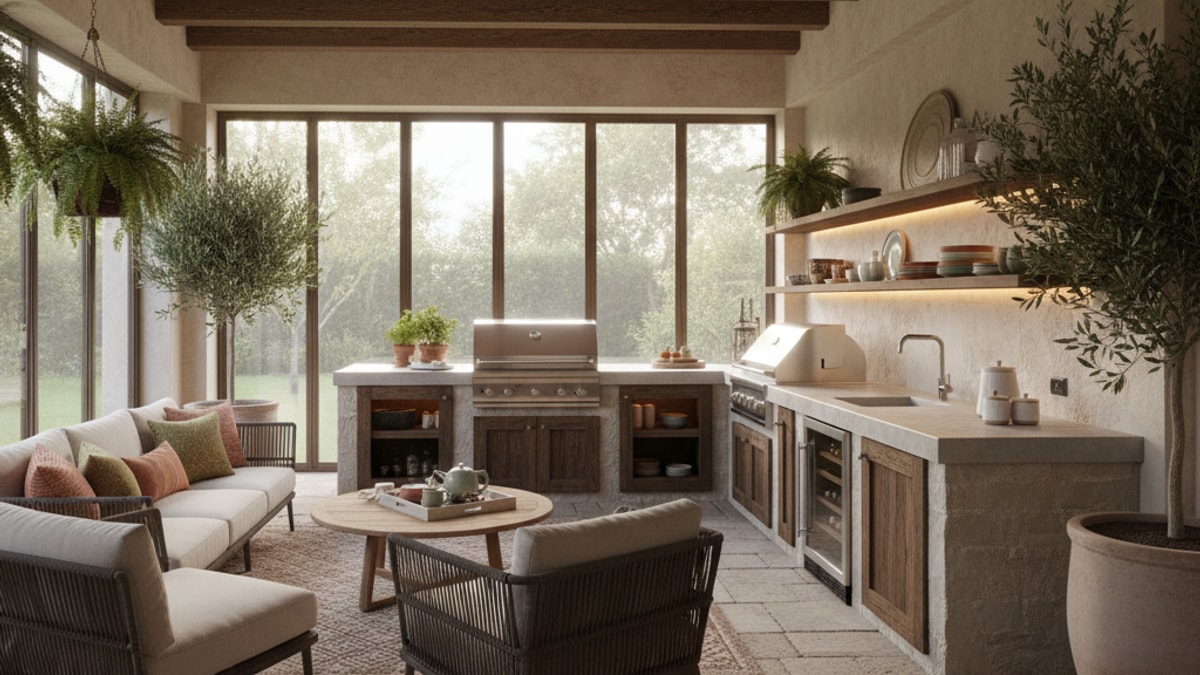
There’s a significant, sometimes dramatic shift that happens when you decide to extend your living space beyond your four walls. It’s more than just adding a grill on a concrete slab. It’s about creating an experience, a destination right in your own backyard. The idea of an outdoor kitchen taps into something fundamental: gathering, sharing food, and enjoying the open air. But figuring out how to build an outdoor patio kitchen can feel like a formidable task. Where do you even begin?
Our team has spent years transforming bare patios into sprawling culinary hubs, and we’ve seen it all. We've learned that the most successful projects aren't just about the flashiest appliances or the most expensive stone. They’re built on a foundation of smart, intentional planning. This isn't just about construction; it's about crafting a space that seamlessly fits your lifestyle. So, let’s walk through the process together, from the spark of an idea to the first meal you share in your new favorite room.
It Starts with a Vision, Not Just a Grill
Before a single shovel hits the dirt, the most critical work happens with a pen and paper—or, in our case, with a detailed design consultation. You have to ask the big questions. How do you envision using this space? Is this a spot for intimate family dinners, or are you planning to host the entire neighborhood for weekend barbecues? The answer dramatically changes the scale and features you'll need. Honestly, this is the step people rush through, and it’s almost always a mistake.
Think about flow. We call it the 'work triangle' in indoor kitchens (the path between the sink, stove, and fridge), and a similar logic applies outdoors. You need a prep area, a cooking zone, and a cleaning station. How do they relate to each other? Where will guests congregate? You don't want them hovering over a hot grill, but you also want the space to feel connected and social. This is where a professional Landscape Design becomes a critical, non-negotiable element for a truly functional space. It’s the difference between a collection of appliances and a genuine kitchen.
We always ask our clients to imagine a typical Saturday. Are you carrying platters of food from the indoor kitchen? If so, the outdoor kitchen needs to be conveniently located. Are you mixing drinks? Then a sink and dedicated counter space near the seating area is essential. It’s these small, nuanced details that elevate a project from good to impeccable. Don't just think about the grill. Think about the entire experience.
Location, Location, Layout: The Foundation of Your Kitchen
Once you have a vision, it's time to get practical. The placement of your outdoor kitchen is dictated by a handful of unglamorous but incredibly important factors. We can't stress this enough: get this part wrong, and you’ll be fighting against your own design forever.
First, consider proximity to the house. A kitchen located just outside a back door makes it easy to ferry supplies back and forth. A standalone structure deeper in the yard can create a wonderful destination feel, but be prepared for the logistical challenge of running longer utility lines. There's no right answer, only the right answer for you.
Next up: the elements. Pay close attention to prevailing winds. You don’t want smoke from the grill constantly blowing back into the house or directly into your primary seating area. It’s a rookie mistake we see all too often. Similarly, think about sun exposure. An afternoon of grilling under the unflinching sun can be brutal. Planning for some kind of shade, whether from a tree or a structure, is key. This is where thoughtful integration of Patio Covers Pergolas can be a game-changer, providing both comfort and architectural style.
Finally, think about your neighbors. A noisy, smoky kitchen right on the property line might not be the best way to maintain neighborhood harmony. The layout should respect your space and the space of those around you. It's just smart planning.
Utilities: The Unseen (But Absolutely Critical) Backbone
This is where a DIY dream can quickly turn into a catastrophic failure. Running utilities—gas, water, and electricity—is complex, requires permits, and absolutely demands professional expertise. Let’s be honest, this is not the place to cut corners.
- Gas: You have two main choices: a natural gas line run from your home’s main supply or standalone propane tanks. Natural gas is incredibly convenient—no more last-minute runs to the store for a new tank mid-party. However, it requires a licensed plumber to run the line, a significant investment upfront. Propane offers flexibility, especially for smaller kitchens or more remote locations, but requires you to monitor fuel levels and swap tanks.
- Electrical: Your outdoor kitchen will likely need more power than you think. A refrigerator, rotisserie motor, outlets for blenders or phone chargers, and—crucially—lighting all require dedicated circuits. All wiring, outlets, and fixtures must be GFCI (Ground Fault Circuit Interrupter) protected and rated for outdoor use to prevent electrical shock. This is a serious safety issue.
- Plumbing: A sink with running water transforms your outdoor kitchen from a simple grilling station into a fully functional workspace. You’ll need lines for both hot and cold water, as well as a drainage line that connects to your home's main sewer or a dedicated dry well, depending on local codes. Proper winterization of these pipes is also essential in climates with freezing temperatures to prevent bursting.
Our experience shows that planning the utility runs early in the design phase saves a tremendous amount of time, money, and headaches. Tearing up a newly laid patio because an electrical conduit was forgotten is a painful and expensive lesson.
Choosing Your Structure: Frame and Finish
The island or structure that houses your appliances is the body of your kitchen. It needs to be tough, weather-resistant, and aesthetically pleasing. The primary options boil down to a few key construction methods.
Wood frames are a popular DIY choice due to their low cost and ease of construction. However, we rarely recommend them. Even pressure-treated wood is combustible and susceptible to rot and insect damage over time. It's a short-term solution that often leads to long-term problems, especially when housing a high-heat grill.
Steel stud framing is a significant step up. It's lightweight, non-combustible, and resistant to moisture and pests. The frame is typically sheathed in cement board, which creates a stable and durable substrate for your choice of finish material, like stone veneer, stucco, or tile. This is a professional-grade method that our team frequently uses for custom Outdoor Kitchens.
Masonry construction using concrete blocks is the most robust and permanent option. It's completely fireproof, incredibly durable, and offers a substantial, built-in look. While the labor is more intensive, a block structure will last a lifetime. This type of solid construction can also be beautifully integrated with other hardscape elements like Seat Retaining Walls to create a truly unified outdoor living area.
Countertops and Surfaces: Where Durability Meets Design
Your countertops are the primary work surface of your outdoor kitchen. They take a relentless beating from UV rays, rain, food spills, and hot pans. Material choice is critical.
Indoor materials like laminate or certain types of engineered quartz are not suitable for outdoor use; they will fade, warp, and delaminate. You need a material designed to withstand the elements. Granite has long been a popular choice for its durability and natural beauty, though darker colors can get extremely hot in direct sun. Poured Concrete countertops offer a modern, industrial aesthetic and can be customized with various colors and finishes, but they require sealing to prevent staining.
In recent years, our team has seen a huge surge in the popularity of porcelain and sintered stone slabs. These materials are virtually non-porous, meaning they won't stain, and they are completely UV stable, so their color will never fade. They are also highly resistant to scratching and heat. They represent a higher initial investment but offer unparalleled performance and low maintenance. Here’s a quick breakdown of the most common options:
| Material |
Pros |
Cons |
Maintenance Level |
| Granite |
Highly durable, heat resistant, wide variety of natural patterns |
Porous and requires sealing, dark colors absorb heat |
Medium |
| Poured Concrete |
Customizable color/shape, modern aesthetic, very durable |
Can crack if not properly installed, needs regular sealing |
Medium to High |
| Quartzite |
Natural stone, harder than granite, stunning appearance |
Can be expensive, some varieties can be porous |
Low to Medium |
| Porcelain/Sintered Stone |
Non-porous (stain-proof), UV stable (no fading), scratch/heat resistant |
Higher initial cost, requires specialized fabricators |
Very Low |
Choosing the right surface is a balance of budget, aesthetics, and how much maintenance you're willing to do. We've found that clients who prioritize ease of use and longevity are happiest with materials like porcelain in the long run.
The Fun Part: Selecting Your Appliances
Now we get to the heart of the kitchen. The quality and type of your appliances will define your cooking experience. This is where you can truly customize the space to your culinary style.
The Grill: This is your centerpiece. A high-quality, built-in grill made from 304-grade stainless steel is the industry standard for longevity and rust resistance. Consider the fuel type—natural gas, propane, or even charcoal for the purists. Features like infrared searing burners, rotisserie kits, and internal lighting can elevate your grilling game from a simple hobby to a gourmet passion.
Refrigeration: You cannot use an indoor mini-fridge outside. It won't be able to handle the ambient temperature swings and will fail quickly. You need an outdoor-rated refrigerator, which is designed with better insulation and more powerful compressors to keep your food and drinks safely chilled, even on the hottest days.
Sinks & Storage: An outdoor sink is a luxury you won't know how you lived without. It's perfect for washing hands, rinsing vegetables, or quick cleanups. Paired with a set of stainless steel access doors and sealed storage drawers, it keeps all your tools, spices, and cleaning supplies organized and protected from the elements.
Specialty Appliances: This is where you can let your imagination run wild. Want to make authentic Neapolitan pizza in 90 seconds? A high-heat pizza oven is a spectacular addition. Do you love hosting large parties? A dedicated side burner is perfect for simmering sauces or boiling corn, while a warming drawer keeps finished food at the perfect temperature. The possibilities are endless, from smokers and griddles to outdoor-rated icemakers.
Let There Be Light (And Shade)
An outdoor kitchen is often used most in the evening, making lighting an absolutely essential component. A well-designed lighting plan is about more than just visibility; it’s about safety and ambiance. You need bright, focused task lighting directly over the grill and prep areas so you can see what you’re doing. This isn’t just for convenience; it’s a safety measure.
Beyond that, layered ambient lighting creates a warm, inviting atmosphere. We often use low-voltage Landscape Lighting to illuminate walkways, highlight architectural features of the kitchen, and cast a soft glow over seating areas. It makes the space feel like a true outdoor room. Simple, right? But it makes a world of difference.
The Surrounding Space: Creating a Cohesive Oasis
Your outdoor kitchen shouldn’t feel like an island. It needs to be thoughtfully integrated into the rest of your backyard. The flooring material, for example, should be durable, non-slip, and easy to clean. High-quality Pavers are an excellent choice, offering both beauty and functionality.
Consider how the kitchen relates to other backyard features. Does it flow naturally to a dining area? Is there comfortable seating nearby for guests? Placing a cozy fire pit a safe distance away can create a secondary gathering spot for after-dinner conversation. Many of our clients love integrating our custom Fire Features to extend the usability of their yard into cooler evenings. You might even want to frame the space with a patch of lush, green Artificial Turf for a soft, low-maintenance contrast to all the hardscaping.
Budgeting for Your Build: A Realistic Look
So, what does all of this cost? The truth is, the range is enormous. A simple, prefabricated island with a mid-range grill might cost a few thousand dollars. A large, custom-built masonry kitchen with high-end appliances, granite countertops, and extensive utility work can easily run into the tens of thousands. It's a significant investment.
The biggest variables are appliances, finish materials, and labor. Going the DIY route can save on labor, but it comes with a steep learning curve and the risk of costly mistakes, especially with utilities. When you partner with a design-build firm like Modern Yardz, you're not just paying for labor; you're investing in expertise, project management, and the peace of mind that comes from knowing the job is done right, to code, and built to last. If you're ready to get a clear picture of the investment for your specific vision, the best first step is to BOOK MY FREE CONSULTATION with our design team.
Building an outdoor patio kitchen is a journey. It requires careful thought, detailed planning, and a clear understanding of both your desires and your constraints. But the result is so much more than a place to cook. It's a place to connect, to celebrate, and to create lasting memories with the people you care about most. It truly extends the way you live in your home.



.webp)
.webp)