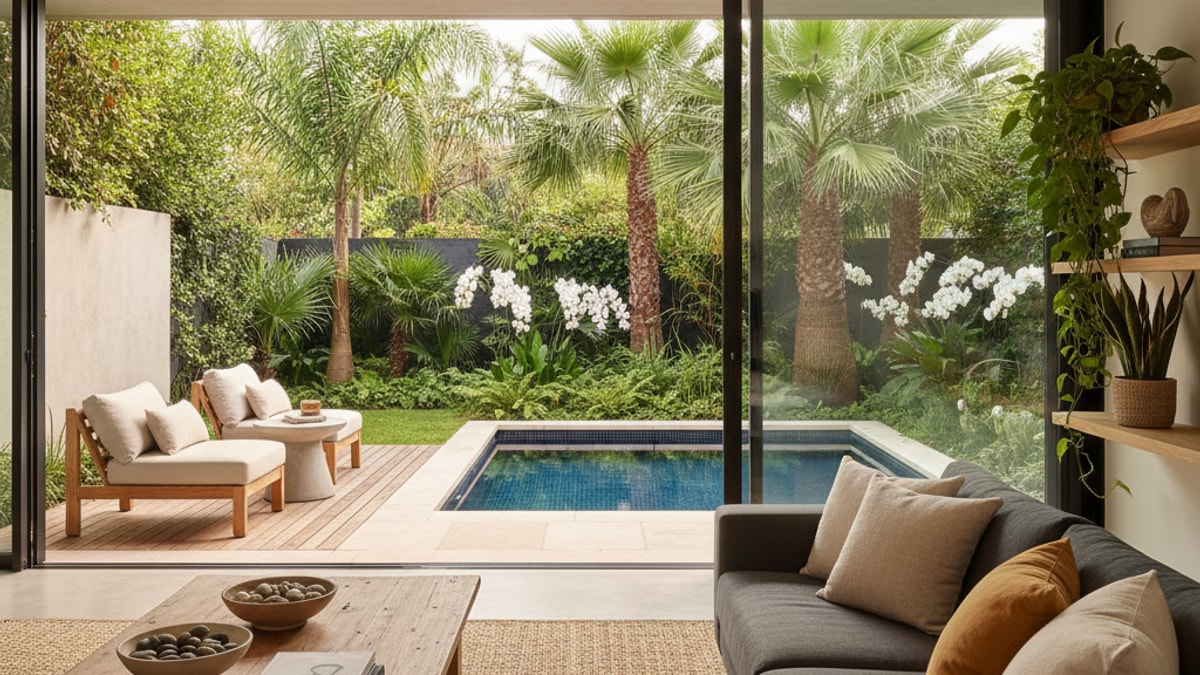
The idea of a backyard pool is a classic dream. But let's be honest, the reality of a massive, sprawling pool doesn't fit every yard or every lifestyle anymore. We're seeing a significant, sometimes dramatic shift in what homeowners want. They're looking for luxury, relaxation, and a place to cool off without sacrificing their entire outdoor space. This is where the plunge pool makes its grand entrance.
It's more than just a small pool. It’s a design statement. A plunge pool is a compact, deep body of water designed for lounging and cooling down rather than swimming laps. Think of it as a personal oasis, a jewel-box feature that elevates your entire backyard. Our team has designed and built countless outdoor living spaces, and we've seen firsthand how a well-integrated plunge pool can completely transform a property. It’s about creating an experience, not just installing a feature.
The Big Question: What's the Real Price Tag?
Alright, let's get right to it. You're here because you want to know how much to install a plunge pool. The straightforward, yet frustratingly vague answer is: it depends. We've seen projects range from as low as $20,000 for a very basic, DIY-assisted setup to well over $70,000 or even $100,000 for a fully custom, high-end installation with all the bells and whistles. That's a huge range, we know. But anyone who gives you a flat price without seeing your property and understanding your vision isn't giving you the full picture.
The final cost is a tapestry woven from dozens of different threads: materials, site accessibility, local regulations, and the features you choose. Our goal here isn't to give you a single magic number. It's to pull back the curtain on all the factors that contribute to the final cost so you can build a realistic budget and make informed decisions. We believe an educated client is the best partner, and that starts with unflinching honesty about the numbers.
Breaking Down the Core Installation Costs
These are the foundational expenses that every plunge pool project will include in some form. They represent the bulk of the budget and are the non-negotiable elements of getting a safe, functional pool in the ground. We can't stress this enough: trying to cut corners on these core components often leads to catastrophic failures and much higher costs down the road.
First, there's the pool shell itself. This is the structure that holds the water, and your choice of material has a massive impact on both the initial cost and long-term maintenance. Concrete (also called gunite or shotcrete) offers complete design freedom. You can make it any shape or size you want. It's incredibly durable but also the most expensive and time-consuming to install. Fiberglass pools are pre-molded shells delivered to your home. They're installed much faster and have a smooth, non-porous surface that resists algae, but you're limited to the manufacturer's available shapes and sizes. Vinyl liner pools are the most budget-friendly upfront, but the liner will need to be replaced every 7-10 years, creating a recurring long-term cost.
Next comes excavation. This is a formidable variable. A flat, easily accessible yard with soft soil is the dream scenario. But we often work with properties on hillsides, with rocky soil, or with tight access where large machinery can't fit. Digging into hard clay or rock requires specialized equipment and significantly more time, which drives up the price. Our team has to assess every site individually to plan for potential challenges like underground utilities or drainage issues. This is one of the biggest 'hidden' costs that can surprise homeowners. A proper site assessment is critical.
Then you have the professional labor and installation. This covers the crew who will dig the hole, set the pool, run the plumbing, and ensure everything is level and secure. It’s a complex orchestration of skills. Choosing an experienced, licensed, and insured builder is paramount. This isn't just about getting the pool in the ground; it's about the entire project's integrity. When you partner with a design-build firm like Modern Yardz, this cost is integrated into a holistic plan, ensuring the team handling your Landscape Design SAN Diego is in constant communication with the installation crew. This prevents the kind of costly miscommunications that can happen when you're juggling multiple contractors.
Finally, there's the essential plumbing and electrical work. Your pool needs a pump to circulate water, a filter to clean it, and skimmers to remove debris. This is the heart and lungs of your pool. You'll also need electrical work to power the pump, underwater lighting, and any potential heaters. This must be done by a licensed electrician to meet safety codes. The cost here depends on the quality of the equipment and the distance from your home's main electrical panel. Skimping on equipment quality is a classic mistake; a more efficient pump might cost more upfront but will save you hundreds of dollars a year in energy bills.
Materials at a Glance: Pool Shell Comparison
Choosing the right material is one of the first major decisions you'll make. Here’s a quick breakdown of the pros and cons our team frequently discusses with clients.
| Feature |
Concrete (Gunite) |
Fiberglass |
Vinyl Liner |
| Initial Cost |
High |
Medium-High |
Low |
| Installation Time |
Long (2-4 months) |
Fast (1-3 weeks) |
Medium (2-4 weeks) |
| Durability |
Very High (decades) |
High (25+ years) |
Low (liner replaced every 7-10 yrs) |
| Customization |
Unlimited |
Limited to Molds |
Highly Customizable Shape |
| Surface Feel |
Plaster (can be rough) |
Smooth Gelcoat |
Smooth Vinyl |
| Maintenance |
Higher (chemicals, potential resurfacing) |
Lower (non-porous surface) |
Medium (liner care) |
Beyond the Basics: Costs That Often Surprise Homeowners
This is where the budget can start to expand. The pool itself is one thing, but creating a functional and beautiful space around it involves several other significant costs that homeowners sometimes forget to factor in. Honestly, these are the elements that separate a simple water feature from a truly luxurious outdoor retreat.
Decking and coping are at the top of this list. Coping is the stone or concrete edge that caps the pool shell, and the decking is the patio area surrounding it. This is your pool's frame, and it's a huge part of the overall aesthetic and budget. The options are vast. You could go with elegant and timeless Pavers SAN Diego, which offer incredible design flexibility and are easy to repair. Or you might prefer the clean, modern lines of poured Concrete SAN Diego. Other options like wood decking or natural stone also exist, each with its own price point and maintenance requirements. The amount of decking you need will be a major cost driver; a small walkway is one thing, but a sprawling lounge area is another.
Safety fencing is another critical, non-negotiable cost. Most municipalities have strict regulations requiring a safety fence with a self-latching gate around any body of water. This is for safety and liability, and it's not a place to cut corners. The cost will depend on the length of the fence and the material you choose, from standard aluminum to high-end glass paneling. We always integrate fence planning into our initial designs to ensure it feels like a deliberate part of the landscape, not an afterthought.
And that brings us to the landscaping and finishing touches. A pool dropped into a dirt yard looks unfinished. The real magic happens when it's integrated into the surrounding environment. This can include planting new garden beds, laying down pristine Artificial Turf SAN Diego for a low-maintenance green space, or installing strategic Landscape Lighting SAN Diego to create ambiance for evening relaxation. These elements are what make the space feel complete and are a core part of our comprehensive design process.
Lastly, don't forget the administrative costs: permits and engineering fees. Before any work begins, you'll need approved plans from your local building authority. This often requires a survey of your property and sometimes engineering reports, especially for complex sites. The permitting process itself involves fees that can range from several hundred to a few thousand dollars. It’s a necessary bureaucratic step to ensure your pool is built safely and to code.
Custom Features That Drive Up the Price (And the Wow Factor)
Once the essentials are covered, you can start dreaming about the features that personalize your plunge pool and turn it into a true showpiece. This is where you can really tailor the experience to your lifestyle.
A heater is probably the most common upgrade. A standard plunge pool is unheated, which is fine for a quick cool-down on a hot day. But adding a gas or electric heat pump extends your swimming season dramatically, letting you enjoy the water on cooler evenings or during the spring and fall. For the ultimate in luxury, some clients even opt for a chiller to keep the water refreshingly cool during the most intense heat waves.
Water features add both sound and visual appeal. Imagine the gentle sound of a small waterfall cascading into your pool or the playful look of bubblers on a shallow Baja shelf. Built-in spa jets can also be added to a bench seating area, turning a section of your pool into a hydrotherapy zone. These features require additional plumbing and equipment, but their impact on the overall ambiance is profound.
High-end interior finishes can also elevate the look. While standard white plaster is common, you can upgrade to a pebble aggregate finish for more texture and a range of beautiful water colors. Custom mosaic tiling along the waterline or even across the entire pool surface can turn your plunge pool into a work of art. These are premium choices with a price tag to match, but the result is undeniably stunning.
And for the tech-savvy homeowner, automation is a game-changer. Modern pool systems can be controlled entirely from your smartphone. You can turn on the heater before you leave work, adjust the lighting, or activate the water features with the tap of a button. This convenience adds to the initial cost but simplifies pool ownership immensely.
So, How Can You Manage Your Plunge Pool Budget?
Seeing all these variables can feel overwhelming, but there are smart ways to approach your project to keep costs in check without sacrificing quality. It’s all about strategic planning.
One effective strategy our team often recommends is phasing the project. The critical part is getting the pool structure and essential equipment installed correctly. Maybe in Phase One, you focus on the pool, basic coping, and required safety fencing. Then, in a year or two, you can execute Phase Two: expanding the patio, building out one of our custom Outdoor Kitchens SAN Diego, or adding a beautiful Patio Covers Pergolas SAN Diego. This approach allows you to spread the investment over time while enjoying the core feature from day one.
Choosing your materials wisely is another key. As we discussed, a vinyl liner pool is less expensive upfront than a concrete one. However, you have to budget for the liner replacement down the line. A fiberglass pool might have a higher initial cost than vinyl, but its lower chemical usage and lack of liner replacement can save you money in the long run. We help clients weigh these short-term and long-term financial implications.
Finally, the single best way to manage your budget and ensure a smooth process is to work with an integrated design-build firm. When one team is responsible for everything from the initial Premium Design Package to the final installation, the process is streamlined. There are no communication gaps between a separate designer, excavator, pool installer, and landscaper. We manage the entire project, providing a single point of contact and a clear, comprehensive budget from the start. This prevents the costly surprises and delays that can arise when you're acting as your own general contractor. It’s about efficiency, accountability, and peace of mind.
Ultimately, a plunge pool is an investment in your home and your quality of life. It’s about creating a personal sanctuary where you can unwind, entertain, and make memories. Understanding the costs involved is the first step toward making that vision a reality. When you're ready to explore what's possible for your own backyard, our team is here to help you navigate the process. You can BOOK MY FREE CONSULTATION and we can begin the exciting journey of designing your perfect outdoor space together.



.webp)
.webp)