Slope Solutions: Landscaping Without Retaining Walls
That formidable, sloping part of your yard—the one you might look at with a mix of frustration and bewilderment—doesn't have to be a source of stress.
That formidable, sloping part of your yard—the one you might look at with a mix of frustration and bewilderment—doesn't have to be a source of stress. So many homeowners see a steep grade and immediately think their only option is a massive, expensive retaining wall. We're here to tell you that's simply not the case in 2026. There's a whole world of sophisticated, beautiful, and natural solutions out there. The real question is how to landscape a steep slope without retaining walls in a way that’s both structurally sound and aesthetically breathtaking.
Our team at Modern Yardz has spent years transforming challenging hillsides into the most celebrated features of a home's landscape. It’s about working with the land, not fighting it. It’s about understanding the nuances of soil, water, and plant life to create a self-sustaining ecosystem that’s as resilient as it is beautiful. This isn't just about avoiding a big construction project; it's about unlocking the true potential of your entire property. Let's dig into the strategies that make it happen.
Why Skip the Retaining Wall in the First Place?
Let's be honest, retaining walls have their place. For severe slopes or specific architectural needs, they are sometimes unavoidable. Our own Seat Retaining Walls service is a testament to how functional they can be when integrated properly. But for many situations, they are an expensive, and often unnecessary, default. The conversation around how to landscape a steep slope without retaining walls has gained significant traction for a few key reasons.
First, cost. The excavation, materials, drainage systems, and labor required for a properly engineered retaining wall can be astronomical. It's a significant investment that can eat up a huge chunk of a landscaping budget. Second, aesthetics. A large, monolithic wall can feel imposing and artificial, disrupting the natural flow of a landscape. It can create a harsh line between different parts of your yard. We've found that a more organic approach often leads to a more cohesive and inviting outdoor space. Finally, there's the environmental impact. Moving large amounts of earth and using tons of concrete or block has a bigger footprint than working with natural contours and vegetation. For these reasons, exploring how to landscape a steep slope without retaining walls is not just a budget-friendly choice—it's often a better design choice.
Start with a Deep Understanding of Your Slope
You can't win a battle without knowing the battlefield. Before a single plant goes into the ground, a thorough assessment of your slope is the critical, non-negotiable first step. This is where professional expertise really shines. You need to understand the 'why' behind your slope's behavior. A comprehensive Landscape Design SAN Diego plan begins with this exact analysis.
What are we looking for? Several things.
- Soil Composition: Is it heavy clay, loose sand, or rich loam? Clay soils hold more water but can become unstable when saturated. Sandy soils drain quickly but offer poor root structure, leading to erosion. Understanding this dictates your plant choices and soil amendment strategy. It's a foundational piece of the puzzle for how to landscape a steep slope without retaining walls.
- Sun Exposure and Aspect: Which way does the slope face? A south-facing slope will be hot and dry, demanding drought-tolerant plants. A north-facing slope will be cooler and moister, supporting a completely different ecosystem. You can't just pick pretty plants; you have to pick the right plants for the microclimate.
- Water Runoff Patterns: Where does the water go when it rains? And it will rain. Observing runoff patterns is essential for preventing catastrophic erosion. You need to know if water sheets off the top, creating rills and gullies, or if it soaks in. This information is vital for planning drainage solutions like swales or French drains, which are often central to any plan for how to landscape a steep slope without retaining walls.
Ignoring these factors is a recipe for failure. We’ve seen DIY projects turn into mudslides because the homeowner didn't account for soil type or water flow. A little bit of science upfront saves a world of heartache later.
The Green Solution: Bioengineering with Plants
This is the heart and soul of the wall-free approach. Using plants to stabilize soil is a technique as old as nature itself. It’s called bioengineering, and it's incredibly effective. The right plants create a dense, interlocking root system that acts like a living net, holding the soil in place. This is the most elegant and sustainable method for how to landscape a steep slope without retaining walls.
But not just any plant will do. You need specific types with particular characteristics.
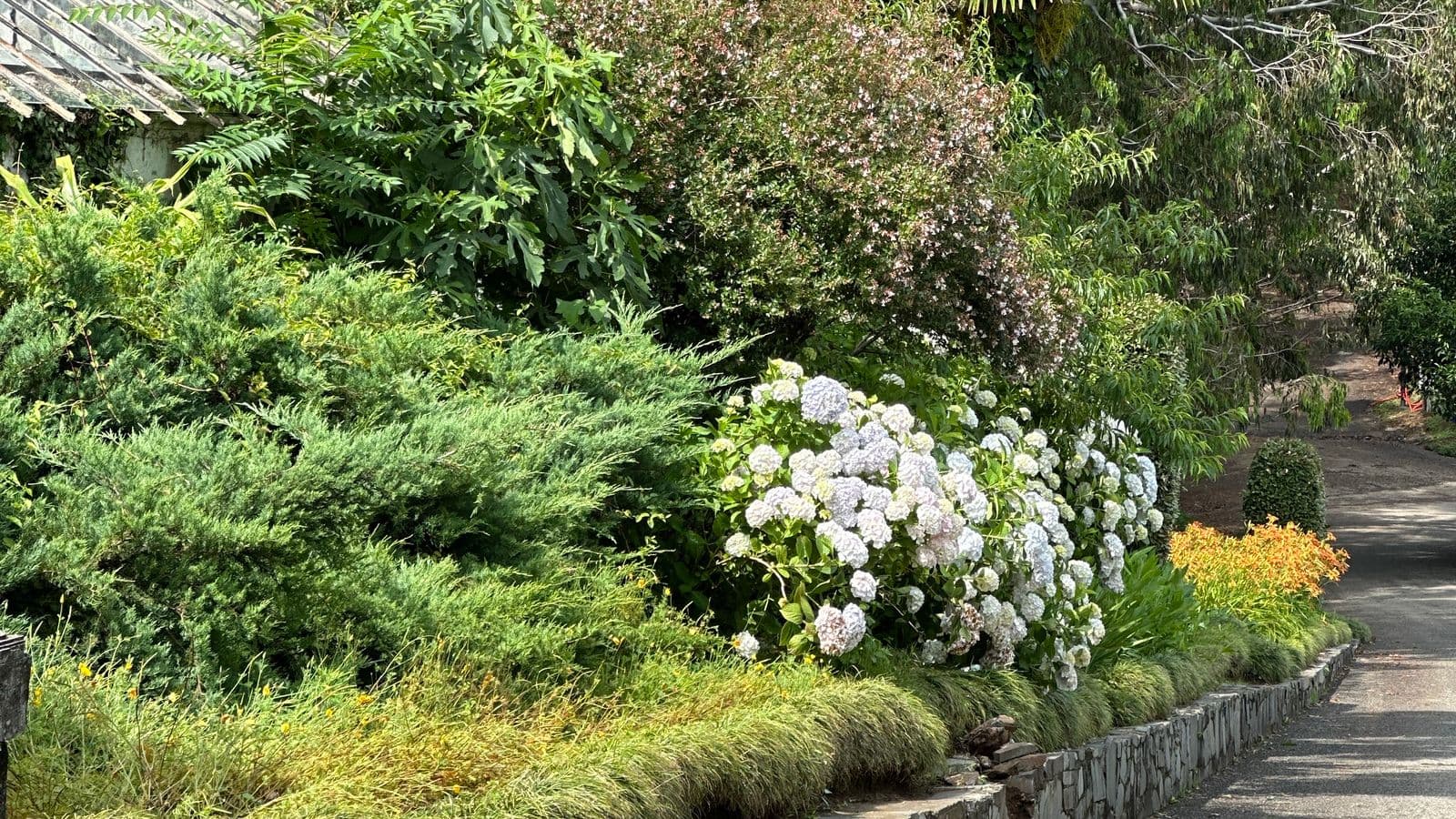
- Deep-Rooted Groundcovers: Forget shallow-rooted turfgrass like Kentucky Bluegrass on a steep slope; it'll just slide off. You need tenacious groundcovers with deep, fibrous roots. Think plants like Creeping Thyme, certain varieties of Juniper, Cotoneaster, or Vinca Minor. These plants spread aggressively, cover the soil to prevent surface erosion from rain, and lock everything together beneath the surface.
- Native Grasses and Perennials: We can't stress this enough: go native. Native plants are adapted to your local climate and soil conditions. They typically have incredibly deep root systems—some prairie grasses have roots that go down 10-15 feet!—and require far less maintenance once established. They are the workhorses in the strategy of how to landscape a steep slope without retaining walls.
- Shrubs and Small Trees: Larger plants act as powerful anchors. Their substantial root structures hold large sections of soil, while their canopies help to soften the impact of heavy rain before it even hits the ground. Sumacs, Dogwoods, and various ornamental grasses can create a beautiful, multi-layered tapestry of foliage that's also working hard to keep your hillside right where it belongs.
We've found that a diverse mix of plant types is always the best approach. A polyculture of trees, shrubs, perennials, and groundcovers creates a resilient, interlocking web of roots at different depths. This is how nature does it, and it's the most effective way for how to landscape a steep slope without retaining walls.
Reshaping the Land: Terracing and Grading
Sometimes, planting alone isn't enough, especially on steeper grades. This is where terracing comes in. Now, when we say terracing, don't immediately picture massive retaining walls. Think of it more like creating a series of wide, level steps down the slope. Each 'step' or terrace creates a flat, usable area and dramatically slows down water runoff. It's a formidable technique for how to landscape a steep slope without retaining walls.
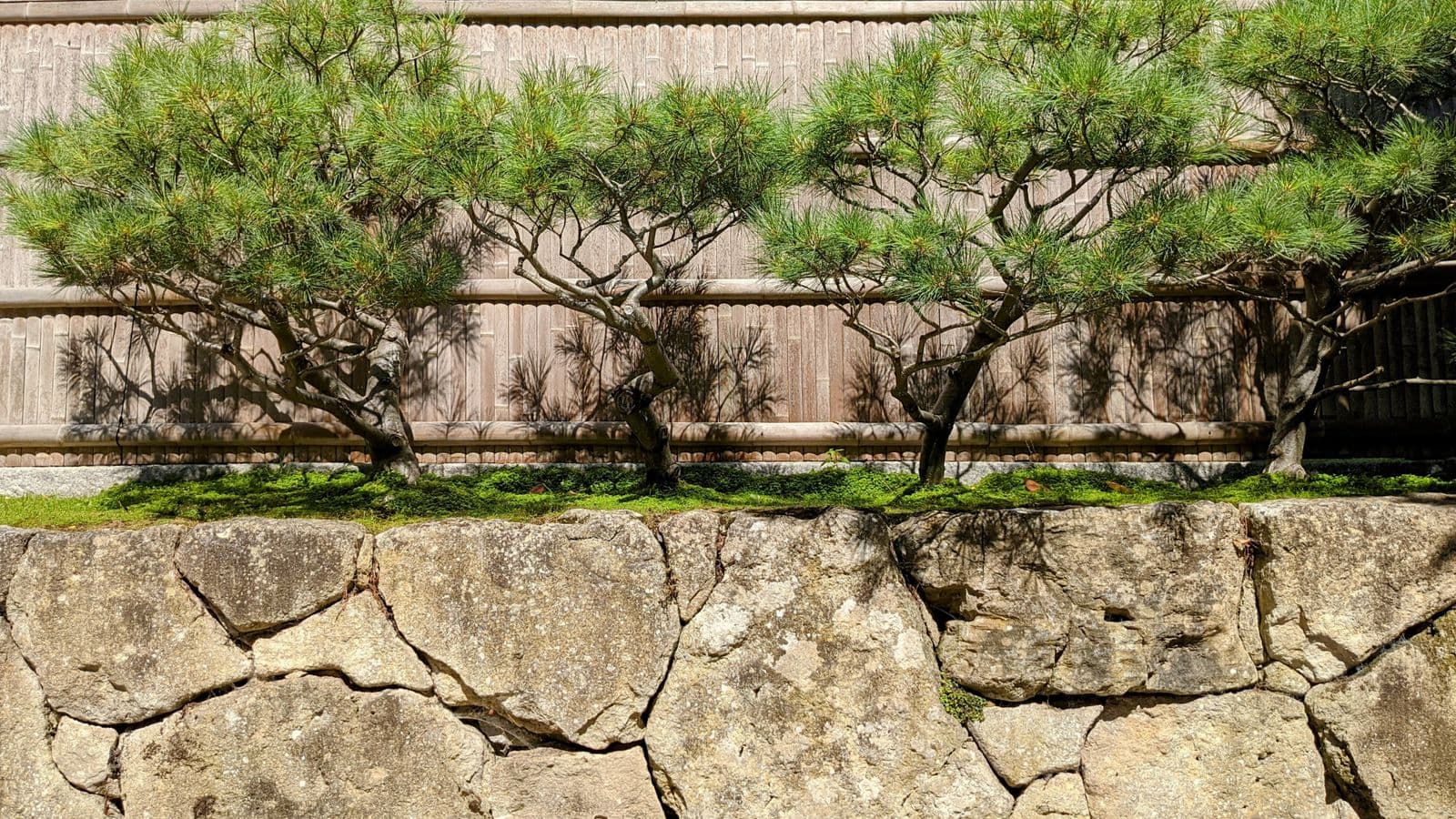
Each terrace can be planted, turning the slope into a series of mini garden beds. The edge of each terrace needs to be stabilized, but this can often be done with more natural materials. Instead of a concrete wall, you might use stacked flagstone, natural boulders, or even compacted earth reinforced with plants. This approach feels much more integrated into the landscape. These terraced levels open up a world of possibilities. Suddenly, you have a spot for a bench, a small garden, or even a quaint patio. Imagine a series of beautiful steps crafted with our expert Pavers SAN Diego team, leading down to a cozy lower patio. Terraces can also be built with more modern materials; a sleek series of level pads made with high-quality Concrete SAN Diego can create a stunning contemporary look.
This is a job that requires precision and a deep understanding of soil mechanics. Improper grading can actually worsen erosion problems. It's not just about digging; it's about carefully calculating angles and ensuring proper compaction. That's why for a project of this scale, professional execution is paramount. Ready to Upgrade Your Backyard? This could be the way.
| Slope Solution | Primary Mechanism | Cost | Aesthetic Appeal | Maintenance |
|---|---|---|---|---|
| Deep-Rooted Planting | Bioengineering; roots bind soil together | Low to Mod | Natural, soft, organic | Low (once est.) |
| Natural Terracing | Creates level steps to slow water & create space | Mod to High | Structured yet can be naturalistic | Moderate |
| Erosion Control Mats | Provides temporary cover for seed germination | Low | Utilitarian (hidden once plants grow) | Very Low |
| Swales & Rain Gardens | Manages water flow by directing and absorbing it | Low to Mod | Can be a beautiful, functional feature | Low to Moderate |
Underpinnings: Erosion Control Fabrics
For a truly robust solution, especially during the initial phase while plants are getting established, we often use erosion control blankets or geotextiles. Think of these as a safety net for your slope. These are biodegradable blankets, often made of jute, coir (coconut fiber), or straw, that are rolled out and staked onto the prepared hillside before planting. The process is a key part of how to landscape a steep slope without retaining walls effectively.
They serve a few brilliant purposes. First, they hold the soil and seeds in place, preventing them from washing away in the first heavy rain. Second, they help retain moisture, which aids in seed germination and gives young plants a better start. Third, as they slowly decompose over a year or two, they add valuable organic matter back into the soil. By the time the blanket has disappeared, the plant root systems have grown strong enough to take over the job of soil stabilization permanently. It's a fantastic, temporary support system that ensures long-term success, and it’s an indispensable tool in our playbook for how to landscape a steep slope without retaining walls.
It’s All About Water Management
We mentioned it before, but it bears repeating: you cannot win against water. You can only guide it. Uncontrolled water flow is the number one enemy of any sloped landscape. Therefore, a smart water management plan is a non-negotiable part of how to landscape a steep slope without retaining walls. This is where you can get really creative.
One of our favorite techniques is the swale. A swale is essentially a shallow ditch or channel built along the contour of the land. Instead of letting water rush straight down the hill, the swale catches it and allows it to spread out and slowly sink into the ground, hydrating the plants along its length. It’s a simple, ancient, and incredibly effective permaculture technique.
A series of swales down a slope can completely transform its hydrology, turning a runoff problem into a hydration solution. You can even direct the overflow from a swale into a rain garden—a specially designed depression filled with water-loving native plants that can handle being inundated during a storm and will look beautiful when dry. It's a smart, eco-friendly approach that turns a problem into a feature. This holistic view is the secret to how to landscape a steep slope without retaining walls for the long haul.
Creating Destinations and Usable Spaces
So, you’ve stabilized the slope. Now what? The ultimate goal isn't just to stop erosion; it's to create a landscape you can use and enjoy. A stabilized slope is a blank canvas. This is the fun part. This is where you Transform Your Outdoor Space Into Something Extraordinary.
Terraces, as we discussed, are perfect for creating destinations. A small, level terrace can become the perfect spot for a pair of Adirondack chairs. A larger one can house one of our custom Fire Features, creating an irresistible gathering spot for cool evenings. Imagine winding pathways, perhaps made of natural stone or mulch, that meander down the slope, connecting different zones and inviting exploration. These paths aren't just for access; they also help to slow water flow.
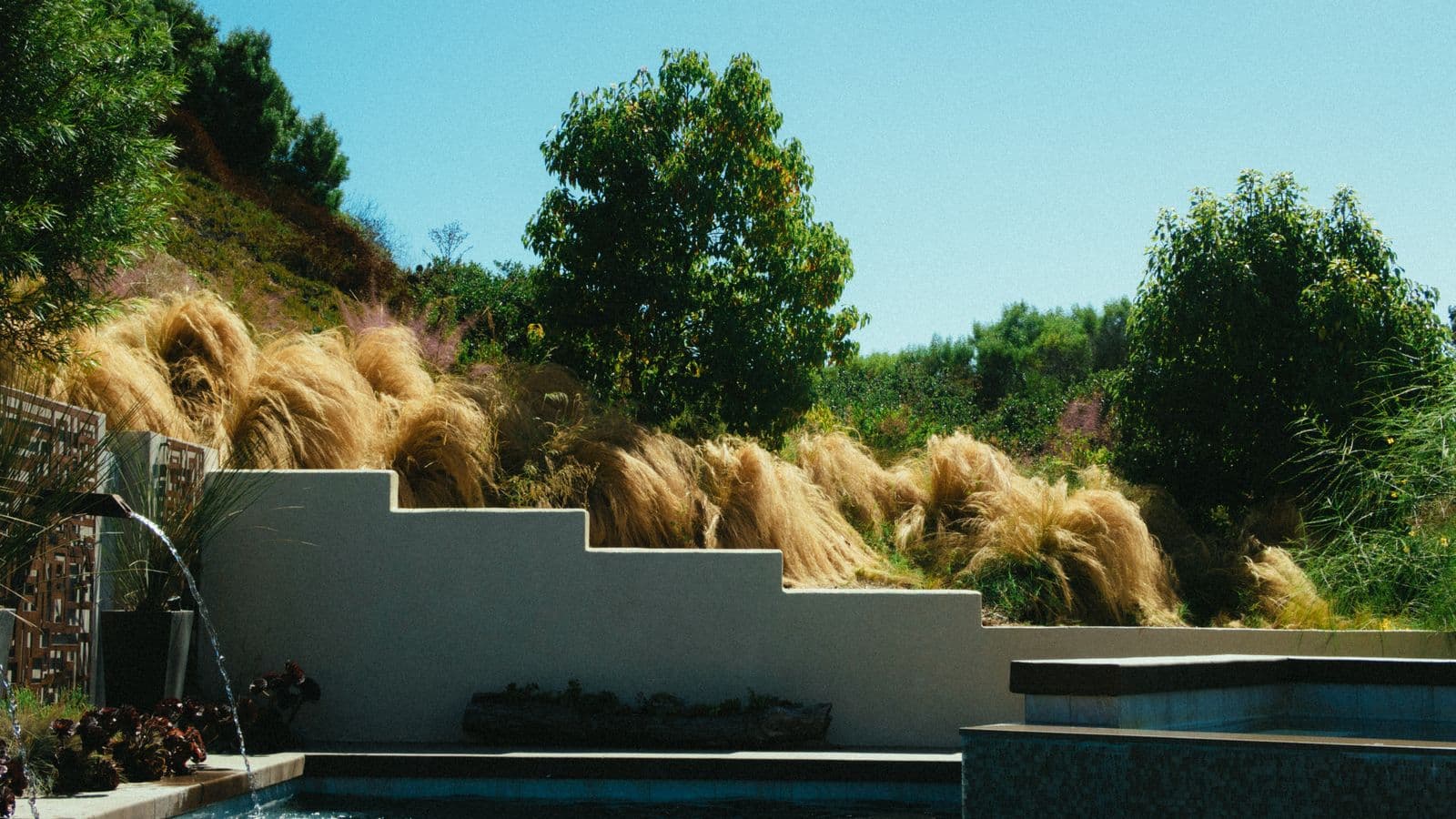
We've also seen incredible success using high-quality Artificial Turf SAN Diego on terraced sections. It provides a lush, green, and perfectly level area for recreation without the maintenance or water requirements of a traditional lawn—something that’s nearly impossible to maintain on a slope. You could even incorporate a stunning centerpiece, like one of our luxurious Pools AND Spas at the base of the slope, with the hillside providing a gorgeous, natural backdrop. The possibilities are truly endless once you understand how to landscape a steep slope without retaining walls.
Your slope is not a liability. With the right design and expert execution, it can become the most dynamic and interesting part of your entire property. It requires a thoughtful, integrated approach that considers soil, water, plants, and your own lifestyle. It’s a complex challenge, to be sure, but the results—a beautiful, stable, and functional landscape that feels like it truly belongs—are more than worth the effort. Let’s Design the Outdoor Space You’ve Been Dreaming Of.
Start Your Free Design Consultation
Tell us about your project and we'll be in touch within 24 hours. No pressure, no obligation.
Common questions
- Do I need a retaining wall to landscape a steep slope?
- No. For many slopes a retaining wall is an expensive, often unnecessary default. Three reasons to skip it: cost (excavation, materials, drainage, and labor add up fast), aesthetics (a monolithic wall can feel imposing and artificial), and a smaller environmental footprint from working with natural contours instead of pouring concrete.
- What plants stabilize a steep slope best?
- Deep-rooted, spreading plants work best. Use tenacious groundcovers like Creeping Thyme, Juniper, Cotoneaster, or Vinca Minor; native grasses and perennials; and anchoring shrubs and small trees such as Sumacs and Dogwoods. Avoid shallow-rooted turfgrass like Kentucky Bluegrass, which just slides off. A diverse polyculture creates the most resilient root web.
- How deep do slope-stabilizing plant roots grow?
- They can go remarkably deep. Some prairie grasses have roots reaching 10 to 15 feet down. That deep, fibrous structure acts like a living net, binding soil far below the surface. Native grasses and perennials develop these deep systems and need far less maintenance once established, making them slope workhorses.
- How long do erosion control blankets last?
- They break down over a year or two. These biodegradable blankets, made of jute, coir (coconut fiber), or straw, are staked over the slope before planting to hold soil and seeds, retain moisture for germination, and add organic matter as they decompose. By then, plant roots have taken over stabilizing the soil.
- Is deep-rooted planting or terracing better for my slope?
- It depends on steepness. Deep-rooted planting is the low-to-moderate-cost, low-maintenance, and most natural option. Terracing, which creates wide level steps, costs moderate to high and suits steeper grades where planting alone is not enough. It also carves out usable flat spaces for a bench, patio, or garden.
Ready to design your dream yard?
Tell us about your project. We'll send back a real plan, not a templated quote.
Book My Free Consultation→