Every property has its unique challenges, doesn't it? Whether you're dealing with a sloping yard, uneven terrain, or simply dreaming of a more structured outdoor living area, you've likely encountered the term 'retaining wall.' But for many homeowners, the fundamental question remains: what does a retaining wall do, truly? It's more than just a stack of blocks; these structures are unsung heroes of landscape design and stability, orchestrating a significant, sometimes dramatic shift in how we interact with our land.
Here at Modern Yardz, we've spent years transforming outdoor spaces, and our team knows firsthand the pivotal role these robust features play. We're not just building walls; we're crafting solutions that enhance safety, expand usability, and elevate aesthetics. So, let's unpack this critical component of modern landscaping, focusing squarely on what does a retaining wall do for your property, your safety, and your design aspirations in 2026 and beyond.
The Bedrock of Stability: Holding Back the Earth
At its most basic, and perhaps most critical, what does a retaining wall do? It holds back soil. Simple, right? But the implications of this seemingly straightforward task are profound. Imagine a hillside property; without proper support, that soil is constantly battling gravity. Over time, erosion, heavy rains, and even minor seismic activity can cause that earth to shift, slide, or collapse. A well-engineered retaining wall acts as a formidable barrier, preventing this relentless natural movement. It's a non-negotiable element for anyone with sloped land, offering peace of mind and protecting your property's integrity. Our experience shows that ignoring this foundational need can lead to catastrophic consequences, from damaged foundations to unsafe outdoor areas. It’s a literal bulwark against the forces of nature, ensuring your land stays precisely where it should. So, in essence, what does a retaining wall do? It safeguards your investment by providing unwavering structural support.
Reclaiming Terrain: Creating Usable, Level Spaces
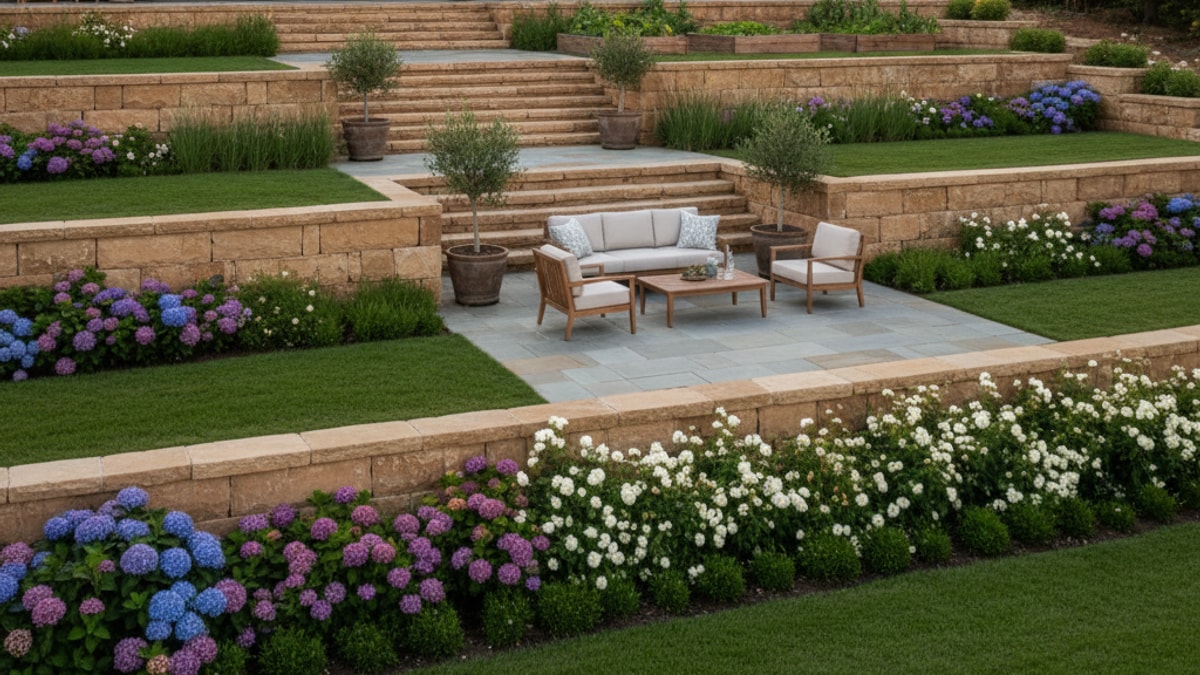
Beyond just preventing disaster, what does a retaining wall do for creating functional outdoor areas? This is where the magic truly happens, particularly on properties with challenging topography. Many yards are blessed, or cursed, with uneven grades, making it difficult to install a patio, a Pools AND Spas, or even a flat lawn for the kids to play on. A retaining wall allows us to cut into a slope or build up a low area, creating perfectly level, terraced sections. Think about it: a previously unusable incline can become a series of charming garden beds, a spacious Outdoor Kitchens SAN Diego area, or even a tiered seating arrangement with a Fire Features. This transformation is often astounding. We've seen clients go from having a perpetually soggy, sloped backyard to a multi-functional oasis, all thanks to strategic retaining wall construction. It's truly about unlocking the full potential of your outdoor environment, making every square foot count. We can't stress enough how profoundly what does a retaining wall do for property value and lifestyle when implemented thoughtfully.
Erosion Control and Drainage Management: A Dual Defense
When heavy rains hit, especially during our wetter seasons, the question of what does a retaining wall do for water management becomes incredibly relevant. Beyond just holding soil, these structures are instrumental in controlling erosion and guiding drainage. Sloped land is highly susceptible to rainwater runoff, which can strip away topsoil, undermine plant health, and even channel water towards your home's foundation. A properly designed retaining wall system incorporates integrated drainage solutions, like gravel backfills and weep holes, to prevent water from building up behind the wall. This allows excess moisture to escape in a controlled manner, preventing hydrostatic pressure from compromising the wall's stability and mitigating the damaging effects of uncontrolled runoff. It's a sophisticated dance between engineering and nature, protecting both your landscape and your home. Our team routinely designs systems that ensure optimal water flow, protecting your investment for years to come. So, in terms of long-term property health, what does a retaining wall do? It’s a vital component of a resilient drainage strategy.
Aesthetic Enhancement: Elevating Your Landscape Design
Let's be honest, functionality is paramount, but curb appeal matters, too. So, what does a retaining wall do for the visual appeal of your outdoor space? The answer is, quite a lot. These structures offer a unique opportunity to introduce texture, color, and architectural interest into your landscape. Whether you opt for the classic elegance of natural stone, the clean lines of modern Concrete SAN Diego blocks, or the rustic charm of timber, retaining walls become a defining feature. They can delineate different zones within your yard, create raised garden beds that are easier to maintain, or provide built-in seating (often referred to as Seat Retaining Walls), adding both beauty and utility. Our team specializes in integrating these walls seamlessly into a broader Landscape Design SAN Diego, ensuring they complement existing features like Pavers SAN Diego or Artificial Turf SAN Diego. The right material and design can transform a utilitarian barrier into a stunning focal point. We've seen how a thoughtfully designed wall can elevate an entire property's aesthetic, making it truly extraordinary. It's a testament to how much what does a retaining wall do for overall design impact.
Types of Retaining Walls: Understanding Your Options
When considering what does a retaining wall do for specific situations, it's crucial to understand that not all walls are created equal. The type of wall you choose will depend on factors like soil conditions, height requirements, aesthetic preferences, and budget. Here's a brief overview of the common types we work with:
- Gravity Walls: These walls rely on their sheer mass and weight to resist the pressure from the soil behind them. They're often constructed from heavy materials like stone, concrete, or segmented concrete blocks. They're a classic choice, and for good reason. What does a retaining wall do when built as a gravity wall? It leverages the simple physics of weight distribution to achieve stability.
- Cantilever Walls: These are more complex, using a thin stem that cantilevers from a footing, forming an inverted 'T' shape. Reinforcing steel within the concrete stem and footing provides strength against the soil pressure. They're effective for taller walls and situations where space might be a bit more restricted. It's a more engineered solution, demonstrating what does a retaining wall do with modern construction techniques.
- Sheet Piling Walls: Often used in softer soils or where space is very limited, these walls consist of thin steel, vinyl, or wooden sheets driven directly into the ground. They derive stability from the depth they're embedded and are commonly seen in waterfront applications or temporary excavations. What does a retaining wall do in these unique environments? It provides a quick, effective barrier.
- Anchored Walls: For extremely tall or heavily loaded walls, anchors (steel cables or rods) are driven into the soil or rock behind the wall and then stressed, providing additional resistance. This method is typically reserved for large-scale civil engineering projects, showcasing the formidable extent of what does a retaining wall do in demanding scenarios.
Choosing the right type is a critical first step. Our team evaluates each site individually to recommend the most appropriate and effective solution, ensuring that what does a retaining wall do for your specific needs aligns perfectly with its design and construction.
Materials Matter: Crafting Your Wall
The material choice is another significant aspect of what does a retaining wall do for both function and aesthetics. We offer a range of options, each with its own benefits:
- Segmental Retaining Wall (SRW) Blocks: These pre-engineered concrete blocks are incredibly versatile, coming in various colors, textures, and sizes. They're popular for their interlocking design, which allows for relatively straightforward installation and flexibility in design. They're durable and can create a very clean, contemporary look. It's a staple for a reason, illustrating what does a retaining wall do for widespread applicability.
- Natural Stone: For timeless elegance and a rustic feel, natural stone is unparalleled. Whether it's stacked dry or mortared, stone walls offer incredible durability and integrate beautifully into natural landscapes. They require skilled craftsmanship, which our team prides itself on. Here, what does a retaining wall do is also about enhancing the inherent beauty of natural materials.
- Poured Concrete: This offers immense strength and design flexibility. Poured concrete walls can be reinforced with rebar and can be stamped, colored, or faced with other materials to achieve virtually any aesthetic. This is where engineering meets artistry, answering what does a retaining wall do in its most robust and customizable form.
- Timber/Wood: While less common for structural retaining walls due to their shorter lifespan compared to masonry, treated timber can be used for smaller, low-height walls or for a more organic, temporary solution. They offer a natural, earthy look. We generally advise on the longevity of these options, as what does a retaining wall do should be a long-term benefit.
Comparing Retaining Wall Types & Materials
| Feature |
Gravity Wall (SRW Blocks/Stone) |
Cantilever Wall (Poured Concrete) |
Anchored Wall (Poured Concrete/Steel) |
Timber Wall (Treated Wood) |
| Primary Stability |
Mass and weight of material |
Reinforced concrete stem and footing |
Anchors into soil/rock, tension |
Embedded posts and wood |
| Ideal Height |
Low to moderate (up to 4-6 ft) |
Moderate to tall (up to 20+ ft) |
Very tall/heavy loads |
Very low (up to 3-4 ft) |
| Aesthetics |
Varied (natural stone, block faces) |
Smooth, customizable finishes |
Often utilitarian; can be faced |
Rustic, natural |
| Cost |
Moderate |
Higher |
Highest |
Lowest |
| Lifespan |
Very long (decades to centuries) |
Very long (decades) |
Very long (decades) |
Shorter (10-20 years) |
| Complexity |
Moderate (can be DIY for small) |
High (requires engineering) |
Very High (specialized engineering) |
Low to Moderate |
The Design and Build Process: Our Expertise in Action
Understanding what does a retaining wall do is one thing; designing and building one correctly is another entirely. This isn't a DIY weekend project, especially for anything beyond a small garden border. There are critical factors at play: soil analysis, drainage requirements, load calculations, and local building codes. Our team approaches every retaining wall project with an unflinching commitment to engineering precision and aesthetic excellence. We begin with a thorough site assessment, evaluating your property's unique characteristics. This includes understanding soil composition, existing drainage patterns, and the grade of the slope. This initial step is absolutely crucial for determining the appropriate wall type and materials.
From there, our Landscape Design SAN Diego experts work with you to visualize the finished product, integrating the wall into your overall outdoor vision. We consider how it will interact with other elements, perhaps complementing your new Patio Covers Pergolas SAN Diego or framing your Landscape Lighting SAN Diego. We believe that what does a retaining wall do for your landscape should extend beyond pure utility to become an integral part of your outdoor living experience. Our process ensures that every detail, from the foundation to the final capstone, meets the highest standards of quality and durability. We're talking about a structure that will stand strong for decades, not just a few seasons.
In fact, we've found that a significant portion of issues with retaining walls stem from improper initial design or cutting corners during construction. That's why we emphasize our full-service approach. We handle everything, from the initial consultation and detailed plans (perhaps with a Luxe Design Package or a Premium Design Package) to the meticulous construction, ensuring your wall is not only beautiful but structurally sound. It's a comprehensive service, designed to address every aspect of what does a retaining wall do for your home's exterior.
Longevity and Maintenance: Keeping Your Wall Strong
Once your retaining wall is in place, what does a retaining wall do for the long haul? With proper design and construction, these structures are incredibly durable and require surprisingly little maintenance. However, a few considerations can help ensure its longevity. Regularly inspect the wall for any signs of shifting, cracking, or bulging. Keep the area around the wall clear of debris, which could impede drainage. Ensure that downspouts or irrigation systems aren't directing excessive water directly onto or behind the wall. Healthy vegetation on top of or near the wall can help stabilize the soil, but avoid planting large trees too close, as their roots can eventually undermine the structure. Our team provides detailed care instructions for all our projects, helping you understand how to protect your investment. It's about proactive care, extending the life and effectiveness of what does a retaining wall do for your property.
Consider this: in 2026, homeowners are increasingly prioritizing outdoor living spaces that are both beautiful and resilient. A well-built retaining wall isn't just about functionality; it's about investing in the long-term health and enjoyment of your property. We've seen countless instances where a carefully planned and expertly executed retaining wall transformed a challenging yard into a stunning, functional extension of the home. Ready to Upgrade Your Backyard? We’re here to help you understand every facet of what does a retaining wall do and how it can benefit your unique outdoor environment.
What Does a Retaining Wall Do for Your Specific Needs?
Ultimately, the precise answer to what does a retaining wall do for you depends on your property's specific conditions and your vision. Is it about creating a safe, level playground for children? Perhaps it's about terracing a steep slope for a productive vegetable garden. Maybe you're looking to define distinct outdoor rooms or add an elegant border to your Outdoor Fire PIT Chula Vista. Whatever the goal, a retaining wall is a versatile tool in the landscape architect's arsenal. Our commitment at Modern Yardz is to bring your unique vision to life, ensuring that every element, including your retaining wall, serves its purpose flawlessly. We encourage you to visit our website to explore our full range of services and see how we can help you achieve the outdoor space you’ve been dreaming of. What does a retaining wall do? It opens up possibilities you might not have even imagined.
It's about more than just construction; it's about crafting environments where memories are made and where the practical blends seamlessly with the beautiful. Let’s Design the Outdoor Space You’ve Been Dreaming Of. We’re eager to show you firsthand what does a retaining wall do for a truly exceptional outdoor living experience.



.webp)
.webp)