A new driveway does more than just give you a place to park your car. It’s the first handshake your home offers guests. It’s the runway for your kids’ first bike rides. And in 2026, it’s a critical, non-negotiable element of your property's curb appeal and overall value. We’ve seen it time and time again: a cracked, crumbling driveway can undermine even the most beautiful home and landscape. The question of how to asphalt a driveway is one we hear often, because homeowners recognize the impact of a smooth, black, impeccable surface.
But let’s be honest. The process of how to asphalt a driveway is a formidable undertaking, one that blends heavy-duty construction with a surprising amount of finesse. It's not just about pouring blacktop. It’s about creating a durable, long-lasting foundation that can withstand weather, weight, and time. Our team at Modern Yardz has spent years mastering the art of hardscaping, from intricate Pavers SAN Diego layouts to sleek Concrete SAN Diego installations, and we want to pull back the curtain on what it really takes to get that perfect asphalt finish.
The Big Question: Is This a DIY Job?
In the age of endless online tutorials, the temptation to tackle any home project yourself is strong. We get it. There's a certain pride in doing it yourself. But when it comes to the complex question of how to asphalt a driveway, we have to give you our unflinching professional opinion: this is one for the pros. It's just not a weekend warrior project.
Why are we so firm on this? Three reasons: equipment, materials, and expertise. You can't rent the kind of heavy-duty rollers and paving machines required from your local hardware store. We’re talking multi-ton machinery that’s essential for proper compaction. Without it, your driveway will fail. Simple as that. Then there's the asphalt itself. Hot mix asphalt arrives on site at over 300°F (150°C) and needs to be laid and compacted before it cools. It's a frantic, coordinated race against time that requires an experienced crew. There's no pause button. One mistake, and you're left with a lumpy, uneven mess that’s incredibly difficult to fix. The entire project of how to asphalt a driveway hinges on this precise execution.
Our experience shows that failed DIY attempts often cost double to fix—you pay for the initial materials, then you pay a professional to tear it all out and do it right. We believe in empowering homeowners with knowledge, and the most powerful knowledge we can share here is knowing when to call in a team that understands the nuances of how to asphalt a driveway properly.
Groundwork Is Everything: The Prep Phase
You can have the best asphalt mix in the world, but if the foundation beneath it is weak, the driveway is doomed. We can't stress this enough: the success of your asphalt driveway is 70% determined before a single drop of blacktop is poured. This is the unseen hero of the entire operation.
It all starts with excavation. The old driveway, along with any soft topsoil, needs to be completely removed. We're talking about digging down anywhere from 8 to 12 inches, depending on your soil conditions and climate. The goal is to reach the stable sub-grade. This is a critical first step in learning how to asphalt a driveway for longevity. Once excavated, the area must be graded with meticulous care. This isn't just about making it flat; it's about creating a subtle slope (usually a 1-2% grade) that directs water away from your home's foundation. Poor drainage is the number one enemy of any paved surface, causing heaving, cracking, and catastrophic failure over time. This principle is universal in our work, whether we're planning for a driveway or ensuring proper runoff around new Pools AND Spas.
Next comes the aggregate base. This is a layer of crushed stone that acts as the driveway's skeleton. It provides strength, stability, and drainage. The stone is laid in layers (called lifts), and each lift is individually compacted with a heavy plate compactor or roller. Skipping this step, or not compacting it enough, is the cardinal sin of paving. A solid base is what separates a 5-year driveway from a 25-year driveway. The entire process of how to asphalt a driveway rests, quite literally, on this foundation.
Understanding Your Materials: Asphalt Mixes Explained
When you picture asphalt, you probably just see black stuff. But there's a science to it. The material used for driveways is called Hot Mix Asphalt (HMA), a precise blend of stone aggregate, sand, and a petroleum-based binder (bitumen). The mix is heated to a high temperature at an asphalt plant to make it liquid and workable, then transported to your home in insulated trucks. The key to knowing how to asphalt a driveway is knowing what's in the mix.
Not all HMA is the same. The recipe can be tweaked based on the application. A mix for a major highway is different from one for a residential driveway. For driveways, you typically want a mix with smaller aggregate for a smoother, denser surface that looks great and is more resistant to water penetration. This is a conversation you must have with your contractor. Ask them what mix they use and why it’s right for your project. A true professional will be able to explain their choice in detail.
Here's a quick breakdown of common paving materials, because understanding your options is part of a holistic approach to landscape design.
| Feature |
Hot Mix Asphalt |
Driveway Pavers |
Poured Concrete |
| Initial Cost |
Moderate |
High |
Moderate to High |
| Durability |
Good (15-25 years with maintenance) |
Excellent (30-50+ years) |
Very Good (20-40 years) |
| Maintenance |
Requires sealcoating every 3-5 years |
Low; spot repairs are easy |
Can require sealing; cracks are hard to repair |
| Aesthetics |
Classic, uniform black |
Highly customizable (colors, shapes, patterns) |
Versatile (stamped, colored, brushed) |
| Climate Suitability |
Excellent in cold climates (flexible) |
Excellent in all climates |
Prone to cracking in freeze-thaw cycles |
| Repairability |
Patching is visible |
Very easy to replace single pavers |
Difficult; patches rarely match |
As you can see, the decision goes beyond just one material. A comprehensive Landscape Design SAN Diego plan considers how the driveway material complements the rest of your home's exterior. The sleek black of new asphalt can be a stunning contrast to a vibrant garden or a modern home facade, but sometimes the intricate patterns of our Pavers SAN Diego options are the better fit. It's all about the complete picture.
The Main Event: How To Asphalt A Driveway Step-by-Step
With a rock-solid base in place, it’s time for the main event. This is where the magic, and the heat, happens. The process of how to asphalt a driveway professionally is a ballet of timing, temperature, and heavy machinery.
First, a tack coat is applied. This is a thin layer of liquid asphalt emulsion that’s sprayed over the aggregate base. Think of it as a super-strong glue. It ensures the new layer of asphalt bonds tightly to the foundation, preventing slippage and adding structural integrity. It's a quick but absolutely vital step in understanding how to asphalt a driveway for maximum durability.
Then, the paving begins. The hot mix asphalt is delivered and fed into a paving machine. This machine lays down the asphalt at a specific, consistent thickness, usually around 2 to 3 inches for a residential driveway. The crew works alongside the paver, using rakes and lutes to manually shape the edges and ensure a seamless transition to walkways, garage floors, or other surfaces. Their skill is what creates those crisp, clean lines that scream 'professional job.' An inexperienced team will leave you with messy edges, a dead giveaway of a poor installation. This part of the process shows that how to asphalt a driveway is as much an art as it is a science.
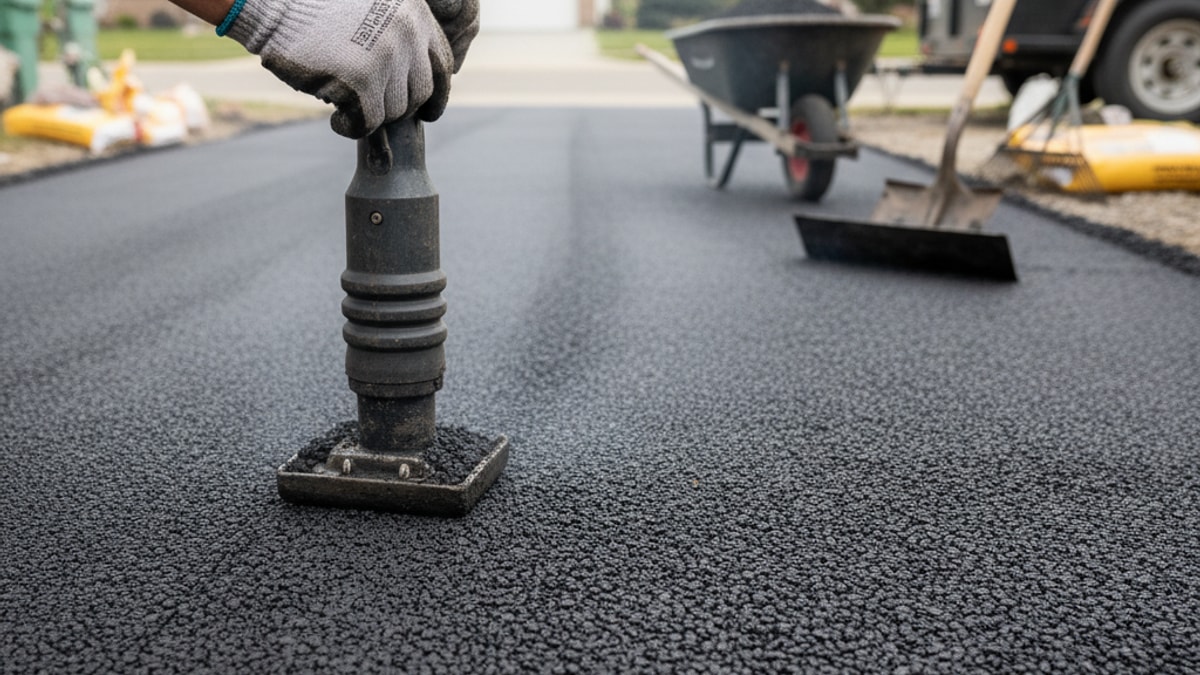
Finally, and most importantly, comes compaction. As soon as the asphalt is laid, a series of heavy rollers move in. The first pass is typically with a large steel-drum roller to begin the compaction process and smooth the surface. Subsequent passes are made in a specific pattern to achieve the target density. Proper compaction is what gives the asphalt its strength and longevity. It squeezes out air pockets, forcing the aggregate particles to lock together. Insufficient compaction is the leading cause of premature failure, leading to ruts, potholes, and cracking. The entire lesson on how to asphalt a driveway could be summarized in one word: compaction.
The Finishing Touches: Curing, Sealing, and Long-Term Care
The work isn’t over when the rollers leave. Your new driveway needs time to cure. The liquid asphalt binder needs to harden and set completely. This means keeping all traffic off it—including cars, bikes, and even foot traffic—for at least 3 to 5 days, and even longer in hotter weather. Be patient. Driving on it too soon can leave permanent tire marks and depressions. It's a tough wait, we know, but it's essential for a flawless finish. The knowledge of how to asphalt a driveway extends beyond the installation day; it includes post-installation care.
About 6 to 12 months after installation, once the asphalt has fully cured and all volatile oils have evaporated, it’s time to apply the first sealcoat. Sealcoating is a critical maintenance step that protects your driveway from the elements. It shields the surface from UV ray degradation (which turns it gray and brittle), prevents water from penetrating, and protects it from oil and gas spills. We recommend resealing your driveway every 3 to 5 years to keep it looking rich and black and to maximize its lifespan. It's a small investment that protects the much larger one underneath.
Proper maintenance ensures your driveway remains a point of pride, perfectly complementing the rest of your outdoor living space, from a welcoming front path to a stunning backyard Outdoor Kitchens SAN Diego setup. It's all connected.
Asphalt in Context: How It Fits Your Overall Landscape Design
A driveway is never just a driveway. It’s the starting point of your home's entire design narrative. At Modern Yardz, we see it as a functional and aesthetic anchor for your property. The decision of how to asphalt a driveway should be made in concert with your broader landscaping goals. The clean, dark surface of new asphalt can create a powerful visual contrast with lush green Artificial Turf SAN Diego or the warm tones of a stone walkway.
Think about the journey from the street to your front door. How does the driveway transition to other hardscaped areas? Does it flow naturally toward a patio covered by one of our custom Patio Covers Pergolas SAN Diego? How will it look at night? This is where elements like Landscape Lighting SAN Diego come into play, where strategically placed lights can highlight the smooth texture of the asphalt and guide visitors safely. Understanding how to asphalt a driveway is just one piece of the puzzle. The bigger picture involves creating a cohesive and inviting outdoor environment.
While asphalt is a fantastic, cost-effective choice, it’s important to consider the alternatives. For some homes, the elegance and design flexibility of Pavers SAN Diego offer a better long-term solution. For others, the modern, clean lines of stamped or colored Concrete SAN Diego are the perfect fit, especially when paired with architectural features like Seat Retaining Walls. The best choice depends on your home's style, your budget, and your vision for the space. Considering every angle is the core of our design philosophy, whether we're planning a simple driveway or a complex backyard oasis complete with Fire Features.
Ultimately, figuring out how to asphalt a driveway is a major decision that impacts your home for decades. It requires careful planning, the right materials, and, most importantly, flawless execution by a skilled team. We hope this breakdown has given you a clearer picture of what the process truly involves. It's a serious project, but when done right, the result is a durable, beautiful surface that elevates your entire property. If you're ready to explore how a new driveway or any other hardscaping project can transform your home, our team is here to help you navigate the options. Why not BOOK MY FREE CONSULTATION today and let's discuss your vision?



.webp)
.webp)