When you're envisioning the perfect outdoor space for your home, the driveway often feels like a mere necessity, doesn't it? Something you need, but perhaps don't give extensive thought to beyond its basic function. Yet, it's far more than just a path for your vehicles; it's the grand, or sometimes understated, entrance to your property, setting the tone for your entire home's aesthetic. Our team at Modern Yardz understands this intimately. We've spent years transforming outdoor areas, and we've consistently found that the question of "How long is the average driveway?" is one that homeowners grapple with, often without realizing the depth of its implications.
It's not just about fitting cars; it's about flow, safety, curb appeal, and ultimately, how your home feels and functions. In 2026, with evolving home designs and property demands, this question takes on even greater significance. We're here to unravel the complexities, guiding you through the considerations that go far beyond a simple numerical average, helping you understand how to plan a driveway that's not just functional but truly spectacular.
Unpacking Driveway Dimensions: More Than Just a Number
Honestly, when people ask, "How long is the average driveway?" they're usually looking for a quick, definitive answer. The truth is, there isn't a single, universally applicable number. It's a nuanced question with a multitude of influencing factors. Think about it: a compact suburban lot will inherently demand a different driveway length than a sprawling rural estate. Our experience shows that every property presents its own unique set of challenges and opportunities when it comes to designing this critical, non-negotiable element of your landscape.
We're not just talking about the physical length from the street to your garage door. We're considering the entire approach, the turning radius needed for larger vehicles, the potential for guest parking, and how the driveway integrates with other outdoor features like a new patio or an Outdoor Kitchens. The average length becomes a mere starting point, a benchmark, rather than a rigid rule. It's a conversation starter, really, for a much deeper dive into what truly works for your specific home and lifestyle. This holistic perspective is what truly distinguishes a merely adequate driveway from one that enhances your entire property.
How Long Is The Average Driveway? Benchmarking in 2026
While we emphasize that 'average' can be a misleading term, it's helpful to establish some general benchmarks for 2026. For a typical suburban home with a two-car garage, a driveway might range from 20 to 30 feet in length. This allows for a couple of parked vehicles without blocking the sidewalk or street access. However, if you're looking for additional parking, perhaps a turnaround space, or if your home is set further back from the road, that length quickly stretches to 40-50 feet or more. For homes with a single-car garage, you might see shorter driveways, perhaps 15-20 feet. But again, this is highly dependent on the property's unique characteristics and local zoning ordinances.
Our team has observed a significant trend towards longer, more accommodating driveways, even on modestly sized lots. Homeowners want more flexibility, especially with families often having multiple vehicles and guests. So, when people ask, "How long is the average driveway?" we're seeing that average push upwards as people prioritize convenience and space. It's not uncommon for new builds, even in tighter developments, to incorporate driveways closer to the 30-foot mark to allow for better vehicle maneuvering and guest parking. We've found that this extra length provides an invaluable buffer zone, preventing vehicles from encroaching on public rights-of-way.
Key Factors Influencing Driveway Length and Design
Determining the ideal length for your driveway involves a careful evaluation of several interconnected factors. It's a bit like a puzzle, where each piece needs to fit just right to create a cohesive and functional whole. Our expertise in Landscape Design means we're constantly balancing these elements for our clients, ensuring that form meets function seamlessly.
Property Setback and Lot Size
This is perhaps the most fundamental determinant. The distance your house is set back from the public road directly dictates the minimum length your driveway needs to be. Larger lots, especially those with a significant front yard, will naturally require a longer driveway. Beyond the minimum, you then consider how much additional length you'd like for aesthetic purposes or extra parking. A long, winding driveway can create a sense of grandeur and privacy, something many homeowners cherish. It's a dramatic, sometimes sprawling design choice.
Vehicle Capacity and Turning Radius
How many cars do you typically need to park? Do you have an RV or boat that needs occasional access? These are crucial questions. A single-car driveway will obviously be shorter than one designed for three or more vehicles. Furthermore, if you want to avoid backing out onto a busy street, you'll need enough space to turn around. This often means designing a wider or longer driveway, possibly with a dedicated turnaround pad. Our team frequently incorporates these considerations into our Pavers and Concrete projects, ensuring the surface can handle the traffic and turning stress.
Local Regulations and Zoning Ordinances
This is where things can get a bit tricky, honestly. Every municipality has its own set of rules regarding setbacks, impervious surface limits, and driveway dimensions. Before we even put pencil to paper, our team thoroughly researches these regulations. You don't want to invest in a beautiful new driveway only to find it doesn't meet local codes. These regulations often directly impact "How long is the average driveway" for specific areas. We can't stress this enough: understanding these nuances upfront saves considerable headaches and costs down the line. It's a critical, non-negotiable element of our process.
Desired Aesthetic and Landscape Integration
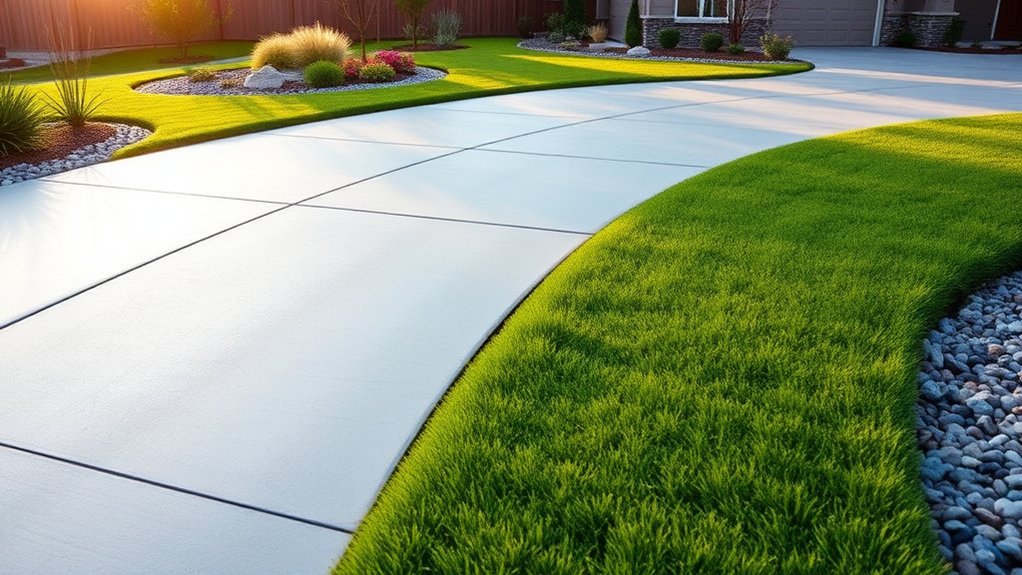
Your driveway isn't just a utilitarian strip; it's a vital component of your home's curb appeal. Do you envision a straight, minimalist approach, or a graceful, curved path framed by lush landscaping? The design choices—materials like Pavers or decorative Concrete, the integration of Landscape Lighting, and even the inclusion of Seat/Retaining Walls to define edges—all influence the perceived and actual length. We're here to blend functionality with stunning visuals, creating a seamless transition from the street to your front door. It's all part of our comprehensive approach to Landscape Design.
Accessibility and Safety Considerations
Slopes, blind spots, and proximity to busy intersections can all impact how long your driveway needs to be for safe entry and exit. A longer, gently sloping driveway is often safer than a short, steep one. Good visibility is paramount. We assess these elements meticulously, ensuring your driveway is not only beautiful but also provides a safe and easy experience for everyone using it. This is particularly vital in 2026, as vehicle sizes continue to vary dramatically.
Comparison Table: Common Driveway Types & Their Typical Lengths
Understanding the various types of driveways can really help when you're considering "How long is the average driveway" for your specific needs. Here's a quick comparison of common configurations and their typical length ranges, keeping in mind these are estimates and actual requirements will vary.
| Driveway Type |
Typical Length Range (feet) |
Key Considerations |
| Short Straight |
15-25 |
Common for single-car garages, minimal setback homes. Prioritizes space efficiency. Limited guest parking. |
| Standard Straight |
25-40 |
Ideal for two-car garages, moderate setback. Allows for parking a couple of cars without blocking the garage. Good balance of function and space. |
| Long Straight |
40-70+ |
Suited for homes with significant setbacks, multiple vehicles, or a desire for a grander entrance. Can feel more private. |
| Curved |
40-80+ |
Often longer due to the curve itself. Creates visual interest, softness, and can navigate challenging terrains. Requires more width for turning radius. |
| Circular/Loop |
60-100+ (total perimeter) |
Provides high functionality for entry/exit and guest parking. Requires substantial lot size. Offers a luxurious, estate-like feel. |
| Shared/Common |
Varies |
Length determined by shared property agreements. Focus is on utility and mutual access, often with less emphasis on individual aesthetic customization. |
The Modern Yardz Approach: Crafting Your Ideal Driveway
At Modern Yardz, we don't just build driveways; we design experiences. We understand that your outdoor space is an extension of your home, a place where memories are made, and where first impressions truly count. When you reach out to us, we're not just thinking about "How long is the average driveway" in a vacuum. We're considering your entire vision, from the moment you pull up to the feeling you get every time you step out your front door.
Our comprehensive Landscape Design process ensures that your driveway integrates perfectly with every other element of your yard. Perhaps you're dreaming of a backyard oasis complete with Pools and Spas, or a sophisticated outdoor living area featuring Patio Covers & Pergolas and elegant Fire Features. Your driveway needs to complement these aspirations, providing not just access but also a cohesive aesthetic journey.
We work with a variety of top-tier materials. Our Pavers installations offer unparalleled durability and aesthetic versatility, allowing for intricate patterns and a wide array of colors. For a sleek, contemporary look, our Concrete services can deliver stunning results, from smooth, polished finishes to stamped and colored designs that mimic natural stone. We've seen a surge in demand for permeable pavers and other sustainable Concrete solutions in 2026, and we're always ready to guide you through these eco-conscious choices. Honestly, though, the best material depends entirely on your specific aesthetic goals and functional requirements.
Future-Proofing Your Driveway: Trends for 2026 and Beyond
In 2026, driveway design is evolving rapidly, moving beyond mere utility to embrace technology and sustainability. When we consider "How long is the average driveway" today, we're also thinking about how it integrates with smart home systems and environmentally friendly practices. Here's what we've learned and what our team is recommending to homeowners looking to elevate their outdoor spaces:
Smart Integration: Imagine driveways with integrated heating systems to melt snow and ice (though perhaps less relevant for us!), or embedded Landscape Lighting that activates as you approach. These smart features, often controlled via an app, are becoming increasingly popular. They offer convenience, enhanced safety, and a touch of modern luxury. We're seeing more and more requests for these types of sophisticated additions.
Sustainable Materials: The push for eco-friendly solutions continues unabated. Permeable Pavers and specialized Concrete mixes that allow rainwater to percolate into the ground are gaining traction. This helps with stormwater management, reduces runoff, and supports local ecosystems. It's a win-win, really, for both your property and the environment. We've found that homeowners are increasingly prioritizing these considerations.
Integrated Landscape Elements: Driveways are no longer standalone features. They're part of a larger, cohesive Landscape Design vision. This means integrating beautiful planting beds, decorative Seat/Retaining Walls, and even Artificial Turf alongside the driveway to create a soft, welcoming approach. The goal is a seamless transition, a visual journey that enhances the entire property. We're building spaces where memories are made, and the driveway is the starting point.
The Investment: Understanding Driveway Costs Beyond Length
When clients ask "How long is the average driveway?" they're often implicitly asking about cost, too. It's a natural correlation, and while length is a significant factor, it's certainly not the only one determining the overall investment. The materials you choose, the complexity of the design (a straight driveway is generally less labor-intensive than a curved one with intricate Pavers patterns), site preparation, and additional features like Landscape Lighting or drainage systems all play a crucial role.
For instance, while Concrete might initially seem more economical per square foot, a highly customized stamped concrete design can rival the cost of premium Pavers. Permeable options, though more environmentally friendly, often involve a more complex installation process, impacting the final price. Our team provides transparent, detailed quotes, ensuring you understand every aspect of your investment. We believe in delivering value and enduring quality, regardless of the chosen materials or the answer to "How long is the average driveway" for your specific project.
Why Professional Expertise is Non-Negotiable for Your Driveway Project
Designing and building a driveway that's perfectly suited to your home and lifestyle is a formidable undertaking. It's not just about pouring Concrete or laying Pavers; it's about engineering drainage, ensuring proper grading, adhering to local codes, and creating a design that enhances your property's value and aesthetic appeal. This is precisely where a full-service design and build company like Modern Yardz becomes an invaluable partner. We manage every step, from initial conceptualization to the final, meticulous installation.
We've seen it all, from tricky slopes to tight spaces, and we've developed refined processes that deliver real results. Our team brings decades of collective experience, ensuring that your driveway isn't just beautiful on day one, but remains functional and stunning for years to come. We handle the complexities of integrating your driveway with other outdoor elements—whether it's a new Patio Covers & Pergolas, a tranquil Pools and Spas, or elegant Fire Features—so you don't have to juggle multiple contractors. This holistic approach means a smoother process, impeccable quality, and a truly unified outdoor living space. We can't stress enough the peace of mind that comes from working with a single, accountable team that understands your entire vision.
Ultimately, understanding "How long is the average driveway" is just the first step in a much larger, more exciting journey. It's about envisioning the ideal approach to your home, a space that welcomes you, your family, and your guests with style and functionality. We're passionate about bringing these visions to life. If you're ready to transform your outdoor space and create a driveway that truly makes a statement, we invite you to visit our website to learn more about our comprehensive services or to BOOK MY FREE CONSULTATION. Let's design something extraordinary together. Your ideal outdoor space awaits.
Frequently Asked Questions About Driveway Length
What's the shortest practical driveway length for a single car?
For a single car, a driveway can be as short as 15-20 feet if your garage is close to the street and you don't need additional parking space or a turnaround. However, we always recommend checking local regulations, as minimum setbacks can vary significantly, dictating the actual length.
Does a curved driveway need to be longer than a straight one?
Yes, typically a curved driveway will be longer than a straight one that covers the same linear distance from the street to the garage. The curve itself adds length, and you'll also need to account for a wider path to accommodate vehicle turning radii comfortably. Our designers consider these factors for optimal flow.
How does property size affect how long is the average driveway?
Larger properties with greater setbacks from the road generally necessitate longer driveways, sometimes significantly so. Smaller, more compact lots will inherently have shorter driveways due to space constraints and zoning requirements. The actual length is a direct reflection of the land available and your home's position.
Are there standard widths to consider along with driveway length?
Absolutely! While this article focuses on 'how long is the average driveway,' width is equally critical. A single-car driveway is typically 9-12 feet wide, while a double-car driveway is 18-24 feet wide. Proper width ensures easy vehicle passage and comfortable door opening.
What impact do local regulations have on driveway length?
Local zoning ordinances and building codes often specify minimum setbacks from property lines and public rights-of-way, directly influencing how short or long your driveway can be. They might also dictate maximum impervious surface areas. Our team always verifies these regulations before starting any Landscape Design project to ensure compliance.
Can I extend my existing driveway to make it longer?
Yes, extending an existing driveway is a common request, especially if you need more parking space or a dedicated turnaround. The feasibility depends on your property layout, existing materials, and local permitting requirements. We can assess your current setup and recommend the best approach for an extension.
How does the type of material affect the ideal driveway length?
The material itself doesn't directly dictate the 'ideal' length, but it can influence the design and overall cost implications of a longer driveway. For instance, intricate Pavers might be more expensive per linear foot than basic Concrete, making a very long paver driveway a larger investment. However, material choice is primarily aesthetic and functional.
What's the benefit of a longer driveway for curb appeal?
A longer driveway, especially one with a gentle curve or beautiful landscaping, can significantly enhance curb appeal by creating a sense of grandeur, privacy, and anticipation. It allows for more design opportunities, such as incorporating Landscape Lighting or decorative Seat/Retaining Walls, making your home feel more inviting and stately. It truly elevates the first impression.
Do long driveways require more maintenance?
Generally, yes, longer driveways mean a larger surface area, which typically requires more maintenance like sweeping, occasional pressure washing, or weed control. If you have Pavers, you might also need periodic joint sand replenishment. However, proper installation and material choice, like durable Concrete, can minimize intensive upkeep.
How does a turnaround area impact driveway length?
Incorporating a turnaround area, such as a circular drive or a dedicated pad, will significantly increase the overall length and width required for your driveway. It's a fantastic feature for convenience and safety, allowing vehicles to exit head-first onto the street. Our team often designs these for clients with busy street access or multiple family vehicles.
Should I consider future vehicle needs when planning driveway length?
Absolutely. It's a wise decision to consider your future needs, such as potential RV or boat parking, accommodating teenage drivers, or even the possibility of electric vehicle charging stations. Planning for these eventualities now can save you considerable hassle and expense down the road. We always encourage clients to think long-term.
What if my property has a steep slope? Does that change ideal driveway length?
Yes, a steep slope often necessitates a longer driveway with a gentler grade to ensure safe and comfortable vehicle access. Short, steep driveways can be challenging to navigate, especially in adverse weather. Our design team excels at creating functional and aesthetically pleasing driveways on challenging, uneven terrains, often incorporating Seat/Retaining Walls to manage elevation changes effectively.
Are there different considerations for commercial driveways versus residential?
Definitely. While the question 'how long is the average driveway' applies to both, commercial driveways have much stricter regulations regarding load bearing, turning radii for larger trucks, and traffic flow. They often require more complex engineering and materials. Our expertise primarily lies in residential landscape design, where the focus is on homeowner needs and aesthetic integration with private outdoor spaces.
What role does drainage play in determining driveway length?
Proper drainage is paramount for any driveway, regardless of length. A well-designed drainage system prevents water pooling, reduces erosion, and protects the integrity of your Pavers or Concrete. On longer driveways, managing stormwater effectively becomes an even more critical design consideration, often requiring swales, catch basins, or permeable surfaces. We integrate robust drainage solutions into all our projects.



.webp)
.webp)