Sloping yards, while often picturesque, can present a formidable challenge for homeowners. We've all seen properties where the terrain dictates much of the outdoor living experience, sometimes to its detriment. Erosion, unusable sloped areas, and drainage issues are common, relentless adversaries. But what if we told you there's a straightforward, highly effective solution? Building a small retaining wall on a slope can dramatically alter your landscape, turning problematic inclines into beautiful, functional spaces. It’s a project that many homeowners consider, especially as we move further into 2026, seeking to maximize every inch of their property.
Our team at Modern Yardz has spent years transforming outdoor environments, and we've observed firsthand the significant, sometimes dramatic shift a well-constructed retaining wall brings. It’s not just about stopping soil from washing away; it's about creating terraces for gardens, providing level ground for patios, or simply adding a crisp, architectural element that defines your yard. Understanding how to build small retaining wall on slope isn't just a DIY endeavor; it's an investment in your home's longevity and aesthetic appeal. Let's dive in.
Why a Small Retaining Wall is a Game Changer
Honestly, though, why bother? That's a fair question. The benefits of a carefully planned and executed retaining wall are multifaceted, touching upon both practical necessities and elevated aesthetics. Firstly, and perhaps most crucially, retaining walls combat erosion. On a slope, soil and valuable nutrients can literally wash away with every significant rain event. A properly installed wall acts as a formidable barrier, keeping your soil in place. We can't stress this enough: preventing erosion safeguards your landscaping and even your home's foundation over time.
Beyond erosion control, these walls unlock new possibilities for your outdoor living areas. Imagine turning a steep, awkward bank into a tiered garden bed brimming with vibrant plantings, or creating a perfectly flat, inviting space for an outdoor seating area. It’s about making your yard work for you, not against you. Our experience shows that even a modest retaining wall can transform an otherwise overlooked part of your property into a prized feature. When you're thinking about how to build small retaining wall on slope, you're really thinking about maximizing usability and visual appeal.
Then there's the aesthetic component. A well-designed retaining wall adds structure, definition, and a sense of order to a sloped terrain. It can complement other hardscaping elements like Pavers SAN Diego or Concrete SAN Diego, creating a cohesive and inviting outdoor environment. It's truly a critical, non-negotiable element for a well-integrated landscape. And yes, a beautifully built wall can absolutely increase your property's value, which is always a welcome bonus in today's competitive housing market.
Essential Planning and Site Assessment
Before you even think about digging, meticulous planning is paramount. This isn't a project to rush. Our team has found that the success of any retaining wall project hinges on thorough preparation, especially when learning how to build small retaining wall on slope. The first step involves a comprehensive site assessment. What's the degree of the slope? What kind of soil are you dealing with? Where does water typically flow during heavy rainfall? These aren't minor details; they're foundational to a stable, lasting structure.
You'll also need to consider local regulations and permits. While small retaining walls (typically under 3-4 feet in height, depending on local codes) often don't require extensive permits, it's always, always best to check with your local planning department. Ignoring this step can lead to costly rework or, worse, safety issues. We've seen this happen, and it's never a pleasant situation. Understanding the full scope, including any underground utilities, is crucial. Call 811 before you dig, every single time. It's a simple call that prevents catastrophic consequences.
Design considerations also come into play. What's the wall's purpose? Is it purely aesthetic, or does it need to hold back a substantial amount of soil? Will it be integrated into a larger Landscape Design SAN Diego project? The height and length of the wall will influence material choice and construction methods. For walls over 2-3 feet, especially on steep slopes, our professional recommendation leans toward consulting an engineer or a seasoned landscape design firm like ours. It's not just about building; it's about building it right and safely.
Choosing Your Materials: Form Meets Function
The material you select for your retaining wall isn't just about looks; it's about structural integrity, durability, and ease of installation. There are several excellent options when you're considering how to build small retaining wall on slope, each with its own advantages and aesthetic appeal. We'll explore the most common choices.
Segmental Retaining Wall (SRW) Blocks: These interlocking concrete blocks are incredibly popular for DIY projects, and for good reason. They're designed for easy installation, often without the need for mortar, relying on gravity and their interlocking design for stability. They come in various colors and textures, offering significant design flexibility. They're also quite durable and relatively low maintenance, a definite plus in our book.
Treated Timber: For a more rustic or natural look, treated timber can be a good choice. It's generally more affordable upfront than stone or concrete blocks, and relatively easy to work with for those comfortable with woodworking tools. However, timber walls have a shorter lifespan compared to masonry options (even treated wood will eventually rot) and aren't typically recommended for walls over a few feet high or in areas with significant moisture.
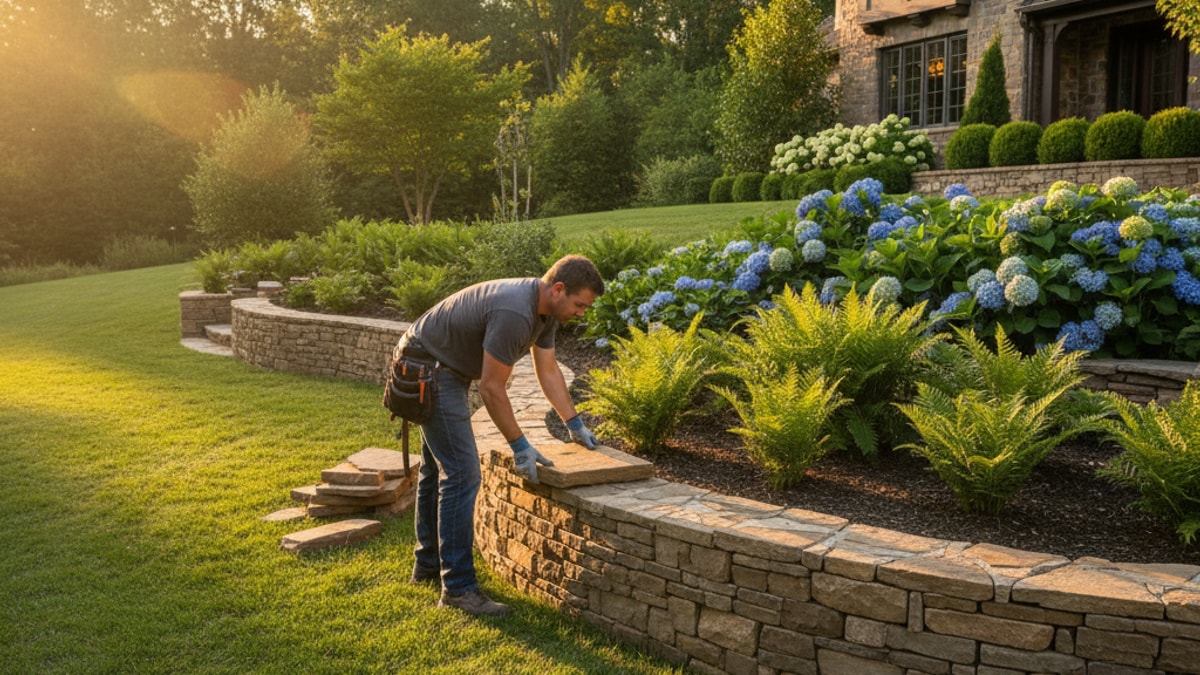
Natural Stone: Stone walls offer unmatched beauty and a timeless appeal. They can be dry-stacked (without mortar) for a natural look or mortared for a more formal, robust structure. Natural stone, whether it's fieldstone, granite, or flagstone, provides an incredible aesthetic, but it's also the most labor-intensive and generally the most expensive option. Working with heavy, irregular stones requires skill and patience.
Poured Concrete: While less common for small DIY walls due to the complexity of formwork and pouring, poured concrete offers exceptional strength and durability. It's a fantastic option for taller, more critical applications, but for a small retaining wall on a slope, it might be overkill unless you're integrating it into a larger, complex Concrete SAN Diego project. Our team often utilizes poured concrete for larger, more demanding landscape transformations.
Here's a quick comparison of common materials:
| Feature |
SRW Blocks |
Treated Timber |
Natural Stone (Dry-Stacked) |
Poured Concrete |
| Cost (Initial) |
Moderate |
Low to Moderate |
High |
Moderate to High |
| Durability |
High |
Moderate (20-40 yrs) |
Very High |
Extremely High |
| DIY Friendly |
High |
Moderate |
Low |
Very Low |
| Aesthetic |
Versatile |
Rustic/Natural |
Premium/Timeless |
Modern/Industrial |
| Maintenance |
Low |
Moderate |
Low |
Very Low |
| Lifespan |
50+ years |
20-40 years |
100+ years |
100+ years |
Tools and Equipment You'll Need
Gathering the right tools before you start is crucial. It saves time, frustration, and ensures the job gets done correctly and safely. When you're figuring out how to build small retaining wall on slope, think about efficiency and precision. Here's what we recommend having on hand:
- Shovel and Spade: For digging the trench and moving soil.
- Pickaxe: Especially if your soil is rocky or compacted.
- Level (4-foot and Torpedo): Absolutely essential for ensuring your wall is plumb and level.
- String Line and Stakes: For establishing a straight, level guide for your wall's base.
- Rubber Mallet: For tapping blocks or stones into place without damage.
- Tape Measure: For accurate measurements.
- Gloves and Safety Glasses: Non-negotiable safety gear.
- Wheelbarrow: For moving materials like gravel, dirt, and blocks.
- Tamper (Manual or Plate Compactor): To compact the base material. A plate compactor is ideal for larger walls or longer runs.
- Mason's Hammer and Chisel (for stone/block): For cutting or shaping materials if needed.
- Geotextile Fabric: Critical for soil separation and preventing washout behind the wall.
- Drainage Gravel (Crushed Stone): For the base and the drainage layer behind the wall.
- Construction Adhesive (for SRW blocks): To secure subsequent courses.
Having these items ready before you start digging will make the process considerably smoother. Trust us, there's nothing worse than halting progress to run to the hardware store for a forgotten tool.
Step-by-Step: How to Build Small Retaining Wall on Slope
Alright, let's get into the nuts and bolts of it. This is where your planning and material choices come to life. Remember, patience and precision are your best friends here. This guide focuses on building a wall with segmental retaining wall blocks, as they're the most DIY-friendly option for learning how to build small retaining wall on slope.
1. Mark and Excavate the Trench
First, use your stakes and string line to clearly mark the path of your retaining wall. For a small wall, we generally recommend a trench that's roughly twice the width of your block and about 6-8 inches deep. The depth ensures your first course is partially buried, providing crucial stability. On a slope, your trench needs to be perfectly level along its entire length. This is critical. Use your long level and a straight board to check repeatedly, adjusting the trench depth as needed to achieve a consistent, level base. This is the absolute foundation for your project; don't skimp on this step.
2. Prepare the Base
Once your trench is excavated and level, it's time for the base material. Add about 2-3 inches of compacted drainage gravel or paver base material to the bottom of the trench. Rake it smooth, then thoroughly compact it using your tamper. You want a rock-solid, level foundation. This step is absolutely non-negotiable for the long-term stability of your retaining wall. We've seen walls fail because of a poorly compacted base, and it's a difficult, often moving-target objective to fix after the fact. Check for levelness again after compaction. This is how to build small retaining wall on slope with real staying power.
3. Lay the First Course
Now for the blocks! Start laying your first course of retaining wall blocks directly onto the compacted base. Begin at the lowest point of your slope. Butt them tightly together. As you lay each block, use your rubber mallet to gently tap it into place, ensuring it's perfectly level from front to back, side to side, and with its neighbors. A small torpedo level is incredibly useful here. This first course, often called the 'footer course,' is the most important for the entire wall's stability. Any imperfections here will compound as you build upwards. Take your time. We really mean this sincerely: precision here prevents headaches later.
4. Install Drainage (Crucial!)
Water is the enemy of any retaining wall. Without proper drainage, hydrostatic pressure will build up behind the wall, leading to bowing, cracking, or even catastrophic failure. This is why we can't stress drainage enough when you're learning how to build small retaining wall on slope. Lay a perforated drainpipe (like an agricultural drain tile) behind the first course of blocks, ensuring it slopes gently towards an outlet point (away from your house or any foundations). Cover the drainpipe and the area immediately behind the wall with at least 6-12 inches of drainage gravel. This gravel layer allows water to freely flow to the drainpipe and away from the wall. We recommend wrapping your drainpipe in a geotextile fabric to prevent it from clogging with soil fines.
5. Lay Subsequent Courses
With your first course set and drainage in place, you can start laying the next rows. For most SRW systems, you'll want to 'stagger' the blocks, meaning the vertical joints of one course should be offset from the course below it (like bricks in a wall). This creates a stronger, more stable wall. Many SRW blocks have a lip or pin system that naturally sets them back slightly, creating a gentle slope into the retained earth. This 'setback' is by design, enhancing stability. Apply construction adhesive between courses for added strength and to prevent shifting, especially with a small retaining wall on a slope. Continue this process, checking for levelness and plumb as you go, until you reach your desired height.
6. Backfill and Cap
As you build each course, you'll need to backfill behind the wall. Use additional drainage gravel directly behind the blocks, then switch to compacted soil or fill material further back. Compact in thin layers (6-8 inches at a time) to prevent settlement and ensure proper support for the wall. If you're using geotextile fabric, lay it against the back of the wall before backfilling with soil; this prevents soil from migrating into your drainage gravel. Finally, once you've reached the top, you can add capstones to finish the wall. These are typically secured with construction adhesive, providing a clean, finished look and protecting the top course of blocks.
Common Pitfalls and How to Avoid Them
Even with the best intentions, mistakes can happen. Our team has a wealth of experience, and we've observed common missteps that can compromise the integrity or appearance of your retaining wall. Being aware of these can save you significant time and effort when figuring out how to build small retaining wall on slope.
- Inadequate Base Preparation: This is, hands down, the most frequent culprit for wall failure. A base that isn't level, deep enough, or properly compacted will lead to settling, bowing, and instability. Take extra time here. It's comprehensive, but absolutely worth it.
- Poor Drainage: As discussed, water pressure is immensely powerful. Skipping or skimping on the drainage system will inevitably lead to problems. Always include drainage gravel and, for anything more than a very small wall, a drainpipe.
- Ignoring the Setback: Many SRW systems are designed with a slight setback. Don't build the wall perfectly vertical if the blocks are meant to lean back. This setback is crucial for the wall's structural stability against the pressure of the soil.
- Insufficient Compaction: Whether it's the base material or the backfill, proper compaction is key. Loose material will settle over time, creating voids and putting undue stress on the wall. Rent a plate compactor if your wall is substantial; it’s an efficient investment.
- Overlooking Local Codes: This can be a huge headache. Always check local regulations regarding height limits, setbacks from property lines, and permit requirements. It's a demanding schedule, we know, but it's crucial.
When to Call the Professionals
While building a small retaining wall on a slope can be a rewarding DIY project, there are definite instances when professional expertise isn't just helpful, but essential. We're proud of the work we do, and we believe in empowering homeowners, but we also know our limits. If your project falls into any of these categories, it's time to bring in the pros:
- Walls Over 3-4 Feet Tall: Taller walls exert tremendous pressure and require engineering calculations and robust construction techniques that go beyond typical DIY capabilities. The consequences of failure are simply too great.
- Steep or Unstable Slopes: If your slope is particularly steep, shows signs of existing instability, or involves significant water runoff, the forces at play are complex. Our team has specialized knowledge in these challenging environments.
- Complex Designs or Integrations: If you're dreaming of a multi-tiered wall system, a wall integrated with a Pools AND Spas, or a retaining wall that doubles as Seat Retaining Walls with built-in Fire Features or Landscape Lighting SAN Diego, the nuances of design and construction can be extensive. We specialize in creating custom outdoor spaces that bring your vision to life, handling every step from design to construction with care and precision.
- Proximity to Structures: If the wall will be close to your home's foundation, a shed, or a neighbor's property, professional installation is crucial to prevent damage to existing structures.
- Time or Physical Limitations: Building a retaining wall, even a small one, is physically demanding. If you don't have the time, the physical capability, or simply prefer to leave the heavy lifting to experts, our team is ready to help. We're here to help homeowners create outdoor spaces that are as functional as they are beautiful.
At Modern Yardz, we handle everything from initial Landscape Design SAN Diego through to final construction. We've got the expertise, the equipment, and the dedicated team to ensure your retaining wall is not only beautiful but also structurally sound and built to last. We're committed to delivering impeccable results, transforming your outdoor space into something extraordinary.
FAQs
It's clear that understanding how to build small retaining wall on slope involves a lot of questions. Here are some of the most common ones we hear from homeowners.



.webp)
.webp)