Imagine your outdoor space as a blank canvas, full of potential. Now, picture a landscape with varying elevations, perhaps a sloped yard that’s just begging for definition, or an area that consistently struggles with soil erosion after heavy rains. These aren't just minor inconveniences; they're formidable challenges that can transform your dream yard into a frustrating battleground against the elements. That's precisely where understanding what is a retaining wall becomes not just useful, but absolutely essential.
Here at Modern Yardz, we've spent years transforming challenging topographies into breathtaking outdoor living areas. We've seen firsthand the significant, sometimes dramatic shift a well-designed retaining wall can bring to a property, whether it's for practical purposes or purely aesthetic ones. It's truly a game-changer for homeowners looking to maximize their usable space and protect their investment.
What Exactly is a Retaining Wall?
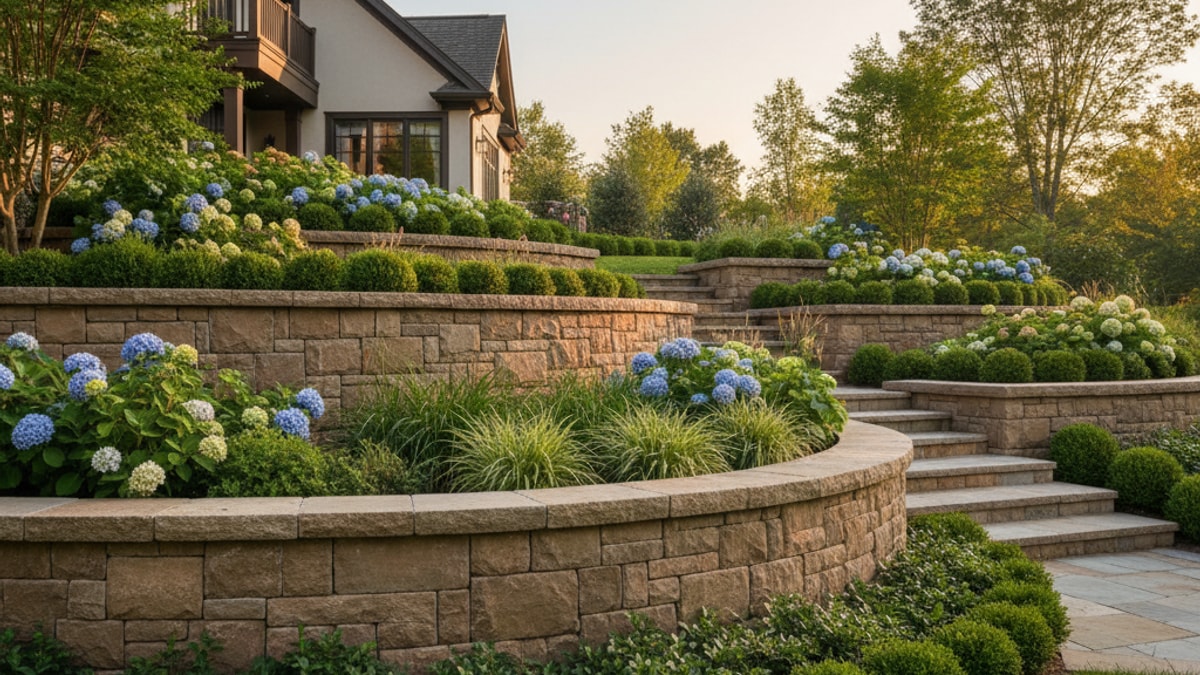
So, let's cut to the chase: what is a retaining wall? In its most fundamental sense, a retaining wall is a structure designed to resist the lateral pressure of soil when there's a change in ground elevation that exceeds the soil's natural angle of repose. Think of it as a steadfast barrier, diligently holding back a mass of earth that would otherwise slide downwards due to gravity. Simple, right? But its implications are anything but. Our team often explains it this way: it's not just a wall; it's an engineering marvel that reshapes your terrain, creating level areas where slopes once dominated and providing critical stability. Without a robust understanding of what is a retaining wall, homeowners might underestimate its pivotal role in both form and function.
We're talking about preventing soil erosion, managing stormwater runoff, and creating usable, flat spaces on sloped properties. Without these structures, many beautifully terraced gardens or level patio areas simply wouldn't exist. It's the silent workhorse of many a picturesque landscape, especially in areas with significant grade changes. Honestly, though, its importance can't be overstated. We've seen properties completely transformed by the strategic placement of a retaining wall.
Beyond Just Holding Earth: The Myriad Benefits of Retaining Walls
While its primary function is undeniably structural, a retaining wall offers a wealth of additional advantages that elevate it from a mere necessity to a strategic design element. When homeowners ask us what is a retaining wall truly capable of, we often highlight these multifaceted benefits:
- Erosion Control: This is perhaps the most obvious benefit. By holding back soil, retaining walls prevent erosion, keeping valuable topsoil in place and protecting lower areas from being buried by runoff. It's a critical, non-negotiable element for long-term landscape health.
- Slope Stabilization: On sloped terrains, retaining walls stabilize the ground, preventing landslides and ensuring the safety of structures and people. This is particularly vital in regions prone to heavy rainfall or seismic activity.
- Increased Usable Space: A sloping yard can feel like wasted potential. Retaining walls allow us to create flat, terraced sections, effectively expanding your usable outdoor living area. Imagine a previously unusable hill becoming a multi-level garden or a spacious patio. That's the magic. We've helped countless clients create stunning Outdoor Kitchens SAN Diego or expansive areas for Pools AND Spas thanks to these foundational structures.
- Aesthetic Enhancement: A well-designed retaining wall, whether it's crafted from natural stone, modern concrete blocks, or rustic timber, can add immense visual appeal. It introduces texture, defines distinct outdoor zones, and creates architectural interest. They're not just functional; they're beautiful. Our Landscape Design SAN Diego services frequently integrate these walls as key design elements.
- Drainage Management: Integrated drainage systems within retaining walls help control water flow, preventing saturation and hydrostatic pressure buildup behind the wall. This is crucial for the wall's longevity and the overall health of your landscape.
- Property Value: Investing in a professionally built retaining wall can significantly enhance your property's curb appeal and functionality, leading to an increase in its overall market value. It's a smart investment, plain and simple.
So, when you consider what is a retaining wall capable of, you're really looking at a versatile solution that solves complex problems while simultaneously elevating your outdoor aesthetic. It's comprehensive.
Unpacking the Different Types of Retaining Walls
Not all retaining walls are created equal. Understanding the various types is crucial for choosing the right solution for your property's specific needs. When we discuss what is a retaining wall with clients, we always delve into these structural distinctions:
Gravity Walls
These are the simplest and perhaps oldest form of retaining wall. A gravity wall relies solely on its own weight and mass to resist the pressure from the soil behind it. They're typically wider at the base and taper towards the top, creating a stable, heavy structure. Materials often include large stones, pre-cast concrete blocks, or even heavy timbers. They're generally suitable for shorter walls, usually up to about four feet, though larger ones can be built with proper engineering. Our experience shows that these are excellent for creating sturdy garden beds or defining smaller landscape features.
Cantilever Walls
When we're talking about what is a retaining wall that offers more structural prowess for taller applications, we often turn to cantilever walls. These are typically made of reinforced concrete, designed as an 'L' or inverted 'T' shape. The base of the wall extends into the soil, using the weight of the soil above it to provide additional resistance against overturning. The vertical stem acts as a cantilever beam, hence the name. They're incredibly efficient for handling significant earth pressures and are common for walls over six feet tall. This type requires careful engineering and professional installation, which is a core part of our Seat Retaining Walls expertise.
Sheet Piling Walls
This type of retaining wall involves driving thin sheets of steel, vinyl, or timber directly into the ground, often used in softer soils or when space is limited. The sheets interlock to form a continuous barrier. They're generally more suitable for temporary structures or in situations where excavation is difficult, such as near water bodies. Sometimes, anchors are used to provide additional stability, transforming them into anchored sheet piling walls. When considering what is a retaining wall in challenging, tight spaces, sheet piling often emerges as a viable, albeit specialized, option.
Anchored Walls
Anchored walls are essentially any of the above types (gravity, cantilever, or sheet piling) that incorporate additional support from cables or rods driven into the soil behind the wall. These 'anchors' are then tensioned and secured to the wall, providing extra resistance to the soil pressure. This method is particularly effective for very tall walls or in situations where conventional methods might not provide enough stability. It's a sophisticated solution, requiring precise geotechnical analysis and engineering. Our team has found that for truly formidable earth retention challenges, anchored systems are often the answer.
Materials Matter: Crafting Your Retaining Wall
The choice of material profoundly impacts not only the structural integrity and longevity of your retaining wall but also its aesthetic appeal. When we're planning what is a retaining wall for a specific property, material selection is a colossal decision. Here's a look at some popular options we work with:
- Segmental Block Walls (Concrete Blocks): These interlocking concrete blocks are incredibly popular due to their versatility, durability, and relatively straightforward installation (though engineering is still critical for taller walls). They come in various colors, textures, and sizes, allowing for a wide range of design possibilities. They're a fantastic choice for many residential projects, offering excellent structural performance. We often utilize these for robust and attractive landscape features.
- Natural Stone: For a timeless, organic look, natural stone is unmatched. Whether it's quarried stone, fieldstone, or flagstone, each piece brings unique character. Stone walls are exceptionally durable and can last for generations, often increasing in beauty as they age. However, they require skilled masonry work, making them a more labor-intensive and generally more expensive option. But the result? Absolutely stunning. It's an investment in enduring beauty.
- Poured Concrete: This option offers immense strength and design flexibility. Poured Concrete SAN Diego walls can be formed into virtually any shape, colored, or textured to mimic other materials. They're excellent for very tall or heavily loaded walls, providing a monolithic, seamless appearance. The downside? Installation requires specialized equipment and expertise, and it's less forgiving than segmental blocks if modifications are needed later.
- Timber/Wood: Treated timbers or railroad ties can be used for retaining walls, particularly for a rustic or natural aesthetic. They're generally more cost-effective upfront for shorter walls. However, wood is susceptible to rot, decay, and insect damage, even when treated, meaning it typically has a shorter lifespan than stone or concrete. We usually recommend timber for lower, less critical applications where a natural look is prioritized over extreme longevity.
- Gabion Walls: These are wire cages filled with rocks, rubble, or other materials. Gabion walls are known for their permeability, allowing water to drain through, which reduces hydrostatic pressure. They're an excellent choice for erosion control, especially in areas with significant water flow, and offer a unique, industrial-chic aesthetic. They're also quite flexible, able to adapt to ground movement better than rigid structures. When discussing what is a retaining wall that’s both permeable and robust, gabions often come up.
Our team always guides clients through these choices, weighing the pros and cons against their specific project goals and budget. We've found that the right material truly makes all the difference.
The Unflinching Science Behind a Stable Retaining Wall
Building a retaining wall isn't just about stacking materials; it's a precise application of engineering principles. When we talk about what is a retaining wall that stands the test of time, we're talking about meticulous planning and execution. Here are the critical components that ensure stability and longevity:
- Footing or Foundation: This is the bedrock of the entire structure. A properly designed and constructed footing, typically made of compacted gravel or reinforced concrete, distributes the weight of the wall and the soil it retains evenly across a wider area. This prevents settling, tilting, or catastrophic failure. It's the unsung hero, really, doing the heavy lifting out of sight.
- Drainage System: This is arguably the most crucial element. Soil behind a retaining wall can become saturated with water, which significantly increases its weight and exerts immense hydrostatic pressure. Without adequate drainage – think gravel backfill, perforated pipes (weeping tiles), and weep holes – this pressure can easily cause the wall to bow, crack, or collapse. We can't stress this enough: impeccable drainage is non-negotiable for a truly durable retaining wall.
- Backfill Material: The material used directly behind the wall (the 'backfill') is vital. We typically use granular, free-draining material like crushed stone or gravel. This allows water to pass through to the drainage system efficiently, minimizing pressure on the wall. Using unsuitable backfill, such as heavy clay, can trap water and negate the best drainage efforts.
- Geogrid or Reinforcement: For taller walls, especially those made from segmental blocks, geogrid reinforcement is essential. These durable polymer grids are laid horizontally into the soil layers behind the wall, extending back into the soil mass. They essentially tie the wall into the stable soil behind it, increasing its overall stability and resistance to outward pressure. It's an ingenious way to create a reinforced earth structure.
Understanding these foundational elements is key to appreciating what is a retaining wall that's not just beautiful, but structurally sound and built to last well into 2026 and beyond. It's complex, yes, but incredibly rewarding when done right.
Planning Your Project: Crucial Considerations
Embarking on a retaining wall project requires careful thought and meticulous planning. Our team regularly guides homeowners through these vital steps:
- Site Assessment: Every project starts with a thorough evaluation of your property's topography, soil type, existing drainage patterns, and any nearby structures or utilities. Understanding these variables is fundamental. What are the slopes like? What's the soil composition? These questions dictate the entire design.
- Height and Load: The height of the proposed wall and the load it will bear (e.g., a patio, a driveway, or just garden soil) are critical engineering factors. Taller walls, or those supporting significant loads, will require more robust designs, often involving specific engineering calculations and permits.
- Permits and Regulations: This is a big one. Most jurisdictions have strict building codes and permit requirements for retaining walls, especially those over a certain height (often four feet). Ignoring these can lead to costly demolition and reconstruction. We always advise checking local regulations early in the planning process; it saves headaches down the line.
- Drainage Strategy: As we've emphasized, a well-thought-out drainage plan is paramount. This includes not just the internal drainage of the wall but also how surface water will be managed around the entire structure. Where will water go after it drains from behind the wall?
- Aesthetics and Integration: Beyond function, consider how the retaining wall will integrate with your overall landscape design. What materials will complement your home's architecture? Will it serve as a focal point or blend seamlessly into the background? This is where our Landscape Design SAN Diego expertise truly shines, helping clients visualize and achieve their dream outdoor spaces.
Our experience shows that skipping these planning stages is a recipe for disaster. It's far better to invest time upfront than to deal with the expense and frustration of a failing wall later. This is what is a retaining wall project truly entails: foresight and precision.
DIY vs. Professional Installation: When to Call the Experts
It's a common question: can I build a retaining wall myself? The short answer is: it depends. For very small, low walls (under two feet) with minimal load, a confident DIYer might be able to tackle it. However, for anything larger, more complex, or structurally critical, professional installation is not just recommended, it's virtually mandatory. Let's be honest, this is crucial.
Here's why we advocate for professional expertise when considering what is a retaining wall project of any significant scale:
- Engineering Expertise: Professional contractors and engineers possess the knowledge to correctly calculate soil pressures, design appropriate footings, and implement proper drainage and reinforcement. This is complex geotechnical engineering, not just a weekend project.
- Heavy Equipment: Installing a substantial retaining wall often requires heavy machinery for excavation, material transport, and compaction. Most homeowners simply don't have access to this equipment, nor the expertise to operate it safely.
- Permit Compliance: Professionals are familiar with local building codes and permit processes, ensuring your wall is compliant from the outset. This avoids potential legal issues and ensures safety.
- Durability and Longevity: A professionally built wall, using the right techniques and materials, will be significantly more durable and last much longer than a hastily constructed DIY version. It's an investment in the longevity of your property.
- Safety: Working with heavy materials, deep excavations, and unstable soil presents significant safety risks. Professionals are trained to manage these hazards safely.
- Warranty and Assurance: Reputable companies like Modern Yardz stand behind their work. We provide warranties on our installations, giving you peace of mind that your investment is protected. This approach (which we've refined over years) delivers real results.
While the allure of saving money on a DIY project is understandable, the potential costs of a failing retaining wall – structural damage, erosion, or even injury – far outweigh any initial savings. When it comes to something as structurally vital as what is a retaining wall, professional guidance isn't a luxury; it's a necessity. Ready to Upgrade Your Backyard? We're here to help.
Maintaining Your Retaining Wall: Ensuring Lasting Performance
Even the most impeccably constructed retaining wall needs a little care to ensure its long-term performance. Understanding what is a retaining wall's maintenance needs will help you protect your investment well into 2026 and beyond. Good news: it's generally not a grueling road warrior hustle, but consistent vigilance pays dividends.
- Monitor Drainage: Regularly check weep holes and drainage pipes to ensure they're clear of debris. Clogged drainage is the enemy of a retaining wall. If you notice standing water behind the wall or excessive bulging, it's a red flag.
- Inspect for Cracks or Bulges: Periodically walk along the length of your wall, looking for any new cracks, shifting blocks, or areas where the wall appears to be bulging. Small, hairline cracks are often normal, but larger, propagating cracks or significant movement warrant immediate professional inspection.
- Check for Erosion at the Base: Ensure the soil or Pavers SAN Diego at the base of the wall isn't eroding away. A compromised base can undermine the entire structure. If you have Artificial Turf SAN Diego near the wall, ensure proper runoff is still occurring.
- Control Vegetation: While planting around a retaining wall can be beautiful, ensure roots from large trees or aggressive shrubs aren't growing into the wall's structure, which can cause damage over time. Keep vegetation trimmed and clear.
- Address Water Sources: If you have irrigation systems, downspouts, or other water sources near the wall, ensure they're directing water away from the wall's face and its drainage system. Excessive surface water can contribute to saturation behind the wall.
Proactive maintenance, even just a simple visual inspection a few times a year, can catch minor issues before they escalate into costly repairs. It truly extends the life of your retaining wall and maintains its structural integrity. It's a small effort for a significant return.
The Modern Yardz Difference: Crafting Your Outdoor Oasis
At Modern Yardz, we believe your outdoor space should be an extension of your home – a place for relaxation, entertainment, and making cherished memories. Our approach to what is a retaining wall, or any landscape element for that matter, is rooted in a deep understanding of both form and function. We don't just build walls; we craft integral components of a larger, cohesive vision.
From the initial consultation where we discuss your aspirations and challenges, through the meticulous Landscape Design SAN Diego process, and all the way to the final construction and finishing touches, our team handles every step with unparalleled care and precision. We pride ourselves on creating custom outdoor spaces that not only meet your needs but exceed your wildest dreams. Our expertise covers everything from stunning Patio Covers Pergolas SAN Diego to inviting Fire Features and, of course, exceptionally built Seat Retaining Walls that blend seamlessly into your landscape.
We understand that investing in your outdoor space is a significant decision. That's why we bring our collective expertise, local roots, and unwavering commitment to quality to every project. We're not satisfied until you're absolutely thrilled with your new outdoor sanctuary. We mean this sincerely: it runs on genuine connections and impeccable results. This is what is a retaining wall project like when you partner with Modern Yardz.
Transform Your Outdoor Space Into Something Extraordinary. Our team is ready to help you navigate the complexities of landscape design and construction, ensuring your vision comes to life with breathtaking results. Let's Design the Outdoor Space You’ve Been Dreaming Of. Explore our full range of services and see how we can help you create the outdoor haven you deserve by visiting our website: modernyardz.com.
Retaining Wall Types: A Quick Comparison
| Type of Wall |
Primary Mechanism |
Ideal Use Cases |
Key Advantages |
Considerations |
| Gravity Wall |
Mass/Weight |
Short walls (up to 4ft), garden beds, decorative |
Simple construction, natural look (stone) |
Limited height, can be bulky, heavy materials |
| Cantilever Wall |
Reinforced concrete, 'L' or 'T' shape |
Taller walls (over 6ft), heavy loads, commercial |
High strength, efficient for large loads, versatile |
Requires engineering, specialized forms, more costly |
| Sheet Piling |
Driven sheets |
Soft soils, tight spaces, temporary structures, waterfront |
Minimal excavation, quick installation |
Appearance, limited strength for very tall walls, material choice |
| Anchored Wall |
Anchors + Wall Type |
Very tall walls, high soil pressure, unstable ground |
Maximum stability, allows for greater heights |
Complex engineering, specialized equipment, higher cost |
This table gives you a quick overview as you ponder what is a retaining wall that best suits your needs.



.webp)
.webp)