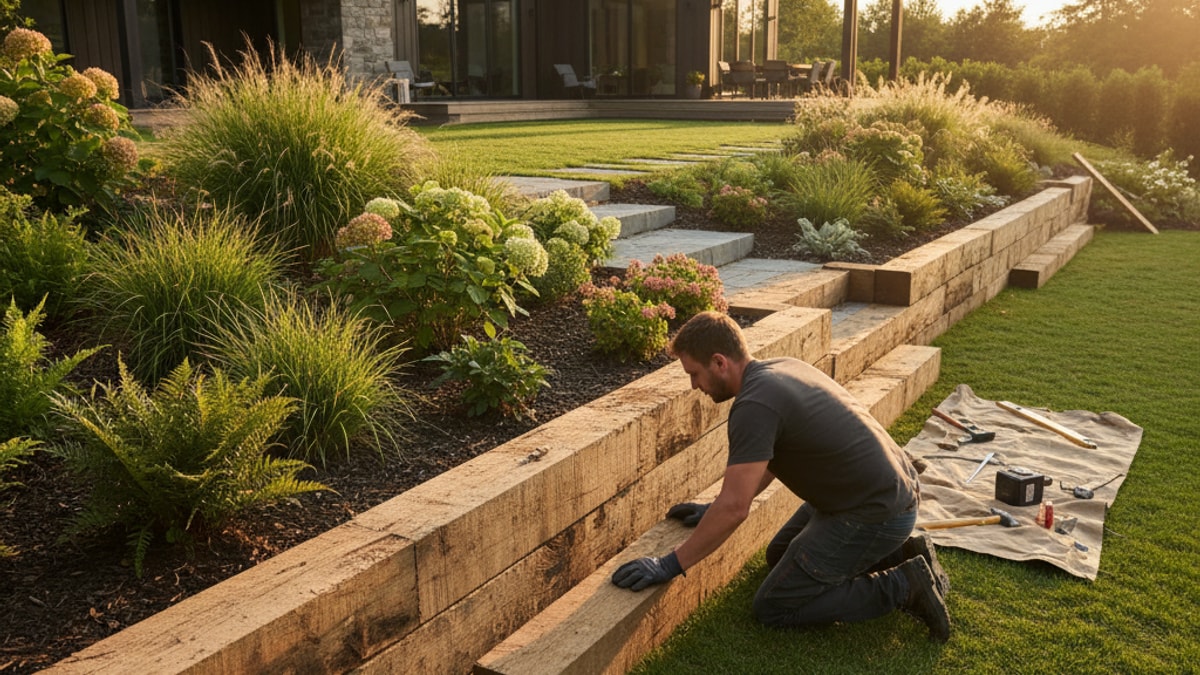
Building a beautiful, functional outdoor space often involves conquering challenging terrain. Slopes, uneven ground, or even just the desire for defined garden beds can present formidable obstacles. That's precisely where a well-constructed retaining wall comes into its own, transforming unusable areas into highly functional, visually stunning elements of your landscape. We’ve seen firsthand how homeowners in 2026 are increasingly looking for ways to maximize every inch of their property, and knowing how to install timber retaining wall correctly is a skill that’s more valuable than ever.
At Modern Yardz, our team has decades of collective experience turning complex visions into tangible outdoor realities. We understand the nuances of Landscape Design SAN Diego and the critical role structures like retaining walls play. A timber retaining wall, when executed correctly, isn't just about holding back earth; it's about adding character, creating terraced gardens, or defining inviting seating areas. It's an investment, pure and simple, and we want to ensure you approach it with all the foundational knowledge you'll need. Let's delve into the definitive process of how to install timber retaining wall, ensuring your project stands the test of time.
Understanding the 'Why' Before the 'How'
Before you even think about digging, it's paramount to grasp why you're building a retaining wall. Is it for erosion control on a significant slope? Are you creating a raised garden bed? Perhaps you're leveling an area for a new patio or an Outdoor Kitchens SAN Diego installation. The purpose dictates the design, the materials, and ultimately, the complexity of how to install timber retaining wall. Our experience shows that rushing this planning phase often leads to costly, frustrating rework down the line. We can't stress this enough: thoughtful planning is your most potent tool.
Crucially, you'll need to assess the site's unique characteristics. What's the soil type? How significant is the slope? Where does water flow during heavy rainfall? These aren't trivial questions; they're the bedrock of a stable, long-lasting structure. For walls exceeding four feet in height, local building codes in 2026 almost universally require engineered plans and permits. Ignoring these can lead to serious legal and structural headaches. Always check with your local authorities first. Our team often handles these intricate planning stages for our clients, ensuring full compliance and structural integrity from the outset.
Essential Preparations: Tools, Materials, and Site Layout
Knowing how to install timber retaining wall starts with gathering the right resources. Don't skimp here; quality tools and materials are non-negotiable for a robust outcome. We've found that cutting corners in this phase inevitably compromises the wall's longevity and stability. Here's what you'll typically need:
Key Tools:
- Shovel and pickaxe (for excavation)
- Level (spirit level, string line level, or laser level)
- Tape measure and marking paint/stakes
- Circular saw or chainsaw (for cutting timbers)
- Drill with appropriate bits
- Hammer or mallet
- Wheelbarrow
- Tamper or plate compactor
- Safety gear: gloves, eye protection, ear protection
Key Materials:
- Treated Timbers: We're talking about pressure-treated lumber, specifically rated for ground contact. ACQ (Alkaline Copper Quaternary) or MCA (Micronized Copper Azole) are common treatments in 2026, offering excellent resistance against rot and insects. Choose the right dimension – 6x6s are popular for their stability and aesthetic.
- Gravel/Crushed Stone: For the foundation and drainage layer. ¾-inch angular gravel works exceptionally well.
- Landscape Fabric: To prevent soil migration into the gravel drainage layer.
- Rebar: Essential for anchoring timber courses together, particularly for taller walls.
- Timber Spikes or Galvanized Screws: For securing timbers horizontally.
- Drainage Pipe (Perforated): Crucial for preventing hydrostatic pressure buildup.
- Backfill Material: The soil or aggregate used behind the wall.
With your supplies ready, it's time for layout. Mark the footprint of your wall using stakes and string. Double-check your measurements, ensuring the lines are straight and the corners are square. This precision now saves you significant headaches later when you're trying to figure out how to install timber retaining wall courses evenly. Remember, any deviation here will compound with each subsequent layer.
The Unflinching Importance of Foundation and Drainage
Honestly, though, if there's one area where we see DIY projects falter, it's the foundation and drainage. These aren't just steps; they're the non-negotiable backbone of your retaining wall. Get this wrong, and your beautiful timber structure will inevitably lean, bulge, or even collapse. We mean that sincerely: it runs on genuine connections to the earth, properly managed.
Excavation: Digging Deep and Wide
Your trench needs to be wide enough to accommodate the first course of timbers plus sufficient space for the drainage material and backfill. For a 6x6 timber, we typically recommend a trench at least 12-18 inches wide. Depth is equally critical. You'll want to bury at least one-third to one-half of your first timber course below grade. This 'deadman' effect provides crucial stability against overturning. So, for a 6-inch tall timber, your trench should be at least 3 inches deep, though often more, depending on the overall wall height and soil conditions. This initial step in how to install timber retaining wall sets the stage for everything else.
Once excavated, compact the trench bottom thoroughly using a hand tamper or a plate compactor. Our team uses compactors for virtually all foundational work; it's simply more effective at creating a stable base. An unstable base will lead to settling, which is catastrophic for a retaining wall's integrity.
The Gravel Bed: A Level Playing Field
Lay down a 4-6 inch layer of well-compacted gravel or crushed stone in the trench. This layer serves multiple purposes: it provides a stable, free-draining base and allows for fine-tuning the level. Get this gravel bed perfectly level, both along the length of the trench and from front to back. A long spirit level or a laser level is invaluable here. This level surface ensures your first course of timbers is perfectly horizontal, which is absolutely critical for the entire wall's stability. Our experience shows that any unevenness here is incredibly difficult to correct later.
Laying the First Course: Anchoring for Eternity
Now, we're ready to place the first course of treated timbers. Lay them end-to-end on your prepared gravel bed. Offset the joints like brickwork, rather than stacking them directly one above the other. This staggering creates a stronger, more cohesive wall. Ensure each timber is perfectly level before moving on. Use a mallet to gently tap them into place if needed. This step in how to install timber retaining wall demands patience and precision.
For added stability, especially in taller walls, you'll want to embed rebar. Drill pilot holes through the timbers and into the compacted earth below. Drive rebar down through these holes, anchoring the first course firmly into the ground. For a wall that's going to genuinely last, this anchoring is a critical, non-negotiable element. We often use 1/2-inch rebar, driven 2-3 feet into the subgrade, extending up through the first two courses.
Building Up: Stacking, Fastening, and Batter
Subsequent courses follow a similar pattern. Stack the timbers, always offsetting the joints. For each new course, drill pilot holes and use long galvanized timber spikes or heavy-duty construction screws to fasten the timbers to the course below. We recommend spacing these fasteners every 2-4 feet along the length of the timber, ensuring a secure connection.
Introducing Batter: The Lean for Strength
Here's where it gets interesting: consider adding a 'batter' to your wall. This means each successive course is set back slightly from the one below, creating a slight lean into the slope. A batter of about 1 inch for every 1 foot of wall height significantly increases stability by leveraging the weight of the backfill. It's a subtle design choice, but one that dramatically enhances structural integrity. This approach (which we've refined over years) delivers real results in how to install timber retaining wall effectively.
The Drainage System: A Wall's Lifeline
We've all seen retaining walls that bulge or collapse, right? Often, the culprit isn't poor construction of the wall itself, but rather inadequate drainage. Hydrostatic pressure – the force of water accumulating behind the wall – is a formidable, relentless enemy. Preventing this is a key component of how to install timber retaining wall correctly.
As you lay each course, place perforated drainage pipe (with the holes facing down) behind the timbers, directly on the gravel base. Cover this pipe with a generous layer of gravel (6-12 inches), wrapping it in landscape fabric to prevent soil from clogging the perforations. This fabric is crucial; it acts as a filter, allowing water to pass through while keeping fines out. The pipe collects water and directs it away from the wall, typically towards a daylight drain or a designated runoff area. For taller walls, we sometimes install 'weep holes' – small gaps or pipes through the wall itself – to provide additional pressure relief.
Backfilling and Compaction: Layer by Layer
This isn't a race. Backfilling should be done in layers, typically 6-12 inches at a time, and thoroughly compacted. Use a hand tamper or a plate compactor to achieve maximum density. Proper compaction prevents future settling, which can destabilize the wall and create unsightly depressions in your landscape. We can't stress this enough: compact, compact, compact! When you’re learning how to install timber retaining wall, this is one of those steps that feels tedious but is absolutely essential.
As you backfill, maintain the slight batter if you've incorporated it. Ensure that your landscape fabric is correctly positioned between the gravel drainage layer and the soil backfill to maintain separation.
Finishing Touches and Long-Term Care
Once all courses are laid, fastened, and backfilled, you're almost done. Cap the wall with a final course of timbers, often secured with longer spikes or screws. You can also add decorative elements, like a bench top or planter boxes, to truly integrate the wall into your outdoor living space. Consider staining or sealing the timbers to enhance their appearance and provide an extra layer of protection against the elements, though most modern treated timbers hold up remarkably well on their own.
Regular inspection is part of the ongoing care. Keep an eye out for any signs of settling, leaning, or erosion. Ensure your drainage system remains clear of debris. With proper installation and a little care, your timber retaining wall will serve you beautifully for years to come. We've seen well-maintained timber walls last well over 20 years, even in demanding conditions.
Comparing Timber Options for Retaining Walls
When you're figuring out how to install timber retaining wall, the type of timber you choose makes a significant difference. Here's a quick comparison of common options available in 2026:
| Feature |
Pressure-Treated Pine |
Cedar |
Redwood |
Railroad Ties (Reclaimed) |
| Cost (Relative) |
Low to Moderate |
Moderate to High |
High |
Low (for reclaimed) to Moderate (for new) |
| Durability |
Excellent (with proper treatment) |
Good (natural resistance to rot/insects) |
Excellent (natural resistance, very stable) |
Variable (depends on age/condition, often creosote-treated) |
| Lifespan |
15-25+ years (ground contact rated) |
15-20 years |
20-30+ years |
10-20 years (if well-preserved) |
| Appearance |
Uniform, takes stain well, can look rustic or modern |
Natural reddish-brown, weathers to silver-grey, aromatic |
Rich red-brown, ages beautifully, highly stable |
Very rustic, industrial, often dark with oil residue |
| Ease of Working |
Easy to cut, drill, and fasten |
Relatively easy, can be brittle if dry |
Easy to work with, holds fasteners well |
Difficult to cut/drill (dense, old wood, metal inclusions) |
| Environmental |
Chemicals used in treatment, but modern types safer |
Sustainable, natural, biodegradable |
Sustainable (if responsibly sourced), natural |
Chemical concerns (creosote), but repurposes material |
Our team generally recommends modern pressure-treated pine for most residential applications due to its balance of cost, durability, and workability. However, the aesthetic appeal and natural resistance of cedar or redwood can't be overstated for certain designs or where a more natural, chemical-free option is preferred.
When to Enlist Professional Expertise
While knowing how to install timber retaining wall yourself offers a sense of accomplishment, there are definitive situations where professional assistance isn't just helpful, it's absolutely necessary. For instance, if your proposed wall is over four feet tall, or if the slope is exceptionally steep, or if there's significant water runoff, you're moving beyond a standard DIY project. These scenarios demand engineered solutions, precise soil analysis, and often heavy machinery – things we handle with expertise at Modern Yardz. Our Seat Retaining Walls service ensures that even the most complex projects are executed flawlessly, integrating seamlessly into your overall Landscape Design SAN Diego.
We've also found that many homeowners simply don't have the time or the specialized equipment required for such a substantial undertaking. It's a grueling road warrior hustle, especially when you're managing demanding schedules and high expectations. That's the reality. It all comes down to assessing your own capabilities and resources honestly. If you're feeling overwhelmed or uncertain, that's a clear signal to reach out. Our team is always ready to provide expert guidance and hands-on support.
Anyway, here's the key point: a timber retaining wall is a long-term fixture in your landscape. It's not just a decorative piece; it's a structural element that protects your property and enhances its value. Investing in professional design and construction, even if it's just for the complex parts, ensures safety, longevity, and a truly beautiful result. We’re here to help you transform your outdoor space into something extraordinary. Ready to upgrade your backyard? Our team is standing by to help you decide how to install timber retaining wall components into your unique vision. Let’s design the outdoor space you’ve been dreaming of, ensuring every detail, including the critical elements like a solid timber retaining wall, is handled with unparalleled precision. You can always explore our full range of services and insights on our website.



.webp)
.webp)