The driveway. It's often the very first impression your home makes, a crucial pathway that guides visitors to your doorstep, and a foundational element of your property's overall curb appeal and functionality. Yet, for many, the intricate details of its construction remain a bit of a mystery. We're talking about the fundamental question: what are driveways made of?
It’s a deceptively simple query, but the answer opens up a sprawling landscape of materials, design considerations, and long-term implications for homeowners. As a company dedicated to crafting exceptional outdoor spaces, our team at Modern Yardz knows that a driveway isn't just a slab of material; it's an integral part of your home's character and a significant investment. Especially now, in 2026, with evolving material science and design trends, choosing wisely is more critical than ever. Let's really dig into this, shall we?
The Ubiquitous Choice: Concrete Driveways
When most people ponder what are driveways made of, concrete often springs to mind first. And for good reason. Concrete is, without question, one of the most prevalent and enduring materials for driveways. It's incredibly versatile, offering a robust, long-lasting surface that can withstand considerable weight and daily wear. Our experience with Concrete projects has shown us its formidable strength and adaptability.
But it's not just about brute force; concrete offers a clean, contemporary aesthetic that complements many architectural styles. The ability to stamp, stain, or texture concrete means it can mimic other materials – like stone or brick – without the associated cost or maintenance. This design flexibility is a major draw for homeowners looking to personalize their exterior spaces. We've seen significant, sometimes dramatic shifts in how homeowners are utilizing concrete's decorative potential, moving far beyond plain grey slabs. That's the key.
However, concrete isn't without its considerations. While durable, it can crack over time, especially in areas prone to freeze-thaw cycles or if improperly installed. Repairing concrete can be challenging, often requiring patching that may not perfectly match the original surface, or even full section replacement. Proper drainage and a solid sub-base are absolutely critical to its longevity. Honestly, though, when installed correctly by seasoned professionals, a concrete driveway can offer decades of reliable service, making it a stellar long-term value. So, what are driveways made of when longevity is paramount? Concrete often leads the pack.
The Classic Appeal of Asphalt Driveways
Another very common answer to what are driveways made of is asphalt. Often referred to as blacktop, asphalt is a composite material primarily made from aggregate (stone, sand, and gravel) mixed with bitumen, a petroleum-based binder. It's a popular choice for its relative affordability and quick installation time.
Asphalt's flexibility is one of its core advantages. It can expand and contract with temperature changes more readily than concrete, making it less prone to cracking in certain climates. This inherent pliability also means it’s less likely to sustain catastrophic damage from heavy loads. It's also an excellent choice if you're looking for a smooth, uniform surface that minimizes tire noise. Our team frequently works with various materials, and asphalt certainly has its place for specific applications, especially where speed of installation and cost-effectiveness are primary drivers. We've found that it's a popular choice for larger, sprawling driveways where budget considerations loom large.
However, asphalt requires more frequent maintenance than concrete. It needs regular sealing, typically every few years, to protect it from UV rays, water penetration, and automotive fluids. Without this care, it can become brittle, fade, and develop potholes. Its dark color can also absorb a lot of heat, which can be a factor in warmer climates. Repairing asphalt is generally easier than concrete, as patches tend to blend more seamlessly, but it's an ongoing commitment. When considering what are driveways made of, and you lean towards asphalt, be prepared for its routine upkeep.
The Aesthetic Versatility of Pavers
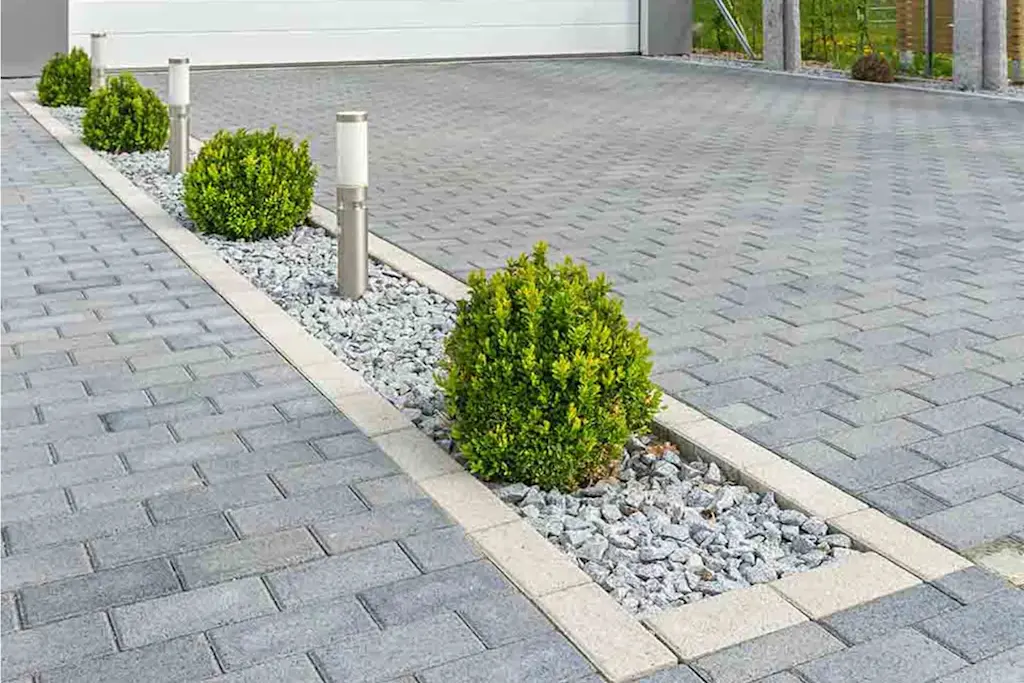
For homeowners seeking a premium, highly customizable, and distinctly aesthetic option, pavers are a compelling answer to what are driveways made of. Pavers are individual blocks, typically made from concrete, brick, or natural stone, laid over a prepared sub-base and sand layer. The sheer variety in shapes, sizes, colors, and textures is truly immense, allowing for intricate patterns and unique designs that elevate a home's exterior dramatically.
Our work with Pavers is a testament to their transformative power. They offer unparalleled design flexibility, allowing us to create bespoke looks that perfectly complement any Landscape Design. From classic herringbone patterns to modern linear designs, pavers add a level of sophistication that other materials simply can't match. They're also incredibly durable. Because they're individual units, they can flex slightly with ground movement, making them less prone to cracking than monolithic surfaces like concrete. That's a critical, non-negotiable element for long-term performance.
Maintenance is also a significant advantage. If a paver is damaged, it can be individually replaced without disturbing the surrounding area. This makes repairs relatively straightforward and often invisible. However, the upfront cost for pavers is generally higher than concrete or asphalt, mainly due to the labor-intensive installation process. We can't stress this enough: proper installation is paramount to prevent shifting or uneven surfaces over time. This approach, which we've refined over years, delivers real results. For those asking what are driveways made of with an eye towards enduring beauty and simple spot repairs, pavers are an excellent, if more investment-heavy, choice.
Gravel Driveways: Natural and Cost-Effective
Sometimes, the simplest answer to what are driveways made of is also the most natural and budget-friendly: gravel. Gravel driveways consist of loose aggregate, often a mix of crushed stone, shale, or shell, laid over a compacted base. They offer a rustic, informal aesthetic that can blend beautifully with natural landscapes and certain home styles, particularly those with a more rural or traditional feel.
From a cost perspective, gravel is typically the least expensive option for initial installation. It provides excellent drainage, reducing issues with standing water, and it's highly permeable, which can be an environmental benefit. Installation is relatively quick and less complex than paved options. Here's what we've learned: success depends on regular maintenance. It's comprehensive.
However, gravel requires consistent upkeep. It needs periodic regrading, refilling, and weeding to maintain its appearance and functionality. Over time, gravel can shift, creating ruts and uneven spots, and can be scattered by vehicle tires, necessitating regular redistribution. Snow removal can also be more challenging compared to a smooth, paved surface. While inexpensive initially, the ongoing maintenance can add up. So, when considering what are driveways made of and budget is the absolute top priority, gravel is a strong contender, but homeowners must be prepared for the maintenance commitment.
Permeable Pavement Options: The Eco-Conscious Choice
As sustainability continues its relentless march to the forefront of design, permeable pavement options are becoming increasingly relevant when discussing what are driveways made of. These systems are designed to allow stormwater to filter through the surface and into the ground below, reducing runoff and replenishing groundwater. This is a critical consideration in 2026, as environmental regulations and homeowner awareness grow.
Permeable options often include permeable Pavers, porous concrete, or permeable asphalt. They utilize specialized aggregates and installation techniques that create voids within the material, allowing water to pass through. The benefits are significant: reduced runoff, improved water quality by filtering pollutants, and mitigation of heat island effects. Our team sees a growing interest in these innovative solutions, especially for homeowners looking to create an eco-friendly outdoor space that integrates seamlessly with elements like Artificial Turf and efficient Landscape Lighting.
However, permeable driveways generally have a higher upfront cost than conventional materials. They also require careful installation by experienced professionals and specific maintenance, such as periodic vacuuming to prevent clogging of the pores. It's a nuanced choice, but one that offers substantial long-term environmental dividends. When contemplating what are driveways made of and environmental impact is a key factor, permeable systems offer a compelling, responsible solution.
The Design-Build Advantage: Why Expertise Matters
Choosing the right material for your driveway is a monumental decision, impacting not just aesthetics but also functionality, longevity, and your budget for years to come. It’s not just about what are driveways made of; it’s about how they’re made and who makes them. This is where the value of a full-service design and build company like Modern Yardz becomes apparent. We don't just pour concrete or lay pavers; we envision and construct entire outdoor living environments.
Our comprehensive approach ensures that your driveway choice integrates flawlessly with your entire property. Maybe you're considering Outdoor Kitchens or dreaming of elegant Pools and Spas. Perhaps Fire Features or custom Patio Covers and Pergolas are on your mind. Each element influences the others, and the driveway is often the connective tissue. We offer everything from a Standard Design Package to a Luxe Design Package, ensuring every detail is considered.
We understand the local climate, the soil conditions, and the specific demands placed on exterior surfaces. This deep, unflinching expertise allows us to recommend materials and construction methods that aren't just aesthetically pleasing, but also structurally sound and durable. We're not just building yards; we're building spaces where memories are made. Our meticulous planning and execution ensure that whether you opt for concrete, asphalt, pavers, or gravel, your investment will stand the test of time and truly enhance your home. That's the reality. It all comes down to impeccable craftsmanship and a holistic design philosophy.
Comparing Driveway Materials: A Quick Look
To help you visualize the differences, here's a concise comparison of what are driveways made of, outlining key aspects of the most common materials:
| Feature |
Concrete |
Asphalt |
Pavers |
Gravel |
| Initial Cost |
Moderate to High |
Low to Moderate |
High |
Low |
| Durability |
Very High (20-40+ years) |
Moderate (15-25 years) |
Very High (25-50+ years) |
Low to Moderate (5-10 years before refresh) |
| Maintenance |
Low (sealing, occasional crack repair) |
Moderate to High (regular sealing, patching) |
Low (weed control, occasional joint sand refill, individual replacement) |
High (regular raking, refilling, weeding) |
| Aesthetics |
Clean, modern, customizable (stamped, stained) |
Uniform black, utilitarian |
Highly versatile, decorative, premium look |
Rustic, natural, informal |
| Repairability |
Difficult (patches visible, section replacement) |
Easy (patches blend well) |
Very Easy (individual unit replacement) |
Very Easy (add more gravel) |
| Drainage |
Poor (unless porous concrete) |
Poor (unless permeable asphalt) |
Good (if permeable, or with proper base) |
Excellent (highly permeable) |
| Eco-Factor |
Low (high embodied energy) |
Low (petroleum-based) |
Moderate to High (if permeable) |
High (natural, permeable) |
This table provides a general overview, but it's important to remember that specific project costs and lifespans can vary significantly based on installation quality, local climate, and usage. What are driveways made of is only part of the equation; the craftsmanship applied is equally vital.
Future Trends in Driveway Construction for 2026 and Beyond
Looking ahead, our team sees several compelling trends shaping what are driveways made of. As we move further into 2026, sustainability and smart home integration are becoming paramount. We're observing increased demand for materials that reduce environmental impact, like recycled aggregates in concrete and asphalt, and expanded adoption of permeable surfaces. Homeowners are increasingly mindful of their ecological footprint, even down to their driveway.
Another burgeoning trend involves smart features. Think heated driveways that automatically melt snow and ice, or integrated Landscape Lighting systems that illuminate pathways with motion sensors or at dusk. These aren't just luxuries; they're becoming practical solutions for demanding schedules and high expectations. We're also seeing a greater emphasis on multimodal driveways – spaces that aren't just for parking but also serve as extensions of outdoor living areas, perhaps connecting seamlessly to a new patio or even a dedicated sports court. The line between purely functional and truly integrated outdoor space continues to blur. It's an exciting time to be in this industry, honestly.
When you're asking what are driveways made of, you're really inquiring about durability, curb appeal, and long-term value. It's a decision that impacts your daily life and your home's worth. Our team believes in empowering homeowners with knowledge, ensuring they make choices that truly align with their vision and budget. We're here to guide you through every step, from initial concept to the final, gleaming surface.
Ready to transform your home's entrance? We'd love to help bring your vision to life. [BOOK MY FREE CONSULTATION] today, and let's discuss the possibilities for your next outdoor project. You can also explore our full range of services on our website.
Frequently Asked Questions About Driveway Materials
Q: What are the most durable driveway materials available in 2026?
A: Concrete and pavers generally offer the longest lifespan, often lasting 25-50 years or more with proper installation and maintenance. Their inherent strength and resistance to various elements contribute significantly to their durability.
Q: How much does it cost to install a new driveway, and what factors influence the price?
A: Driveway costs vary widely based on material, size, complexity of design, and site preparation. While gravel is the least expensive, pavers and permeable options are typically at the higher end. Our team can provide a detailed quote after assessing your specific needs.
Q: What are driveways made of that are best for cold climates with heavy snow?
A: Asphalt's flexibility makes it somewhat resistant to freeze-thaw cracking, though it still requires sealing. Concrete can be durable if properly reinforced and installed with appropriate expansion joints. Heated driveways, regardless of material, are an excellent solution for snow.
Q: Can I mix different driveway materials for a unique look?
A: Absolutely! Combining materials like concrete with paver borders or integrating gravel sections with paved pathways is a fantastic way to create a custom, visually dynamic entrance. Our Landscape Design experts often recommend this for added character.
Q: What are driveways made of that are most environmentally friendly?
A: Permeable pavers and porous concrete/asphalt are top choices for eco-friendliness as they allow water to filter back into the ground, reducing runoff. Gravel is also permeable and natural, making it a good option if you're mindful of environmental impact.
Q: How often do I need to maintain my driveway, depending on the material?
A: Maintenance schedules differ significantly. Asphalt typically needs sealing every 2-5 years, while concrete benefits from sealing every 3-5 years. Pavers mainly require joint sand replenishment and occasional cleaning. Gravel needs regular raking and refilling, which we've mentioned can be a continuous task.
Q: What are driveways made of that are easiest to repair if damaged?
A: Gravel is the easiest; you simply add more. For paved surfaces, individual pavers can be replaced, making them highly repairable. Asphalt patches generally blend better than concrete, which often shows visible repairs or requires larger section replacements.
Q: Are there specific driveway materials that increase home value more than others?
A: High-quality, well-installed driveways, especially those made of pavers or stamped/decorative concrete, can significantly boost curb appeal and perceived home value. The aesthetic impact of these materials is substantial, drawing a premium.
Q: What are driveways made of that are resistant to oil stains or tire marks?
A: While no material is entirely immune, sealed concrete and pavers offer good resistance, especially with timely cleaning. Asphalt's porous nature can make it more susceptible to absorbing oil and fluid stains. Regular sealing helps protect all materials.
Q: What's the typical installation timeframe for different driveway types?
A: Gravel driveways are usually the quickest, often completed in a day or two. Asphalt can be installed relatively fast, often within a week. Concrete and paver installations, especially for larger or more complex designs, can take anywhere from one to three weeks, depending on the scope.
Q: Can I install a driveway over an existing one?
A: Sometimes, yes, but it depends on the condition of the existing driveway. A new asphalt layer can be laid over old asphalt or even concrete if the base is sound. For pavers, a complete removal of the old surface and proper base preparation is almost always necessary for long-term stability. Our team always assesses the existing conditions first.
Q: What are driveways made of that offer the best traction?
A: Textured concrete, pavers with slightly rough surfaces, and gravel generally offer better traction than smooth asphalt or plain concrete. This can be an important safety consideration, particularly in areas prone to rain or ice.
Q: Is it possible to have a heated driveway, and what materials work best for it?
A: Yes, heated driveways are an increasingly popular feature in 2026. Electric radiant heating cables or hydronic (liquid-based) systems can be installed beneath concrete, asphalt, or pavers. All these materials work effectively with heating systems, though concrete and pavers are often preferred for their thermal mass and ease of integration.
Q: What are driveways made of that are best for heavy vehicles?
A: Reinforced concrete is typically the most robust choice for consistently bearing heavy vehicles, such as RVs or large trucks. A properly installed paver driveway with a strong base can also handle significant loads due to its interlocking system. Gravel, if compacted well with a sufficient depth, can also support heavy vehicles, but it will require more frequent maintenance to prevent ruts.



.webp)
.webp)