So, You Need to Tame a Slope on a Budget?
It’s a situation our team at Modern Yardz sees all the time. You have a sloped yard, an erosion problem, or you just want to create more usable, terraced space. The solution is clear: a retaining wall. But the budget? That’s often less clear. The question we hear constantly is, “how to build a retaining wall for cheap?” It's a valid, practical concern, and frankly, it's the starting point for some of the most creative projects we’ve seen.
Let’s be honest, though. In 2026, the cost of materials and labor isn't getting any lower. The key to how to build a retaining wall for cheap isn’t about cutting corners that lead to a catastrophic failure down the road. It’s about being smart. It’s about choosing the right materials for your specific needs, understanding the non-negotiable principles of construction, and knowing where you can save money without sacrificing an ounce of structural integrity. We've built countless walls, from simple garden borders to complex, engineered structures, and we're here to share what we've learned so you can tackle this project with confidence.
The Anatomy of a Retaining Wall (That Won't Fail)
Before we even touch on materials, you have to understand what makes a retaining wall stand. It's not just a stack of blocks. It’s an engineered system designed to fight a relentless battle against gravity and water pressure. A surprising number of people exploring how to build a retaining wall for cheap overlook these fundamentals, and that's a recipe for a leaning, bulging, or completely collapsed wall in a few years. We can't stress this enough.
A successful wall has several critical components:
- The Footing/Base: This is the foundation. It's a trench filled with compacted gravel that provides a stable, level surface for the first course of your wall. Skimping here is the number one mistake we see. A poor base guarantees a failed wall. The entire structure depends on it. A proper foundation is central to how to build a retaining wall for cheap because re-doing it is incredibly expensive.
- The Wall Itself (The Face): This is the visible part, made from your chosen material—blocks, timbers, stones, etc. The material choice is a huge factor in how to build a retaining wall for cheap, and we'll dive deep into that shortly.
- The Drainage System: This is the unseen hero. It consists of a gravel backfill zone, a perforated pipe (or weep holes), and landscape fabric. Its job is to collect water that soaks into the soil behind the wall and channel it away. Without proper drainage, hydrostatic pressure (the force of water-logged soil) will build up and push your wall over. It’s not a matter of if, but when. This is a non-negotiable part of the process.
- The Backfill: This is the soil used to fill the space behind the wall once it's built. Some of it will be the drainage gravel, and the rest will be the native soil you excavated.
- Geogrid Reinforcement: For walls over a few feet tall, this is essential. Geogrid is a strong, plastic mesh that is laid in layers between the wall blocks and extends back into the soil. It effectively anchors the wall to the earth behind it, dramatically increasing its strength. For anyone serious about learning how to build a retaining wall for cheap that is also safe, understanding geogrid is vital.
Understanding these parts is the first real step in figuring out how to build a retaining wall for cheap. Because if any one of them is missing or poorly executed, the money you 'saved' will be dwarfed by the cost of demolition and rebuilding.
Choosing Your Materials: The Biggest Cost Factor
Here’s where the rubber meets the road. Your choice of material will have the single largest impact on the total cost of your project. As you explore how to build a retaining wall for cheap, you'll find a few standout options. Each has its own profile of cost, ease of installation, and longevity. Our experience shows that the 'cheapest' option isn't always the best value in the long run.
| Material |
Avg. Cost (per sq. ft.) |
DIY Friendliness |
Lifespan (Approx.) |
Best For |
| Treated Wood/Timber |
$15 - $25 |
High |
15-20 years |
Low walls (under 4 ft), rustic look, straight lines. |
| Interlocking Blocks |
$20 - $35 |
High |
50+ years |
DIY projects, curved or straight walls, modern look. |
| Poured Concrete |
$30 - $50 |
Low (Pro Recommended) |
50-100 years |
Tall, engineered walls, modern industrial aesthetic. |
| Gabion Baskets |
$10 - $40 |
Medium |
50-100 years |
Permeable walls, rustic/industrial look, using on-site rock. |
| Natural Stone (Dry-Stack) |
$25 - $60+ |
Low to Medium |
100+ years |
Rustic, naturalistic walls; requires skill and patience. |
Let's break these down a bit further.
Treated Wood Timbers: This is often the go-to answer for how to build a retaining wall for cheap. It's lightweight, easy to cut, and relatively inexpensive upfront. However, it has the shortest lifespan. Even pressure-treated wood will eventually rot from constant contact with damp soil. For a small garden bed or a very low, non-critical wall, it can be a great choice. But for anything holding back a significant slope, you have to consider its limited lifespan.
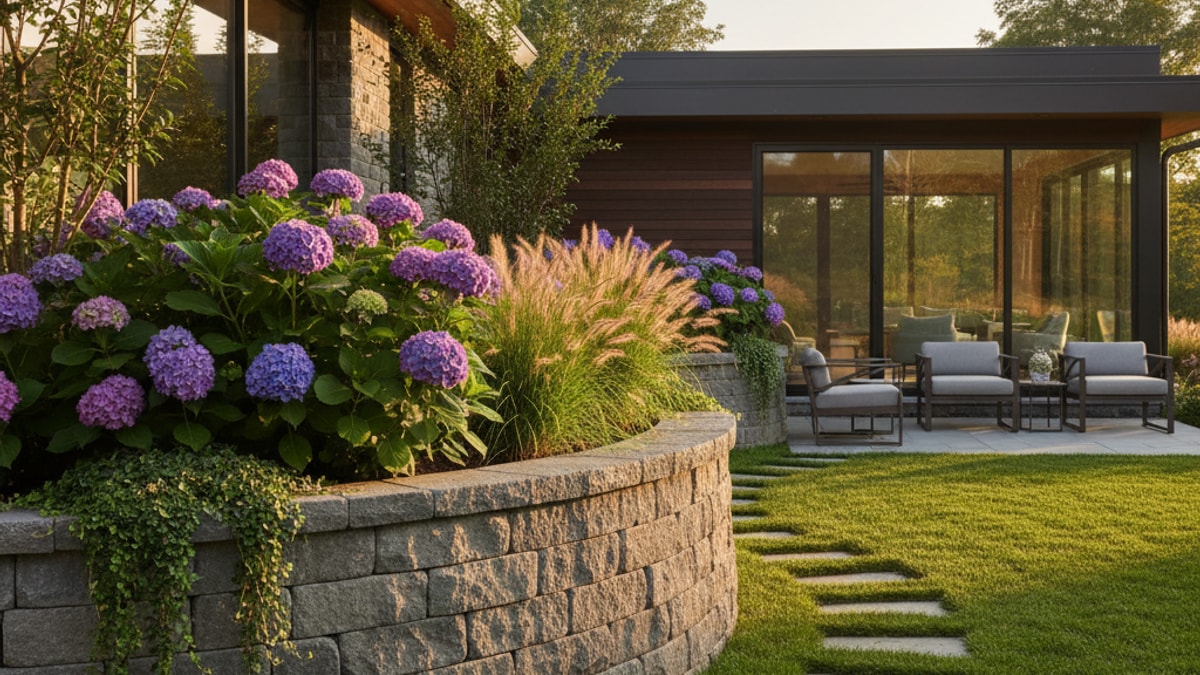
Interlocking Concrete Blocks: Our team finds this to be the sweet spot for most DIY homeowners. These blocks are specifically designed for retaining walls, with a lip on the back that helps lock them together and create the correct setback (the slight backward lean of the wall). They're uniform, easy to handle, and come in countless styles and colors. While the per-block cost is low, the total project cost rises with the necessary base gravel, drainage stone, and capstones. Still, for a durable, long-lasting solution, this is a fantastic approach for anyone wanting to know how to build a retaining wall for cheap that will actually last.
Gabion Walls: This is a really interesting and increasingly popular option in 2026. A gabion wall is simply a wire mesh cage filled with rocks. The cost can be extremely low if you have a source of free rock on your property. They are also excellent for drainage, as water passes right through them. The main labor is in assembling the baskets and filling them, which can be time-consuming but doesn't require a ton of specialized skill. This method is a formidable contender in the quest for how to build a retaining wall for cheap.
Poured Concrete: While not typically considered 'cheap,' a poured concrete wall can be cost-effective if it's part of a larger project. For instance, if you're already hiring a team for a project involving our Concrete SAN Diego services, adding a retaining wall can be more efficient than bringing in a separate crew. For DIY, the cost of forms, rebar, and the concrete itself makes it less of a budget option. Its strength, however, is unmatched.
The Labor Equation: DIY vs. Hiring a Pro
Labor is the other massive variable. Doing it yourself is the most obvious way to answer the question of how to build a retaining wall for cheap. You can potentially save 50% or more of the total project cost. But—and this is a big but—it's incredibly hard, physical work. You'll be digging, lifting heavy blocks or timbers, shoveling tons of gravel, and ensuring every single step is precise.
Ask yourself these honest questions:
- Is my wall taller than 3-4 feet? Most municipalities require an engineer's stamp and a permit for walls over this height. This is no longer a simple DIY project; it's a structural build that carries significant liability. This is where professional Seat Retaining Walls expertise becomes critical.
- Do I have the physical ability and time? A 20-foot long, 2-foot high wall can easily take a full weekend or more for an inexperienced person. It's back-breaking labor. Don't underestimate it.
- Do I have the right tools? You'll need a heavy-duty shovel, a level, a tamper, a wheelbarrow, a circular saw (for wood) or a masonry chisel/saw (for blocks), and sturdy gloves. Renting tools can add to the cost.
- What is the cost of a mistake? If your DIY wall fails, it could cause a landslide, damage your property or a neighbor's, and will cost a fortune to fix. The initial savings of a DIY approach evaporate instantly when a wall fails. The core of how to build a retaining wall for cheap is to build it right the first time.
For many homeowners, a hybrid approach works best. Perhaps you do the demolition and excavation yourself to save on labor costs, then hire a professional team like ours to handle the critical base preparation and wall construction. Let’s Design the Outdoor Space You’ve Been Dreaming Of, and we can help you figure out where your efforts and our expertise can best meet to fit your budget.
Step-by-Step: How to Build a Retaining Wall for Cheap
Alright, let's get into the practical steps. We'll use an interlocking block wall as our example, as it's the most common and effective DIY solution. The process for how to build a retaining wall for cheap using blocks is straightforward but requires meticulous attention to detail.
Step 1: Planning and Layout
Don't even think about touching a shovel yet. First, plan your wall. Use stakes and string, or even a garden hose, to mark the exact location. Call 811 to have all underground utility lines marked. This is free and legally required. You absolutely do not want to hit a gas line. This planning phase is a crucial part of how to build a retaining wall for cheap because it prevents costly mistakes.
Step 2: Excavation
Dig a trench for your base. The trench should be deep enough to accommodate 4-6 inches of compacted gravel plus about half the height of your first block. It should also be wide enough for the block plus at least 12 inches of drainage gravel behind it. As you dig, set the soil aside on a tarp—you'll use some of it for backfill later.
Step 3: The All-Important Base
This is where you cannot cut a single corner. Fill the trench with 4-6 inches of paver base or crushed gravel. Rake it smooth and then compact it. We mean really compact it. Rent a hand tamper or a plate compactor. Your goal is a rock-solid, perfectly level base. Check it with a 4-foot level in all directions. An unlevel base means a wobbly, unsafe wall. We’ve seen it happen. The key to how to build a retaining wall for cheap is a solid foundation; it prevents the most expensive repairs.
Step 4: Setting the First Course
Your entire wall's success depends on this first row of blocks. Place each block on the compacted base, making sure it's perfectly level side-to-side and front-to-back. Use a rubber mallet to make fine adjustments. Wiggle each block to ensure it's fully seated. This is the most tedious, but most critical, part of the entire installation. Every single block in this first course must be perfect.
Step 5: Drainage and Backfill
Once the first course is set, lay your perforated drainage pipe behind it, ensuring it has a slight slope to drain to an open area. The holes in the pipe should face down. Now, backfill behind the blocks with at least 12 inches of 3/4-inch drainage gravel. This gravel zone is what relieves the hydrostatic pressure.
Step 6: Stacking Subsequent Courses
Now it gets easier. Stack the next course of blocks, staggering the joints like a brick pattern for strength. Most interlocking blocks will automatically create the necessary setback. As you build, continue to backfill with drainage gravel behind the wall. Every two courses or so, you should also pull some of the native soil you excavated over the gravel. If your wall is over 3 feet, you’ll need to integrate geogrid at this stage, laying it over the blocks and extending it back into the slope before you backfill over it.
Step 7: Capping the Wall
Once you've reached your desired height, you finish the wall with capstones. These are secured with a high-strength concrete adhesive. This gives the wall a clean, professional look and ties the top course together. This final touch is a simple but impactful part of how to build a retaining wall for cheap that still looks fantastic.
Critical Mistakes to Avoid (That Cost You More Later)
We've been called in to fix a lot of failed walls. The dream of how to build a retaining wall for cheap can quickly turn into a nightmare. Here are the catastrophic errors we see most often:
- Ignoring Drainage: We've said it before, and we'll say it again. No drainage pipe and no gravel backfill is a guaranteed failure. Water is your enemy here.
- An Unlevel or Uncompacted Base: The wall will settle unevenly, joints will open up, and it will begin to lean. The time you spend on the base pays you back for decades.
- Forgetting to Account for Setback: A retaining wall should lean back into the hill it's holding. Good interlocking blocks do this automatically, but if you're using other materials, you must build this in manually.
- Building Too High Without an Engineer: Don't do it. The forces at play in a tall wall are immense. If you need a wall over 4 feet, it's time to stop thinking about how to build a retaining wall for cheap and start thinking about how to build it safely with professional help. Our Landscape Design SAN Diego team can create engineered plans that are both safe and beautiful.
Beyond the Basics: Adding Style on a Budget
A budget-friendly wall doesn't have to be boring. Once you've mastered the basics of how to build a retaining wall for cheap, you can add features that make it a centerpiece of your yard. Consider building gentle curves into your wall—they are often stronger than straight lines and add visual interest. You can also incorporate spaces for planting pockets or even integrate low-voltage Landscape Lighting SAN Diego to illuminate the wall at night.
By building the wall wider in certain sections, you can create integrated seating, a feature we specialize in with our dedicated Seat Retaining Walls service. This dual-purpose design is the essence of smart landscaping and a brilliant way to add value. Ready to Upgrade Your Backyard? Thinking about these features from the start can transform a purely functional structure into something extraordinary.
Building a retaining wall is a formidable project, but it’s absolutely achievable on a budget if you're armed with the right knowledge. The secret to how to build a retaining wall for cheap is to invest your money and effort where it counts most: in a solid foundation, impeccable drainage, and the right materials for the job. Do that, and you'll have a structure that not only saves you money upfront but also serves your landscape beautifully for decades to come.



.webp)
.webp)