A beautiful landscape often hinges on the integrity of its foundational elements. For many properties, that includes a robust retaining wall, a structure designed to hold back soil, prevent erosion, and create usable, level ground. But what happens when these crucial barriers start to falter? It's a question we hear often: how to fix retaining wall issues before they escalate into something truly catastrophic.
Here at Modern Yardz, we've spent years crafting stunning outdoor spaces, and a significant part of that work involves ensuring the underlying stability and longevity of every feature. We understand the critical role these walls play in both aesthetics and safety, and we've seen firsthand the wide array of problems that can emerge. Addressing these issues promptly isn't just about preserving your property's visual appeal; it's about safeguarding its structural health and, ultimately, your investment. Let's delve into the definitive strategies for retaining wall repair, helping you understand when it's a DIY job and when you absolutely need seasoned professionals.
Unpacking the 'Why': Why Do Retaining Walls Fail?
Before we can effectively discuss how to fix retaining wall problems, we've got to understand why they fail in the first place. It's rarely a single, isolated factor. Instead, it's often a confluence of pressures, environmental assaults, and sometimes, initial construction shortcuts that lead to eventual compromise. Our team has found that the primary culprits typically fall into a few key categories.
Firstly, there's poor drainage. This is, honestly, the most common and destructive offender. Water is relentlessly powerful. If a retaining wall isn't properly designed with adequate drainage behind it – think weep holes, gravel backfill, or a French drain system – hydrostatic pressure builds up. That's the force of water accumulating behind the wall, pushing against it with immense, sometimes dramatic, force. Over time, this relentless pressure will buckle, crack, or even completely collapse a wall, regardless of how well it was built. We can't stress this enough: managing water is paramount.
Then, we encounter soil issues. The type of soil, its compaction, and its expansion properties all play a formidable role. Expansive clay soils, for instance, swell dramatically when wet and shrink when dry, creating immense pressure on the wall during wet seasons and pulling away during dry spells. This constant push-and-pull, this relentless movement, can destabilize even the most robust structures. Improperly compacted backfill during construction is another significant issue; it settles unevenly, creating voids and differential pressures that the wall isn't designed to withstand.
Improper design or construction is another critical, non-negotiable element. A retaining wall isn't just a stack of blocks or a pour of concrete. It's an engineered structure. The correct footing, proper reinforcement (like rebar in concrete or geogrid in segmental block walls), and appropriate batter (the slight backward slope) are all crucial. If these elements are overlooked or skimped on during installation, the wall is essentially doomed from the start. Our experience shows that many walls we're called to assess in 2026 for repair are suffering from design flaws that date back years, sometimes decades.
Finally, external factors contribute. Earthquakes, heavy vehicle traffic nearby, or even just the natural settling of the surrounding landscape over many, many years can exert forces that push a wall beyond its designed capacity. Understanding these root causes is the first, most vital step in figuring out how to fix retaining wall damage effectively and permanently.
Recognizing the Red Flags: When Your Wall Needs Attention
Identifying the warning signs early can save you significant headaches and expense down the line. We've seen homeowners delay action, hoping a problem will 'fix itself,' only to face much larger, more expensive repairs later. Don't fall into that trap. Here are the key indicators that your wall needs help, and that you should start thinking about how to fix retaining wall issues.
Cracking: Not all cracks are equal. Hairline cracks that are stable and don't grow might be cosmetic. But larger, horizontal, vertical, or stair-step cracks (especially in block or concrete walls) are serious. If you can fit a dime into a crack, or if cracks are lengthening and widening over time, that's a major red flag. Diagonal cracks can indicate settlement or shear failure.
Bulging or Leaning: This is perhaps the most alarming sign. If any section of your wall appears to be bowing outwards, or if the entire wall is tilting away from the earth it's holding back, you're looking at a significant structural failure. This indicates immense pressure from behind and an imminent risk of collapse. When we see this, our immediate recommendation is always professional intervention.
Separation or Shifting: Blocks or timbers pulling apart from each other, or the entire wall segment visibly moving away from an adjacent structure (like a house foundation or patio), signals trouble. This loss of integrity means the wall isn't acting as a cohesive unit anymore.
Drainage Issues: Water seeping through the face of the wall, persistent puddling at the base, or erosion channels forming directly behind or around the wall are all symptoms of inadequate drainage. While not a direct structural failure of the wall material itself, it's a clear precursor to one, signifying that hydrostatic pressure is likely building.
Efflorescence: Those white, powdery deposits on the face of masonry walls? That's efflorescence, a sign that water is migrating through the wall, dissolving salts from the masonry or soil, and depositing them on the surface as it evaporates. It's usually a cosmetic issue, but it's a strong indicator of water presence, which, as we discussed, is the primary enemy of retaining walls.
DIY vs. Professional Intervention: Knowing Your Limits
When confronting signs of failure, a crucial decision point emerges: can you tackle this yourself, or do you need professional help? Let's be honest, this is crucial for both safety and effectiveness when deciding how to fix retaining wall damage. Our team at Modern Yardz has seen it all, and we're here to offer some clear guidance.
Minor Repairs (Potential DIY):
- Small, stable hairline cracks: If they're purely cosmetic and not expanding, you might be able to fill them with a suitable masonry sealant or caulk. This is more about aesthetics and preventing water intrusion into the wall's interior than structural repair.
- Efflorescence removal: This is usually a cleaning job, requiring a stiff brush, water, and sometimes a mild acidic cleaner (use with extreme caution and follow manufacturer instructions). Remember, this treats the symptom, not the underlying water issue.
- Minor mortar joint repair: If a small section of mortar is crumbling between blocks, and the wall itself is otherwise sound, you might re-point it with fresh mortar. This requires careful technique to ensure a strong bond.
- Improving surface drainage: Adding a small swale or French drain away from the top of the wall to redirect surface water can be a proactive step, assuming the wall's internal drainage is already adequate.
When to Call the Professionals (Always Recommend):
- Any sign of bulging, leaning, or significant shifting. This is non-negotiable. These are immediate structural emergencies that require expert assessment and often, heavy equipment and specialized knowledge. You're not just fixing a wall; you're often engineering a solution to soil dynamics and water management.
- Large, growing, or stair-step cracks. These indicate structural stress or differential settlement that a DIY patch simply won't address. We've found that trying to patch these yourself is like putting a band-aid on a gaping wound.
- Water persistently seeping through the wall face. This indicates a major drainage problem behind the wall that needs a comprehensive solution, likely involving excavation and installation of proper drainage systems. This is beyond typical DIY capabilities.
- Walls over 4 feet tall. Taller walls exert immense pressure and their failure carries significant risk. Even minor issues on tall walls should be professionally evaluated.
- Walls supporting critical structures. If the wall is holding back soil that supports a house foundation, a driveway, or any other valuable asset, don't risk it. The stakes are too high. Our Landscape Design SAN Diego experts always factor in structural integrity for such critical elements.
Honestly, though, for anything beyond the most superficial cosmetic fixes, especially when dealing with the core problem of how to fix retaining wall issues, professional expertise is the safest and most effective route. Our experience, refined over years, delivers real results because we approach each wall as a unique engineering challenge.
Core Strategies to Fix Retaining Wall Issues: A Professional Approach
When we're called in to assess and implement solutions for how to fix retaining wall dilemmas, our approach is comprehensive. We don't just patch; we diagnose and engineer for long-term stability. Here's what we've learned makes the difference.
Comprehensive Assessment and Diagnosis
The first, most critical step is an unflinching, thorough assessment. We'll examine the wall's materials, its height, its age, and critically, the surrounding landscape, paying close attention to grading, water flow, and soil characteristics. We're looking for the true root cause, not just the visible symptoms. This often involves understanding the wall's original construction, if possible, and evaluating any recent changes to the property that might be contributing to the problem. We might even look at the design principles for our own Seat Retaining Walls to compare against existing structures.
Addressing Drainage – The Linchpin of Longevity
If poor drainage is the culprit (and it frequently is), fixing it is paramount. This often means carefully excavating behind the wall, installing a perforated drainage pipe (a 'French drain') wrapped in filter fabric, and backfilling with coarse, free-draining gravel. We'll ensure weep holes are clear or install new ones if necessary. Proper grading at the top of the wall to divert surface water away is also essential. This step alone can alleviate immense hydrostatic pressure and significantly improve the wall's chances of survival. Our team frequently integrates advanced drainage solutions into our Pavers SAN Diego and Concrete SAN Diego projects to prevent future issues.
Reinforcement and Stabilization
For walls that are leaning or bulging but haven't completely failed, reinforcement can sometimes be an option, though often, partial or full rebuild is necessary. This might involve:
- Deadman Anchors: For timber or block walls, these are T-shaped anchors buried in the soil behind the wall and tied back to the wall face with cables or rods. They effectively extend the wall's footprint, providing additional resistance to pressure.
- Helical Piers: For more severe cases, helical piers can be driven deep into stable soil and connected to the wall, offering significant stabilization. This is a highly specialized task.
- Geogrid Installation: For segmental block walls, if we're rebuilding, we'll ensure proper geogrid layers are installed at specified intervals, extending deep into the backfill. This interlocks the wall blocks with the soil mass, creating a more stable, unified structure.
Partial or Full Rebuild
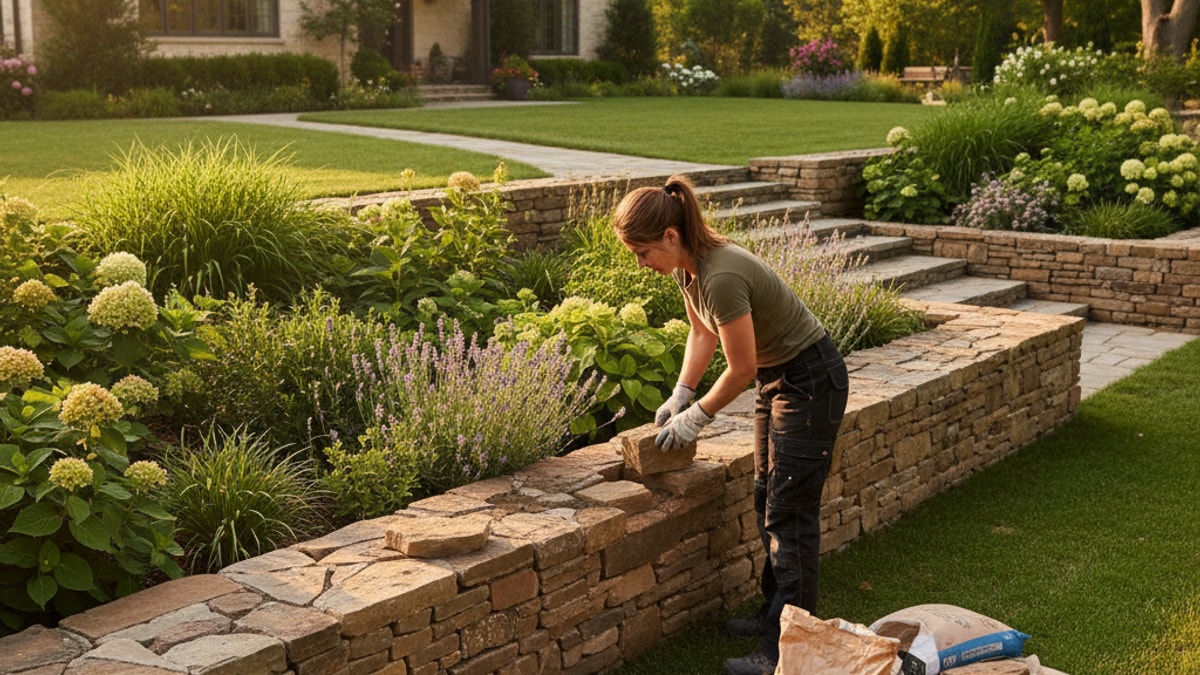
Sometimes, the damage is simply too extensive, or the original construction was so flawed, that a rebuild is the only viable, long-term solution. This means carefully dismantling the compromised sections (or the entire wall), clearing the site, and reconstructing it from the ground up, adhering to modern engineering standards. This is where our expertise truly shines. We'll ensure:
- Proper Footing: A stable, level foundation is non-negotiable. For concrete, this means appropriate depth and reinforcement. For block walls, a compacted gravel base and often a concrete leveling pad.
- Correct Materials: Using high-quality, durable materials suitable for the load and environmental conditions. Whether it's robust segmental blocks or reinforced poured concrete, the material choice matters immensely.
- Internal Drainage: As mentioned, meticulous installation of drainage pipes and gravel backfill.
- Reinforcement: Correct placement of rebar in concrete or geogrid in block walls.
- Batter and Setback: Ensuring the wall has the correct slight backward slope (batter) and/or block setback for stability.
This isn't just about putting bricks back; it's about building a new, resilient structure that will withstand the forces of nature for decades to come. When you're asking how to fix retaining wall issues of this magnitude, you're really asking how to build a better retaining wall.
Comparative Approaches to Retaining Wall Repair
Understanding the various methods to fix retaining wall damage is key to making informed decisions. While many options exist, we typically recommend solutions that offer long-term durability and address the root cause, rather than just superficial symptoms. Here's a look at common issues and our recommended approaches:
| Issue Type |
Common Symptoms |
DIY Approach (Limited Scope) |
Professional Approach (Recommended) |
Durability Rating (Pro Approach) |
| Cosmetic Cracks |
Hairline cracks, surface blemishes |
Masonry caulk/sealant, paint |
High-quality, flexible crack fillers; professional surface restoration; aesthetic enhancements with Landscape Design SAN Diego |
High |
| Efflorescence |
White powdery residue |
Stiff brush, water, mild cleaner |
Specialized masonry cleaners; addressing underlying moisture source; applying sealers to prevent recurrence |
Medium-High |
| Minor Mortar Issues |
Crumbling mortar joints, small gaps |
Repointing small sections |
Full repointing of affected areas with appropriate mortar mix; structural assessment for underlying causes |
High |
| Drainage Problems |
Water seepage, pooling at base, erosion |
Surface grading changes |
Excavation, installation of French drains/weep holes, granular backfill, proper grading, geotextile fabric installation |
Very High |
| Bulging/Leaning |
Wall bowing outwards, tilting away |
Not recommended for DIY |
Structural analysis, excavation, internal reinforcement (e.g., geogrid, deadman anchors), or partial/full rebuild with engineered solutions |
Very High |
| Significant Cracks |
Large, growing, stair-step cracks |
Not recommended for DIY |
Structural repair, potential section replacement, reinforcement, addressing settlement/soil issues. May involve Concrete SAN Diego work. |
High-Very High |
| Complete Collapse |
Wall has fallen or is in imminent danger |
Absolutely no DIY |
Full excavation, engineered redesign, and complete rebuild. Critical to get this right. |
Very High |
As you can see, while minor cosmetic issues might be a weekend project, anything hinting at structural compromise demands the expertise we offer. That's the reality. It all comes down to ensuring safety and long-term value.
Preventative Measures: Keeping Your Wall Strong in 2026 and Beyond
Once you’ve gone through the effort to fix retaining wall issues, you'll want to ensure it stays in top shape. Proactive maintenance is always less costly and stressful than reactive repairs. Here’s how we recommend safeguarding your investment:
- Monitor Drainage: Regularly check weep holes and drainage systems for blockages. Keep the area around the wall clear of debris, leaves, and anything that could impede water flow. Ensure downspouts from your roof aren't discharging directly onto or behind the wall.
- Observe for Changes: Periodically walk the length of your wall, looking for new cracks, bulges, or shifting. Early detection is key. We recommend doing this at least twice a year, especially after heavy rain events or during significant seasonal changes.
- Manage Landscaping: Don't plant large trees or shrubs too close to the wall, especially those with aggressive root systems. Roots can exert immense pressure over time, contributing to failure. Keep vegetation trimmed and healthy.
- Control Soil Erosion: Prevent erosion at the top and base of the wall. Maintaining healthy ground cover or adding a layer of mulch can help stabilize the soil and prevent washouts that could undermine the wall's integrity.
- Avoid Overloading: Don't place excessive weight (like large boulders, heavy equipment, or piles of excavated soil) directly on top of or too close to the wall. This adds unnecessary stress.
- Regular Inspections: Consider a professional inspection every few years, especially for older or taller walls. An expert eye can spot subtle issues before they become major problems. This kind of due diligence is essential in 2026's changing climate conditions.
These seemingly small actions can make a monumental difference in the lifespan of your retaining wall, ultimately minimizing the need to repeatedly figure out how to fix retaining wall problems.
Choosing the Right Partner for Your Retaining Wall Project
When faced with a failing retaining wall, the choice of contractor is paramount. You need a team that doesn't just understand construction but also the complex interplay of soil, water, and structural engineering. This isn't a task for just any handyman; it demands specialized knowledge and experience. Here's what we offer at Modern Yardz:
- Deep Local Expertise: We've been designing and building robust outdoor structures for years. We understand the unique soil conditions and climate, which directly impacts how retaining walls behave over time. This local insight is invaluable.
- Comprehensive Service: From initial Landscape Design SAN Diego to final construction, we handle every step. This integrated approach ensures seamless communication and consistent quality. We're not just fixing a wall; we're restoring an integral part of your outdoor living space.
- Quality Materials and Craftsmanship: We use only the highest-grade materials and employ skilled artisans who take immense pride in their work. Our commitment to durability means you won't be asking how to fix retaining wall issues again anytime soon.
- Transparent Communication: We believe in keeping you informed at every stage, explaining the diagnosis, the proposed solution, and the timeline. No surprises, just clear, honest dialogue.
- Commitment to Longevity: Our goal isn't just to fix the immediate problem but to ensure your retaining wall stands strong for decades. We focus on engineering solutions that address root causes, not just symptoms.
We've built our reputation on transforming outdoor spaces into areas of beauty, function, and enduring quality. Whether it's a new installation or a complex repair, our dedication to excellence ensures your project is in the most capable hands. Let's design the outdoor space you've been dreaming of.
Facing a compromised retaining wall can feel daunting, but with the right expertise, it's a completely solvable problem. We've walked countless homeowners through the process of understanding how to fix retaining wall damage, turning potential hazards into durable, attractive landscape features. Don't let a failing wall detract from your property's beauty or compromise its safety. Take action, and consider partnering with a team that brings a wealth of experience and a commitment to quality to every project. Ready to upgrade your backyard? Our team is here to help transform your outdoor space into something extraordinary, building structures that last and memories that endure.



.webp)
.webp)