What Is a Retaining Wall Used For? San Diego Guide (2026)
A retaining wall holds back soil, prevents erosion, creates flat usable space, and manages drainage. San Diego costs: $25–$120/sq ft installed. Walls over 4 feet need permits and engineering.
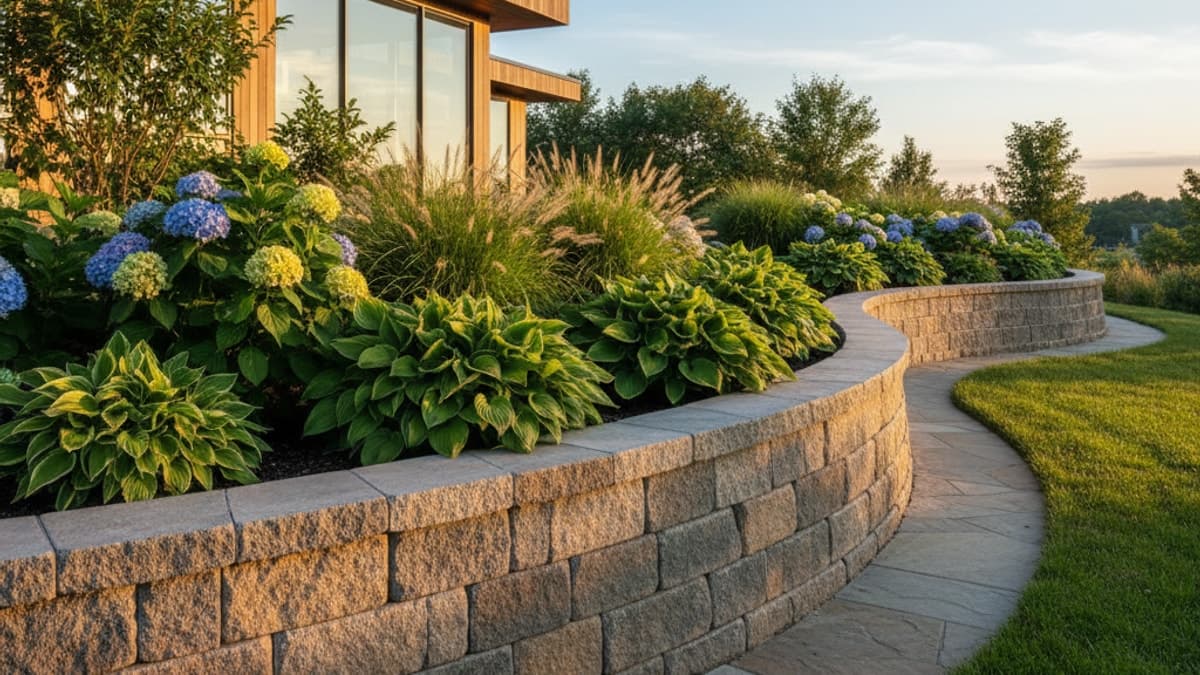
A retaining wall holds back soil on sloped terrain, prevents erosion, creates flat usable space, manages drainage, and protects structures from soil pressure. In San Diego — where expansive clay soils dominate inland neighborhoods like Scripps Ranch, Rancho Bernardo, Poway, and Mira Mesa, and elevation changes are common across hillside lots in La Jolla, Mount Helix, and the Encinitas Ranch — retaining walls are typically required when you cut into a slope steeper than 3:1, build any hardscape on a slope, or exceed local code thresholds for cuts over 2–4 feet. Cost ranges in 2026: $25–$50 per square foot installed for concrete block, $50–$100+ for natural stone, $60–$120 for poured concrete with engineered plans. Walls over 4 feet require permits and structural engineering in most San Diego jurisdictions.
Modern Yardz has designed and built hundreds of retaining walls across San Diego County under California Contractor License #1082881 — from coastal lots in La Jolla and Del Mar to inland-foothill properties in Poway, Alpine, and Ramona. This guide covers the four primary functions, when retention is required, material specs, cost ranges, and the drainage details that determine whether a wall lasts 30 years or fails in three.
What is a retaining wall used for?
Four core functions, each addressing a specific failure mode on sloped properties:
- Soil retention and slope stability. When you cut into a slope to create a flat area — for a pool, patio, building pad, or terrace — you create an artificial vertical face that's inherently unstable. Without a retaining wall, that face slumps and erodes. Within two San Diego rainy seasons, an unsupported cut slope can lose all definition.
- Erosion prevention. Even gentle slopes shed soil over time, especially during the December–March rainy season that delivers most of San Diego's annual precipitation in concentrated bursts. Retaining walls create a physical barrier that stops migration and, when properly designed, redirects water flow away from vulnerable areas.
- Creating usable flat space. Hillside lots are common across San Diego County. A 3-foot retaining wall can create a 10-foot-deep terrace on a moderate slope; a 6-foot wall on steeper grade yields up to 15 feet of flat space. The wall doesn't just hold soil — it unlocks square footage for a pool, outdoor kitchen, or fire feature.
- Drainage management. A properly designed wall incorporates drainage that prevents water from pooling behind it. Without that drainage, hydrostatic pressure builds and eventually cracks or collapses the wall — and poor drainage is the leading cause of retaining wall failure across San Diego properties.
When is a retaining wall required vs. optional?
Specific conditions make retention non-negotiable:
- Slope exceeds 3:1 (horizontal:vertical) and you're creating a flat area — required. Slopes steeper than 3:1 are inherently unstable when cut; vegetation alone won't prevent slumping or erosion.
- Building any structure on or near a slope — required. Pools, patios, foundations, even large planter beds need stable level substrate. Shifting soil undermines footings and causes cracking.
- Mild slope (5:1 or gentler) with no construction planned — optional. Natural slopes at this grade are stable; erosion can be managed with planting and grading. A wall here is aesthetic, not structural.
- Local building code requires retention — required. San Diego County codes typically require permitted retention for cuts exceeding 2–4 feet depending on jurisdiction. Inspectors flag unpermitted cuts and can require retroactive installation.
- Property line at the base of a slope, erosion affects neighbors — required. California liability law: if your soil migrates onto neighboring property, you're responsible for damage. The retaining wall is both practical and legal protection.
The honest answer: if you're cutting into a slope to create any kind of hardscape — patio, pool deck, outdoor kitchen, or large planter bed — you need a retaining wall. The only debate is height and material. Skipping it to save money guarantees a more expensive repair later, often after damage to the hardscape itself.
What does a retaining wall cost in San Diego?
Pricing per square foot of wall face (height × length), 2026 ranges:
- Concrete block / segmental retaining wall (SRW): $25–$50/sq ft installed. Most cost-effective option for walls 3–8 feet. Common brands: Allan Block, Belgard, Pavestone, Keystone.
- Natural stone (dry-stacked or mortared): $50–$100+/sq ft. Premium aesthetic, longer lifespan. Best for shorter walls (under 4 feet) and integrated landscape features.
- Poured concrete: $60–$120/sq ft for walls over 6 feet with engineered plans. Maximum strength, required for heavy lateral loads (saturated clay soils, surcharge from structures above).
- Treated timber (legacy option): $15–$30/sq ft. 15–20 year lifespan before rot. Increasingly rare in 2026 as concrete options have become more cost-competitive.
- Gabion walls (rock-filled wire baskets): $35–$65/sq ft. Industrial aesthetic, excellent drainage, popular for naturalistic designs.
San Diego pricing factors that move the number:
- Soil type. Inland neighborhoods (Scripps Ranch, Rancho Bernardo, Mira Mesa, Poway) sit on expansive clay that requires thicker footings, more rebar, and often engineered drainage — adds 15–25% to the per-sq-ft cost.
- Site access. Hillside lots in La Jolla, Mount Helix, and El Cajon often have restricted access for equipment. Hand-carry sites add 20–35% to labor.
- Wall height. Walls over 4 feet require permits and engineered plans in most jurisdictions. Engineering and permits add $1,500–$5,000 to project cost.
- Drainage spec. A properly drained wall costs 10–15% more than a wall with minimum drainage — and lasts 3–5x longer.
For a typical 30-foot-long, 4-foot-tall (120 sq ft) concrete block wall in San Diego, expect $3,500–$6,500 installed. The same wall in poured concrete with full engineering: $8,500–$15,000.
What's the best material for my retaining wall?
Material choice tracks wall height, soil load, and aesthetic:
- Concrete blocks (SRW): versatile workhorse. Engineered with internal setback so each course leans slightly back into the slope. Easy to install, stack, and cap. Best for 3–8 foot walls in most soils.
- Poured concrete: maximum strength. Required for walls over 6 feet, saturated clay sites, or surcharge loads from structures above. Permanent — can't be modified later.
- Natural stone: premium organic aesthetic. Dry-stacked stone provides excellent natural drainage. Best for shorter walls (under 4 feet) integrated into landscape design.
- Gabion: wire baskets filled with crushed rock. Self-draining by design, naturalistic appearance, fast install. Increasingly popular for sustainable design.
- Engineered modular blocks with geogrid reinforcement: for tall walls (6–15 feet). Geogrid mesh extends horizontally into the backfill, tying the wall and reinforced soil into a single retaining mass.
- Dual-purpose [seat or retaining walls](/services/concrete-contractors-san-diego): combine retention with built-in seating at typically 18-inch height for comfortable seating. Same structural standards as functional walls.
For most San Diego residential applications under 4 feet, concrete block hits the right cost-to-quality ratio. Above 4 feet — especially in expansive clay zones — poured concrete with engineered plans is the safer call.
Why is drainage the make-or-break factor?
Poor drainage is the #1 cause of retaining wall failure in San Diego. A wall built without proper drainage traps water behind it during the rainy season, saturates the backfill soil, and increases lateral pressure beyond the wall's design capacity. The wall tilts, cracks, or collapses — usually within 3–5 years.
A properly drained wall includes:
- Weep holes at the base, spaced every 4–6 feet horizontally, 6–12 inches above grade. Allow trapped water to escape.
- 12–18 inches of clean angular gravel backfill behind the wall (not pea gravel — fines clog quickly). Creates a drainage zone for water to percolate through.
- Perforated drain pipe (French drain) at the base of the wall, embedded in gravel, wrapped in filter fabric. Routes collected water to a safe discharge point — storm drain, dry well, or lower property elevation.
- Granular backfill in the load zone — if native soil is San Diego clay, replace the first 2–3 feet of backfill with crushed rock or engineered fill to reduce lateral load.
- Surface grading that directs water away from the wall, not toward it.
Skipping drainage to save money is the most expensive mistake homeowners make. We've replaced walls that were structurally sound but failed because the original installer skipped the drainage step — repair cost runs 3–5x the original install because the failed wall has to come down before the new one goes up.
What permits does San Diego require for retaining walls?
Permit thresholds in San Diego County (verify with your specific jurisdiction):
- Walls under 3 feet: typically permit-exempt for residential properties — San Diego Municipal Code §129.0203 exempts retaining walls only up to 3 feet, measured from the bottom of the footing to the top of the wall
- Walls 3–4 feet (depending on jurisdiction): may require a basic building permit but often no engineered plans
- Walls over 4 feet: require both a building permit AND structural engineering stamps. Plan check fees typically $500–$2,000; engineering $1,000–$3,500
- Walls over 6 feet: require deeper engineering analysis (geotechnical soil report often required)
- Walls within property setbacks or affecting drainage to neighbors: additional review and possible neighbor notification
Permitting walls correctly protects resale value (unpermitted walls flag during home inspections), legal standing in property-line disputes, and code compliance. We pull permits as part of every project that requires them.
How long does a retaining wall last?
Expected service life by material, with proper drainage:
- Properly drained concrete block (SRW): 50–75 years
- Poured concrete with engineered footings: 75–100 years
- Natural stone (dry-stacked or mortared): 75–100+ years
- Treated timber: 15–20 years before rot compromises structure
- Gabion (galvanized wire): 50–75 years; coated wire 75+
- Walls without drainage (any material): 3–10 years before failure
San Diego climate is favorable for retaining wall longevity — no freeze-thaw cycles, moderate annual rainfall. The biggest threats are seismic activity (low-magnitude quakes occasionally affect tall walls), expansive clay soil cycling (worst in inland neighborhoods), and homeowner-overlooked drainage maintenance.
What happens when a retaining wall fails?
Failure modes in escalating order:
- Forward lean (most common). Wall is losing the fight against soil pressure. Drainage has failed, footing was inadequate, or the original design didn't account for actual load. Small lean (under 2 degrees) can sometimes be repaired with drainage upgrades and soil removal. Larger lean (5+ degrees) means rebuild.
- Cracking. Hairline cracks in poured concrete are cosmetic. Cracks wider than 1/4 inch running vertically or diagonally signal structural failure.
- Sliding (lateral movement). Wall is moving forward as a unit. Footing is undersized, soil pressure exceeds design. Almost always means rebuild.
- Bulging or block displacement. Individual blocks pushing forward. Geogrid reinforcement failure, or no reinforcement was installed when it should have been.
- Collapse. End-stage failure. Wall has fallen forward or buckled. Hardscape and structures above are at immediate risk.
Annual inspection after the rainy season catches most problems early. Walk the wall, sight along the top from each end (looking for lean), check weep holes for clogs, look for cracks wider than 1/4 inch.
Can I install a retaining wall myself?
Yes for short walls. No for tall walls or load-bearing applications:
- DIY-appropriate: walls under 3 feet using interlocking concrete blocks on flat or gently sloping sites with simple drainage. Allan Block and similar systems are designed for homeowner install. Material cost for a 30-foot, 2.5-foot-tall DIY wall: $800–$1,800. Time: 2–3 weekends including base prep.
- Hire a contractor when: wall exceeds 3 feet, soil is expansive clay, slope is over 3:1, hardscape will sit above the wall, neighbor's property is at the base, permits are required, or you're not confident in load calculations.
DIY failures typically result from skipped base preparation (no compacted gravel pad), inadequate drainage (no perforated pipe, no proper backfill rock), or undersized footings. The remediation cost is essentially equal to a fresh pro install.
How Modern Yardz designs and builds retaining walls
We're a design-build firm — same team handles site assessment, engineering coordination, permits, and construction. For retaining wall projects:
- Soil and slope assessment included in every consultation
- Drainage spec'd as a non-optional system, not an add-on
- Engineering coordination for walls over 4 feet
- Permits pulled and inspections coordinated
- 1-year workmanship warranty plus material warranties (typically 15–25 years from manufacturers)
- Integration with surrounding landscape design, pavers, and seat or retaining walls
Walls built alongside a pool or full-yard renovation are typically bundled into a single project budget and financed together — usually the cleanest path when retention enables the rest of the build.
For a typical 30-foot, 4-foot-tall residential retaining wall in San Diego (~120 sq ft), our pricing lands at:
- Concrete block (SRW), full drainage, no permits required: $4,200–$6,500
- Concrete block, full drainage, permitted with engineering: $5,500–$9,000
- Poured concrete with full engineering: $9,500–$15,000
- Natural stone (mortared) with full drainage: $7,500–$12,000
Larger walls, hillside access, expansive clay sites, or complex tiered designs shift the number — and we tell you how much, in writing, before you sign anything.
Ready for an honest assessment on your slope challenge? Book a free consultation — we'll walk the property, photograph the slope conditions, and send a written line-item plan within 48 hours.
Start Your Free Design Consultation
Tell us about your project and we'll be in touch within 24 hours. No pressure, no obligation.
Common questions
- What is a retaining wall used for?
- A retaining wall holds back soil on sloped terrain, prevents erosion, creates flat usable space, manages drainage, and protects structures from soil pressure. The four core functions address specific slope failure modes: instability when cut, erosion over time, lost square footage on hillsides, and water pressure buildup.
- How much does a retaining wall cost in San Diego in 2026?
- $25–$50 per square foot for concrete block, $50–$100+ for natural stone, $60–$120 for poured concrete with engineered plans, $35–$65 for gabion. A typical 30-foot, 4-foot-tall (120 sq ft) wall runs $3,500–$6,500 in concrete block or $8,500–$15,000 in poured concrete.
- When is a retaining wall required vs. optional?
- Required when slope exceeds 3:1 and you're creating a flat area, when building any structure on a slope, when local code mandates retention for cuts over 2–4 feet, or when erosion threatens neighboring property. Optional on mild slopes (5:1 or gentler) with no construction planned.
- Do I need a permit for a retaining wall in San Diego?
- Walls under 3 feet are typically permit-exempt. Walls 3–4 feet may need a basic building permit. Walls over 4 feet require both a permit and structural engineering stamps. Permits add $500–$2,000 in fees plus $1,000–$3,500 in engineering. Walls over 6 feet often require geotechnical soil reports.
- What's the most important factor in retaining wall longevity?
- Drainage. Poor drainage is the #1 cause of retaining wall failure in San Diego. A properly drained wall lasts 50–100 years; a wall without drainage often fails in 3–10 years. Drainage requires weep holes, 12–18 inches of clean gravel backfill, perforated drain pipe, and surface grading away from the wall.
- What's the best material for a retaining wall?
- Concrete block (SRW) is the most cost-effective for walls 3–8 feet. Poured concrete is required for walls over 6 feet or with heavy lateral load (saturated clay soils, surcharge). Natural stone is best for shorter walls under 4 feet with premium aesthetic. Gabion offers excellent drainage and naturalistic look.
- How tall can I build a retaining wall without engineering?
- Most San Diego jurisdictions allow walls up to 4 feet without engineered plans, though permits may still be required at 3–4 feet. Walls over 4 feet always require structural engineering. Walls over 6 feet typically require a geotechnical soil report on top of structural engineering.
- Can I build a retaining wall myself?
- Yes for walls under 3 feet using interlocking concrete blocks on flat or gently sloping sites. Material cost runs $800–$1,800 for a 30-foot DIY wall. Hire a contractor for walls over 3 feet, expansive clay soils, slopes over 3:1, walls under hardscape load, walls near property lines, or any wall requiring permits.
- What does a retaining wall failure look like?
- Forward lean (most common) means soil pressure is winning. Cracks wider than 1/4 inch signal structural failure. Lateral sliding means the footing is undersized. Block bulging or displacement means geogrid reinforcement failed. Annual inspection after rainy season catches most issues early.
- How long does a retaining wall last in San Diego?
- Properly drained concrete block walls: 50–75 years. Poured concrete with engineered footings: 75–100 years. Natural stone: 75–100+ years. Walls without proper drainage fail in 3–10 years regardless of material. San Diego climate is favorable — no freeze-thaw — so drainage is the dominant longevity factor.
- Does San Diego soil affect retaining wall design?
- Yes significantly. Expansive clay soils common in Scripps Ranch, Rancho Bernardo, Mira Mesa, and Poway require thicker footings, more rebar, and engineered drainage — adding 15–25% to per-sq-ft cost. Sandy coastal soils are easier to engineer for. Soil type drives the entire wall design, not just the cost.
- Do retaining walls add value to a San Diego property?
- Yes, especially walls that create new usable flat space. A wall that turns a sloped side yard into a patio or outdoor kitchen zone adds functional square footage that buyers value. Walls that prevent foundation erosion or protect adjacent structures preserve property value by avoiding $10,000–$30,000 foundation repairs.
Ready to design your dream yard?
Tell us about your project. We'll send back a real plan, not a templated quote.
Book My Free Consultation→