Every homeowner eventually faces a challenge with uneven terrain. Maybe you're battling erosion, trying to carve out a level patio area, or simply aiming to add a compelling aesthetic feature to your property. That's where a well-designed retaining wall comes in, transforming unusable slopes into practical, beautiful landscape elements. It's a significant undertaking, yes, but knowing how to construct a retaining wall correctly ensures longevity and structural integrity.
Here at Modern Yardz, we've spent years perfecting outdoor spaces, and we understand the nuances involved in such crucial structural components. We're not just about aesthetics; we believe that true beauty in landscaping emerges from impeccable engineering and thoughtful design. This deep dive isn't just theory; it’s born from countless projects, real-world challenges, and the kind of on-the-ground experience you can only gain over time. Let's explore exactly how to construct a retaining wall that truly lasts, enhancing your home for years to come.
Understanding the 'Why' Behind Your Retaining Wall Project
Before we even think about the first shovel full of dirt, it's vital to grasp the purpose of your retaining wall. Is it purely functional, designed to hold back a significant amount of earth and prevent soil erosion? Or is it more decorative, perhaps creating a raised garden bed or defining a seating area? Often, it's a blend of both, but understanding the primary objective helps dictate the design, materials, and, critically, the structural requirements. Our team has found that walls over four feet tall, or those supporting significant loads (like a driveway above), require professional engineering. This isn't just a recommendation; it's often a local code requirement in 2026. Ignoring this step can lead to catastrophic failure, and no one wants that.
We often see clients eager to jump straight to material selection, but pausing to consider the 'why' will save you considerable headaches and expense down the line. It's the foundational element of knowing how to construct a retaining wall effectively. The wall's purpose informs its height, length, and the type of pressure it will endure, which directly impacts the construction method you'll choose. A small garden wall might be a DIY project, but a load-bearing wall needs expertise. That's where our comprehensive Landscape Design SAN Diego services truly shine, helping you plan every aspect with precision.
Essential Planning: The Unflinching First Steps
Honestly, this is where most DIY projects go awry. Proper planning is the critical, non-negotiable element when learning how to construct a retaining wall. It involves several crucial stages, each demanding meticulous attention. We can't stress this enough: cutting corners here will inevitably lead to problems. Our experience shows that a well-executed plan prevents costly rework and ensures a safe, durable structure. So, what exactly does this planning entail?
First, consider your site's topography. Are we dealing with gentle slopes or a dramatic, challenging grade? What's the soil like? Clay, sand, or a mix? Soil composition significantly affects drainage and the wall's foundation. We've seen walls fail purely because the sub-base wasn't properly prepared for the soil type. Next, think about drainage. This is paramount. Water pressure behind a retaining wall is a formidable force, and if not managed, it will, without fail, compromise your wall's integrity. We'll dive deeper into drainage later, but start thinking about it now. You're trying to figure out how to construct a retaining wall that defies gravity and water, after all.
Then there are the utilities. Seriously, don't forget to call 811 (or your local equivalent) before you dig. Striking a gas line or electrical conduit is not just dangerous; it's devastating. You'd be surprised how often this gets overlooked in the excitement of a new project. Finally, local codes and permits. This is 2026, and regulations are becoming more stringent. Most jurisdictions require permits for retaining walls over a certain height, often 3-4 feet. Failing to secure the right permits can lead to fines, forced demolition, and a significantly delayed project. We're well-versed in navigating these requirements, ensuring your project adheres to all necessary standards. If you're wondering how to construct a retaining wall without legal headaches, start with the permit office.
Choosing Your Materials: More Than Just Aesthetics
The market offers a sprawling array of materials for retaining walls, each with its own benefits and drawbacks. Your choice impacts not only the look but also the structural capabilities, cost, and lifespan of the wall. Our team frequently works with clients to select the perfect material that balances their aesthetic vision with the practical demands of the project. When you're considering how to construct a retaining wall, the material choice is central.
Segmental Retaining Wall (SRW) Blocks
These are incredibly popular, and for good reason. They're versatile, interlocking, and relatively easy to work with for heights under four feet. SRW blocks don't require mortar, relying on their weight, interlocking design, and gravel backfill for stability. They come in various colors and textures, offering a lot of design flexibility. For a DIY enthusiast learning how to construct a retaining wall, these are often the go-to. However, for taller walls, or those with significant load, they need reinforcement like geogrid.
Natural Stone
Timeless, durable, and beautiful. Natural stone offers an organic, classic look that's hard to beat. It can be dry-stacked (without mortar) for smaller, decorative walls, or mortared for more robust structures. Working with natural stone demands a higher skill level and can be more labor-intensive, but the results are undeniably stunning. It's a premium option, often chosen for its long-term aesthetic value.
Poured Concrete
For sheer strength and versatility, poured concrete is hard to beat. It allows for custom shapes, curves, and immense load-bearing capacity. This is typically the choice for very tall walls or those needing significant structural integrity, like walls supporting roads or heavy structures. Poured concrete walls almost always require professional engineering and specialized forms. If you need to know how to construct a retaining wall that's virtually indestructible, this is it. Our Concrete SAN Diego services handle these complex installations with precision.
Timber/Wood
Less common for permanent, load-bearing walls due to rot and insect issues, but still used for smaller, temporary, or aesthetic applications. Pressure-treated timber can last a couple of decades, but it's not a 'forever' solution. It's generally more economical upfront, but consider the long-term maintenance and replacement costs.
Other Options
Gabion walls (wire cages filled with rocks) offer a unique, industrial look and excellent drainage. Railroad ties, while historically popular, are now less recommended due to environmental concerns and limited lifespan. For many homeowners, understanding how to construct a retaining wall means picking the right material for their specific scenario, budget, and desired outcome.
When we design and build Seat Retaining Walls for our clients, we often discuss these material options in detail, ensuring the final product isn't just functional but also seamlessly integrates with the overall aesthetic of their outdoor living space. It's about finding that perfect balance.
Key Considerations Before You Dig
Before any actual construction begins, there are a few more critical steps. These are often overlooked but are absolutely essential when you're learning how to construct a retaining wall that performs as expected. We've seen projects falter because these preparatory stages weren't given their due attention. That's the reality. It all comes down to detailed preparation.
Site Preparation and Layout
Clear the area of any vegetation, rocks, or debris. Mark out the footprint of your wall using stakes and string. Ensure your layout accounts for any curves or steps. This is where precision matters. A straight wall starts with a straight line on the ground. For more complex designs, or if you're integrating your wall into a larger project like an Outdoor Kitchens SAN Diego or Pools AND Spas, our professional layout services ensure everything aligns perfectly.
Excavation
This is more than just digging a trench. You need to excavate a trench for the wall's footing that's wider than your wall blocks and deep enough to place the first course below grade, often 6-12 inches, plus space for the gravel base. The trench bottom must be perfectly level and compacted. We mean perfectly level. Any deviation here will translate to an uneven wall, compromising its stability and appearance. This is a primary step in how to construct a retaining wall that doesn't lean or buckle.
The Construction Process: Step-by-Step
Alright, with the planning and preparation meticulously handled, we can finally discuss the physical act of how to construct a retaining wall. This isn't just about stacking blocks; it's a methodical process that builds strength from the ground up. Our team adheres to these steps rigorously, because we know from experience that each one contributes to the wall's long-term success.
Step 1: Laying the Base Course
After excavating, you'll need to create a stable base. This usually involves a layer of compacted gravel (typically 4-6 inches) in your trench. Use a plate compactor to ensure it's incredibly dense. Then, spread a thin layer of leveling sand or gravel over the compacted base. This layer needs to be perfectly level. Seriously, use a long level and a straight edge. This first course, often buried, sets the tone for the entire wall. It's comprehensive, and it's the beginning of how to construct a retaining wall with genuine integrity.
Step 2: Installing the First Course of Blocks
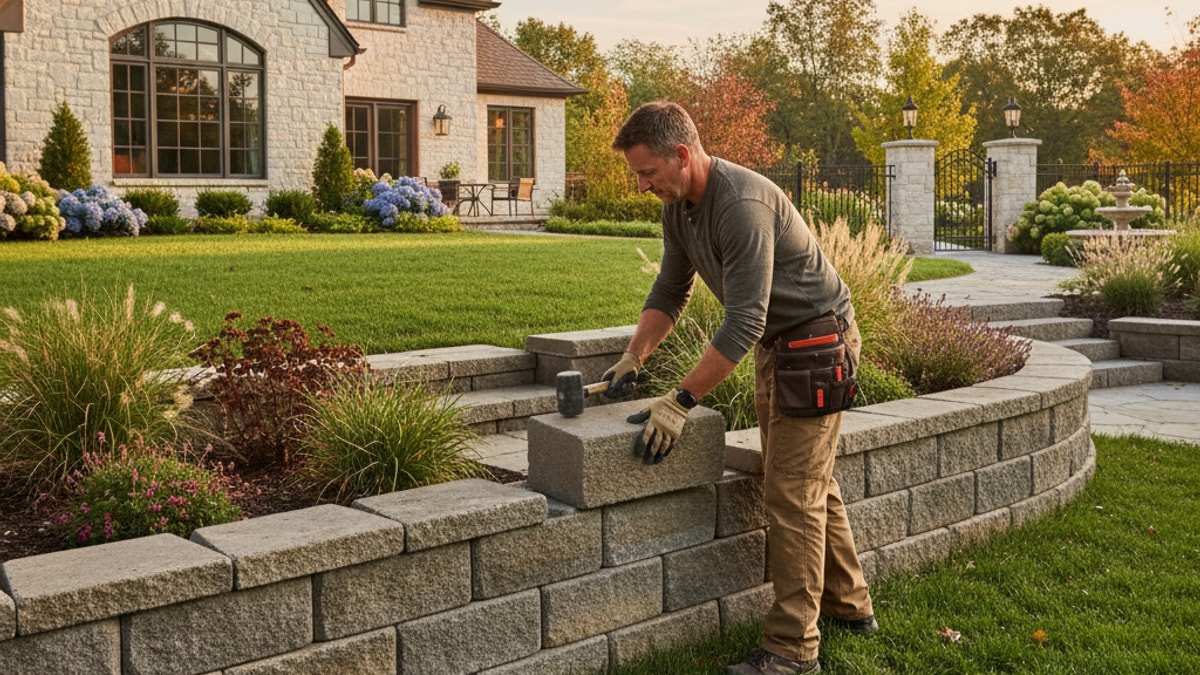
Place your first course of retaining wall blocks directly on the leveled base, ensuring they are perfectly level front-to-back and side-to-side. This is the single most important step for the wall's stability. If this course isn't level, every subsequent course will be off, leading to a leaning wall or gaps. Use a rubber mallet to tap blocks into place, making minor adjustments. You’re essentially building a perfectly flat, stable platform for the rest of the wall. This really is the secret to how to construct a retaining wall that looks good and stays put.
Step 3: Installing Drainage
Remember that discussion about water pressure? Here's where we address it. Behind your first course of blocks, lay a perforated drainpipe (often called a 'French drain') wrapped in a filter fabric. This pipe should slope gently towards an outlet point, ensuring water can escape. Backfill around this pipe with drainage gravel (clean, crushed stone, not pea gravel). This crucial step prevents hydrostatic pressure from building up behind the wall, which is a leading cause of retaining wall failure. You can't learn how to construct a retaining wall without mastering drainage.
Step 4: Adding Subsequent Courses
For segmental blocks, stack the next course on top of the first, offsetting the seams (like brickwork) for added strength. Use a brush to clean off any debris from the top of the blocks before placing the next layer. For walls requiring geogrid reinforcement, lay the geogrid back from the wall, spanning several feet into the backfill, at specified intervals (often every 2-3 courses, or as engineered). Geogrid locks into the blocks and extends into the earth, tying the wall into the soil mass behind it, dramatically increasing its stability. This is paramount for taller walls. Continue this process, ensuring each course is level, plumb, and properly interlocked or mortared.
Step 5: Backfilling and Compaction
As you add each course, backfill behind the wall with drainage gravel for at least 12 inches, then use soil. This isn't just about filling space; it's about compaction. Compact the backfill in 6-8 inch lifts (layers) using a hand tamper or plate compactor. Proper compaction prevents future settling, which could lead to voids behind the wall and eventual collapse. This step is often underestimated, but it's a significant factor in how to construct a retaining wall that withstands the elements. We've often seen the difference it makes.
Step 6: The Capstone
Once you reach your desired height, it's time for the capstone. These are often flatter, more finished blocks designed to sit on top of the wall. Secure them with a high-strength construction adhesive. This not only gives the wall a clean, finished look but also protects the underlying blocks from water infiltration. It's the final flourish, the aesthetic conclusion to how to construct a retaining wall that’s both functional and beautiful.
Comparison of Retaining Wall Types & Considerations
Different scenarios call for different solutions. Our team regularly evaluates site conditions, design objectives, and budget to recommend the optimal retaining wall type. It's not a one-size-fits-all approach.
| Feature / Wall Type |
Segmental Block Wall |
Poured Concrete Wall |
Natural Stone Wall |
Timber Wall (Pressure-Treated) |
| Max Height (Typical) |
4-6 ft (with geogrid) |
10+ ft (engineered) |
3-5 ft (mortared) |
2-3 ft (without engineering) |
| Cost (Relative) |
Medium |
High |
High |
Low-Medium |
| Installation Difficulty |
Moderate (DIY possible) |
High (Pro required) |
High (Skilled Pro) |
Moderate (DIY possible) |
| Aesthetic Options |
Good (varied textures/colors) |
Very High (custom forms) |
Excellent (organic, unique) |
Limited (rustic, utilitarian) |
| Durability/Lifespan |
Very Good (50+ years) |
Excellent (100+ years) |
Excellent (100+ years) |
Fair (15-25 years) |
| Drainage Needs |
Critical (internal system) |
Critical (weep holes/pipe) |
Good (often permeable) |
Moderate (backfill critical) |
| Maintenance |
Low |
Very Low |
Low |
Medium (inspections for rot) |
This table should give you a clearer picture of the tradeoffs involved. When you’re trying to figure out how to construct a retaining wall, these are the kinds of factors we weigh. We guide our clients through these choices, ensuring they're informed and confident in their decisions.
Long-Term Care and Maintenance for Your Retaining Wall
Building a retaining wall is an investment, and like any investment, it benefits from proper care. While a well-constructed wall requires minimal maintenance, neglecting it can shorten its lifespan. We've seen perfectly good walls deteriorate simply because basic checks weren't performed. This is part of the ongoing understanding of how to construct a retaining wall that truly lasts.
Regularly inspect your wall for any signs of bulging, cracking, or shifting. Small issues, if caught early, are usually easy to remedy. Pay close attention to the drainage system. Ensure the weep holes or drainpipe outlets are clear of debris. Clogged drainage will lead to water buildup, and as we discussed, water is the primary enemy of retaining walls. Keep vegetation clear from the face and top of the wall; roots can find their way into cracks and cause damage over time. If you notice significant changes, it's always best to consult with a professional. Our team is always here to offer advice or conduct inspections.
We genuinely believe that your outdoor space should be a source of joy and relaxation, not a constant battle against the elements. Knowing how to construct a retaining wall is a significant step towards achieving that. It's about creating order, adding beauty, and enhancing the functionality of your property. We've been transforming outdoor spaces since before 2026, and we're committed to bringing that same level of expertise and dedication to your project.
Ready to Upgrade Your Backyard? Whether you're planning a new Artificial Turf SAN Diego installation, envisioning stunning Fire Features, or need a robust retaining wall solution, we’re here to help. We understand the nuances of creating outdoor spaces that are as functional as they are beautiful. Let’s Design the Outdoor Space You’ve Been Dreaming Of. We invite you to visit our website to learn more about our services and see how we can help transform your vision into reality. We're passionate about bringing your outdoor dreams to life.
FAQs About Retaining Wall Construction
What's the ideal height for a DIY retaining wall?
Generally, we recommend keeping DIY retaining walls under 3-4 feet in height. Taller walls exert significant pressure and often require professional engineering and permits to ensure stability and safety.
How deep should the foundation trench be for a retaining wall?
For most walls, the trench should be at least 6-12 inches deep, plus the thickness of your gravel base. The first course of blocks should be partially or fully buried for maximum stability and a clean finish.
Is drainage really that important for a retaining wall?
Absolutely, drainage is critically important. Without proper drainage, water can build up behind the wall, creating immense hydrostatic pressure that can easily cause the wall to bulge, crack, or even collapse over time.
Can I use any type of gravel for backfill behind the wall?
No, it's essential to use clean, crushed stone (often referred to as 'drainage gravel' or '¾-inch clean stone'). Avoid rounded river rock or pea gravel, as these don't compact well and won't provide the necessary stability or drainage efficiency.
How do I make sure my retaining wall is level?
Start by ensuring your base trench is perfectly level and compacted. Use a long level on each block of the first course, tapping with a rubber mallet for adjustments. Continuously check for levelness on each subsequent course, both front-to-back and side-to-side.
Do I need a permit to construct a retaining wall?
In 2026, most jurisdictions require permits for retaining walls over a specific height, typically 3 or 4 feet. It's crucial to check with your local planning department before starting any construction to avoid fines or mandated demolition.
What's geogrid, and when is it necessary?
Geogrid is a geosynthetic material used to reinforce soil and stabilize retaining walls, especially those over 4 feet tall or supporting heavy loads. It's laid between courses and extends into the backfill, tying the wall into the earth for enhanced structural integrity.
Can I build a curved retaining wall with segmental blocks?
Yes, segmental retaining wall blocks are designed to allow for gentle curves. Many blocks have tapered sides or a lipped edge that helps create a natural curve. Planning the curve meticulously during layout is key.
How long does it take to construct a retaining wall?
The timeline varies significantly based on wall size, material, and your experience. A small DIY wall might take a weekend, while a large, engineered wall could take our professional team several days to a few weeks to complete, factoring in excavation and curing times.
What are common mistakes people make when building retaining walls?
Common mistakes include inadequate base preparation, neglecting drainage, improper backfill compaction, not offsetting block seams, and failing to secure necessary permits. These issues can compromise the wall's stability and lifespan.
Should I consult a professional for my retaining wall project?
We always recommend consulting a professional, especially for walls over 3-4 feet, or those supporting critical structures. Our expertise ensures proper design, material selection, and adherence to building codes, guaranteeing a safe and durable outcome.
What if my soil is mostly clay?
Clay soil retains water, making drainage even more critical. You'll need an even more robust drainage system, potentially including a thicker gravel backfill zone and a well-designed drainpipe. Proper compaction of the base is also paramount.
Can a retaining wall increase my property value?
Absolutely. A well-designed and properly constructed retaining wall can significantly enhance curb appeal, create usable flat areas, and prevent erosion, all of which contribute positively to your property's overall value and marketability.
How do I choose the right contractor for a retaining wall?
Look for a contractor with extensive experience in retaining wall construction, strong local references, proper licensing and insurance, and a portfolio of similar projects. Our team at Modern Yardz has decades of experience creating beautiful and functional outdoor solutions.
Creating an enduring retaining wall is a complex endeavor that truly benefits from a thoughtful, systematic approach. We're proud of the robust, beautiful outdoor spaces we've built, and we know that understanding how to construct a retaining wall correctly is fundamental to that success. We’re passionate about helping homeowners achieve their landscape dreams, turning challenges into stunning, functional features.



.webp)
.webp)