An outdoor kitchen is more than just a grill. It’s the heart of your backyard, the central hub for gatherings, and the place where memories are forged over good food and conversation. You’ve planned the layout, picked the perfect countertop, and installed the appliances. Now, you’re at the final stretch: the finishing touches that elevate a functional space into a seamless, professional-grade oasis. And right at the top of that list are the access doors. They seem simple, right? Just a stainless steel rectangle you pop into a hole.
Our team has seen firsthand that this is where many well-intentioned DIY projects go sideways. The installation of these doors is a critical, non-negotiable element that dictates not only the look of your kitchen but its longevity and durability against the elements. A poorly installed door can lead to water intrusion, pest infestations, and a crooked, amateurish look that undermines all the hard work you’ve put in. We're here to make sure that doesn't happen. This isn't just a manual; it’s our collective experience distilled into a practical guide on how to install outdoor kitchen access doors with the precision of a professional.
Why Getting the Door Installation Right is Non-Negotiable
Let’s be honest, the access doors in your outdoor kitchen island are the gatekeepers. They protect the internal components—gas lines, electrical wiring, plumbing, and storage—from everything nature throws at them. Rain, humidity, insects, rodents... you name it. A shoddy installation job is an open invitation for problems.
We can't stress this enough: a tiny, almost imperceptible gap at the top of a door frame can funnel a surprising amount of water directly into your island's cavity. Over time, this leads to a catastrophic mess. In a wood-framed island, you’re looking at rot, mold, and structural failure. In a steel-framed one, it’s rust and corrosion that can compromise the integrity of the entire build. Even in a robust masonry island, moisture buildup creates a haven for mold and mildew, which can damage wiring and create unpleasant odors every time you open the cabinet.
Then there's the aesthetic component. You’ve invested in a beautiful structure, perhaps with stunning stonework or sleek Pavers SAN Diego that tie into your patio. A crooked door, a sloppy sealant job, or a frame that isn't flush with the finish material sticks out like a sore thumb. It’s the one detail that can make an expensive project look cheap. Proper installation ensures clean lines, perfect alignment, and a watertight seal that looks as good as it performs. It’s the difference between a project that’s 'done' and a project that’s done right.
Before You Begin: The Pre-Installation Checklist
Proper preparation is about 80% of the job. Rushing this stage is the single biggest mistake we see homeowners make. Before you even think about picking up a tube of silicone, you need to have a bulletproof plan and the right components in hand. It will save you a world of frustration.
First, let's talk about the opening itself. The term 'rough opening' is a bit of a misnomer; you want it to be as precise as possible. Your door manufacturer will provide specs for the required cutout dimensions. These aren't suggestions. Measure your opening’s height and width in at least three different places. Are they consistent? Use a framing square to check that all four corners are a perfect 90 degrees. A surprising number of openings aren't perfectly square, and you need to know that now, not when the door is halfway in. If it’s out of whack, you may need to do some grinding on a masonry opening or trimming on a wood-framed one to correct it.
Choosing the right doors is just as crucial. The industry standard for quality is 304-grade stainless steel, which offers excellent rust and corrosion resistance for most environments. However, if you live in a coastal area with salt in the air, our team strongly recommends upgrading to 316-grade (or marine-grade) stainless steel. The added molybdenum provides superior protection against saltwater corrosion. This is a detail often covered in our comprehensive Landscape Design SAN Diego process, ensuring every material choice is suited for its specific environment.
Finally, gather your arsenal. Having every tool and material ready before you start prevents frantic trips to the hardware store mid-installation. It’s about workflow and precision.
| Tool Category |
Must-Have Tools |
Nice-to-Have Tools |
| Measuring & Layout |
Tape Measure, Carpenter's Square, Level (2-foot minimum) |
Laser Level, Digital Angle Gauge |
| Drilling & Fastening |
Power Drill/Driver, Appropriate Drill Bits (masonry/metal) |
Impact Driver, Right-Angle Drill Adapter |
| Sealing & Finishing |
Caulking Gun, High-Quality Exterior Silicone Sealant |
Painter's Tape, Mineral Spirits for cleanup |
| Fitting & Adjusting |
Composite Shims, Utility Knife |
Oscillating Multi-Tool, Small Pry Bar |
| Safety |
Safety Glasses, Work Gloves |
Knee Pads |
The Step-by-Step Installation Process: Our Team's Method
Alright, you’ve done your homework. The opening is prepped, your tools are laid out, and you have a high-quality door set ready to go. Now, it's time for the main event. We've refined this method over countless Outdoor Kitchens SAN Diego installations to ensure a perfect, weatherproof fit every time.
Step 1: The All-Important Dry Fit
Do not skip this. Seriously. Before any sealant or screws are involved, carefully place the door frame into the rough opening. Check how it fits. Is it snug? Is it too loose? You’re looking for a consistent gap of about 1/8 inch all the way around. This space is crucial for applying a sealant bead and for allowing minor adjustments with shims. Gently press the frame's flange against your finish material (stucco, stone, etc.). Does it sit flat? Or does it rock back and forth? This tells you if your wall surface is uneven. Make mental notes of any problem areas.
Step 2: Prepare for Sealing
Remove the door from the opening. For an exceptionally clean sealant line, apply painter's tape to the finished exterior wall of your island, creating a border around the entire perimeter of the opening. Leave about a 1/4-inch gap between the edge of the tape and the edge of the opening. This little trick is what separates a pro job from a messy amateur one. You’ll thank us later.
Step 3: Apply the Sealant
Now, grab your caulking gun and exterior-grade silicone. Apply a continuous, generous bead of sealant to the back of the door frame's mounting flange—the flat part that will sit against the island wall. Don't be shy with it, but keep it consistent. This bead is your primary water barrier. Some installers put the bead on the island wall itself, but we've found that applying it directly to the frame provides a cleaner, more controlled application.
Step 4: Set, Shim, and Level
This is where the magic happens. Carefully insert the sealant-backed frame into the opening. Press it gently into place until the silicone makes even contact with the wall. Do not fully tighten it yet.
Now, grab your level. Place it on the bottom of the frame opening. Is it perfectly level? If not, insert composite shims under the low side until it is. Now place the level on the sides of the frame. Is it perfectly plumb (vertically level)? If not, use shims on the sides to nudge it into position. This is a delicate dance of tiny adjustments. The goal is a frame that is perfectly level and plumb, with a consistent reveal around the doors themselves. The shims hold it in this perfect position while you fasten it.
Step 5: Secure the Frame
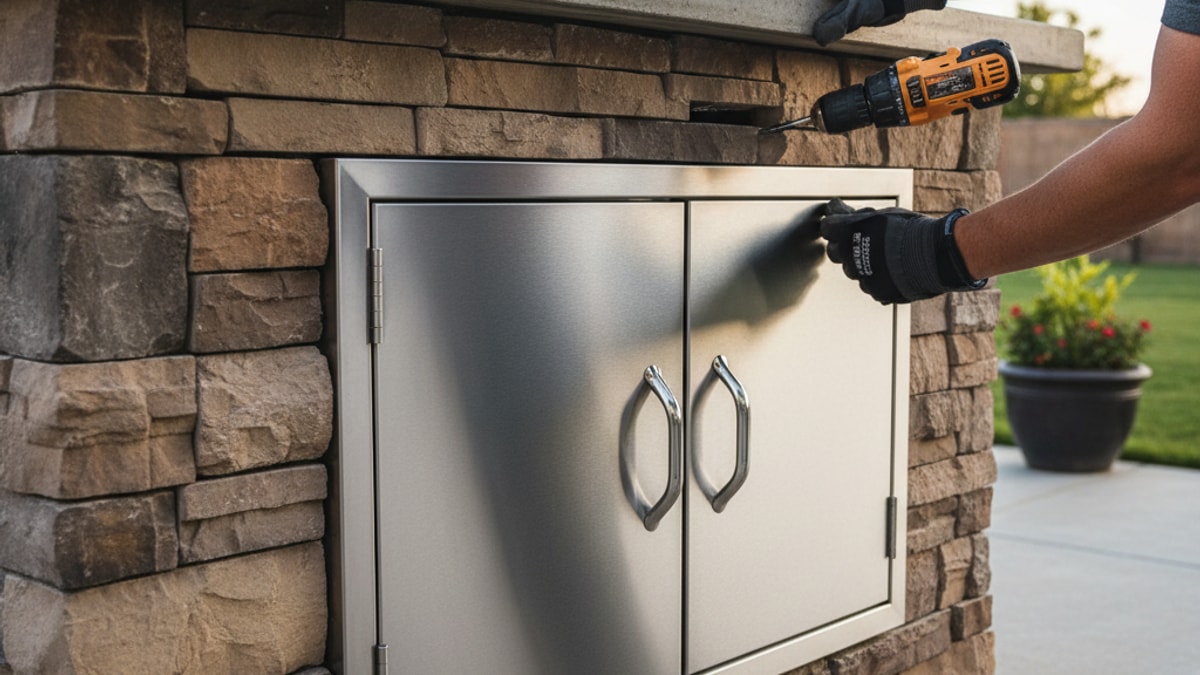
With the frame held perfectly in place by the shims, it’s time to secure it. Using your drill, drive the provided screws through the pre-drilled holes in the frame's interior. The key here is to snug the screws, not to crank them down with all your might. Over-tightening can warp the stainless steel frame, creating gaps and ruining the seal you just worked so hard to create. Drive them until the flange is firm against the wall and the shims, and no more. Alternate your screw placement—top left, bottom right, etc.—to apply even pressure.
Step 6: The Final Seal and Cleanup
With the frame securely in place, some of the sealant from Step 3 should have squeezed out around the perimeter. This is good; it means you have a solid seal. Now, run a final, neat bead of silicone into the corner where the door flange meets the island wall. This is your secondary, visible seal. Use a caulk finishing tool or a wet finger to smooth this bead into a clean, concave line.
Immediately after smoothing, carefully pull off the painter's tape you applied earlier. Pull it away from the new sealant line at a 45-degree angle. This will leave you with a perfectly crisp, professional-looking edge. Use a rag with a bit of mineral spirits to clean up any smudges. Finally, use a utility knife to score and snap off the parts of the shims that are sticking out. Your door is now installed.
Common Pitfalls and How to Sidestep Them
We’ve been called in to fix a lot of installations, and the mistakes are almost always the same. Learning from them can save you a significant headache.
The 'It’s Good Enough' Gap: A small, 1/16-inch gap might seem insignificant, but to a driving rain or a column of ants, it’s a superhighway. Don't compromise on the seal. Take the time to shim and adjust until the frame is perfectly flush and the sealant has squeezed out evenly.
Using Interior-Grade Hardware: This is a catastrophic error. The screws that come with your access doors are stainless steel for a reason. If you lose one and replace it with a standard zinc-plated screw from your workshop, it will rust in a matter of weeks. The rust will then bleed and stain your beautiful island finish, creating an unsightly mess that’s incredibly difficult to remove.
Forgetting to Check the Door Swing: Before you do your final tightening, open and close the actual doors. Do they swing freely? Do they catch anywhere? Do the magnetic closures engage properly? Sometimes, tightening a screw on one side can slightly torque the frame, causing the doors to misalign. It’s much easier to fix this before the sealant cures.
A Sloppy Sealant Job: Nothing screams 'DIY' louder than a messy, smeared caulk line. It’s a purely cosmetic detail, but it matters. The painter's tape trick is your best friend here. It takes an extra five minutes and makes a world of difference in the finished product. Take your time, and don't be afraid to wipe a bad bead off and start again.
A Deeper Dive: Installing Doors into Different Island Materials
The fundamental process of level, shim, and seal remains the same, but the specifics of anchoring the door change dramatically depending on what your island is made of. Our build teams have to be experts in all of these.
Installing into Stucco over CMU Block: This is a very common and durable construction method. The key challenge is getting a good seal against the textured stucco surface. You’ll need to use a bit more sealant to fill in all the tiny valleys in the texture. When it comes to fastening, you’re not screwing into stucco; you’re anchoring into the concrete block behind it. This requires pre-drilling holes with a masonry drill bit and using high-quality masonry anchors, like Tapcons, to secure the frame. Never rely on screwing just into the stucco layer—it has zero holding power.
Installing into Steel Studs & Cement Board: This modern construction style is lightweight and rot-proof. Here, your primary goal is to make sure your screws hit the steel studs framing the opening. You may need to use a powerful magnet or a stud finder to locate them precisely. Use self-tapping screws designed for metal to get a secure bite. It’s also critical that the edges of the cement board in the rough opening are sealed with a waterproofing membrane before you install the door to prevent moisture from wicking into the board itself.
Installing into Wood-Framed Islands: While less common in new construction due to durability concerns, wood-framed islands still exist. Water is the mortal enemy here. In addition to a perfect silicone seal around the door, the rough opening itself must be meticulously waterproofed. We recommend using self-adhering flashing tape (like you’d use for a window) to wrap the entire inside of the opening—sill, jambs, and header. This creates a pan that directs any incidental moisture back out, rather than letting it soak into the wood framing and cause rot.
When Should You Call a Professional?
There's a deep satisfaction that comes from a successful DIY project. We get it. But there are times when calling in a professional is the smartest, safest, and ultimately most cost-effective decision you can make.
If your rough opening is significantly out of square, if you're dealing with a complex curved island design, or if you need to cut a new opening into an existing stone or concrete structure, it's time to call for backup. These situations require specialized tools and expertise to avoid causing costly structural damage. Furthermore, if your access door needs to be installed near a gas line shutoff or an electrical junction box, the risks associated with a mistake are simply too high.
Our team at Modern Yardz handles these complex integrations every day as part of our complete Outdoor Kitchens SAN Diego builds. We know the codes, we have the tools, and we understand how all the systems work together. If you're looking at your project and feeling even a little bit out of your depth, don’t hesitate to reach out. We're here to help you get it done right. You can always [BOOK MY FREE CONSULTATION] to talk through your project with one of our design experts.
Your outdoor kitchen is an investment in your home and your lifestyle. Taking the time to install the final components with care and precision protects that investment. It ensures your space will not only look fantastic on day one but will continue to perform flawlessly for countless family barbecues and neighborhood parties for years to come.



.webp)
.webp)