An outdoor kitchen bar is more than just a place to set down a drink. It's the magnetic center of your backyard, the spot where stories are told, laughter echoes, and connections are made. It’s the command center for every great barbecue and the quiet corner for a weeknight glass of wine. We’ve seen it time and time again: when homeowners decide to build an outdoor kitchen bar, they’re not just adding a feature; they’re fundamentally changing how they live in their outdoor space. It’s a significant, sometimes dramatic shift.
But let’s be honest. The path from a patch of empty grass to a fully functional, beautiful bar can feel formidable. There are countless decisions to make, from materials that can withstand the elements to a layout that actually works for how you entertain. That's where expertise comes in. With years of designing and building custom outdoor living areas, our team at Modern Yardz has learned what truly makes an outdoor bar exceptional. It’s a blend of unflinching durability, smart design, and personal style. We're here to walk you through the process, sharing the professional observations we've gathered along the way.
First Things First: Vision and Planning
Before a single shovel hits the dirt, the most important work happens. It’s all in the planning. Skipping this step or rushing through it is, in our experience, the number one reason projects fall short of their potential. You have to start by asking the right questions, and they're less about materials and more about your life. How do you see yourself using this space? Is it for sprawling weekend parties with the whole neighborhood, or for quiet, intimate family dinners? The answer dramatically changes the scale, layout, and features you'll need.
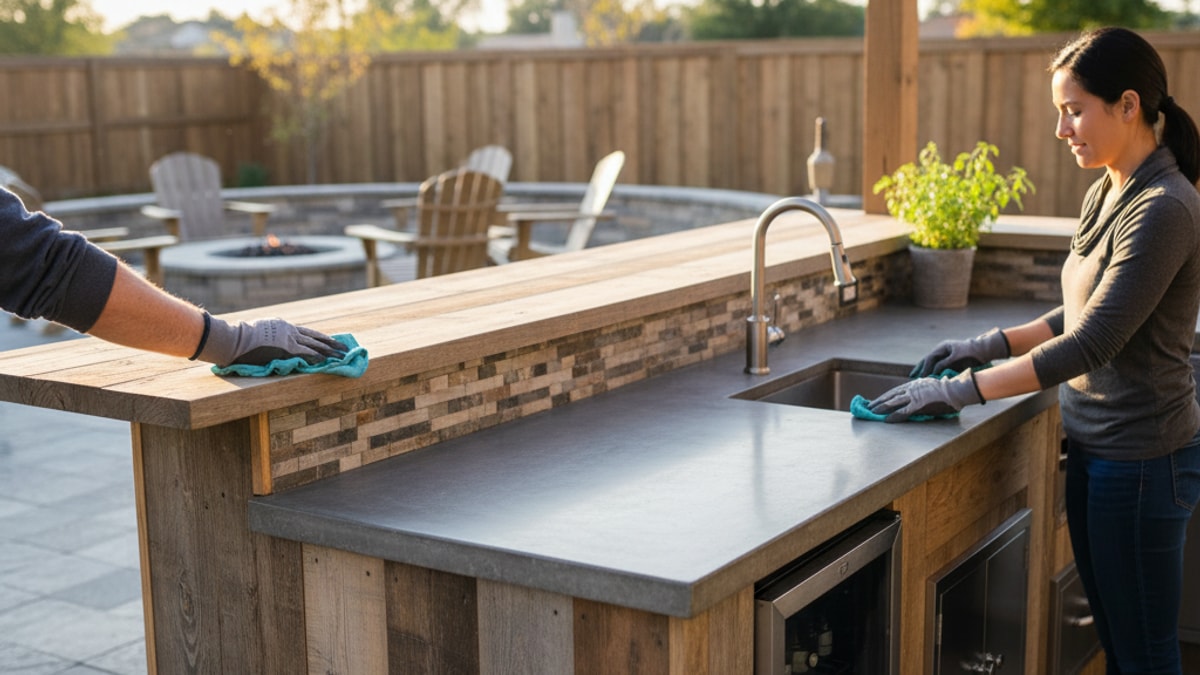
Think about the flow. Where will people gather? Where will the 'chef' be working? A well-designed outdoor bar considers the triangle of activity between the grill, the sink, and the refrigerator, ensuring everything is within easy reach. But it also considers the social flow. You don't want guests tripping over the cook to get a drink from the cooler. We often design a two-tiered counter system—a lower level for food prep and a higher, separate level for guests to sit and chat. This creates a natural, comfortable boundary that keeps the conversation going without disrupting the workflow. Simple, right? But it's a detail that makes a world of difference.
And another consideration: location. This is crucial. You need to think about sun exposure throughout the day, prevailing winds, and proximity to your indoor kitchen. A bar that bakes in the afternoon sun won't get much use. One that's a long trek from the house for forgotten ingredients will quickly become a hassle. We always map out these environmental factors as part of our comprehensive Landscape Design SAN Diego process. It’s about creating a space that feels like a natural, intuitive extension of your home. If you're feeling overwhelmed by these initial questions, that's perfectly normal. This is the ideal stage to BOOK MY FREE CONSULTATION so we can help you crystallize that vision.
The Unseen Hero: Your Foundation and Frame
You can have the most beautiful stone veneer and the fanciest grill on the market, but if the structure underneath isn't solid, you're setting yourself up for catastrophic failure down the road. The foundation is everything.
Your outdoor kitchen bar needs a dedicated, level, and incredibly stable base. For most applications, this means one of two options: a poured concrete slab or a reinforced paver patio. A properly installed Concrete SAN Diego slab is the gold standard for stability and longevity. It's a monolithic base that won't shift or settle. However, a well-engineered base of compacted aggregate beneath high-quality interlocking pavers can also provide a fantastic, durable surface. We often recommend this when integrating the bar into a larger patio project, as it allows for a seamless look. Our work with Pavers SAN Diego ensures the foundation is built to handle the immense weight of the bar structure and countertops.
With the foundation set, it’s time to frame the island itself. You have three primary choices for framing material: pressure-treated wood, steel studs, or concrete masonry units (CMUs). While wood is often seen as a go-to for DIY projects due to its accessibility, our team strongly advises against it for outdoor kitchen structures. Why? Moisture. Even pressure-treated wood will eventually warp, rot, or succumb to insects, compromising the entire structure. We’ve been called in to repair too many beautiful kitchens built on a failing wood frame.
CMUs, or cinder blocks, are incredibly durable and fireproof, making them a solid choice. They create a formidable, permanent structure. The downside is that they are heavy, labor-intensive, and can be more difficult to run utilities through. Our professional preference, refined over years of projects, is galvanized steel framing. It’s lightweight, completely resistant to rot and pests, non-combustible, and dimensionally stable. It won’t twist or warp with changes in humidity. It provides the perfect skeleton for a bar that is built to last for decades, not just a few seasons.
Dressing It Up: Cladding and Countertops
Now for the part you and your guests will actually see. The materials you choose for the exterior (cladding) and the top surface (countertop) define the entire aesthetic of your outdoor kitchen bar.
For the vertical surfaces, the options are nearly limitless. You can match your home's exterior with stucco or brick veneer for a cohesive look. You can create a modern vibe with large format tiles or sleek panels. Or, you can embrace a more rustic, organic feel with natural stacked stone or cultured stone veneer. Stone veneer is a perennial favorite for a reason—it offers timeless beauty and incredible durability. We recommend choosing a finish that complements your overall backyard design, whether it’s a modern patio or a more traditional garden setting.
When it comes to countertops, the decision is even more critical because this surface takes the most abuse. It needs to withstand UV rays, rain, food stains, hot pans, and freezing temperatures without cracking, fading, or staining. Not all countertop materials are created equal, especially when exposed to the elements. Here's what we've learned.
| Material |
Durability |
Maintenance |
Cost |
Best For |
| Granite |
Excellent. Resists heat, scratches, and UV rays. |
Needs annual sealing to prevent staining. |
$$$ |
A timeless, natural look with high performance. |
| Quartz |
Very good. Stain and scratch resistant. |
Can discolor with prolonged, direct UV exposure. |
$$$$ |
Sleek, modern aesthetics in covered/shaded areas. |
| Poured Concrete |
Good. Highly customizable in shape and color. |
Requires regular sealing; can develop hairline cracks. |
$$ |
Industrial, modern, and custom-shaped designs. |
| Tile (Porcelain) |
Excellent. Non-porous, stain & fade resistant. |
Grout lines require cleaning and sealing. |
$$ |
Budget-conscious projects and versatile design. |
| Stainless Steel |
Excellent. Hygenic, heat-proof, won't stain. |
Can scratch and dent; shows fingerprints. |
$$$ |
A professional, commercial kitchen look. |
Our team has a strong preference for high-quality granite and porcelain tile for fully exposed outdoor bars. Granite is a natural stone that was literally forged in the earth; it's inherently ready for the outdoors. You just have to be diligent about sealing it. Porcelain tile has come a long way, and today's options can mimic the look of natural stone or wood with none of the porosity issues. While we love the look of quartz, we only recommend it for bars that are fully protected from direct sunlight by a solid roof, as the resins used in its manufacturing can yellow over time. Poured concrete offers an amazing custom look, but you must be prepared for the commitment to sealing and the acceptance of its 'living' character as it develops a patina.
Powering Your Party: Utilities and Appliances
A bar with no cold drinks isn't much of a bar. Integrating utilities is a non-negotiable step that absolutely requires licensed professionals. We can't stress this enough: do not attempt to run your own gas or high-voltage electrical lines. It’s a massive safety risk. A professional electrician and plumber will ensure everything is installed to code, using exterior-grade wiring, GFCI outlets for safety, and proper plumbing for your sink and drainage.
Once the lines are run, you can start selecting your appliances. This is where you can truly customize your bar to your cooking and entertaining style. Of course, a built-in grill is often the centerpiece of any Outdoor Kitchens SAN Diego setup. But the bar is what elevates it from a simple grill station to a full-service entertainment hub.
Think about what you'll need:
- Refrigeration: An outdoor-rated refrigerator is a must-have. These units are built to handle fluctuating ambient temperatures while keeping your drinks and food safely chilled. Look for UL-rated for outdoor use.
- Sink: A small bar sink is incredibly useful for rinsing glasses, washing hands, and prepping garnishes. Don't forget to plan for both hot and cold water if possible.
- Ice Maker: For the serious host, a dedicated outdoor ice maker means no more running back inside for ice bags.
- Kegerator: A built-in kegerator is the ultimate luxury for beer lovers, providing fresh, cold draft beer on demand.
- Storage: Don't forget weatherproof storage. Stainless steel access doors and drawer units keep your tools, glasses, and supplies clean, dry, and free of pests.
When selecting any stainless steel components, pay close attention to the grade. 304-grade stainless steel is the industry standard and is perfectly suitable for most environments. However, if you live in a coastal area with salt in the air, we strongly recommend upgrading to 316-grade (or marine-grade) stainless steel for its superior corrosion resistance.
Setting the Mood: Lighting and Shade
Your outdoor kitchen bar shouldn't shut down when the sun sets. A thoughtful lighting plan extends its usability into the evening and creates an incredible ambiance. This is more than just sticking a floodlight on the wall. It’s about layers.
First, you need task lighting. These are focused lights placed directly over the key work areas: the grill, the prep counter, and the sink. Under-counter LED strip lighting is a fantastic, low-profile option for this. Second, you need ambient lighting. This is the general, soft illumination that makes the space feel warm and inviting. This could come from wall sconces on a nearby wall or from lights integrated into a pergola. Finally, consider accent lighting to highlight interesting features, like the texture of your stone cladding or nearby plantings. A well-executed Landscape Lighting SAN Diego design is what separates a good project from a spectacular one. It adds safety, drama, and a truly professional finish.
Equally important is shade. An outdoor bar that's unusable on a hot, sunny afternoon is a design failure. A permanent structure like one of our custom Patio Covers Pergolas SAN Diego provides the most robust solution, offering protection from both sun and light rain. A pergola can define the space beautifully while offering partial shade, which can be enhanced with a retractable canopy or by growing vines. Even a large, high-quality cantilever umbrella can make a huge difference if a permanent structure isn't in the budget.
The Final Touch: Seating and Integration
The final piece of the puzzle is the seating. After all, it's a bar. You need to decide on the height of your seating area. A 42-inch high bar-top is the standard for standing and leaning, and it pairs with bar-height stools (typically with a 30-inch seat height). Alternatively, you could opt for a 36-inch high counter, which uses shorter counter-height stools. We find the split-level design often works best, with the 36-inch counter for working and a 42-inch tier for guests. This slight elevation gives guests a great vantage point without making them feel like they're hovering over the cook.
Choose comfortable, durable, all-weather stools that complement the style of your bar. And think about how this new feature connects to the rest of your yard. Does it flow naturally to the patio dining table? Is it a good gathering spot for people getting out of the pool? The most successful projects we've built are those where the bar feels like a cohesive part of a larger, thoughtfully designed outdoor world, often connecting to other elements like inviting Fire Features or custom Pools AND Spas. It all works together.
Building an outdoor kitchen bar is a significant undertaking, but it’s one of the most rewarding home improvement projects you can tackle. It creates a destination in your own backyard, a place that encourages you to slow down, connect with people, and enjoy your home in a whole new way. If you’re ready to start the conversation, our team is here to help you navigate every decision. Feel free to BOOK MY FREE CONSULTATION and let's start designing the backyard hub you've always dreamed of.
It’s more than a project; it's an investment in your lifestyle. It’s about creating that perfect spot where memories are just waiting to happen, where the drinks are cold, and the company is even better.



.webp)
.webp)