What Do You Really Need in an Outdoor Kitchen? Our Pro Take
The dream of an outdoor kitchen is a powerful one, isn't it?
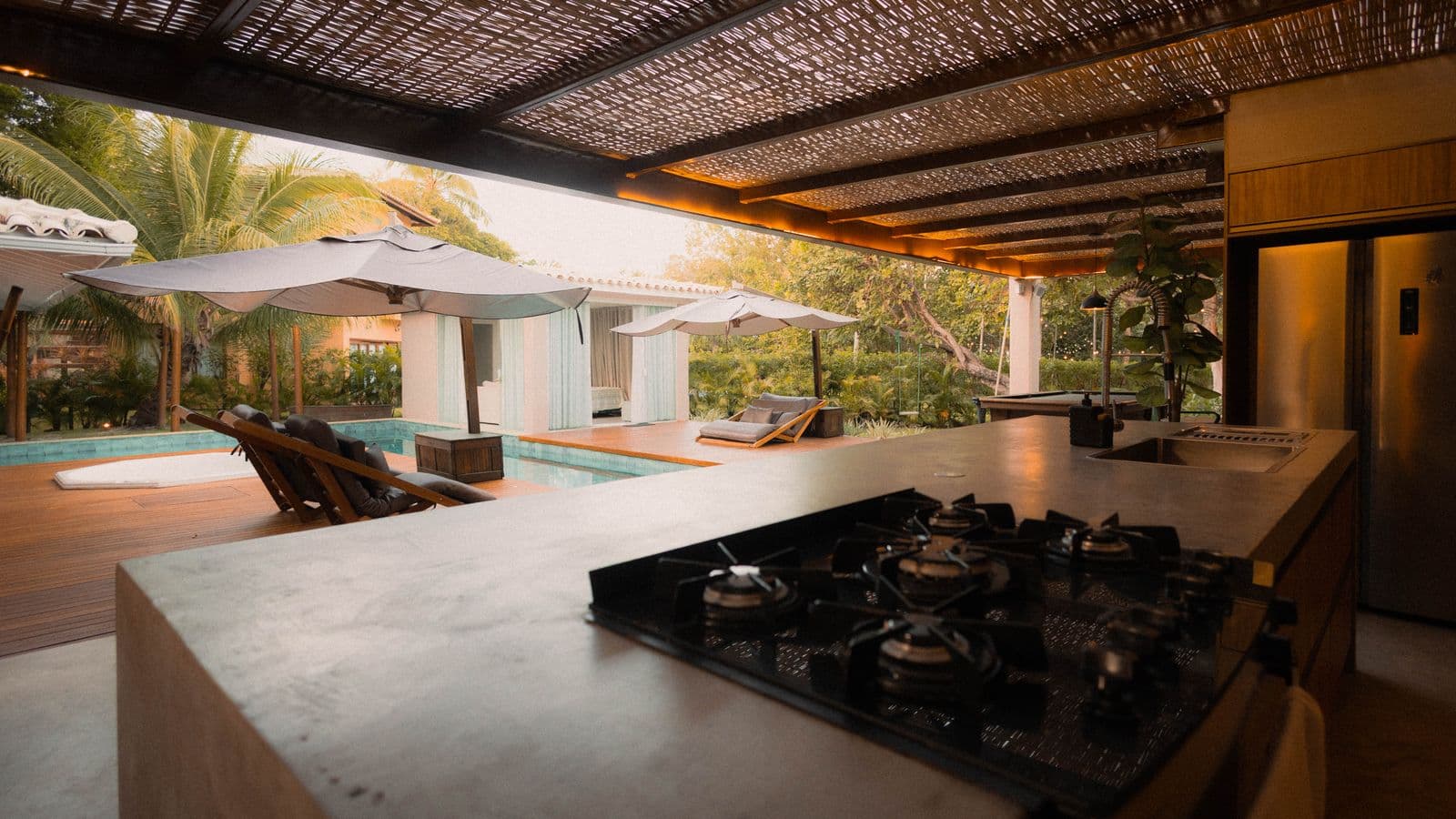
The dream of an outdoor kitchen is a powerful one, isn't it? It’s the sizzle of steaks on the grill, the clink of glasses with friends, and the warmth of a perfect evening spent entirely under the open sky. We get it. For years, we’ve helped homeowners turn that vision into a tangible, beautiful reality. But we’ve also seen where things can go wrong. The allure of gleaming stainless steel and every gadget imaginable can quickly overshadow the most important question: what do you actually need in an outdoor kitchen to make it work for you?
It's a question that can feel overwhelming. A quick search floods you with options—from simple grill islands to sprawling culinary compounds that would make a professional chef blush. The key isn't to have everything; it's to have the right things. It's about creating a functional, inviting space that seamlessly extends your home and enhances your lifestyle, not just a collection of expensive appliances that gather dust. So, let's cut through the noise. Here’s what our experience has taught us about building an outdoor kitchen that you'll love and, more importantly, use.
It Starts With a Vision, Not Just Appliances
Before we even talk about grills or refrigerators, we have to talk about you. This is the single most overlooked step, and honestly, it’s the most critical. We can't stress this enough: a successful outdoor kitchen is a direct reflection of how you live, cook, and entertain. A design that’s perfect for a family that hosts huge weekend barbecues will be entirely wrong for a couple who enjoys quiet, intimate dinners.
So, ask yourself some honest questions:
- Who are you cooking for? Is it just your immediate family? Are you the neighborhood hub for every holiday and birthday party?
- What kind of cooking do you do? Are you a classic grill master focused on burgers and hot dogs? Or are you an aspiring pitmaster who needs a smoker? Maybe you dream of a wood-fired pizza oven for artisanal pies.
- How do you entertain? Do you want guests gathered around a bar-height counter, chatting with the chef? Or do you prefer a separate, more formal dining area?
- What’s your workflow? Think about your indoor kitchen. Do you need lots of prep space right next to the grill? How important is a sink for quick clean-ups?
The answers to these questions form the blueprint for your entire project. They dictate the layout, the appliance selection, and the overall scale. This planning phase is precisely why our comprehensive Landscape Design SAN Diego process begins with a deep conversation, not a catalog. We’re not just building a structure; we’re designing an experience. Getting this part right ensures your investment pays off with years of enjoyment.
The Non-Negotiables: Your Outdoor Kitchen Foundation
Once you have your vision, you can start mapping out the core components. While every kitchen is unique, our team has found that a truly functional space is built on a foundation of a few key elements. Think of these as the holy trinity of outdoor cooking.
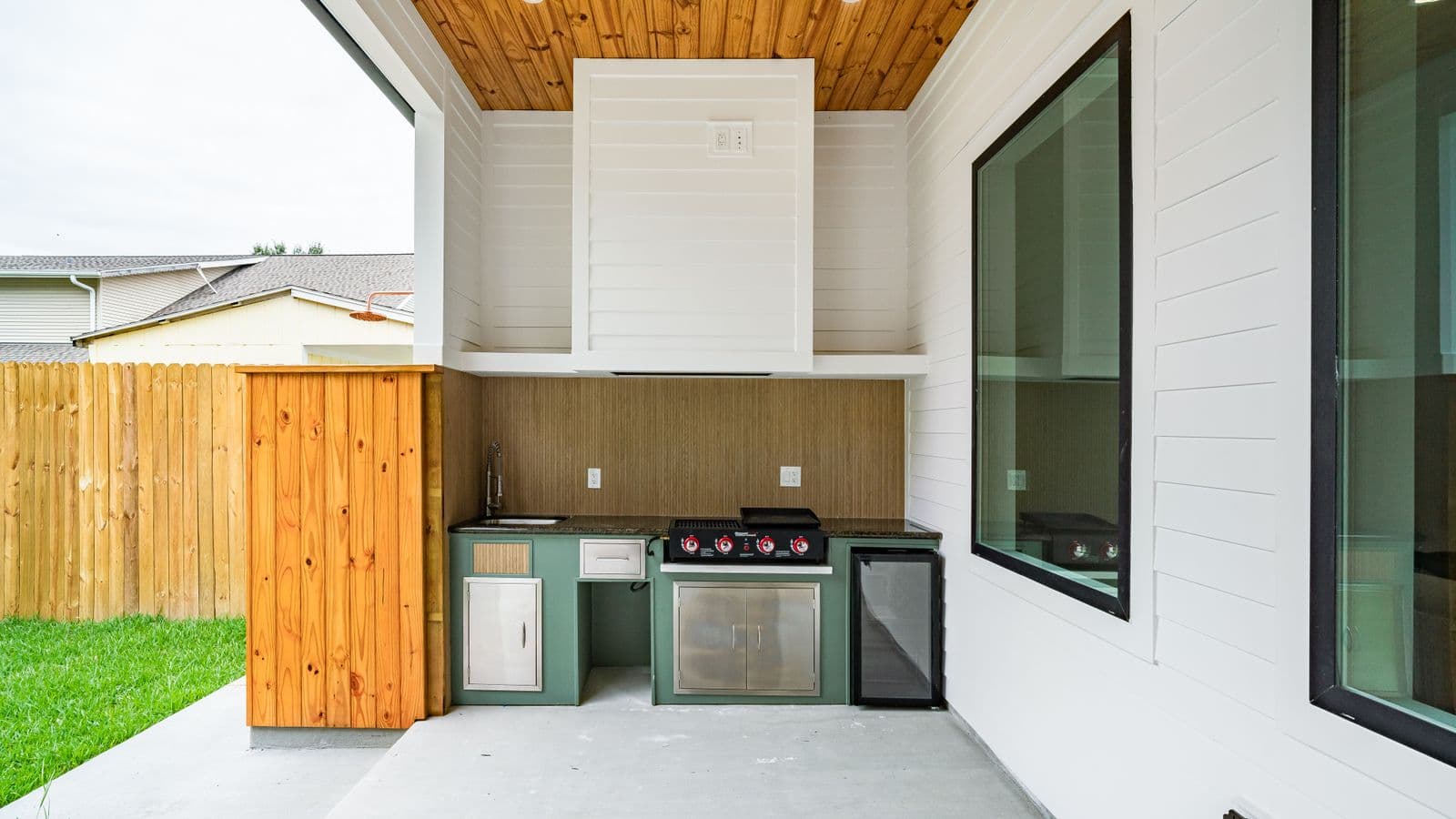
First and foremost, the grill. This is the heart and soul of your kitchen. It’s the main event. Don't skimp here. A high-quality grill will not only perform better and last longer, but it will also be safer and more enjoyable to use. We’ll dive deeper into grill types in a moment, but for now, just know this is your primary decision.
Second, you need adequate counter space. This is a catastrophic failure point in many DIY or pre-fab island setups. You need a dedicated landing zone for platters of raw food, spices, and tools. You also need a separate space for finished food to rest before serving. Without sufficient counter space, you’ll find yourself constantly juggling, running back and forth to the house, and feeling frustrated. The whole point of an outdoor kitchen is to keep you outside, engaged with your guests. Insufficient counter space defeats that purpose. It's that simple.
Third, and this is one we strongly advocate for, is a sink. It may seem like a luxury, but in terms of pure functionality, it’s a game-changer. A simple cold-water sink gives you a place to wash your hands after handling raw meat, rinse utensils, and clean up small spills without ever leaving the party. It elevates the space from a simple “grill station†to a true, self-sufficient kitchen. If your budget and layout allow for hot and cold water, even better. You’ll be amazed how often you use it.
Leveling Up: The 'Nice-to-Haves' That Make a Difference
With the foundation in place, you can start considering the elements that add convenience and expand your culinary horizons. These are the components that take your outdoor kitchen from functional to truly luxurious.
An outdoor-rated refrigerator is usually the first addition. It’s a massive convenience. No more running inside for another drink or to grab the cheese for the burgers. You can store beverages, condiments, and prepped ingredients right where you need them. A word of caution from our team: you absolutely must get a unit specifically rated for outdoor use. Indoor mini-fridges aren't built to handle the temperature swings and humidity, and they’ll fail quickly (and can even be a safety hazard).
Dedicated storage is another huge one. Drawers and cabinets specifically designed for outdoor use keep your grilling tools, cleaning supplies, and serving dishes protected from the elements and readily accessible. Stainless steel is the most popular choice for its durability and sleek look. This eliminates the need to haul everything you need from your indoor kitchen every single time you want to cook outside. It makes the whole process feel less like a chore and more like a seamless experience.
From here, the possibilities become truly exciting. Side burners are fantastic for simmering sauces or boiling corn on the cob while the main grill is occupied. An ice maker is a pure luxury for those who entertain often, ensuring you never run out. And for the true enthusiast, specialized cooking appliances like a power burner for wok cooking, a flat-top griddle (teppanyaki style), or the ever-popular pizza oven can turn your backyard into a destination for incredible food. Our work with custom Outdoor Kitchens SAN Diego often involves integrating these very specific, passion-driven appliances.
Choosing Your Cooking Powerhouse: The Grill
As the centerpiece, your grill deserves careful consideration. The fuel type is the biggest differentiator, and each has its passionate advocates. There’s no single “best†choice—only the best choice for you.
Grill Type
Pros
Cons
Best For...
Gas (Propane/Natural)
Unbeatable convenience, fast preheating, precise temperature control.
Can be more expensive upfront, lacks the smoky flavor of charcoal.
The frequent griller who values speed, ease of use, and control for weeknight meals.
Charcoal
Superior smoky flavor, achieves higher searing temperatures, generally less expensive.
Longer to heat up, messier to use and clean, requires more skill to control temp.
The purist who prioritizes flavor above all else and enjoys the ritual of cooking with fire.
Pellet Smoker/Grill
“Set it and forget it†convenience, excellent for smoking and low-and-slow cooking, infuses wood-fired flavor.
Doesn't achieve the high searing temps of gas or charcoal, requires electricity.
The barbecue enthusiast who loves smoked meats like brisket and ribs, and values precision.
Hybrid (Gas & Charcoal)
Offers the best of both worlds: gas for convenience, charcoal for flavor.
Can be very expensive, takes up more space, more complex with more parts to maintain.
The serious outdoor cook who refuses to compromise and wants ultimate versatility.
Our experience shows that built-in grills offer the most seamless and professional look. They integrate directly into your countertop structure, creating a cohesive design. When selecting a built-in grill, pay close attention to the material. 304-grade stainless steel is the industry standard for longevity and corrosion resistance, which is a non-negotiable element for a long-term investment.
Countertops and Cabinetry: Durability Meets Design
Your outdoor kitchen is constantly exposed to the elements: blistering sun, rain, and temperature fluctuations. The materials you choose for your countertops and the structure itself must be able to withstand this relentless assault.
Granite has long been a popular choice for its natural beauty and durability. It holds up well to heat and, when properly sealed, resists staining. Quartzite is another natural stone that’s even harder and more durable than granite, making it an excellent, albeit more premium, choice. For a more modern or industrial aesthetic, poured-in-place Concrete SAN Diego countertops offer a stunning, custom look. They are incredibly durable but must be fabricated and sealed by professionals to prevent cracking and staining.
For the base structure (the cabinet boxes), the most common method is building a frame from galvanized steel studs and covering it with concrete board. This provides a sturdy, non-combustible foundation that can then be finished with a variety of veneers like stacked stone, brick, or stucco to match your home's exterior or your patio's Pavers SAN Diego. This custom approach allows for a truly integrated design that looks like it was always part of your landscape.
Don't Forget the Infrastructure: Utilities and Layout
This is the behind-the-scenes work that makes everything else possible. It's not glamorous, but getting it wrong can be catastrophic. Proper planning for gas, electrical, and plumbing lines is absolutely essential and should be handled by licensed professionals. Per the CSLB's Building Official Information Guide, a C-27 landscape contractor may obtain the permits and contract for gas and electrical work when it is part of or incidental to an overall landscaping project.
If you're opting for a natural gas grill, you'll need a dedicated gas line run from your home's main supply. This is far more convenient than swapping out propane tanks. Your refrigerator, ice maker, and lighting will all require electricity, which means running outdoor-rated wiring to GFCI (Ground Fault Circuit Interrupter) outlets for safety. And, of course, a sink requires both a water supply line and a drainage solution. Our design team coordinates all of this, ensuring that the layout is not only beautiful but also safe and compliant with all local codes.
Layout is just as critical. We design using the same “work triangle†principle as indoor kitchens, ensuring an efficient flow between your three main zones: cold (refrigerator), hot (grill), and wet (sink). This minimizes steps and makes the entire space more intuitive and enjoyable to work in. There’s nothing worse than a poorly designed layout that has you constantly walking around an obstacle to get from the fridge to the grill.
Creating the Perfect Ambiance: Shelter and Lighting
An outdoor kitchen isn't just an island of appliances in the middle of your yard. To make it a truly usable and inviting space, you need to consider the environment around it. How do you make it comfortable?
Shelter is a huge factor. A solid roof or one of our custom Patio Covers Pergolas SAN Diego can provide crucial shade from the intense sun, making the space usable even on the hottest days. It also offers protection from light rain, extending your outdoor season. A pergola can define the space beautifully while still allowing for airflow and sunlight, and can be outfitted with a retractable canopy for more versatile coverage.
Lighting is equally important for both functionality and mood. You need task lighting directly over the grill and prep areas so you can see what you’re doing after the sun goes down. But you also want ambient lighting to create a warm, inviting atmosphere for your guests. A thoughtful Landscape Lighting SAN Diego plan can transform the space at night. This might include under-counter lights, sconces on nearby walls, or string lights overhead. Good lighting makes the space safer and encourages guests to linger long into the evening.
The Finishing Touches: Seating, Storage, and Flow
Finally, think about how people will interact with the space. Seating is a major component. A two-tiered countertop with bar-height stools is a fantastic way to create a social hub where guests can hang out and talk to the cook. It’s casual, interactive, and fun.
Beyond the bar, consider the proximity to your main dining area. Is there a smooth, clear path from the kitchen to the table? The overall flow of your backyard is paramount. The kitchen should feel connected to other outdoor 'rooms' like the lounge area around one of our Fire Features or the deck surrounding your Pools AND Spas. Functional elements like Seat Retaining Walls can even do double duty, defining the kitchen space while providing extra guest seating.
It’s this holistic approach—thinking about the kitchen not in isolation but as a vital part of your entire outdoor living ecosystem—that truly creates a spectacular result. It’s about more than just grilling. It's about creating a destination in your own backyard for making memories.
Building the perfect outdoor kitchen is a journey of defining your needs and then matching them with the right components and a smart design. It’s a significant investment, but one that can dramatically change how you use and enjoy your home. If you're ready to explore what's possible, our team is here to help you navigate every step. Why not BOOK MY FREE CONSULTATION today and we can start dreaming together?
Start Your Free Design Consultation
Tell us about your project and we'll be in touch within 24 hours. No pressure, no obligation.
Common questions
- Do I need a sink in my outdoor kitchen?
- Our team strongly advocates for a sink as a foundational element. It may seem like a luxury, but functionally it's a game-changer. A simple cold-water sink lets you wash hands after handling raw meat, rinse utensils, and clean up small spills without leaving the party. It elevates the space from a basic grill station into a true, self-sufficient kitchen.
- Is gas or charcoal better for an outdoor kitchen grill?
- There's no single best choice, only the best one for you. Gas offers unbeatable convenience, fast preheating, and precise temperature control, ideal for the frequent weeknight griller. Charcoal delivers superior smoky flavor and higher searing temperatures but takes longer to heat, is messier to clean, and requires more skill to control temperature.
- What grade of stainless steel should a built-in grill be?
- Look for 304-grade stainless steel, the industry standard for longevity and corrosion resistance, and a non-negotiable element for a long-term investment. Built-in grills, which use this material, also offer the most seamless, professional look, integrating directly into your countertop structure to create a cohesive design rather than a loose collection of appliances.
- What countertop materials hold up best in an outdoor kitchen?
- Granite is a popular choice for its natural beauty and durability, holding up to heat and resisting stains when properly sealed. Quartzite is even harder and more durable, though a more premium option. Poured-in-place concrete offers a stunning, modern look and is incredibly durable, but must be fabricated and sealed by professionals to prevent cracking.
- Do I need a special refrigerator for an outdoor kitchen?
- Yes, you absolutely must get a unit specifically rated for outdoor use. Indoor mini-fridges aren't built to handle the temperature swings and humidity, so they'll fail quickly and can even be a safety hazard. An outdoor-rated refrigerator is usually the first addition homeowners make, storing beverages, condiments, and prepped ingredients right where you need them.
Ready to design your dream yard?
Tell us about your project. We'll send back a real plan, not a templated quote.
Book My Free Consultation→