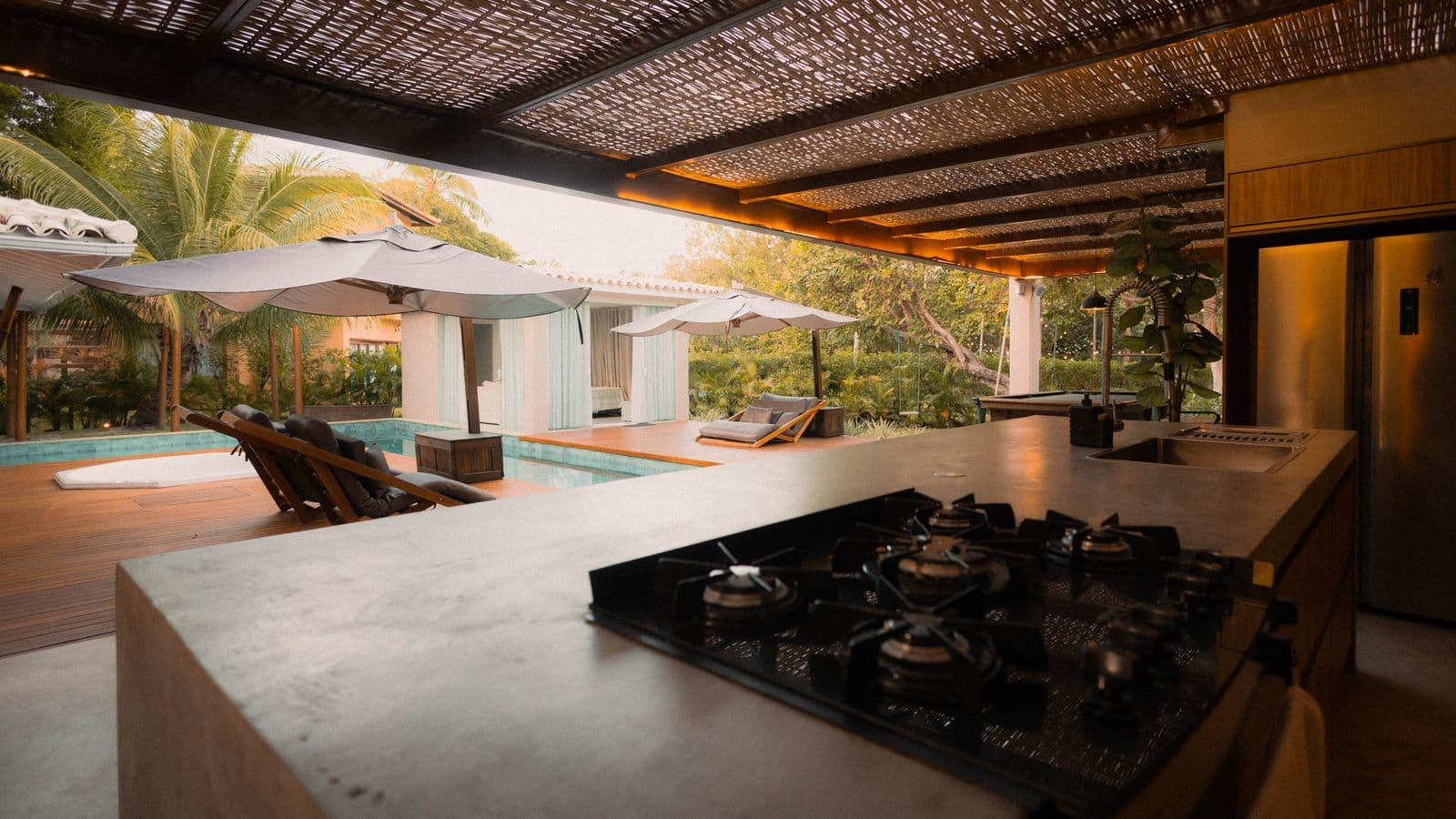
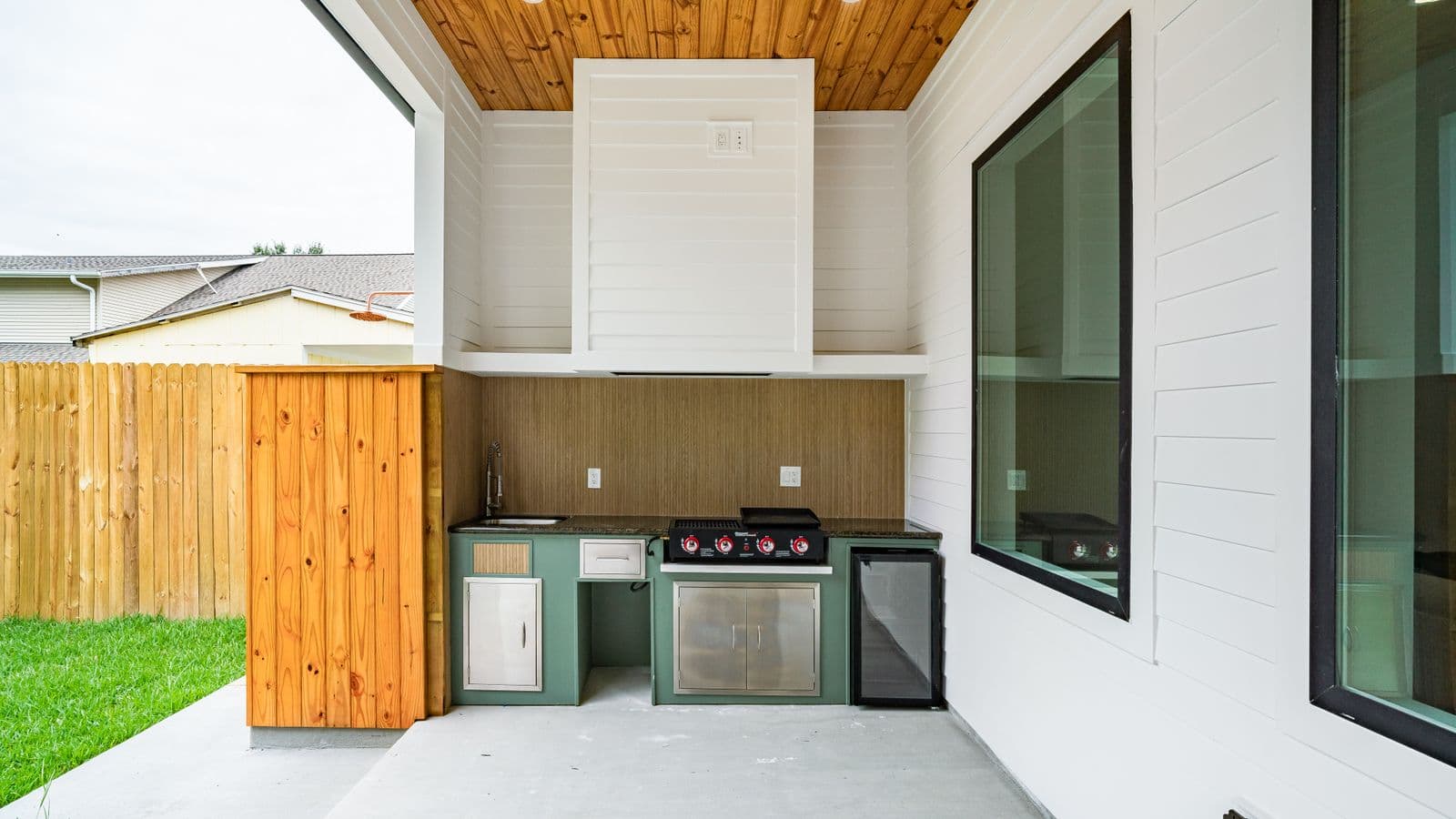
Outdoor Kitchens: Can Butcher Block Handle the Elements?
There’s an undeniable romance to butcher block. It’s warm, inviting, and feels alive in a way that cold stone or sterile stainless steel never will.
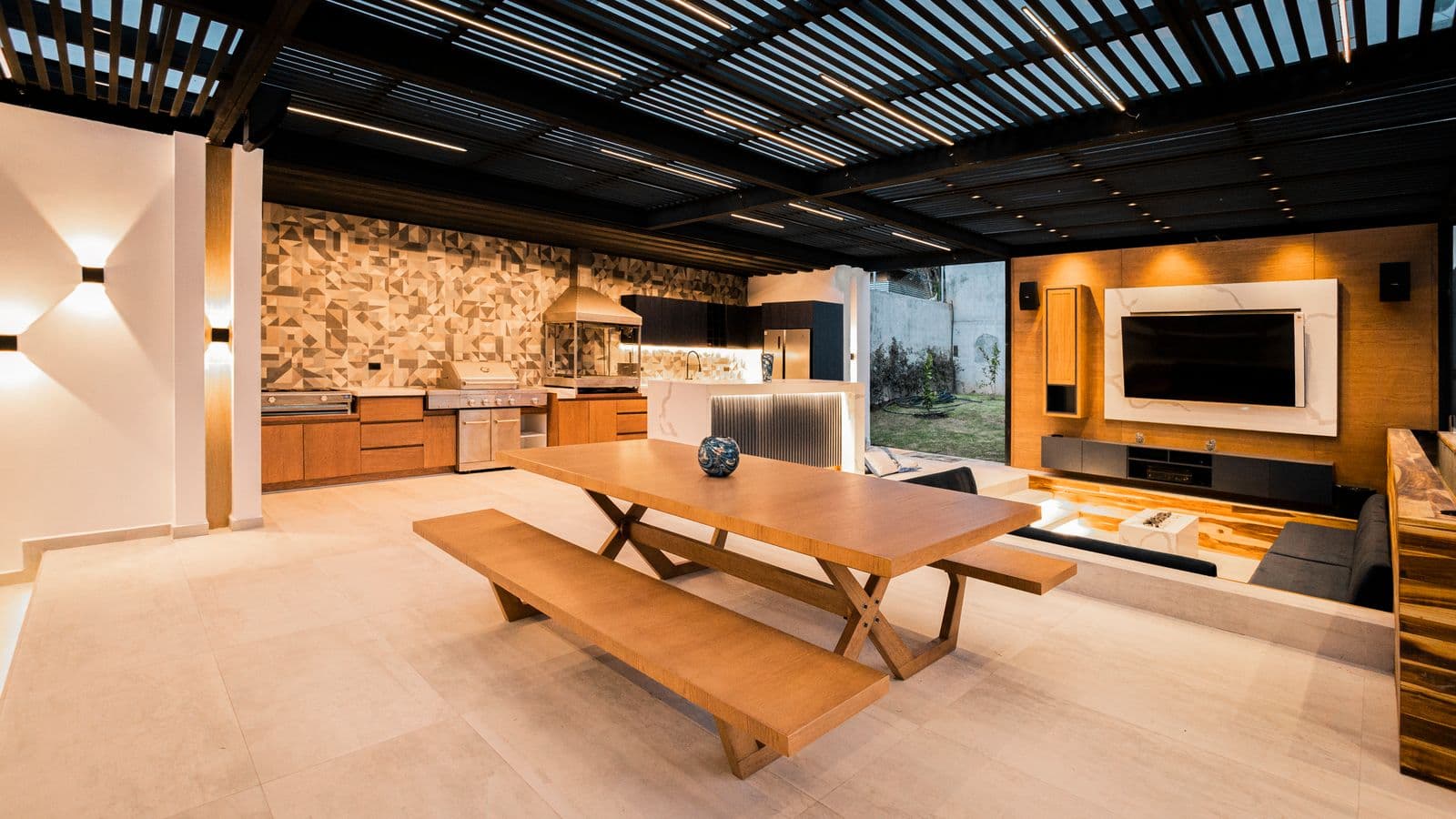
There’s an undeniable romance to butcher block. It’s warm, inviting, and feels alive in a way that cold stone or sterile stainless steel never will. We get it. Our design team often fields this exact question from homeowners sketching out their dream backyard escape: can we bring that beautiful, rustic, chef-inspired look of butcher block into our outdoor kitchen? It’s a fantastic vision. Picture it: a sprawling oak or walnut surface, glowing under the evening lights, ready for you to prep burgers or roll out pizza dough.
But here's where we, as experienced builders, have to step in and have a frank conversation. The dream and the reality of maintaining wood outdoors are two vastly different things. Answering the question, “Is butcher block good for an outdoor kitchen?†isn't a simple yes or no. The real answer is a very nuanced, “It can be, but you have to know _exactly_ what you’re signing up for.†It’s a commitment. A significant one. So let’s break down what that commitment truly looks like.
The Unmistakable Appeal of Butcher Block
First, let's acknowledge why this is even a question. Why do people want it so badly? The aesthetic pull is powerful. In a world of hardscapes—gleaming stainless steel grills, stone veneers, and concrete patios—butcher block introduces a critical, non-negotiable element of organic softness. It’s a natural material that feels grounded and authentic.
It’s also incredibly functional, at least in theory. A true butcher block is a forgiving surface. It’s kind to your knives, and minor scratches can often be sanded and oiled away, which you certainly can’t do with granite or quartz. There's a timeless, utilitarian beauty to a well-worn block that speaks to good food and great company. It feels less like a sterile food-prep zone and more like the heart of the home, just transplanted into the fresh air. This vision is precisely what drives so many of our clients to consider it when planning their perfect Outdoor Kitchens SAN Diego with us.
The Harsh Reality: Wood vs. The Great Outdoors
Now for the dose of reality. An outdoor environment is relentlessly hostile to wood. We can't stress this enough. It’s a constant, formidable battle against nature, and nature almost always wins. Your indoor butcher block lives in a climate-controlled paradise. Its outdoor cousin, however, faces a grueling onslaught from every direction.
Here’s the breakdown of its primary enemies:
- Moisture: This is public enemy number one. Rain, morning dew, humidity, spilled drinks, and splashes from a nearby pool—it all conspires to saturate the wood fibers. When wood gets wet, it swells. When it dries, it shrinks. This constant cycle of expansion and contraction is catastrophic. It leads to warping, cupping (where the edges curl up), and cracking. Worse yet, trapped moisture is a breeding ground for mold, mildew, and rot, which will turn your beautiful countertop into a spongy, discolored mess.
- UV Radiation: The sun is not your friend here. Just as it fades your patio furniture, the sun’s UV rays break down the lignin in wood—the natural polymer that holds the wood fibers together. This process, called photodegradation, causes the wood to lose its rich color, turning it a silvery, washed-out gray. It also makes the surface brittle and prone to splintering.
- Temperature Fluctuations: Wood is constantly moving with temperature changes. A hot summer day can cause it to expand, while a cool night makes it contract. Over hundreds of these cycles, the joints between the wood strips in the butcher block can weaken and even fail, causing delamination. The glue holding it all together simply gives up the ghost.
- Pests: Termites, carpenter ants, and other wood-boring insects see an outdoor wood countertop as an all-you-can-eat buffet. Without proper treatment and constant vigilance, your investment could literally be eaten from the inside out.
Honestly, when you put a material like wood in a completely exposed outdoor setting, you're asking it to do something it was never biologically designed to do. It’s a constant fight.
Can You 'Outdoor-Proof' a Butcher Block Countertop?
So, is it hopeless? Not entirely, but the effort required is substantial. You can’t just buy a standard butcher block, install it, and hope for the best. You have to take aggressive, proactive measures to protect it. Our experience shows that success hinges on creating an almost impenetrable barrier between the wood and the elements.
Here are the primary methods people try:
- Marine-Grade Varnish: This is the go-to for boats, and for good reason. Spar varnish and other marine-grade finishes are formulated with UV inhibitors and are designed to be flexible, allowing for some wood movement. You’ll need to apply multiple—we’re talking five to seven—thin coats to build up a thick, protective film. The catch? This film will eventually fail. It will crack, peel, or get scratched, creating an entry point for moisture. Once water gets under that varnish, it’s trapped, and the wood will rot from within. You’ll need to sand the entire thing down and re-varnish it every year or two. Without fail.
- Penetrating Epoxy Sealers: Another option is a two-part epoxy that soaks into the wood fibers before hardening. This essentially turns the top layer of the wood into a plastic-wood composite, making it highly water-resistant. It’s an effective but tricky application. It can also give the wood a slightly unnatural, plasticky sheen, which might defeat the purpose of choosing wood in the first place. And just like varnish, if you get a deep scratch that breaks the seal, you’ve created a vulnerability.
- Constant Oiling: This is the traditional method for indoor butcher blocks, but it’s a far more demanding task outdoors. Using a tung oil or specialized outdoor wood oil can help repel water and nourish the wood. But here’s the brutal truth: you’d need to reapply it constantly. We’re not talking once a season. In a moderately exposed environment, you might be looking at re-oiling every single month. It’s a relentless maintenance schedule that most homeowners simply can’t keep up with.
Let’s be honest, this is crucial. The moment you slack on the maintenance, the elements will find a way in. It’s not a one-time fix; it’s a perpetual chore.
Choosing the Right Wood: Not All Butcher Blocks Are Equal
If you’re still determined to proceed, the specific type of wood you choose makes a monumental difference. Your standard maple, birch, or oak butcher block from a big-box store is absolutely not going to cut it. Those woods have what’s called an “open-grain†structure and are highly susceptible to moisture damage.
You need to invest in a wood species that has natural defenses against the outdoors. These are typically dense, oily tropical hardwoods:
- Teak: This is the king of outdoor woods. It’s packed with natural oils and silicas that make it incredibly resistant to water and rot. It’s what they use on high-end yachts for a reason. It’s also, by far, the most expensive option.
- Ipe (Brazilian Walnut): Ipe is so dense it’s practically fireproof and is famously difficult to even cut. Its density makes it extremely resistant to rot, insects, and decay. It will last for decades, but it’s heavy, expensive, and tough to work with.
- Acacia: A more budget-friendly but still very capable option. Acacia has good natural water resistance and durability, making it a popular choice for outdoor furniture. It will still require diligent sealing but offers a much better starting point than domestic woods.
Even with these superior woods, you are not exempt from the sealing and maintenance routines. You’ve just bought yourself a bit more of a fighting chance. The core principles of protection remain the same.
Outdoor Countertop Material Comparison
To put this all in perspective, let’s see how butcher block stacks up against other common materials used in our Outdoor Kitchens SAN Diego projects. It helps to see the trade-offs in black and white.
| Material | Durability & Weather Resistance | Maintenance Level | Aesthetics | Average Cost (Material Only) |
|---|---|---|---|---|
| Butcher Block (Teak/Ipe) | Low to Moderate (Highly dependent on sealing) | Very High (Constant sealing/oiling required) | Warm, natural, unique | High to Very High |
| Granite | Very High (Resists heat, scratches, UV) | Low (Requires periodic sealing) | Natural stone, wide variety | High |
| Poured Concrete | High (Can crack if not installed properly) | Low to Moderate (Sealing needed to prevent stains) | Modern, industrial, customizable | Moderate to High |
| Stainless Steel | Very High (Resists heat and weather) | Low (Can show fingerprints, may scratch) | Professional, sleek, modern | High |
| Porcelain/Sintered Stone | Excellent (Non-porous, UV/stain/scratch proof) | Very Low (Essentially maintenance-free) | Huge range of looks (can mimic wood) | Very High |
Looking at this, it becomes clear. Butcher block is an outlier. It demands the most from you as a homeowner while offering the lowest intrinsic durability in an outdoor setting.
Maintenance: The Unflinching Commitment Required
We’ve mentioned maintenance, but let’s paint a clearer picture of what that really means. It’s not just wiping it down. It’s a regimen.
Imagine this scenario: you’ve had a great barbecue, but someone left a wet glass on the counter overnight. With granite, you wipe it off. With a heavily varnished butcher block, you inspect the ring, hoping it didn’t compromise the finish. If you have an oiled finish, you now have a dark, permanent ring that needs to be sanded out. So, you get out the orbital sander, smooth down the area, feathering it into the rest of the surface, and then re-apply several coats of oil over a few days, waiting for each to dry.
Now multiply that by every little spill, every unexpected rainstorm, every season. The annual deep maintenance involves a complete light sanding of the entire surface to remove the oxidized top layer and any minor scratches, followed by a thorough reapplication of your chosen sealant. This isn't a quick 20-minute job. It’s a weekend project.
This is the reality we’ve seen play out. The initial excitement fades, life gets busy, and the maintenance schedule slips. One missed sealing before the rainy season is all it takes for irreversible damage to begin. We’ve been called in to replace beautiful-looking butcher block countertops that were only a few years old but had turned into a warped, delaminated disaster.
Smarter Alternatives for That Natural Wood Look
So what if you love the look but can't stomach the maintenance? We get that. Fortunately, material science has come a long way. Our team often recommends alternatives that deliver that warm aesthetic without the formidable upkeep.
Porcelain and sintered stone slabs are a game-changer. Manufacturers can now produce tiles and slabs with photorealistic wood grain patterns that are shockingly convincing. You get the visual texture and warmth of wood, but on a surface that is non-porous, UV-stable, and completely impervious to water, stains, and scratches. It’s the best of both worlds.
Another fantastic approach is using wood as an accent, not the primary work surface. You could have durable granite or concrete countertops for the main prep and cooking areas, and then incorporate a raised bar top made of Ipe or Teak. This keeps the wood away from the messiest zones and makes it easier to maintain. This is a common strategy in our custom Landscape Design SAN Diego projects—finding that perfect balance between beauty and real-world practicality.
Stamped concrete is another avenue. With modern techniques, we can pour durable Concrete SAN Diego countertops and stamp them with a texture that mimics wood grain, then stain them to match the desired color. It's a rugged, durable solution with a touch of organic style.
Our Professional Take: Where Butcher Block _Could_ Work
After all these warnings, is there any scenario where we’d give butcher block a cautious green light? Yes, but with major caveats.
The absolute key is protection from direct weather. If your outdoor kitchen is situated under a solid roof structure, like in a covered pavilion or a three-season room, its chances of survival increase dramatically. A well-designed structure from our Patio Covers Pergolas SAN Diego team can shield the countertop from the vast majority of rain and direct sunlight. This is the single most important factor.
Even in this best-case scenario, you're still dealing with ambient humidity and temperature swings, so you must use a premium tropical hardwood like Teak and commit to a strict maintenance schedule. It reduces the risk from 'extremely high' down to 'manageable for a dedicated owner'. It's never a 'set it and forget it' material, not even close.
An outdoor kitchen is an ecosystem. The countertop choice needs to make sense with the flooring, the appliances, the lighting, and the surrounding landscape. Our job is to help you build a cohesive, beautiful, and—most importantly—functional space that lasts. Sometimes that means guiding clients towards a more durable material that will bring them peace of mind for years to come. If you're ready to explore what that perfect combination of materials looks like for your home, you can always BOOK MY FREE CONSULTATION with our design experts.
Ultimately, the choice to use butcher block outdoors is less about the material itself and more about you, the homeowner. It's a lifestyle choice. It requires a level of diligence and care that goes far beyond any other countertop material. If you genuinely enjoy the ritual of maintaining beautiful wood and have the time and dedication to do it right, it can be a stunning and unique feature. But if you’re looking for a low-maintenance backyard oasis where you can relax without a looming chore list, we sincerely recommend you explore the many other beautiful and resilient options available. Your outdoor kitchen should be a source of joy, not a constant source of work.
Start Your Free Design Consultation
Tell us about your project and we'll be in touch within 24 hours. No pressure, no obligation.
Common questions
- How often do I need to re-oil or reseal an outdoor butcher block countertop?
- In a moderately exposed environment you may need to re-oil every single month, far more demanding than indoor blocks. If you use marine-grade varnish instead, you apply five to seven thin coats and must sand it down and re-varnish every year or two. It's a relentless, perpetual chore, not a one-time fix.
- What is the best type of wood for an outdoor kitchen countertop?
- Dense, oily tropical hardwoods work best. Teak is the king of outdoor woods, packed with natural oils and silicas that resist water and rot, but it's the most expensive. Ipe (Brazilian Walnut) is extremely dense and lasts decades. Acacia is a budget-friendly option with good water resistance. Standard maple, birch, or oak won't cut it.
- Do I need a roof or cover over my outdoor butcher block countertop?
- Yes, protection from direct weather is the single most important factor. If your outdoor kitchen sits under a solid roof, covered pavilion, or three-season room, the countertop's survival chances increase dramatically by shielding it from most rain and sunlight. Even then you still face ambient humidity and temperature swings, so premium hardwood and strict maintenance remain essential.
- Is granite better than butcher block for an outdoor kitchen?
- For durability, yes. Granite offers very high weather resistance, standing up to heat, scratches, and UV, and needs only low maintenance through periodic sealing. Butcher block has low-to-moderate durability that's highly dependent on sealing, plus very high maintenance requiring constant sealing and oiling. Butcher block is really an outlier that demands the most while offering the lowest outdoor durability.
- What can I use instead of butcher block to get a wood look outdoors?
- Porcelain and sintered stone slabs are the top recommendation, offering photorealistic wood grain on a non-porous, UV-stable surface that's impervious to water, stains, and scratches. Alternatively, use wood only as a raised bar-top accent while keeping durable granite or concrete for main prep areas. Stamped concrete stained to mimic wood grain is another rugged, durable option.
Ready to design your dream yard?
Tell us about your project. We'll send back a real plan, not a templated quote.
Book My Free Consultation→