Should Your Outdoor Kitchen Be Covered? An Expert Breakdown
You’ve pictured it a thousand times. The sizzle of the grill, the clink of glasses, friends and family gathered around, sharing stories under the open sky.
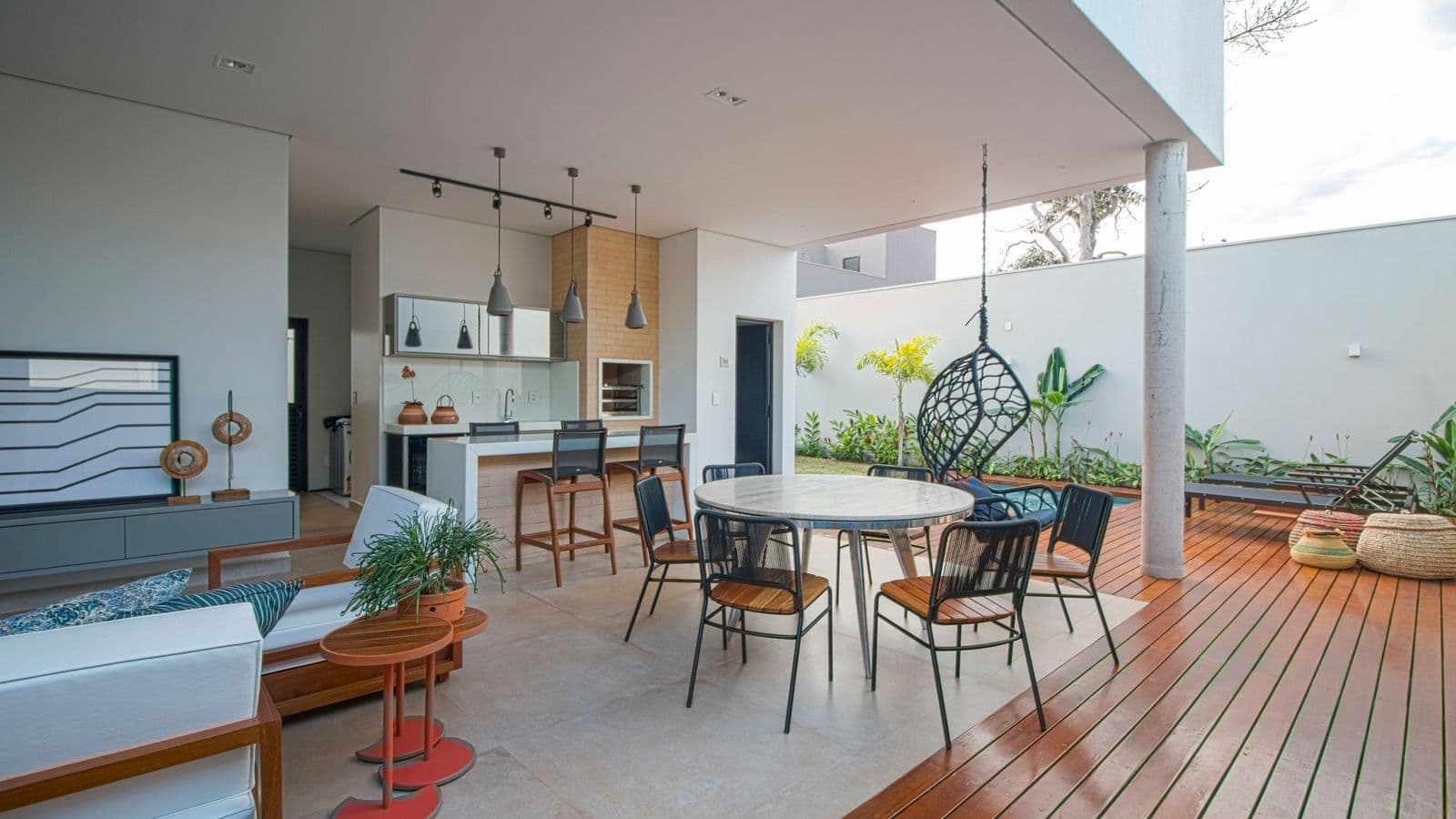
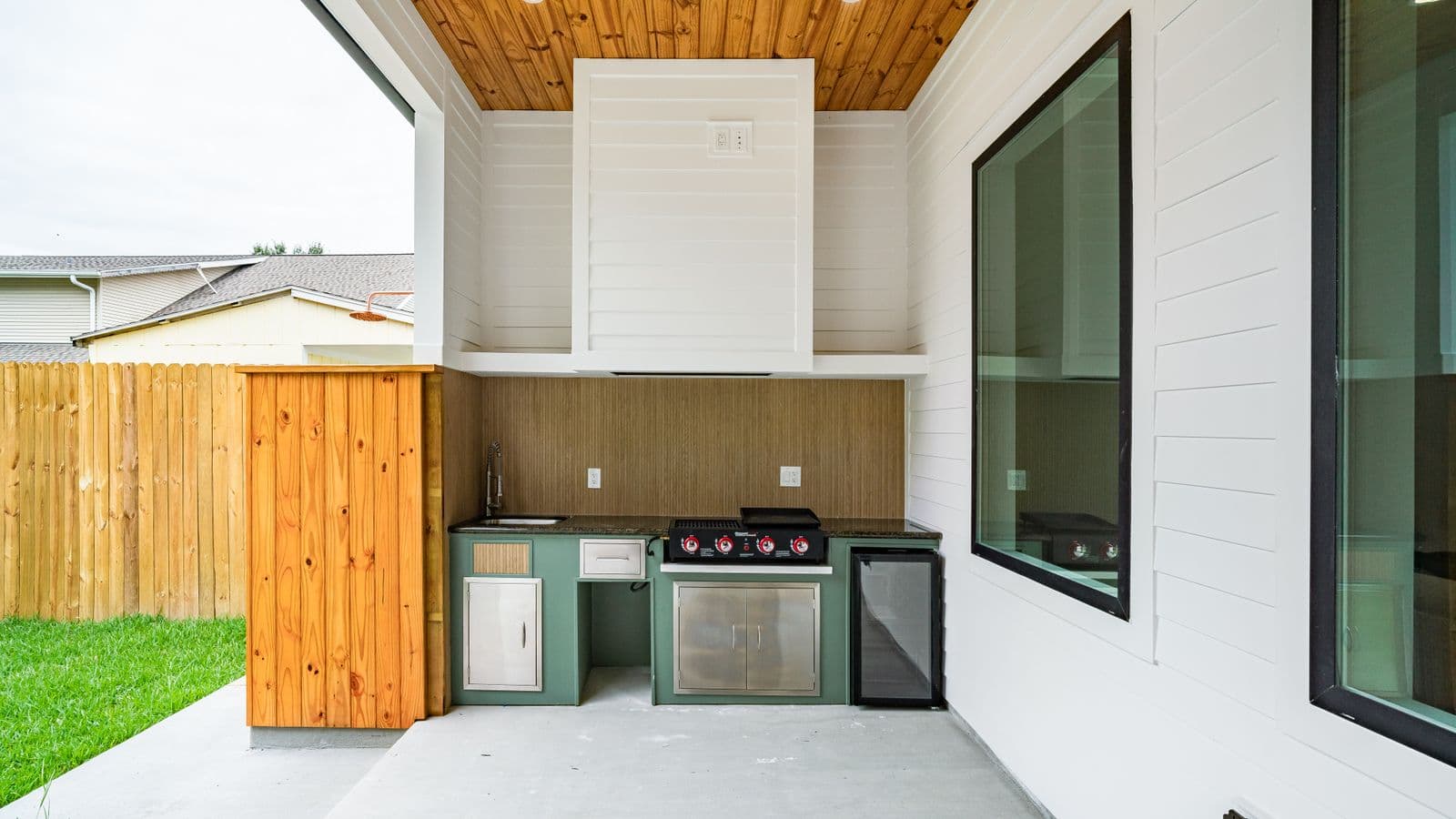
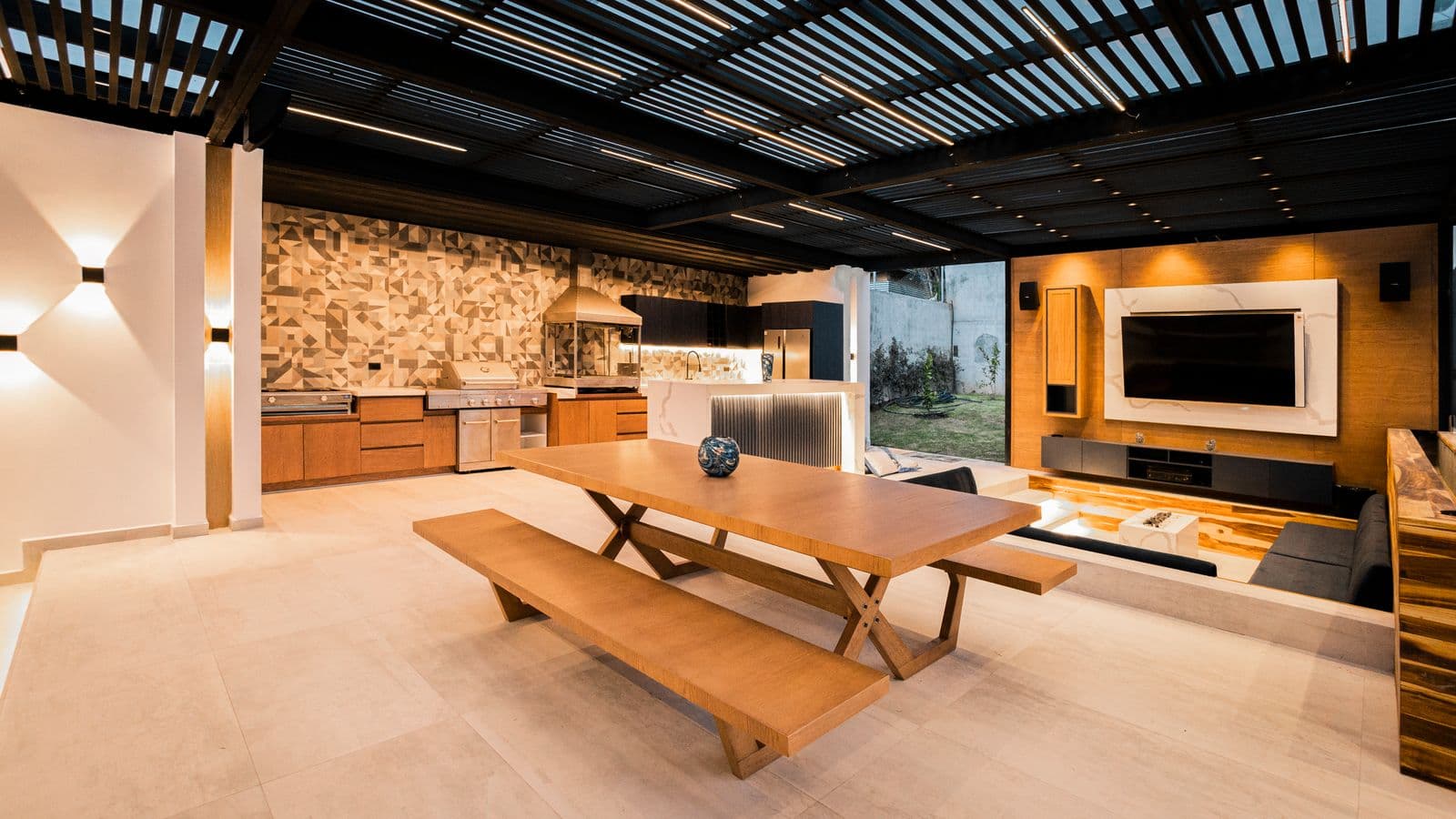
You’ve pictured it a thousand times. The sizzle of the grill, the clink of glasses, friends and family gathered around, sharing stories under the open sky. The outdoor kitchen is more than an amenity; it's the heart of the modern backyard, a hub for connection and culinary creativity. But as you move from dream to design, a critical question emerges, one our team at Modern Yardz gets asked almost daily: does an outdoor kitchen _really_ need to be covered?
It’s a fantastic question. And the answer isn’t a simple yes or no. It’s a nuanced conversation that balances budget, climate, usage habits, and long-term value. We've designed and built countless outdoor living spaces, and our experience shows that the decision to cover your kitchen is one of the most significant you'll make, impacting everything from the lifespan of your appliances to the number of days you can actually enjoy your investment. Let's break it down.
The Short Answer (and Why It's Complicated)
Let’s get this out of the way. Do you _have_ to cover your outdoor kitchen? Technically, no. You can absolutely build one with materials rated for full exposure. But the real question isn't about necessity; it's about wisdom. Should you cover it? We lean heavily towards yes. Almost always.
A cover is preventative medicine for your investment. It's the difference between an outdoor kitchen that looks weathered and worn after a few seasons and one that remains the pristine centerpiece of your yard for a decade or more. It’s about protecting thousands of dollars in appliances, countertops, and cabinetry from the relentless assault of the elements. It’s about usability. It's about comfort.
So, while it’s not a strict requirement, omitting a cover is a calculated risk. A risk we generally advise against.
Protecting Your Investment: The Unflinching Case for a Cover
When you invest in one of our custom Outdoor Kitchens SAN Diego, you're investing in high-quality materials and appliances. Leaving them exposed is like parking a luxury car on the street during a hailstorm. You just wouldn't do it.
Here’s what a cover is really protecting against:
- The Sun's Relentless UV Rays: The sun is probably the single most damaging element. Over time, direct sunlight will fade stainless steel, bleach wood finishes, warp composite decking, and degrade the sealants on stone countertops. The vibrant colors of your beautiful cabinetry can become dull and lifeless. A cover acts as a constant shield, preserving the fit, finish, and color of every component.
- Rain and Moisture: This is the obvious one, but its effects are insidious. Water can seep into the electronic components of grills, refrigerators, and ice makers, leading to premature failure and costly repairs. It promotes mold and mildew growth in grout lines and within cabinetry. Even marine-grade materials aren't invincible. Constant moisture can lead to corrosion on hinges and hardware and can stain porous stone surfaces. A roof or solid cover keeps the entire area dry, clean, and ready to use.
- Debris and Environmental Mess: Think about what falls from the sky. Leaves, pollen, bird droppings, dust, and twigs. Without a cover, your pristine cooking surfaces become a collection basin for outdoor grime. This means you're not just wiping down the counter before you cook; you're performing a deep clean every single time. It's a significant, often frustrating, increase in maintenance that a simple cover virtually eliminates.
- Harsh Weather Events: Depending on your climate, you might face wind-driven rain, hail, or even snow. A sturdy cover provides a formidable line of defense, preventing physical damage to your equipment and structure. It keeps your kitchen from becoming a soggy, unusable mess right after a storm passes.
We can't stress this enough: protecting the core components of your kitchen is paramount. It ensures longevity and keeps your space looking and functioning as it did on day one.
Beyond Protection: How a Cover Transforms Your Outdoor Space
Okay, so a cover is a great shield. We've established that. But honestly, that’s only half the story. The real magic happens when you realize a cover isn't just a defensive measure; it’s an enhancement that fundamentally changes how you experience your entire backyard.
It’s a game-changer.
A covered outdoor kitchen stops being just a collection of appliances and starts becoming a true outdoor _room_. It creates a destination. This architectural element provides a sense of enclosure and intimacy, psychologically defining the kitchen and dining area as a distinct space. It’s the difference between cooking _in_ your yard and cooking in a dedicated outdoor living room.
Think about the practical benefits:
- Year-Round Usability: A sudden summer shower won't send your guests running for the hills. A cover means you can grill, entertain, and relax outdoors regardless of a little rain. It extends the usability of your investment from 'perfect days only' to 'almost any day.'
- Comfort is King: The shade provided by a cover is a massive benefit. On a hot, sunny day, it can lower the ambient temperature in that zone by 10-15 degrees or more. This makes cooking more pleasant and dining more comfortable. You’re no longer a slave to the sun's position. This is where well-designed Patio Covers Pergolas SAN Diego truly shine, offering a perfect blend of sunlight and shade.
- Integration of Amenities: A solid cover is a platform. It allows for the seamless integration of other creature comforts that elevate the experience from good to incredible. We're talking about ceiling fans for a gentle breeze, recessed lighting for perfect evening ambiance, and even built-in speakers for music. With a structural cover, you can incorporate thoughtful Landscape Lighting SAN Diego that makes the space usable and beautiful long after the sun goes down.
- Increased Property Value: A well-designed, fully integrated covered outdoor kitchen is a massive selling point. It’s a feature that prospective buyers see as a significant lifestyle upgrade. It’s not just an expense; it’s an investment that adds tangible, marketable value to your home.
What Are Your Options? A Look at Different Cover Styles
Once you decide a cover is the right move, the fun begins. There isn't a one-size-fits-all solution. The right choice depends on your home's architecture, your budget, and the specific functionality you're looking for. Our design team works with clients to find the perfect match, but here are the most common options we build.
| Cover Type | Primary Benefit | Best For | Considerations |
|---|---|---|---|
| Solid Roof | Maximum protection from sun and rain | Homeowners wanting a true outdoor room feel and all-weather use | Can be more expensive; may require more complex engineering and permitting — San Diego Municipal Code §129.0203 exempts patio covers only in RS/RX zones and only up to 300 sq ft. |
| Pergola | Architectural beauty and partial shade | Creating a defined space with an open, airy feel | Doesn't offer full rain protection unless a secondary cover is added. |
| Retractable Awning | Flexibility to have sun or shade on demand | Covering spaces adjacent to the house where a permanent roof isn't desired. | Less durable in high winds; mechanical parts require maintenance. |
| Cantilever Umbrella | Affordability and targeted shade | Smaller kitchen areas or for renters; budget-conscious projects | Limited coverage area; must be closed in windy conditions. |
Let’s dive a little deeper into the main contenders.
Solid Roof Structures: This is the gold standard for protection and creating a true outdoor room. A solid roof, often designed as an extension of your home's existing roofline, offers complete shelter from sun and rain. It provides the perfect framework for installing ceiling fans, lighting, and even infrared heaters for chilly evenings. The downside? It's typically the most significant investment and requires careful planning to ensure it integrates flawlessly with your home's architecture.
Pergolas: We love pergolas. They are architecturally stunning and create a beautiful sense of definition without completely blocking the sky. A traditional pergola with open rafters provides partial, dappled shade that shifts throughout the day. For more protection, you can add polycarbonate panels on top (which block UV rays and rain but let light through) or a retractable fabric canopy underneath. They offer a fantastic compromise between an open-air feel and functional shelter.
The Argument for Going Uncovered: Is It Ever a Good Idea?
So, after all that, is there ever a time our team would say, 'You know what? Skip the cover.'
Yes, but it's rare and requires careful consideration.
An uncovered kitchen might work if you meet a very specific set of criteria. First, you live in an exceptionally mild and dry climate where rain is infrequent and the sun isn't punishingly intense year-round. Second, your budget is extremely tight, and a cover is simply not feasible at the moment (though we'd still recommend planning for one in the future). Third, you are committed—and we mean _truly committed_—to using the most durable, marine-grade materials available for every single component.
This means investing in 316-grade stainless steel appliances, which have higher corrosion resistance. It means choosing ultra-dense materials for countertops, like specialized Concrete SAN Diego formulations or non-porous sintered stone, that won't stain or degrade. Your cabinetry would need to be made from stainless steel or a high-density polyethylene (HDPE). You'd also want to invest in high-quality, custom-fit canvas covers for each individual appliance to provide some level of protection when not in use.
Even with all these precautions, you're still accepting a higher maintenance burden and a shorter lifespan for your kitchen compared to a covered equivalent. The aesthetic is also a factor. Some homeowners desire a completely open, minimalist look and are willing to accept the trade-offs. It's a valid choice, as long as you go in with your eyes wide open to the long-term consequences.
Material Matters: What to Consider, Covered or Not
Whether you opt for a cover or brave the elements, material selection is a non-negotiable cornerstone of a successful outdoor kitchen project. This is where our expertise in building durable outdoor environments really comes into play.
- Countertops: Granite is a popular choice, but it needs to be sealed regularly to prevent staining. Quartz, a go-to for indoor kitchens, is generally not recommended for outdoor use as the resins can yellow in direct sunlight — Caesarstone sells its standard range as an indoor product and reserves a separate UV-rated Outdoor Collection, with its own warranty, for exterior installs. Our team often recommends Dekton, a sintered stone that is virtually indestructible and UV-stable, or a beautifully crafted concrete countertop for a modern, durable surface.
- Cabinetry: Forget wood unless it's a highly resilient species like teak and you're prepared for the maintenance. The best options are stainless steel or powder-coated steel for a sleek, modern look, or HDPE polymer cabinets, which are waterproof, won't fade, and come in a variety of colors and textures.
- Appliances: Look for appliances made from at least 304-grade stainless steel. As mentioned, if you're going uncovered, upgrading to 316-grade (marine grade) is a wise investment for its superior corrosion resistance — Penn Stainless attributes that edge to the 2–3% molybdenum in 316, which 304 has none of, giving it higher resistance to pitting and crevice corrosion in chloride environments such as coastal air.
- Flooring: The floor beneath your kitchen takes a lot of abuse, from foot traffic to grease splatters. We often recommend high-quality Pavers SAN Diego or properly sealed concrete. They are durable, easy to clean, and provide a stable, safe surface for cooking and entertaining.
Integrating a Cover into Your Overall Landscape Design
Here’s a critical piece of advice from our design team: don't treat the cover as an add-on. It should be a foundational element of your backyard's master plan. A poorly placed or stylistically mismatched cover can look like a clumsy afterthought, disrupting the flow and beauty of your entire space.
When we undertake a holistic Landscape Design SAN Diego project, the outdoor kitchen and its potential cover are considered from day one. We think about sightlines from the house, traffic flow around the patio, and how the structure will relate to other key elements like a pool, a fire pit, or seating areas. The goal is to create a cohesive environment where every piece feels intentional and connected.
The style of the cover should complement your home's architecture. A sleek, modern pergola might be perfect for a contemporary home, while a gabled roof with exposed beams might better suit a traditional or rustic house. It’s about creating harmony. The structure can also serve to anchor other elements, like providing a backdrop for stunning Fire Features or integrating with Seat Retaining Walls to create a multi-functional entertainment zone.
This integrated approach is what separates a good project from a truly breathtaking one.
The Modern Yardz Approach: Design, Durability, and Detail
At Modern Yardz, we see an outdoor kitchen as more than just a place to cook. It's the soul of your outdoor living space. Our process is built around understanding how you want to _live_ in your yard. We don't just ask what kind of grill you want; we ask about the parties you want to host, the family dinners you envision, and the quiet morning coffees you want to enjoy.
That conversation informs every decision we make, especially the one about the cover. We'll walk you through the options, show you 3D renderings of how different structures will look in your space, and help you weigh the costs and benefits. Our build team then brings that vision to life with meticulous attention to detail, using only materials and construction techniques designed to last.
Because at the end of the day, our goal is to create a space that you'll love and use for years to come, in sunshine and in rain. It’s a commitment to quality and thoughtful design. Are you ready to explore the possibilities for your own backyard? BOOK MY FREE CONSULTATION and let's start designing the outdoor space you've always dreamed of.
Ultimately, deciding whether to cover your outdoor kitchen is a personal choice. But armed with the right information, you can make a decision that protects your investment, enhances your lifestyle, and adds lasting value to your home. It’s about creating a space that isn't just beautiful, but brilliantly functional, ready for whatever the day—or the weather—brings.
Start Your Free Design Consultation
Tell us about your project and we'll be in touch within 24 hours. No pressure, no obligation.
Common questions
- Do I really need to cover my outdoor kitchen?
- Technically no, but Modern Yardz strongly recommends it. You can build one with materials rated for full exposure, so a cover isn't a strict requirement. However, omitting it is a calculated risk: a cover protects thousands of dollars in appliances, countertops, and cabinetry from sun, rain, and debris, and generally extends your kitchen's usable lifespan.
- How much cooler does a covered outdoor kitchen stay?
- On a hot, sunny day, the shade from a cover can lower the ambient temperature in that zone by 10 to 15 degrees or more. This makes cooking more pleasant and dining more comfortable, so you're no longer a slave to the sun's position.
- What are my options for covering an outdoor kitchen?
- The four most common options are a solid roof, a pergola, a retractable awning, and a cantilever umbrella. A solid roof gives maximum sun and rain protection; a pergola adds architectural beauty and partial shade; a retractable awning offers sun-or-shade flexibility; and a cantilever umbrella provides affordable, targeted shade for smaller areas.
- When is it okay to skip the cover and go uncovered?
- Only if you meet specific criteria. It can work in an exceptionally mild, dry climate, on a very tight budget, and if you commit to marine-grade materials like 316-grade stainless steel, sintered stone or concrete countertops, and HDPE cabinetry. Even then, expect a higher maintenance burden and a shorter lifespan.
- What countertop material is best for an outdoor kitchen?
- Modern Yardz often recommends Dekton, a sintered stone that's virtually indestructible and UV-stable, or a durable concrete countertop. Granite works but needs regular sealing to prevent staining. Quartz is generally not recommended outdoors, because its resins can yellow in direct sunlight, making it a poor fit for exposed spaces.
Ready to design your dream yard?
Tell us about your project. We'll send back a real plan, not a templated quote.
Book My Free Consultation→