Your Backyard's Next Big Upgrade
The idea of an outdoor kitchen has exploded. It’s no longer just a grill on the patio; it’s a full-fledged culinary hub, the heart of backyard entertainment. We've seen a significant, sometimes dramatic shift in how homeowners view their outdoor spaces. It’s an extension of the home, a place for connection, and the kitchen is often the centerpiece. But the thought of a massive, custom-built masonry project can be daunting, both in terms of cost and construction time. That's where the conversation about how to build a modular outdoor kitchen begins, and honestly, it’s a game-changer for many.
Modular systems offer a powerful combination of customization and streamlined installation that traditional methods often can't match. It’s about achieving that high-end, integrated look without the sprawling timeline and complexity of a full custom build. Our team has designed and installed countless outdoor living areas, and we’ve found that a well-planned modular kitchen delivers incredible value and longevity. It's a smart approach. This isn't just about placing a few cabinets outside; it’s about creating a cohesive, functional, and beautiful space that works for you.
First Things First: What Exactly is a Modular Outdoor Kitchen?
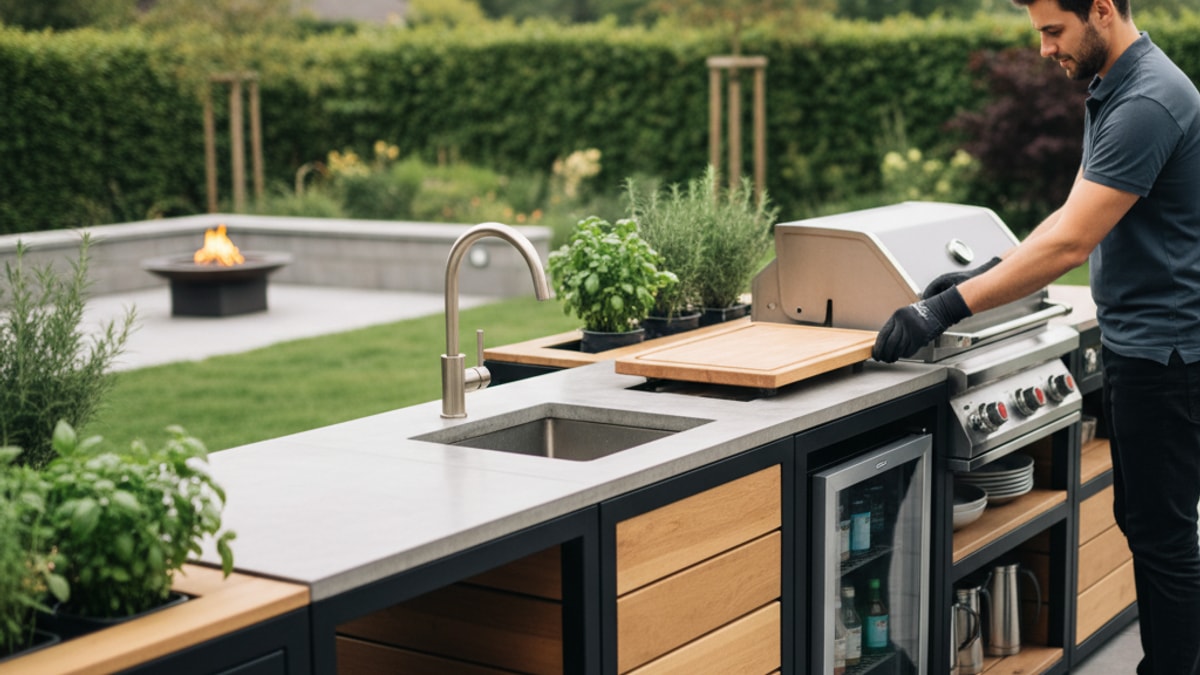
Let’s clear this up, because the term gets thrown around a lot. A modular outdoor kitchen is built using prefabricated cabinets, or 'modules,' that are designed to house specific appliances like grills, side burners, refrigerators, and sinks. Think of it like high-end LEGOs for your backyard. These modules are typically constructed from durable, weather-resistant frames (like galvanized steel) that are then finished on-site with your choice of cladding and countertops.
The beauty is in the system. Instead of building a concrete block structure from scratch, a process that is messy and time-consuming, you start with a precise, engineered framework. This approach dramatically cuts down on installation time and job site disruption. You're not sacrificing quality, either. The result is a permanent, high-performance kitchen that looks and feels custom-built because, in many ways, it is. You're just starting with a smarter foundation. We can't stress this enough: the planning phase is where you make it your own, and the modular system is the vehicle to bring that vision to life efficiently.
The Critical Planning and Design Phase
Don't skip this. Seriously. The success of your entire project hinges on what happens before a single tool is picked up. A thoughtfully designed kitchen is a joy to use; a poorly planned one is a constant source of frustration. Our Landscape Design SAN Diego process always begins with a deep dive into how you live and entertain.
Ask yourself some unflinching questions:
- How will you use the space? Are you a weekend BBQ warrior focused on the perfect steak, or do you envision hosting large gatherings with a full bar and sink for cleanup?
- What's your workflow? Great kitchens, indoors or out, have logical zones: a hot zone (grill, side burners), a cold zone (refrigerator, ice maker), a wet zone (sink), and a dry zone (prep space). Think about the triangle concept from your indoor kitchen—it applies here, too.
- Where will it go? Location is everything. You need to consider proximity to the house for easy transport of food and supplies. But you also need to think about wind patterns (you don't want smoke blowing back into the house or onto your guests), sun exposure, and the view from both the kitchen and the house.
- What about utilities? This is a big one. You'll need to plan for gas lines (natural gas or propane), electrical outlets for refrigerators and lighting, and plumbing for a sink or ice maker. Getting this wrong can lead to catastrophic budget overruns. It's far easier to run these lines during the initial setup than to retrofit them later.
Once you have a sense of your needs, you can start sketching layouts. The most common are the linear (straight line), the L-shape, and the U-shape. The L-shape is incredibly popular because it creates a natural corner for conversation and defines the cooking area without completely closing it off. A U-shape can create a true 'cockpit' feel for the chef, with everything within arm's reach. We’ve found that the layout is often dictated by the existing patio space and how it integrates with other elements like a dining area or one of our custom Fire Features.
Choosing the Right Foundation
A modular kitchen is a permanent structure. It's heavy. It needs a solid, level foundation to sit on, and this is a non-negotiable element of the build. You have two primary options here, and the choice often depends on your existing landscape and aesthetic preferences.
Poured Concrete Slab: This is the gold standard for stability. A reinforced concrete slab provides an impeccably flat and durable base that won't shift or settle over time. If you're starting from scratch, pouring a dedicated slab for the kitchen area is often the best choice. Our expertise in Concrete SAN Diego ensures that the slab is properly graded for drainage and engineered to support the weight of the kitchen and its stone finishes.
Paver Patio: Can you build a modular kitchen on pavers? Yes, but with a major caveat: the paver base must be professionally installed and properly compacted. We’ve seen DIY paver jobs that look good for a year and then start to sink and shift. That's a disaster for an outdoor kitchen. A professionally installed paver base is excavated deep, filled with layers of aggregate, and compacted relentlessly to create a stable, interlocking surface. When done correctly by a team like ours that specializes in Pavers SAN Diego, it provides a beautiful and completely suitable foundation.
Never, ever attempt to build your kitchen directly on grass, dirt, or a flimsy deck. It will fail. That’s the reality. It all comes down to a solid base.
The Bones of Your Kitchen: Frame Materials
The frame is the skeleton of your modular kitchen. It needs to be strong, resistant to the elements, and precisely engineered to fit your appliances. While there are a few options out there, our experience has shown that one material class consistently outperforms the others.
| Frame Material |
Pros |
Cons |
Our Recommendation |
| Galvanized Steel |
Extremely strong and rigid. Resists rust and corrosion. Lightweight for easier installation. Non-combustible. |
Higher initial cost than wood. Can be sharp to work with. |
The Professional's Choice. The longevity and structural integrity are unmatched. This is what we use and recommend for a kitchen that will last for decades. |
| Wood Framing |
Inexpensive and widely available. Easy to cut and assemble for DIYers. |
Susceptible to rot, moisture damage, and insects. It's combustible, requiring special insulation jackets around grills. |
Avoid for outdoor kitchens. The risk of fire and eventual decay is simply too high. We've replaced too many rotted wood frames to ever recommend them. |
| Welded Aluminum |
Lightweight and will not rust. |
Can be less rigid than steel. Welding requires specialized skills and equipment, increasing labor costs. |
A viable but often more expensive and less common option than galvanized steel. Steel offers a better balance of strength, cost, and ease of assembly. |
We mean this sincerely: don't cut corners on the frame. It's the core of your investment. A robust steel frame ensures your heavy granite countertops won't crack and your appliance doors will always close perfectly. It’s the hidden component that guarantees the longevity of the entire structure.
Dressing It Up: Cladding and Countertops
This is the fun part. The cladding (the vertical finish on the sides of the cabinets) and the countertops are what define your kitchen's style. This is where you connect the kitchen's aesthetic to the rest of your home and landscape. The options are nearly limitless, but they fall into a few key categories.
For Cladding:
- Stone or Brick Veneer: This is the most popular choice for a reason. It provides a rich, textured, and timeless look. Thin stone or brick veneers are applied to the cement board that sheathes the steel frame. It looks exactly like a full masonry build but at a fraction of the weight and cost.
- Stucco: A great option for matching the finish of your home. It can be tinted to any color and provides a clean, modern, or Mediterranean look. Proper application is critical to prevent cracking.
- Tile: Porcelain or ceramic tile can create a unique, custom look. It's durable and easy to clean, but you need to use a high-quality, frost-proof tile and epoxy grout to withstand the elements.
For Countertops:
This is a critical, non-negotiable element that takes the most abuse. It needs to be durable, stain-resistant, and UV-stable.
- Granite: Still the king of outdoor countertops. It's incredibly durable, heat-resistant (you can place hot pans on it), and comes in a huge variety of colors. It does need to be sealed periodically to prevent staining.
- Poured Concrete: Offers a modern, industrial aesthetic. Our Concrete SAN Diego artisans can create custom-colored and polished concrete countertops that are truly unique. They are very durable but must be sealed meticulously to protect against stains from things like oil, wine, and acidic foods.
- Quartz: While quartz is a go-to for indoor kitchens, most brands are not warrantied for outdoor use. The resins used to bind the stone can yellow and degrade in direct sunlight. There are a few new outdoor-rated quartz products, but they are expensive and have a limited track record. We generally steer clients toward granite or concrete for proven performance.
- Tile: Tile can be a budget-friendly option, but the grout lines are the weak point. They are prone to staining and cracking over time. If you go this route, use large-format tiles to minimize grout and choose a high-performance epoxy grout.
The Heart of the Matter: Appliances and Utilities
Your appliances are what turn a beautiful structure into a functional kitchen. The quality of your grill, in particular, will have the biggest impact on your cooking experience. This is where you should allocate a healthy portion of your budget.
Think beyond the grill. A full outdoor kitchen experience often includes:
- A High-Quality Grill: Look for 304-grade stainless steel construction for maximum corrosion resistance. Features like infrared searing burners and rotisseries can elevate your cooking game.
- Side Burners: Perfect for heating sauces, boiling corn, or simmering side dishes without having to run back inside.
- Outdoor Refrigerator: A UL-rated outdoor refrigerator is a must-have for keeping drinks cold and ingredients close at hand. Indoor mini-fridges are not designed to handle the temperature fluctuations and humidity of the outdoors and will fail quickly.
- Sink and Faucet: A sink is incredibly convenient for prep and cleanup. You'll need to run both hot and cold water lines, as well as a drain line that connects to your home's sanitary system or a dry well, depending on local codes.
- Storage: Drawers and access doors are essential for storing tools, propane tanks, and other supplies. Look for fully sealed stainless steel units to keep critters and water out.
And don't forget the lighting. You're going to want to use your kitchen after the sun goes down. Effective Landscape Lighting SAN Diego is crucial. This includes task lighting directly over the grill and prep areas, as well as ambient lighting integrated into the structure, such as under-countertop LED strips or lights built into nearby Seat Retaining Walls. Good lighting is about both safety and atmosphere.
Integrating Your Kitchen Into the Broader Landscape
An outdoor kitchen shouldn't feel like an afterthought dropped onto a patio. It should feel like an integral part of a complete outdoor living environment. That's the difference between a simple project and a truly transformative space. This is where holistic design becomes so important.
Consider how the kitchen relates to other outdoor 'rooms'.
- Dining Area: Is there a clear, easy path from the grill to the dining table? Is the dining area protected from the elements by one of our custom Patio Covers Pergolas SAN Diego? A pergola can define the dining space and provide much-needed shade, making it far more comfortable and usable.
- Lounge Area: We often design kitchens to overlook a comfortable seating area, perhaps centered around a fire pit or fireplace. This allows the cook to remain part of the conversation and social gathering.
- Pool and Spa: If you have a pool, the outdoor kitchen often becomes the central hub for summer entertainment. We design spaces that flow seamlessly from the pool deck to the bar counter of the kitchen, creating a resort-like feel. Our expertise with Pools AND Spas allows us to create a cohesive vision for the entire backyard.
Even the surrounding softscape matters. Planting beds with herbs near the kitchen are both beautiful and functional. Using low-maintenance ground cover like high-quality Artificial Turf SAN Diego around the living areas ensures the space is always green and ready for guests without the mud and mess.
The process of building a modular outdoor kitchen is straightforward when you break it down into these manageable phases. It's a project that blends technical precision with creative design. The flexibility of the modular approach allows for an incredible degree of personalization, letting you create a kitchen that perfectly suits your style and your life. If the process feels overwhelming, that's what we're here for. A conversation with one of our designers can help clarify your vision and set you on the right path. Why not BOOK MY FREE CONSULTATION to explore the possibilities for your own backyard?
Building an outdoor kitchen is an investment in your home and your lifestyle. It’s about creating a destination, a place where memories are made over shared meals and warm evenings. Taking the time to plan it right ensures that it will be a source of joy for many, many years to come.



.webp)
.webp)