Your patio is the heart of your San Diego backyard. It’s where the grill master holds court, where bare feet run on warm summer evenings, and where you unwind after a long day. But over time, that pristine concrete canvas can start to tell a different story—one of spilled drinks, greasy BBQ drips, encroaching green algae, and a general layer of dust and grime. Suddenly, your outdoor oasis feels a little less… oasis-y. Knowing how to clean patio cement isn't just about appearances; it's about reclaiming your space.
Here at Modern Yardz, we've designed and built countless concrete patios across San Diego County, from the sunny backyards of Chula Vista to the coastal homes in Oceanside. We’ve seen firsthand how a clean, well-maintained surface can completely transform the feel of an outdoor living area. It’s not just about spraying it down with a hose. It’s about using the right techniques and understanding what you’re up against. Our team has compiled our collective experience into this definitive breakdown, sharing the professional insights we use to restore concrete to its former glory. Let’s get that patio looking impeccable again.
Why a Clean Patio Matters (More Than You Think)
It’s easy to dismiss a dirty patio as a simple aesthetic issue. But our experience shows it’s much deeper than that. The condition of your concrete has a direct impact on the safety, longevity, and overall value of your outdoor living space. And—let's be honest—it dramatically affects how much you enjoy it.
A buildup of moss or algae, especially common in our coastal San Diego climate, isn't just an eyesore; it's a legitimate safety hazard. When wet, these organic growths become incredibly slick, creating a serious risk for slips and falls. For families with young children or for homeowners who love to entertain, this is a non-negotiable issue. Keeping that surface clean is a fundamental part of keeping it safe.
Beyond safety, there’s the health of the concrete itself. Concrete is porous. Spills from oil, acidic foods (like citrus or wine), and chemicals from pool water or fertilizers can seep into the surface, causing permanent staining and degradation over time. That green stuff? Algae and mildew can hold moisture against the concrete, accelerating wear and potentially leading to crumbling or pitting, especially in older installations. A regular, thorough cleaning is preventative maintenance that protects your investment. It stops small problems from becoming catastrophic ones. We’ve seen neglected patios that required a full replacement—a costly project that could have been avoided with consistent care. Our entire philosophy, which you can learn more about on our About page, is built on creating beautiful spaces that last.
And finally, there's the simple joy of it. Your patio is an extension of your home. It’s a room without a roof. When it’s clean, bright, and inviting, you’re more likely to use it. It elevates your entire property, making it a source of pride and a perfect backdrop for making memories. A clean patio just feels better. It’s that simple.
Before You Start: The Essential Prep Work
Jumping straight into cleaning without proper preparation is a classic rookie mistake. We can't stress this enough—what you do before you even mix a cleaning solution or start a pressure washer is just as important as the cleaning itself. A few minutes of prep ensures a more effective, safer, and much less frustrating cleaning day.
First things first: clear the deck. Completely. Move all patio furniture, grills, planters, umbrellas, and toys out of the area. Don’t just slide them to one side; get them off the patio entirely. This gives you an unobstructed canvas to work on and prevents you from just pushing dirt around. It also protects your belongings from cleaning solutions or high-pressure water streams. While you’re at it, take a moment to inspect the feet of your metal furniture—this is a common source of those pesky rust stains we’ll tackle later.
Next, grab a stiff-bristled push broom and give the entire surface a thorough, aggressive sweeping. You're not just getting rid of loose leaves and debris. You're working to dislodge any caked-on dirt, pebbles, and grime that have settled on the surface. Pay extra attention to corners and the edges where the patio meets the house or landscaping. This step is critical because pressure washing loose debris can turn small pebbles into dangerous projectiles. You're clearing the battlefield.
Now, for a professional-level inspection. With the surface clear and swept, take a slow walk around the patio. Look for significant cracks, chipping, or spalling (where the surface is flaking off). If you find minor cracks, you might be able to fill them with a concrete crack filler from a home improvement store after cleaning. However, for larger, structural issues, it’s best to address them before you proceed with a deep clean, as high-pressure water can make them worse. If you see widespread issues, it might be a sign that the underlying foundation needs a look. That’s when a professional assessment is invaluable. Our team handles everything from new Services to repairs, so we understand the importance of a solid foundation.
Finally, protect your surroundings. Cover any nearby plants, shrubs, and delicate landscaping with plastic sheeting. If your patio is adjacent to doors, windows, or siding, consider covering them as well, especially if you plan on using a pressure washer or chemical cleaners. A little overspray can damage window seals or strip paint. And don't forget to protect yourself: safety glasses are mandatory, and gloves are highly recommended, especially when handling any kind of cleaning agent.
Choosing Your Weapon: Cleaning Methods Compared
There isn't a single “best” way to clean patio cement; the right method depends entirely on the type and severity of the dirt you’re dealing with. You wouldn't use a sledgehammer to hang a picture frame, right? Same principle applies here. Our team typically categorizes cleaning approaches into three tiers, from gentle maintenance to heavy-duty restoration.
Tier 1: The Gentle Scrub (Soap & Water)
For general dust, light dirt, or patios that are cleaned fairly regularly, you often don't need anything more than a simple, manual approach. This is your go-to for routine upkeep.
- What you’ll need: A bucket, warm water, a pH-neutral soap (like dish soap or a simple castile soap), and a stiff-bristled deck brush with a long handle.
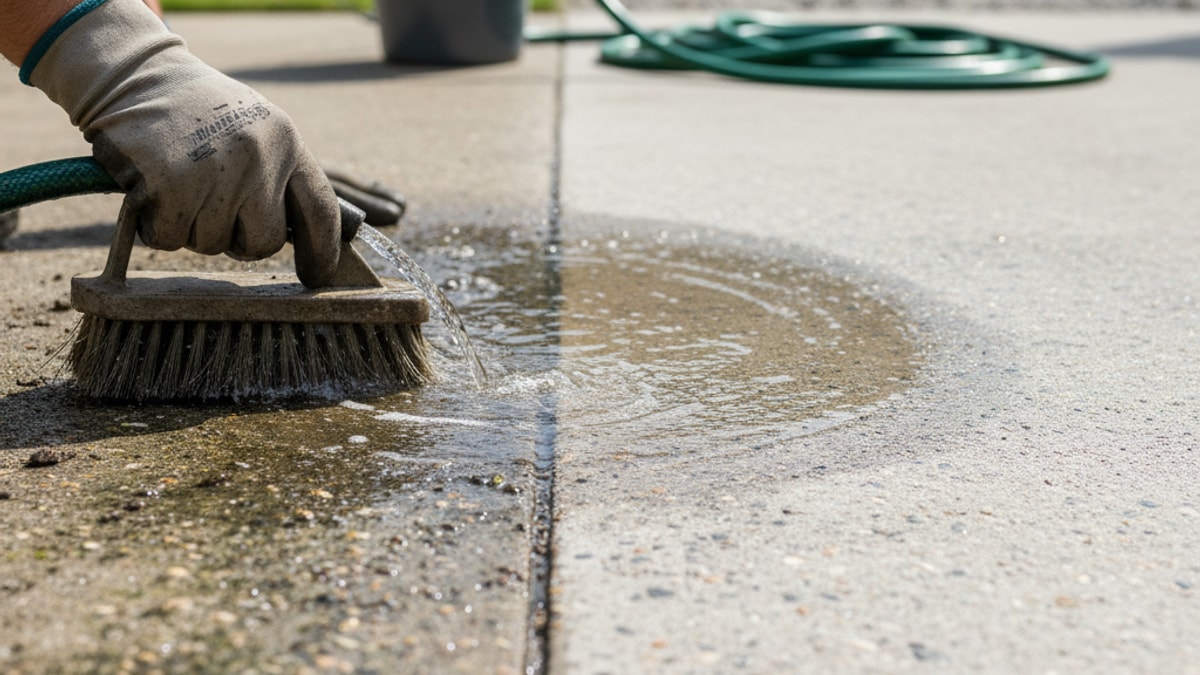
- How it’s done: Mix a small amount of soap into a bucket of warm water. Wet the entire patio surface with a hose. Working in small, manageable sections (about 4x4 feet), pour some of the soapy water onto the concrete and start scrubbing vigorously with the deck brush. The long handle will save your back. The key is consistent pressure. Overlap your sections to ensure you don’t miss any spots. Once you’ve scrubbed an area, rinse it thoroughly with the hose before the soap has a chance to dry on the surface. A soapy residue can actually attract more dirt later on.
Tier 2: The Natural Deep Clean (Vinegar or Oxygen Bleach)
When you're facing more stubborn grime, mildew, or the beginnings of algae growth, it’s time to step up your game with something that has a bit more cleaning power.
- For Mildew & Algae (Vinegar): White vinegar is a fantastic natural disinfectant and cleaner. Mix a 50/50 solution of white vinegar and water in a bucket or a garden sprayer. Apply it to the affected areas and let it sit for about 20-30 minutes, but don't let it dry completely. Then, scrub with your deck brush and rinse thoroughly. The acidic nature of vinegar is great at breaking down organic matter. A word of caution: vinegar can be harmful to some plants, so make sure your landscaping is well-protected.
- For General Grime & Organic Stains (Oxygen Bleach): This is one of our team's favorite eco-friendly solutions. Unlike chlorine bleach, oxygen bleach (the main ingredient is sodium percarbonate, found in products like OxiClean) is non-toxic and breaks down into oxygen, water, and soda ash. It’s fantastic for lifting organic stains. Follow the manufacturer’s instructions to mix the powder with water, apply it to the wet patio, let it bubble and work its magic for 15-20 minutes, then scrub and rinse. It’s remarkably effective.
Tier 3: The Power Reset (Pressure Washing)
For deeply embedded dirt, set-in stains, and years of neglect, the pressure washer is your most powerful ally. It can strip away layers of grime in minutes, delivering a dramatic transformation. But with great power comes great responsibility—used incorrectly, it can also damage your concrete. We’ll dive deeper into this next.
Here's a quick comparison to help you decide:
| Method |
Best For |
Pros |
Cons |
| Soap & Water Scrub |
Regular maintenance, light dust & dirt |
Inexpensive, safe for plants, gentle on concrete |
Labor-intensive, ineffective on deep stains or algae |
| Vinegar Solution |
Mildew, algae, light efflorescence |
Natural, deodorizing, affordable |
Can harm plants, acidic nature can lightly etch unsealed concrete |
| Oxygen Bleach |
Organic stains (algae, moss, leaf stains) |
Eco-friendly, powerful on organic matter, color-safe |
Takes time to activate, requires mixing, less effective on oil |
| Pressure Washing |
Heavy grime, set-in stains, large areas |
Extremely fast and effective, deep cleaning power |
Can damage concrete if used improperly, requires equipment |
The Pressure Washer Deep Dive: Power with Precision
Nothing delivers that jaw-dropping, night-and-day transformation quite like a pressure washer. It’s immensely satisfying. But our team has also been called in to repair damage done by well-intentioned homeowners who got a little too aggressive. The key to a successful pressure washing job is understanding the tool and using a methodical approach.
First, let's talk about the machine itself. For most residential concrete patios, an electric or gas-powered pressure washer with a pressure rating between 1500 and 2500 PSI (pounds per square inch) is ideal. Anything less might not be effective, and anything more—like the 3000+ PSI commercial units—risks etching, scarring, or damaging the concrete surface, especially if it's older or has a delicate finish. It's all about control.
The magic is in the nozzle. Your pressure washer will come with several color-coded tips, each creating a different spray angle. Using the wrong one is the fastest way to cause damage.
- Red Nozzle (0 degrees): Never use this on concrete. This is a pinpoint jet of water with immense power, designed for stripping paint off steel. It will absolutely carve lines into your patio.
- Yellow Nozzle (15 degrees): This is for heavy-duty stain removal on hard surfaces. Use it with extreme caution on concrete, keeping a safe distance. It's best reserved for very stubborn, isolated spots.
- Green Nozzle (25 degrees): This is the workhorse for most concrete patio cleaning. It provides a good balance of cleaning power and surface area coverage. It’s our team’s go-to for general-purpose washing.
- White Nozzle (40 degrees): This is a wider, gentler spray. It's perfect for rinsing, applying detergents, and cleaning more delicate surfaces. A great choice if your concrete is painted or has a decorative finish.
Technique is everything. Start by holding the wand at a consistent angle, about 12-18 inches away from the surface. Begin in a far corner and work your way out, using a smooth, overlapping, sweeping motion, like you’re spray-painting the floor. Don’t just blast directly down. Keep the wand moving at all times; pausing in one spot for even a second can create an uneven, etched circle. The goal is a uniform finish, not a collection of clean spots and wand marks. This methodical approach is what separates a professional-looking job from a DIY disaster.
For an even more consistent finish, many professionals (including our crews) use a surface cleaner attachment. It looks like a floor buffer and contains spinning nozzles under a circular housing. It cleans a wide path with perfect consistency and dramatically reduces the chances of leaving zebra stripes. If you're renting a pressure washer, it's an attachment that is absolutely worth the small extra cost.
Tackling Formidable Stains: A Pro's Guide
Sometimes, you’re up against more than just general grime. Specific spills and stains require a targeted strategy. Here’s how our team approaches the most common culprits we see on San Diego patios.
Grease & Oil Stains: The classic BBQ spill or a leak from a parked car. These are tough because oil penetrates deep into the concrete's pores. The key is to act fast, but even old stains can often be improved.
- The Poultice Method: This is our preferred technique. Make a thick paste using a poultice material (like kitty litter, sawdust, or baking soda) and a strong solvent (like acetone or a commercial concrete degreaser). The paste should have the consistency of peanut butter. Apply it in a thick layer over the stain, extending an inch or two beyond its edges. Cover it with plastic wrap and tape down the edges. Let it sit for 24-48 hours. The solvent dissolves the oil, and the poultice material draws it up out of the concrete as the solvent evaporates. Once dry, scrape it off and scrub the area with soap and water.
Rust Stains: These often appear as orange-brown blemishes from metal patio furniture, planters, or nails left on the surface. For light stains, a simple solution of lemon juice or white vinegar can work. Apply it, let it sit for 10-15 minutes, scrub with a nylon brush, and rinse. For more stubborn rust, you’ll need a commercial rust remover containing oxalic acid. Follow the product's safety instructions carefully—these are powerful chemicals.
Organic Stains (Algae, Moss, Mildew): As mentioned earlier, a solution of oxygen bleach is fantastic for this. For very heavy buildup, you may need to apply the solution, scrub to break up the growth, and then follow up with a pressure washer (using a 25-degree nozzle) to blast away the loosened material. Prevention is key here; improving sunlight and drainage around the patio can help discourage future growth.
Efflorescence: See a white, powdery, or crystalline substance on your concrete? That’s efflorescence. It’s caused by water moving through the concrete and depositing soluble salts on the surface. It's not harmful, but it can be unsightly. Often, a stiff brush and a mild acid wash (like a diluted vinegar solution) can remove it. However, if it keeps coming back, it’s a sign of a persistent moisture issue that may need to be addressed by a professional. Don’t just keep cleaning the symptom; find the source of the water. This is where a holistic view of landscape design and drainage—something central to our work at Modern Yardz—becomes critical.
The Final Step: Sealing Your Concrete for Lasting Beauty
You've done all the hard work. The patio is spotless, the stains are gone, and the concrete looks brand new. Now what? Walk away and enjoy it? Not so fast. The single most important step to protect your freshly cleaned patio is to seal it. Our team considers this a critical, non-negotiable part of any professional concrete care project.
A quality concrete sealer is like a coat of armor for your patio. It penetrates the pores of the concrete and creates a protective barrier that repels water, oil, and other contaminants. This makes future cleanups infinitely easier and prevents new stains from setting in. It also enhances the color of the concrete and can provide UV protection to prevent fading. A sealed patio will stay cleaner, for longer. Period.
There are two main categories of concrete sealers:
- Penetrating Sealers (Silane/Siloxane): These soak into the concrete to form a hydrophobic barrier within the material itself. They don't change the appearance or slip-resistance of the surface, making them an excellent choice for a natural look. They offer fantastic protection against moisture and salt damage.
- Topical Sealers (Acrylic, Polyurethane, Epoxy): These form a protective film on top of the concrete. They are often used to enhance color and provide a satin or gloss finish. Acrylic sealers are the most common for outdoor residential use, as they are breathable and UV-stable. They provide great stain protection but may require reapplication every few years.
Before applying any sealer, the concrete must be absolutely, completely, 100% dry. Trapping moisture underneath a sealer can cause a cloudy or hazy appearance. We recommend waiting at least 24-48 hours after a deep cleaning or pressure washing. Application is typically done with a paint roller or a garden sprayer. Apply thin, even coats, following the manufacturer’s specific instructions. The result is a patio that’s not just clean, but protected for years to come—a cornerstone of the quality we deliver on every project, from a simple patio to a complete outdoor transformation you can see on our Home page.
When to Call in the Professionals
DIY is empowering, but there are times when calling for backup is the smartest move. If your patio is exceptionally large, has deeply set stains that multiple cleaning attempts can't lift, or shows signs of significant cracking or spalling, it’s probably time to consult an expert.
Professional teams like ours at Modern Yardz have access to commercial-grade equipment, specialized cleaning agents, and—most importantly—the experience to diagnose and treat problems safely and effectively. We understand the nuances of different concrete finishes and how to restore them without causing damage. We can identify underlying issues, like the drainage problems causing that recurring efflorescence, and propose real solutions.
If you've tried the methods here and your patio still isn't looking its best, or if the job just feels too overwhelming, don't hesitate. Give us a call. We’re here to help our San Diego neighbors get the most out of their outdoor spaces. We'd be happy to take a look and provide a clear path forward. You can easily BOOK MY FREE CONSULTATION through our Contact page to have one of our experts come out and assess the situation.
Bringing a tired concrete patio back to life is one of the most rewarding home improvement projects you can tackle. It instantly boosts your curb appeal and makes your entire backyard a more beautiful and functional space. With the right techniques and a little bit of effort, you can achieve professional-level results and reclaim your outdoor oasis. For more tips and inspiration on transforming your outdoor space, be sure to check out our Blog. We’re always sharing our latest projects and professional advice to help you create the yard of your dreams.



.webp)
.webp)