You’ve pictured it a thousand times. The perfect evening, friends gathered around, the sizzle of the grill, and the clink of glasses under the open sky. An outdoor kitchen isn’t just an addition to your home; it’s a whole new way of living. It’s an investment in joy, in connection, and in creating memories. But as our team helps homeowners bring these dreams to life, one question always comes up, usually with a hint of anxiety: can outdoor kitchen appliances be left outside year-round?
It’s a fantastic question, and honestly, it’s the most important one you can ask. You’re about to invest in beautiful, high-performance equipment, and the last thing you want is for nature to undo all that good work. The simple answer is yes, they can. But—and this is a big but—it’s not a matter of just setting them up and forgetting about them. The real, smart answer is that their survival depends entirely on the quality of the appliances themselves, the design of your space, and the commitment to a solid maintenance routine. We’ve seen the good, the bad, and the catastrophic, and we’re here to share what truly makes the difference.
The Short Answer vs. The Smart Answer
Let's get this out of the way. Can you leave them out? Yes. Should you? Absolutely, that's what they're built for. But the difference between an outdoor kitchen that looks pristine after ten years and one that’s a rusty, dysfunctional mess after two is knowledge. It's about proactive care, not reactive panic.
The smart answer involves understanding that 'outdoor-rated' isn't just a marketing buzzword. It's a fundamental engineering principle that separates a durable, long-lasting appliance from a piece of indoor equipment masquerading as something it's not. Our team at Modern Yardz has designed and built countless Outdoor Kitchens SAN Diego, and we can't stress this enough: success starts long before the first steak hits the grill. It starts with choosing the right gear and designing the right environment.
It All Starts with the Right Materials
Not all shiny metal is created equal. The unflinching assault of sun, rain, humidity, and temperature swings requires materials that can take a beating and come back for more. This is where the spec sheet becomes your best friend.
First and foremost, let's talk about stainless steel. It’s the undisputed king of outdoor kitchen construction, but there are levels to this. The most common you'll see is 304-grade stainless steel. For most environments, it’s a robust, reliable choice with excellent corrosion resistance. It’s the industry standard for a reason. However, if you live in a coastal area with salt in the air or have a saltwater pool, you need to level up. Our experience shows that 316-grade, or 'marine-grade,' stainless steel is the only way to go in these environments. It contains an element called molybdenum, which gives it a formidable defense against chlorides like salt and pool chemicals. It's a slightly higher investment upfront that prevents a catastrophic failure down the road.
But it's not just about the steel shell. What about the parts you can't see? The electronics, the wiring, the insulation—these are the vulnerable guts of your appliances. True outdoor-rated units have fully sealed electrical components to keep moisture out. The wiring is heavier-duty, and the insulation in an outdoor refrigerator, for example, is far more robust to handle ambient temperature swings from 40 to 100 degrees. An indoor mini-fridge would burn out its compressor in a single season trying to keep up. It simply wasn't designed for that kind of grueling work.
Your Appliance Lineup: A Survival Guide
Every piece of your outdoor kitchen has its own unique set of vulnerabilities. Treating them all the same is a recipe for disappointment. Here’s what we’ve learned about keeping the all-stars of your outdoor setup in prime condition.
The Grill: This is the heart of your kitchen. Whether it's a built-in head or a freestanding cart model, its longevity hinges on a few key areas. The burners and ignition system are most susceptible to moisture and debris. Regular cleaning to remove grease buildup and food particles is non-negotiable, as this gunk can hold moisture against the metal and clog gas ports. The cooking grates, whether stainless steel or cast iron, need to be kept clean and, in the case of cast iron, seasoned to prevent rust.
Outdoor Refrigerators & Kegerators: These are arguably the most sensitive appliances. They are constantly running systems. The number one killer of an outdoor fridge is a failed compressor, often due to poor ventilation. When we design our Outdoor Kitchens SAN Diego, we incorporate specific ventilation panels into the island structure to ensure the unit can breathe. Without proper airflow, the compressor overheats and dies. The door seals are another weak point. They need to be wiped down regularly to prevent mold and mildew and to ensure they maintain a tight seal, keeping the cool air in and the humid air out.
Ice Makers & Sinks: For any appliance with a water line, seasonal preparation is key, especially in climates with freezing temperatures. You must completely drain the water lines for sinks, ice makers, and refrigerators with water dispensers to prevent pipes from bursting when the water freezes and expands. For sinks, covering the drain can also prevent debris and critters from making a home in your plumbing.
Side Burners & Griddles: Much like the main grill, these are all about keeping the burner components clean and dry. A good cover will do most of the work, but a seasonal deep clean where you remove the grates and inspect the gas tubes for any blockages (spider webs are a common culprit) will ensure they light reliably every time.
The Unseen Enemy: Moisture, Debris, and Pests
It's not just the dramatic downpour or the blanket of snow you have to worry about. The slow, relentless enemies are often the most damaging. Humidity is a silent killer. It seeps into every tiny crevice, promoting rust on untreated metals and creating a perfect environment for mold inside refrigerators or storage drawers. This is why breathability in appliance covers is so important—you want to block rain, but you don't want to trap moisture inside.
Pollen, dust, leaves, and grass clippings are another menace. They accumulate in vents, behind units, and inside control panels. This layer of grime not only looks bad but can become a genuine fire hazard when it collects around burners and heat shields. It also holds moisture against surfaces, accelerating corrosion.
And let's be honest, your beautiful, sheltered outdoor kitchen island looks like a luxury condominium to pests. Rodents look for warm, enclosed spaces to nest over the winter, and they have a particular fondness for chewing on electrical wiring. Spiders love to build webs inside the gas tubes of your grill burners, which can block the flow of gas and cause a dangerous flare-up. Regular cleaning and inspection are your best defense against these unwanted tenants.
Your Year-Round Protection Playbook
Protecting your investment is an active process. A few key strategies, practiced consistently, will add years to the life of your appliances and keep your outdoor kitchen looking and performing its best.
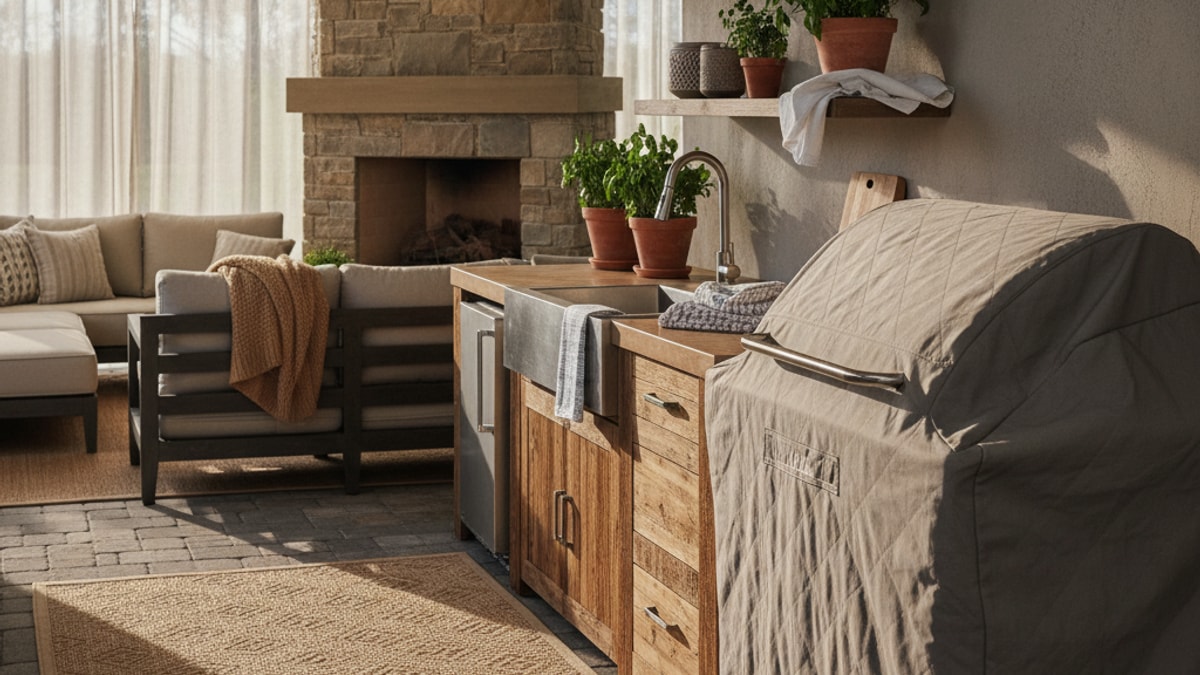
First, a high-quality, custom-fit cover for each appliance is the single most important accessory you can buy. We mean this sincerely. A generic plastic tarp will trap moisture and can even scratch stainless steel surfaces as it flaps in the wind. A proper cover made from a durable, weather-resistant, and breathable fabric will shield your appliances from rain, UV rays, and debris while allowing condensation to escape. It's the baseline of outdoor appliance care.
Second, consider the power of permanent overhead protection. While covers are essential, a solid roof structure is the ultimate defense. A well-designed structure, like one of our custom Patio Covers Pergolas SAN Diego, provides a formidable barrier against the harshest elements. It dramatically reduces the amount of direct rain, snow, and sun your appliances are exposed to, lessening the burden on their construction and your covers. It transforms your kitchen from being merely 'outside' to being in a sheltered, protected outdoor room.
This proactive approach is everything. A little effort each season pays massive dividends in longevity and performance.
| Protection Method |
Initial Cost |
Weather Protection |
Convenience |
Longevity Impact |
| No Protection |
None |
Very Low |
Highest |
Catastrophic |
| Generic Tarp |
Low |
Low (Traps Moisture) |
Low (Flaps, Tears) |
Negative |
| Fitted Fabric Covers |
Moderate |
High (UV, Rain, Debris) |
Moderate (On/Off) |
Significant |
| Hard Covers |
Moderate-High |
Very High (Impact, Rain) |
Moderate (Heavier) |
Very Significant |
| Overhead Structure |
High |
Excellent (All-Weather) |
Highest (Always on) |
Maximum |
What About Extreme Weather?
Even the best-laid plans need to account for Mother Nature's wild side. Different climates present different challenges, and your preparation should reflect that reality.
For regions with heavy rain and high winds, drainage is paramount. Ensure your patio has a proper slope so that water flows away from the kitchen island, not towards it. Puddles around the base of your appliances are a death sentence. Our designs often incorporate a slightly raised plinth for the kitchen, using materials from our Pavers SAN Diego or Concrete SAN Diego services to create a solid, dry foundation.
In areas with snow and ice, winterization is a critical, non-negotiable process. This goes beyond just draining water lines. Heavy, wet snow should be gently brushed off covers to prevent the weight from damaging handles or knobs. Ice can be particularly insidious, freezing in crevices and expanding, potentially warping thin metal or cracking plastic components. Never try to chip ice off an appliance; it's better to let it melt naturally or use lukewarm water if you're in a hurry.
And for those in intensely sunny climates, the relentless UV radiation is the enemy. It will fade and degrade plastic components like handles, knobs, and logos, making them brittle over time. It also breaks down the fabric of cheap appliance covers in a single season. High-quality stainless steel will handle the heat, but it can get scorching hot to the touch, a real safety concern. Thoughtful placement and overhead protection are your best defenses against the sun's onslaught.
Smart Design Makes All the Difference
This is where everything comes together. You can buy the best appliances in the world, but if they're installed in a poorly designed space, you're fighting an uphill battle. True longevity is born from a holistic approach where the landscape design and the kitchen itself work in harmony.
Our design process always starts with the site itself. We consider the path of the sun, the direction of prevailing winds, and drainage patterns. By simply orienting the kitchen correctly, we can use the house itself as a shield against the worst of the weather. We plan for functionality and durability in equal measure.
Proper ventilation isn't just a suggestion; it's a requirement for safety and performance, especially for grills and refrigerators. We build ventilation channels directly into the island structure to ensure a constant flow of fresh air. We also ensure every utility—gas, electric, and water—is installed professionally, with outdoor-rated components and safety features like GFCI outlets and accessible shut-off valves.
It’s this meticulous level of detail that separates a functional outdoor kitchen from a truly exceptional one. It’s about creating a space that’s not only beautiful on day one but remains a source of joy and pride for years to come. This is the kind of detailed planning that goes into every project. If you're ready to explore what's possible, you can BOOK MY FREE CONSULTATION with our design team.
Ultimately, your outdoor kitchen is a living part of your home. It requires a bit of attention and care, just like a garden or a swimming pool. By choosing the right equipment, investing in proper protection, and committing to a simple maintenance routine, you can confidently leave your appliances outside, ready for your next culinary adventure, no matter the season. That peace of mind is the final, essential ingredient for the perfect outdoor space.



.webp)
.webp)