It’s the question we hear almost every day. A homeowner, excited about transforming their backyard, leans in and asks, “So, really, how much to install a small inground pool?” And we get it. You’re looking for a number, a clear figure you can write down and plan around. The honest answer, though, is a bit more complicated than a simple price tag. It’s not like buying a car where the MSRP is right there on the window sticker. A pool is a custom construction project, deeply personal to your property and your vision.
Our team has spent years turning bare patches of grass into stunning outdoor living spaces, and we’ve learned that the final cost is a story told in chapters: the land itself, the materials you choose, the features you can’t live without, and the surrounding environment that makes it all feel complete. So, instead of giving you a vague, unhelpful number, we’re going to pull back the curtain. We’ll walk you through every factor that influences the price, from the ground-breaking essentials to the luxurious finishing touches. This is the conversation we have with our clients to ensure there are no surprises, only excitement for the final result.
First, Why the Surge in Small Pools?
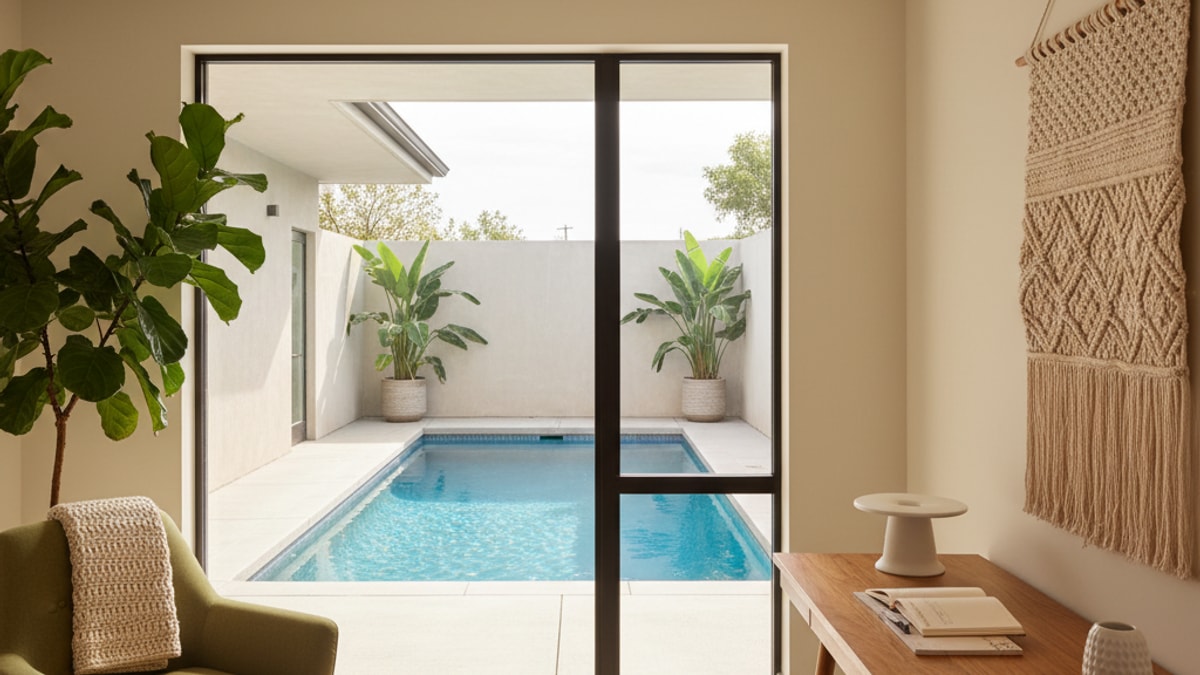
Let's talk about the 'why' before the 'how much.' The trend toward smaller, more intimate pools isn't just about smaller lot sizes, though that's certainly a factor. It's a significant, sometimes dramatic shift in how people want to use their backyards. The sprawling, deep-end-for-diving pools of yesterday are giving way to something more intentional. We call them plunge pools, cocktail pools, or spools (spa-pools). Whatever the name, their purpose is clear: relaxation, socializing, and aesthetic beauty over Olympic laps.
Our clients tell us they want a place to cool off, to unwind with a drink after a grueling day, to sit with friends on a warm evening. They want the sound of water, the visual centerpiece, and the luxury feel without the colossal maintenance and heating costs of a massive pool. It’s about maximizing lifestyle in a more compact, efficient, and often more beautiful way. That's the appeal. It's powerful.
The Big Question: What's the Real Price Range?
Alright, let’s get to it. While we can't give you a precise quote without seeing your space (and you should be wary of anyone who does), we can provide a realistic ballpark. For a professionally installed, quality small inground pool, you're generally looking at a range of $40,000 to $80,000+.
That’s a huge range, right? Frustratingly so. But that entire gap is filled with choices, site conditions, and features. A simple, vinyl-liner plunge pool on a perfectly flat lot will be at the lower end. A custom concrete (gunite) spool with an integrated spa, a waterfall, and premium travertine decking on a sloped yard with rocky soil will easily push the upper limits and beyond. Our goal is to help you understand where your project might fall on that spectrum. Every single dollar has a destination, and it's our job to map it out for you.
Deconstructing the Core Installation Costs
These are the non-negotiable elements. Every single inground pool project, big or small, will include these fundamental costs. This is the foundation of your budget.
1. Excavation & Site Preparation
This is, without a doubt, one of the biggest variables. What your yard is made of and how easily we can access it dictates a huge chunk of the initial cost. If we can drive a mini-excavator right to the spot and the digging is easy (think soft, sandy soil), costs are manageable. But what if access is tight? We’ve had to use smaller, less efficient equipment or even cranes to lift machinery over a house. That adds time and money.
And then there’s the soil itself. If we hit hard clay, dense rock, or a high water table, the excavation becomes a formidable challenge requiring specialized equipment like hydraulic breakers. We can't stress this enough: what’s under your grass is a massive cost driver. A soil test or a thorough site evaluation during our initial Landscape Design SAN Diego phase is critical to forecasting this accurately.
2. The Pool Shell Itself: Concrete vs. Fiberglass vs. Vinyl
This is your most significant material choice, and it impacts everything from installation time to long-term maintenance. Each has its pros and cons, and the best fit really depends on your goals and budget.
| Feature |
Concrete (Gunite/Shotcrete) |
Fiberglass |
Vinyl Liner |
| Customization |
Virtually unlimited. Any shape, size, or depth. |
Limited to pre-manufactured molds and shapes. |
Highly flexible shapes, but depth can be limited. |
| Initial Cost |
Highest |
Moderate to High |
Lowest |
| Surface Durability |
Extremely durable, but requires resurfacing every 10-15 years. |
Very durable and non-porous. Resists algae well. |
Softest surface. Liner needs replacement every 5-9 years. |
| Installation Time |
Longest (weeks to months) |
Fastest (can be installed in days) |
Relatively fast (1-3 weeks) |
| Feel |
Can be rough on feet unless a premium finish is used. |
Smooth, seamless gelcoat finish. |
Smooth and soft to the touch. |
Our experience shows that clients who want a truly unique shape, an integrated spa, or specific design features like a tanning ledge gravitate toward concrete. It offers a level of bespoke design that the others can't match. Those prioritizing speed and lower long-term chemical use often lean toward fiberglass. Vinyl remains a popular choice for budget-conscious projects.
3. Essential Plumbing & Equipment
This is the circulatory system of your pool. It's not the glamorous part, but it's absolutely critical. Your basic equipment pad will include a pump, a filter (cartridge, sand, or DE), and all the necessary plumbing to circulate the water. We recommend variable-speed pumps to all our clients—they're quieter, more energy-efficient, and can save you a surprising amount of money on your electricity bill over the life of the pool. Skimping on equipment is a classic mistake that leads to headaches down the road. Quality components are a non-negotiable for a healthy, low-maintenance pool.
4. Basic Coping & Pool Surround
Coping is the edge material that caps the pool shell, and you’ll need at least a small amount of decking or patio space around the pool for access and safety. This immediate surround is part of the core cost. Options range from standard broom-finished Concrete SAN Diego to more elegant pre-cast stone or brick. The wider and more intricate this initial patio is, the more it adds to the base price. Many homeowners choose beautiful and durable Pavers SAN Diego for this area, which provides a seamless transition from the pool to the rest of the yard.
The “Extra” Costs That Are Actually Essential
This is where budgets can get derailed. Many quotes for “how much to install a small inground pool” might only cover the basics we just listed. But a pool project is never just the pool. Our holistic approach at Modern Yardz means we plan for these elements from day one.
- Safety Fencing: Nearly every municipality has strict codes requiring a safety fence with a self-latching gate around the pool area. This is not optional. The cost can range from a few thousand for a simple chain-link fence to much more for decorative aluminum, glass, or custom wood fencing.
- Permits & Engineering: Before we dig, we need plans, and those plans need to be approved. This involves engineering reports, site plans, and permit fees paid to your local building authority. It's a bureaucratic but necessary step that adds to the overall cost.
- Yard Restoration & Landscaping: The installation process is invasive. Heavy machinery will likely tear up your lawn. You need to budget for repairing that damage, which could mean new sod, grading, or even a full landscape refresh. This is a perfect time to consider low-maintenance options like high-quality Artificial Turf SAN Diego that looks great year-round and eliminates mud around the pool.
- Electrical Work: A licensed electrician must run a dedicated circuit from your home's main panel to the pool equipment. If your panel is full or outdated, you might even need a panel upgrade, which can be a significant expense.
These four items alone can add $10,000 - $20,000 or more to your project. Ignoring them is setting yourself up for financial shock later on. We build them into the conversation from the very beginning.
Taking It to the Next Level: Features That Define Your Oasis
Now we get to the fun part. The features are what transform a simple swimming hole into a breathtaking resort-style experience. Every single one of these choices will influence the final cost, but they also dramatically increase your enjoyment of the space.
Let’s be honest, this is crucial. This is where you personalize your investment.
- Heating Systems: Want to extend your swim season? A heater is a must. Gas heaters are fast and powerful but more expensive to run. Electric heat pumps are incredibly efficient in milder climates but work slower. Solar heating has a high upfront cost but practically free operation thereafter.
- Saltwater Chlorine Generator: This is an incredibly popular upgrade. Instead of manually adding chlorine, a saltwater system uses a generator to convert salt in the water into chlorine. It creates softer-feeling water that's gentler on skin and eyes. It’s an upfront investment that simplifies maintenance.
- Integrated Hot Tub or Spa: The ultimate luxury. Adding an attached spa that spills over into the pool is a major cost addition, often adding $15,000 or more, but it creates a year-round destination in your backyard. Our expertise in designing integrated Pools AND Spas ensures the hydraulics and aesthetics work in perfect harmony.
- Water Features & Lighting: The sensory details make all the difference. Sheer descent waterfalls, deck jets that arc into the pool, or bubblers on a tanning ledge add movement and sound. Modern LED Landscape Lighting SAN Diego can transform the space at night with a rainbow of colors, all controlled from an app. It's pure magic.
- Automation Systems: Imagine controlling your pool's pump, heater, lights, and water features from your smartphone. That's what automation delivers. It’s a convenience that, once you have it, you’ll never want to live without.
The Biggest Factor of All: The Complete Environment
Here’s a truth our team has learned over decades of design and construction: a pool is only as good as the space around it. You can have the most beautiful pool in the world, but if it’s surrounded by a cracked concrete slab and a wilting lawn, it will never feel complete. The real magic happens when the pool is just one part of a cohesive, beautifully designed outdoor living area.
This is where the initial question of “how much to install a small inground pool” evolves. The better question is, “How much does it cost to create my dream backyard?”
Think about how you'll use the space. Do you envision hosting family barbecues? Then a fully equipped Outdoor Kitchens SAN Diego becomes part of the plan. Do you want a cozy spot for conversation on cool evenings? A custom-built fire pit from our Fire Features collection is the perfect anchor. You’ll need shade and architectural interest, which is where stylish Patio Covers Pergolas SAN Diego come in. You'll need comfortable seating, perhaps integrated into handsome Seat Retaining Walls that also solve grading issues.
Working with a design-build firm like Modern Yardz means we consider this entire ecosystem from the start. We don't just dig a hole; we craft an environment. Our design packages, like the Premium Design Package, allow us to render your entire backyard in stunning 3D, so you can see how the pool, patio, kitchen, and landscaping all work together before a single shovel hits the ground. This holistic approach prevents costly mistakes and ensures the final result isn't just a pool, but a destination.
So, when you budget for your pool, think bigger. The cost of the pool itself might be $60,000, but the total backyard transformation you’re dreaming of might be closer to $100,000 or more. Being realistic about this from the outset is the key to a successful, rewarding project.
Our process always begins with a conversation, not a quote sheet. We want to understand your vision, your lifestyle, and your property. From there, we can design a space that fits your dreams and your budget. Ready to start that conversation? It's as simple as scheduling a chat with our design team.
It’s an investment, for sure. But it’s one of the few home improvements that pays you back every single day in relaxation, memories, and pure joy. Understanding the true costs is simply the first step on that very exciting journey.



.webp)
.webp)