How Much Does a Pool Really Cost to Install? An Expert Look
It's the question we hear more than any other. It’s whispered at neighborhood barbecues and typed into search bars late at night.
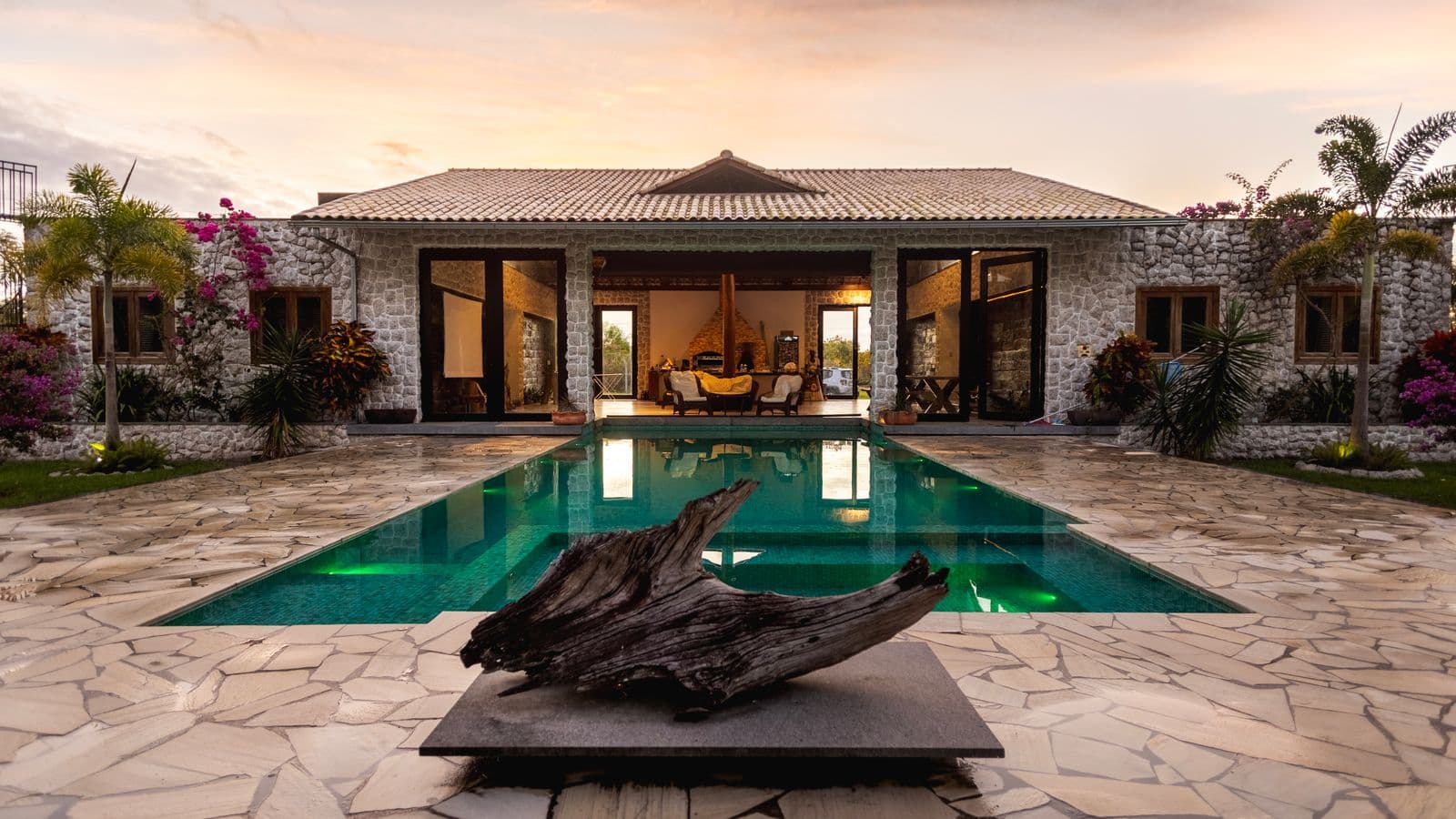
It's the question we hear more than any other. It’s whispered at neighborhood barbecues and typed into search bars late at night. “How much does it cost to install a pool?†The honest answer? It’s complicated. The price isn't a single number on a tag; it's a sprawling, dynamic equation with a dozen variables that can shift the final cost dramatically. It’s not like buying a car where the sticker price is the starting point. With a pool, the 'sticker price' is just one piece of a much larger, more exciting puzzle.
Our team has spent years transforming backyards into personal oases, and we've guided countless homeowners through this exact question. We’ve seen the budgets, we’ve navigated the challenges, and we've celebrated the first cannonball splash. So, let's pull back the curtain. We're going to give you an unflinching look at the real costs—from the dirt work under the ground to the landscape lighting that makes it all glow. This isn't about scaring you with big numbers; it's about empowering you with knowledge so you can plan your project with confidence.
The Big Picture: Average Pool Installation Costs
Let’s get a baseline on the table. For a standard-sized inground swimming pool, most homeowners can expect to invest anywhere from $50,000 to well over $150,000. That’s a massive range, right? The reason for this chasm is that a “pool†is rarely just a pool. It’s the centerpiece of an entire outdoor environment. The final number hinges on a formidable list of factors: the type of pool you choose, the size and depth, the materials for the surrounding patio, the complexity of your property, and the universe of custom features you decide to add. A simple, kidney-shaped vinyl liner pool on a flat, accessible lot will land on the lower end of that spectrum. A custom-designed gunite pool with an attached spa, a cascading waterfall, and an expansive travertine patio on a sloped, rocky property will soar to the high end, and sometimes beyond.
It’s a lot to consider. Our experience shows that the most successful projects begin not with a dollar amount, but with a vision. What do you want your backyard to _feel_ like? Once we understand that, we can start engineering the budget to match the dream.
Breaking Down the Core Costs: What's in the Base Price?
When a builder gives you a base quote for a pool, it typically includes a specific set of items. Understanding what's inside that initial number is critical to avoiding surprises down the road. These are the non-negotiable elements that turn a patch of grass into a functioning swimming pool.
First up is excavation. We have to dig a very large, very precise hole in your yard. The cost here is influenced by a few key things. Is your yard easy for heavy equipment to access? Or do we need to use smaller machinery, which takes more time? What's the soil like? Soft, easy-to-dig dirt is one thing; hitting solid rock or a high water table is another challenge entirely, often requiring specialized equipment and additional labor. Our team always conducts a thorough site assessment to anticipate these issues before they become budget-busting problems.
Next, you have the pool shell itself—the structure that holds the water. This is one of the most significant choices you'll make, impacting both your initial cost and long-term maintenance. Essentially, you're choosing between three main types of inground Pools AND Spas: concrete (also called gunite or shotcrete), fiberglass, and vinyl liner. Each has its own set of costs, benefits, and aesthetic possibilities.
| Feature | Concrete (Gunite) | Fiberglass | Vinyl Liner |
|---|---|---|---|
| Initial Cost | Highest | Medium | Lowest |
| Customization | Virtually unlimited shapes, sizes, and finishes | Limited to pre-fabricated mold shapes | High flexibility in shape and size, but liner patterns are the main design choice |
| Durability | Extremely durable and long-lasting structure | Very durable, non-porous surface resists algae | Liner needs replacement every 5-10 years on average |
| Installation Time | Longest (several weeks to months) | Fastest (can be installed in days) | Relatively fast (often a week or two) |
| Surface Feel | Can be rough (plaster) or smooth (pebble/tile) | Very smooth, seamless gelcoat finish | Smooth, slick vinyl feel |
| Long-Term Cost | Requires resurfacing every 10-15 years, uses more chemicals | Lowest long-term cost, fewer chemicals needed | Cost of liner replacement is a significant recurring expense |
We can't stress this enough: there's no single 'best' choice. It truly depends on your priorities. If you dream of a freeform lagoon with a natural rock waterfall, gunite is your only real option. If you want to be swimming in two weeks with minimal long-term fuss, fiberglass is a formidable contender. Our design team helps you weigh these pros and cons against your specific vision and budget.
Then comes the circulatory system of your pool: the plumbing and electrical work. This is the hidden network that keeps your water clean, clear, and comfortable. This part of the budget covers the pump (the heart), the filter (the kidneys), and all the necessary pipes and valves. It also includes the electrical work for running the equipment, as well as essential safety features like underwater lighting. Cutting corners here is a catastrophic mistake. We’ve seen it happen. Using undersized equipment or shoddy installation leads to relentless problems and costly repairs. It’s a critical, non-negotiable element that must be done right the first time.
Finally, there's the cost of permits and labor. Every project requires approval from your local municipality, and navigating that process involves fees, plans, and inspections — in the City of San Diego, pool plans are reviewed under Information Bulletin 712, which requires engineer-stamped structural calculations for custom pools. The labor component is the expertise of the crews who excavate, form the shell, run the plumbing, and bring the whole thing to life. This is where the quality of your builder truly shines through.
Beyond the Basin: The Costs That Shape Your Budget
Here’s where the vision for your backyard really starts to take shape—and where the budget can expand. The base price gets you a pool full of water, but the surrounding environment is what makes it an inviting oasis. Honestly, these elements are just as important as the pool itself.
The pool deck or patio is the most significant of these. It's the surface you'll walk on, where you'll place your lounge chairs, and where the kids will run and jump. Your two primary choices here are poured Concrete SAN Diego or interlocking Pavers SAN Diego. A simple broom-finished concrete deck is the most budget-friendly option. Stamped or colored concrete adds more design flair for a moderate price increase. Pavers, on the other hand, offer a premium look with an endless variety of colors, shapes, and patterns. While the upfront cost is higher, they are incredibly durable and can be repaired easily by replacing individual stones if one ever cracks or gets stained. Our team has found that a beautiful paver patio can elevate the entire aesthetic of the pool area.
Next is safety fencing. In most areas, this isn't optional; it's required by law. Fencing codes are strict about height, gate-latching mechanisms, and the spacing of the pickets to ensure safety, especially for children. The cost will vary based on the material (aluminum, steel, wood, glass) and the total linear footage you need to enclose the pool area.
And another consideration: landscaping and drainage. Excavating for a pool is a major earth-moving operation. It will disrupt your existing yard. The budget needs to account for restoring the area around the pool. This includes proper grading to ensure water drains away from the pool and your home's foundation, as well as new sod, plants, or perhaps even low-maintenance Artificial Turf SAN Diego for a perpetually green look. A well-designed landscape integrates the pool seamlessly into your property, making it feel like it was always meant to be there.
This is also where we can talk about enhancements that add sensory delight. Water features like sheer descent waterfalls, deck jets, or bubbling fountains create soothing sounds and visual appeal. And a professional Landscape Lighting SAN Diego plan is transformative. It extends the use of your pool into the evening, enhances safety, and highlights the beauty of the water and surrounding features. It's an absolute game-changer.
Customization and Upgrades: Where the Budget Can Soar
Now, this is where it gets really fun. The features and technology available for modern pools are incredible, allowing you to tailor your experience perfectly. Of course, each upgrade comes with a corresponding price tag.
A pool heater is one of the most popular upgrades, extending your swimming season by months. You can choose from gas heaters (which heat the water quickly but have higher operating costs), electric heat pumps (more energy-efficient but slower to heat), or solar heating (highest upfront cost but virtually free to operate). The right choice depends on your climate and how you plan to use your pool.
Another major decision point is the sanitation system: traditional chlorine versus a saltwater chlorine generator. Let's clear up a common misconception: saltwater pools are not chlorine-free. They use a generator to convert salt into chlorine. The benefits are softer-feeling water that's less harsh on skin and eyes, and you don't have to handle and store liquid or tablet chlorine. The upfront cost for the generator is a few thousand dollars, and the cell will need to be replaced every 3-7 years, but many owners find the convenience and water quality well worth it.
Automatic pool covers are a fantastic investment in safety, convenience, and efficiency. With the push of a button, a sturdy cover slides over your pool, creating a barrier that can support the weight of a person. It also dramatically reduces water evaporation, chemical consumption, and heat loss, saving you a significant amount of money over time — the EPA's WaterSense program notes that a pool cover can prevent up to 95% of a pool's evaporation. While the initial investment is substantial (often $10,000 - $20,000+), the long-term benefits are undeniable.
And then there are the luxury add-ons that turn a great pool into a spectacular resort-style experience. Think about an integrated spa that spills over into the pool, a shallow sun shelf (or Baja shelf) for lounging in a few inches of water, a dramatic infinity edge that creates a stunning visual effect, or even a swim-up bar. These are the elements that are often part of a larger outdoor living project, perhaps complementing one of our custom Outdoor Kitchens SAN Diego or a cozy seating area around one of our beautiful Fire Features.
The Modern Yardz Approach: It’s More Than Just a Pool
A pool shouldn't be an isolated feature dropped into your yard. It should be the heart of a cohesive, beautifully designed outdoor living space. That's the core of our philosophy at Modern Yardz. We believe the process starts with a comprehensive Landscape Design SAN Diego that considers how you and your family will actually live in the space.
We think about the flow. How will you move from the back door to the patio? Where is the best place for the grill and dining area? How does the pool connect to the lounge seating? We consider how elements like Patio Covers Pergolas SAN Diego can provide necessary shade and define an outdoor room, or how integrated Seat Retaining Walls can offer both function and extra seating. By planning the entire environment from the outset, we create a space that is far greater than the sum of its parts. This integrated approach prevents the common problem of a beautiful pool surrounded by a disjointed, impractical yard.
Our design process is collaborative and transparent. We listen to your ideas, understand your lifestyle, and then translate that into a functional and stunning plan. Understanding how all these pieces fit together is the first step toward building a backyard you'll love for decades. If you're ready to explore what's possible for your home, we invite you to BOOK MY FREE CONSULTATION to speak with one of our expert designers.
Don't Forget Long-Term Ownership Costs
The initial installation cost is the big hurdle, but it's wise to also plan for the ongoing costs of pool ownership. It's not a one-and-done purchase. Think of it like a car; it needs fuel and regular maintenance to run well.
Your annual budget should include chemicals (chlorine, salt, pH balancers, etc.), which can run from $500 to $1,000 per year depending on your pool size and system. Your electricity bill will increase from running the pump, typically by $50 to $150 per month during the swimming season. You'll also use more water due to evaporation and backwashing the filter. And finally, you'll need to budget for maintenance and repairs—things like replacing pump seals, filter cartridges, or, for vinyl pools, the eventual liner replacement. A smart owner sets aside 1-3% of the pool's initial cost annually for these long-term expenses. It’s better to be prepared.
Ultimately, answering “how much does it cost to install a pool?†requires a deep dive into your personal vision, your property's unique characteristics, and your long-term goals. It's a significant financial investment, but it's also an unparalleled investment in your home, your family's happiness, and a lifestyle filled with relaxation and memories. Getting a clear, comprehensive understanding of all the costs involved is the most important first step in that journey.
Start Your Free Design Consultation
Tell us about your project and we'll be in touch within 24 hours. No pressure, no obligation.
Common questions
- Which pool type is cheapest to install: concrete, fiberglass, or vinyl?
- A vinyl liner pool has the lowest initial cost, while concrete (gunite) is the highest and fiberglass sits in the middle. Keep long-term costs in mind too: vinyl liners need replacing every 5-10 years, gunite requires resurfacing every 10-15 years, and fiberglass carries the lowest long-term cost with fewer chemicals needed.
- How long does it take to install an inground pool?
- It depends on the pool type you choose. Fiberglass is the fastest, often installed in just days, while a vinyl liner pool typically takes a week or two. A concrete (gunite) pool takes the longest, from several weeks to months, because the shell is formed and built on site.
- Is a saltwater pool better than a chlorine pool?
- Neither is simply better; it depends on your priorities. Saltwater pools aren't chlorine-free, they use a generator to convert salt into chlorine, giving softer water that's less harsh on skin and eyes. The generator costs a few thousand dollars upfront, and the cell needs replacing every 3-7 years.
- How much does it cost to maintain a pool each year?
- Plan for chemicals running $500 to $1,000 per year depending on your pool size and system, plus a higher electricity bill of roughly $50 to $150 per month during swimming season for the pump. A smart owner also sets aside 1-3% of the pool's initial cost annually for repairs.
- Do I need a fence around my pool?
- Yes, in most areas safety fencing is required by law, not optional. Codes are strict about fence height, gate-latching mechanisms, and picket spacing to keep children safe. Your cost will vary based on the material you choose, such as aluminum, steel, wood, or glass, and the total linear footage needed.
Ready to design your dream yard?
Tell us about your project. We'll send back a real plan, not a templated quote.
Book My Free Consultation→