A pool cover is more than just a sheet of material you throw over the water. It’s a critical safety barrier, a guardian against debris, and a tool for conserving heat and water. But all of that potential is held in place by something incredibly small and deceptively simple: the pool cover anchor. Get the installation right, and your cover performs flawlessly for years. Get it wrong? You’re looking at a saggy, unsafe cover, a damaged concrete deck, and a world of frustration. It’s a small detail with massive consequences.
Here at Modern Yardz, we've spent years designing and building complete outdoor environments, from sprawling patios to intricate Pools AND Spas. Our team has seen it all when it comes to pool decks and the hardware that holds them together. We know that understanding how to install pool cover anchors in concrete isn't just a handyman skill; it's a fundamental part of ensuring your backyard is safe, functional, and beautiful. This isn't just about drilling holes. It’s about precision, foresight, and respecting the materials you're working with.
Why Proper Anchor Installation is Non-Negotiable
Let’s be honest, this is the part a lot of people want to rush through. You’ve got the cover, you’ve got the drill, and you just want to get it done. We can't stress this enough: slowing down here will save you catastrophic headaches later. A poorly installed anchor isn't just an eyesore; it's a failure point waiting to happen.
First and foremost, safety. This is especially true for safety covers, which are designed to hold the weight of a person (or several). The cover itself is only as strong as its weakest anchor point. If an anchor is loose, improperly set, or drilled into compromised concrete, it can pull out under tension. The result is a sudden loss of tautness, creating a dangerous sag that completely negates the cover's purpose. We've seen it happen, and it's a scenario no homeowner ever wants to face.
The integrity of your investment is also on the line. Your pool cover was a significant expense, and its lifespan is directly tied to a proper installation. A cover that is consistently held taut and flat will wear evenly and resist damage from wind and weather. A loose, flapping cover, on the other hand, will suffer from premature wear and tear on the straps, the springs, and the cover material itself. The anchors are the foundation of that stability. A sloppy job here is like building a house on sand.
And then there's your concrete deck. This is a huge one. Drilling into concrete is an unforgiving process. A misplaced hole, a bit that 'walks' across the surface, or a chip-out from using the wrong technique creates permanent cosmetic damage. In a worst-case scenario, an improperly drilled hole can create a stress point that contributes to cracking or spalling down the line. The quality of your pool deck is paramount. A professionally poured and finished surface, like those we create with our Concrete SAN Diego service, provides the ideal foundation, but even the best concrete can be damaged by a careless hand. Protecting that surface is just as important as securing the cover.
Assembling Your Arsenal: Tools and Materials
Walking into a project with the right tools isn't just about making the job easier; it’s about making a professional result possible. Fumbling with the wrong equipment is the fastest way to make mistakes. Our experience shows that having everything clean, organized, and ready to go before you drill the first hole is a critical, non-negotiable element of success.
Here’s what our team recommends you have on hand:
- A Rotary Hammer Drill: This is not the place for your standard cordless drill. We mean this sincerely: you need a rotary hammer. It combines rotation with a powerful hammering action that pulverizes concrete, rather than just scraping at it. Using a regular drill will burn out the motor, take forever, and likely result in oversized, messy holes. You can rent one for a day if you don't own one. It’s worth every penny.
- Carbide-Tipped Masonry Drill Bit: The size is crucial and must match the specific anchor you're installing. Most standard brass anchors require a 3/4-inch bit, but always check the manufacturer's instructions. Don't guess. A bit that's too small will make inserting the anchor impossible; a bit that's too large will result in a loose anchor that will never be secure.
- High-Powered Shop Vacuum: Drilling concrete creates a formidable amount of fine, abrasive dust. You need to clear this dust out of the hole completely for the anchor to set properly. A vacuum with a narrow crevice tool is perfect for this. Canned air or a blower can also work, but be prepared for dust to go everywhere.
- Tape Measure & Marking Tool: A quality tape measure is a must. For marking on concrete, we’ve found that a carpenter's pencil, a soapstone marker, or even a permanent marker works well. You need something that won't easily rub off as you work.
- Chalk Line: For ensuring your anchors are installed in a perfectly straight line relative to the pool's edge, a chalk line is invaluable. It’s the difference between a professional-looking layout and a haphazard one.
- The Pool Cover Itself: You'll use the cover as your template. Lay it out over the pool, centered, and use the strap locations to determine where your anchors need to go.
- Anchor Tamping Tool: This is a small, specialized tool that fits inside the anchor and allows you to tap the anchor sleeve down to expand it without damaging the delicate threads inside. It's often included with anchor kits, but if not, you must get one. Do not try to use a screwdriver or a bolt; you will ruin the anchor.
- Hammer or Mallet: A standard hammer works, but a small 2-3 lb sledge hammer or engineer's hammer provides better control for seating the anchors.
- Safety Gear: This is absolutely mandatory. Safety glasses or goggles are a must to protect your eyes from flying concrete chips. Hearing protection is also highly recommended, as a rotary hammer is incredibly loud. A dust mask will keep you from inhaling silica dust, which is seriously bad for your lungs. Knee pads will save your knees during the long process of marking and drilling.
Having these items ready transforms the project from a chaotic scramble into a methodical, professional process. It's comprehensive.
Understanding Your Anchor Options
Not all pool cover anchors are created equal. The type you choose will impact the look of your deck, the longevity of the installation, and the overall cost. The choice usually comes down to material and style. Our team almost exclusively recommends solid brass or high-grade stainless steel for their superior durability and corrosion resistance, but it's good to know what's out there.
Here's a breakdown of the most common types:
- Solid Brass Anchors: These are the industry standard for a reason. Brass offers exceptional resistance to corrosion from both pool chemicals and general weather. They develop a nice patina over time that many people find attractive. They are strong, reliable, and what we consider the 'install-it-and-forget-it' option.
- Stainless Steel Anchors: Another premium option. Stainless steel (specifically marine-grade 316 or 304) is incredibly strong and offers a clean, modern look that won't tarnish. It's an excellent choice for saltwater pools or for homeowners who prefer the silver finish over brass.
- Aluminum Anchors: These are typically a more budget-friendly option. While they are functional, our experience shows they are more susceptible to corrosion and pitting over time, especially in harsh chemical environments. They simply don't have the staying power of brass or stainless steel.
In terms of style, you'll generally choose between pop-up and flush-mount anchors. Pop-up anchors have a center section that screws up when in use and retracts to be flush with the deck when the cover is off. Flush-mount anchors are a simple threaded insert that sits just below the surface of the concrete. Both work well; the choice is largely aesthetic.
Here’s a quick comparison to help you decide:
| Feature |
Solid Brass Anchors |
Stainless Steel Anchors |
Aluminum Anchors |
| Corrosion Resistance |
Excellent (especially in chlorine environments) |
Very Good (grade 304/316 is best) |
Good (but can corrode/pit over time) |
| Strength & Durability |
High |
Very High |
Moderate |
| Cost |
High |
Moderate-High |
Low-Moderate |
| Aesthetic |
Classic, warm look. Develops a patina. |
Modern, clean look. Stays shiny. |
Utilitarian look. Can oxidize. |
| Our Recommendation |
The gold standard for longevity and reliability. |
A fantastic, durable alternative. |
Best for temporary or budget-conscious applications. |
The Installation: A Step-by-Step Professional Guide
Now, this is where it gets interesting. This is the process. Follow these steps methodically, and you’ll achieve a result you can be proud of. Rush, and you’ll be calling a professional to fix it. We’ve seen both outcomes countless times.
Step 1: Lay Out and Center the Pool Cover
Before you even think about drilling, you need a perfect layout. Spread your new pool cover over the pool. Make sure it's completely flat and centered, with an equal amount of overlap on all sides. This might take two people. The cover's straps are your guide—these will dictate the anchor locations. They are positioned to provide optimal tension across the entire surface.
Step 2: Mark Your Anchor Locations
With the cover in place, pull each strap out straight and taut from the cover's edge. The ideal location for the anchor is typically 18-24 inches from the edge of the cover strap D-ring. This distance allows the spring to stretch and apply the correct tension. Our team recommends using a small block of wood cut to your desired length (say, 20 inches) as a consistent measuring guide. Place one end at the strap and mark the concrete at the other end. This ensures every anchor is the exact same distance from the cover.
Once you have your initial marks, use your chalk line to snap straight lines between the anchor points on the long sides of the pool. This is a pro tip for ensuring an impeccable, grid-like appearance. A little extra time here makes a huge aesthetic difference. Double-check everything. Measure twice, drill once.
Step 3: Drill the Pilot Hole (Optional but Recommended)
Concrete can be slick. A large 3/4-inch bit has a tendency to 'walk' or skate across the surface before it bites in, potentially marring your deck. To prevent this, we often drill a small pilot hole first using a much smaller masonry bit (like 1/4-inch). This creates a starting point that the larger bit can lock into, ensuring your hole is drilled exactly where you marked it.
Step 4: Drill the Main Hole
It's time for the rotary hammer. Set the drill bit to the correct depth. Most anchors require a hole around 2 inches deep. A great trick is to wrap a piece of electrical tape around your drill bit at the 2-inch mark. When the tape reaches the concrete surface, you know you've gone deep enough. This prevents you from drilling too shallow or, worse, too deep.
Hold the rotary hammer firmly with both hands, perpendicular to the concrete surface. Start drilling slowly to ensure the bit is seated, then increase the speed. Let the tool do the work. Don't force it. Applying excessive pressure can cause the bit to bind or overheat. Just provide steady, firm pressure and let the hammer action pulverize the concrete. That's the key.
Step 5: Clean the Hole Thoroughly
This step is absolutely critical and often overlooked. The hole will be filled with fine concrete dust. If you don't remove all of it, the anchor sleeve won't be able to expand properly and grip the sides of the hole. It will feel tight at first, but it will eventually work its way loose.
Use your shop vacuum with a crevice tool to suck out every last bit of dust. We mean it. Get it all out. Follow up with a blast of compressed air if you have it (while wearing your safety glasses, of course). The inside of the hole should be completely clean and free of debris.
Step 6: Install the Anchor Body
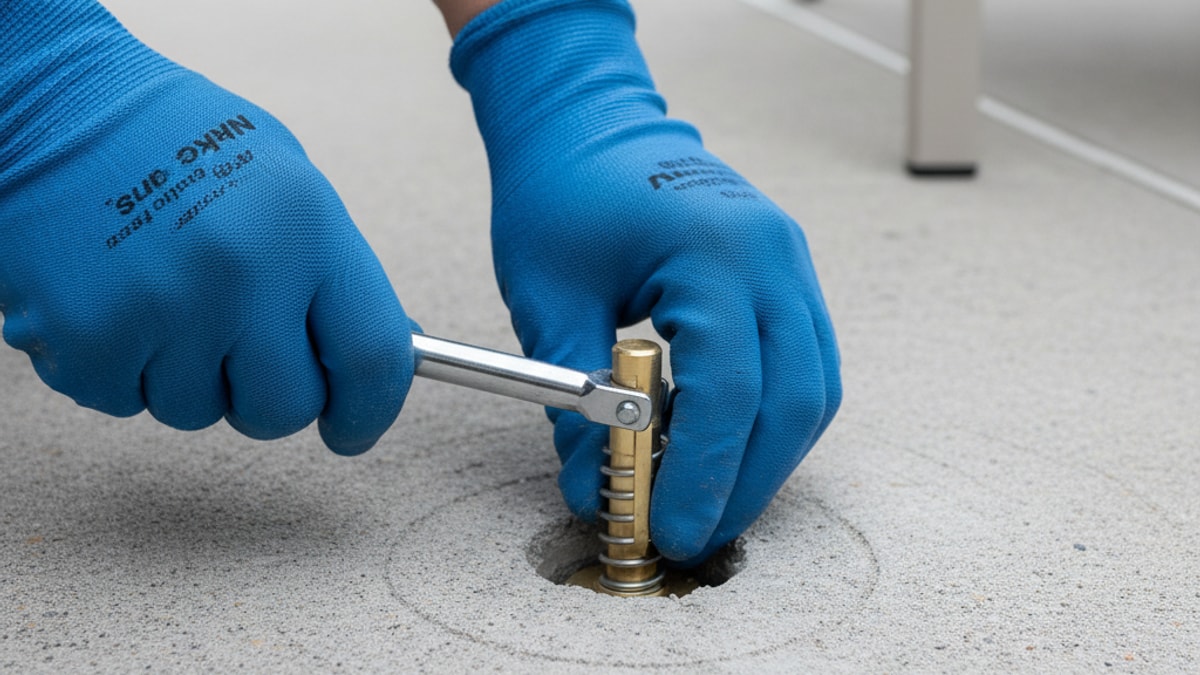
Drop the anchor body (the outer sleeve and the inner threaded cone) into the clean hole. It should be a snug fit. If it's too loose, your hole is too big. If you have to hammer it in with force, your hole is too small. It should slide in with just a bit of resistance. The top of the anchor should sit just slightly below the surface of the concrete deck, creating a flush finish.
Step 7: Set the Anchor
Now you'll use the tamping tool. Insert it into the anchor body until it rests on the top of the inner cone. Using your hammer, give the tamping tool a few firm, solid taps. You'll feel and hear a distinct change as the tool drives the cone up into the sleeve, expanding the sleeve and locking it tightly against the sides of the concrete hole. Three to five solid strikes are usually all it takes. Don't go crazy here; you're not driving a railroad spike. You're just seating it firmly.
Step 8: Test and Finish
Thread the screw-in portion of the anchor into the body you just set. It should thread in smoothly. If it binds, you may have damaged the threads by using the wrong tamping tool. Assuming it threads in nicely, you're done with that anchor. Move on to the next one, repeating the process with the same methodical precision.
Common Mistakes We See (And How to Avoid Them)
Over the years, our team has been called in to fix more than a few DIY anchor installations gone wrong. The mistakes are almost always the same. Here's what we've learned so you can avoid them:
- Using the Wrong Drill. We've already said it, but it bears repeating. A standard drill will not work. You will burn it out, and the holes will be a mess. Rent a rotary hammer. No excuses.
- Drilling Too Close to the Edge. Never drill within 4-6 inches of the edge of a concrete slab or an expansion joint. This is the weakest part of the concrete, and drilling there is a recipe for chipping, cracking, and catastrophic failure. If your cover layout forces a hole in this zone, you need to consult a professional for alternative anchoring solutions.
- Not Cleaning the Hole. A dusty hole is the number one cause of failed anchors. The dust acts like a lubricant and prevents the anchor from getting a solid bite. It seems minor, but it's a project-killer. Vacuum every single hole until it's spotless.
- Inconsistent Measurements. Eyeballing the anchor locations leads to a sloppy, unprofessional look and, more importantly, uneven tension on the cover. Use a measuring tape or a jig for every single mark to ensure perfect consistency.
- Over-Tamping the Anchor. Hitting the tamping tool with the force of a lumberjack can damage the anchor's threads or even crack the surrounding concrete. A few firm, authoritative taps are all that's required to set the wedge.
Avoiding these common pitfalls is what separates a weekend warrior from a seasoned pro. It's this attention to detail that we bring to every aspect of our work, from a full Landscape Design SAN Diego project to the installation of custom Fire Features.
Maintaining Your New Pool Cover Anchors
Your job isn't quite done. A little routine maintenance will ensure your anchors last as long as your pool deck. At the beginning and end of each pool season, when you're installing or removing the cover, take a few extra minutes for upkeep.
First, clean them out. Use your shop vac to remove any dirt, leaves, or debris that has collected in the anchor holes over the summer. A small blast of compressed air works wonders here, too.
Next, lubricate the threads. Apply a small amount of anti-seize lubricant or even just a dab of white lithium grease to the threads of the screw-in portion of the anchor. This prevents them from seizing up due to corrosion or mineral deposits, making them much easier to use year after year.
Finally, give them a quick inspection. Make sure none of the anchors feel loose or wobbly. If one does, it's a sign that the initial installation may have been faulty, and it needs to be addressed before it fails under load.
Knowing When It's Time to Call the Professionals
This guide is designed to empower a confident DIYer to tackle this project successfully. However, there are times when calling in a professional team is the smartest, safest, and ultimately most cost-effective decision. If you encounter paver decks instead of solid concrete, old or cracked concrete, or complex pool shapes that make layout a nightmare, it might be time to get help. Dealing with these challenges requires specialized tools and experience.
If the thought of operating a rotary hammer or the responsibility of ensuring a perfectly safe installation feels overwhelming, that's okay. A professional installation is an investment in peace of mind. Our teams at Modern Yardz handle these types of technical installations regularly. We have the right equipment, the experience to anticipate problems, and the knowledge to ensure the job is done perfectly the first time. If you're unsure about any step of the process, we encourage you to BOOK MY FREE CONSULTATION to discuss your project with our experts.
Installing pool cover anchors is a task that demands precision and patience. It’s the final, critical step in protecting your pool and your family. By using the right tools, following a methodical process, and paying close attention to the small details, you can ensure your pool cover is anchored securely for many seasons to come, giving you a safe and beautiful backyard space to enjoy.



.webp)
.webp)