The Truth About Marble for Your Outdoor Kitchen Countertops
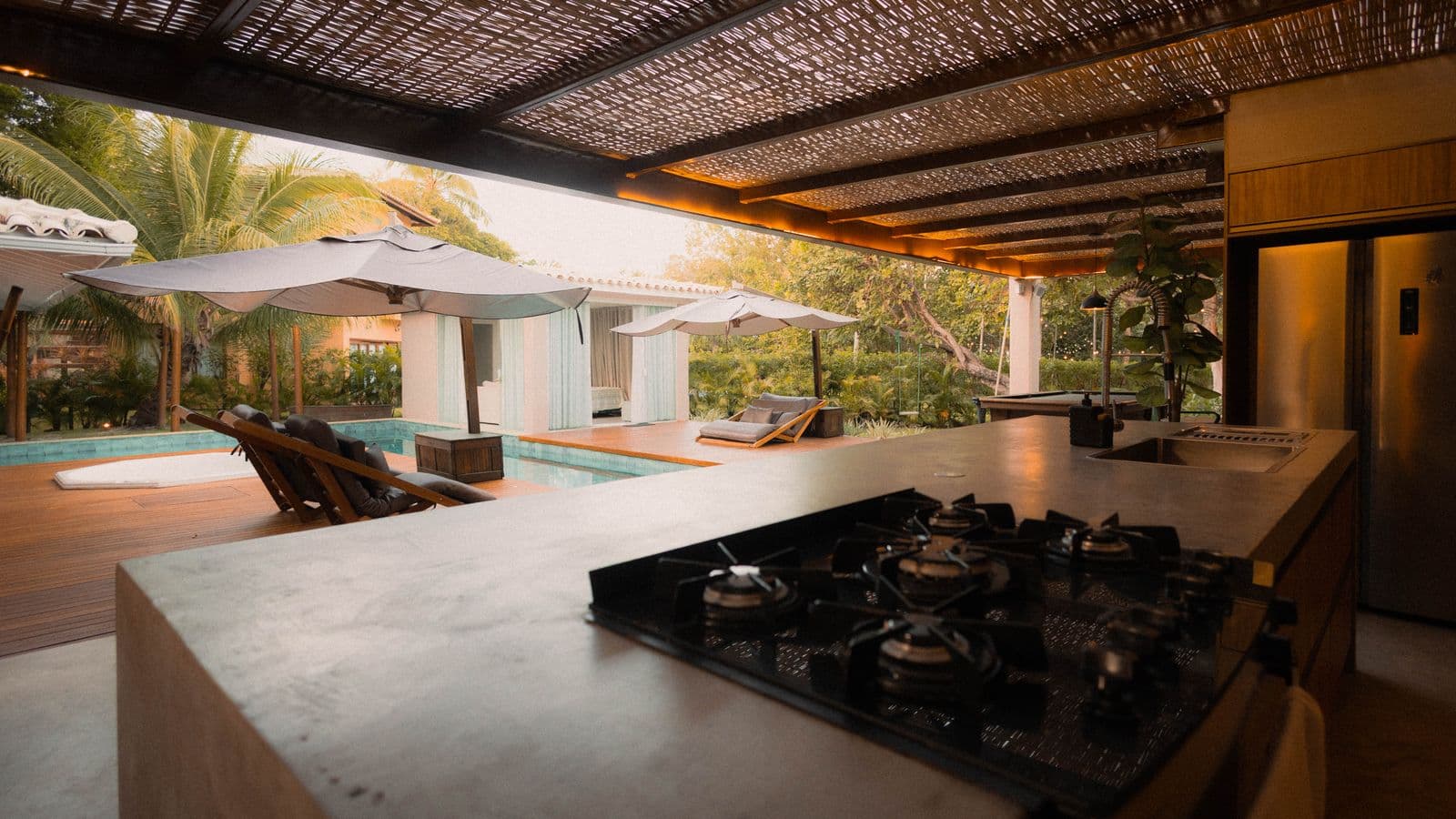
It’s a look we see in design magazines and on dream-home shows all the time: a sprawling, luminous marble countertop anchoring a gorgeous outdoor kitchen.
It’s a look we see in design magazines and on dream-home shows all the time: a sprawling, luminous marble countertop anchoring a gorgeous outdoor kitchen. The image is pure luxury. You can almost feel the cool stone under your hands on a warm evening, see the subtle, unique veining catch the light from the setting sun. It’s breathtaking.
And that’s where the conversation always starts. A client will show us a picture and ask, “Can we do this?†The answer is almost always yes, we _can_. But the real question, the one we always pivot to, is _should_ you? Is marble good for an outdoor kitchen? Honestly, it's one of the most complex material questions we face in our design process. It’s not a simple yes or no. It’s a nuanced conversation about lifestyle, expectations, and your personal tolerance for mother nature's relentless effects. Our team at Modern Yardz has designed and built countless Outdoor Kitchens SAN Diego, and we’ve guided homeowners through this exact decision many, many times. So, let’s talk about it. Really talk about it.
The Dream: Why We're All Drawn to Marble
Let’s not pretend otherwise. The appeal of marble is powerful and visceral. No other natural stone quite captures its specific brand of elegance. Each slab is a one-of-a-kind geological masterpiece, a piece of art forged over millennia. When you choose marble, you're not just picking a countertop; you're selecting a unique feature that will never be replicated. That’s a big deal.
Its beauty is its primary selling point. The soft, milky whites, the dramatic, stormy grays, the warm, creamy beiges—they all possess a depth and luminosity that man-made materials struggle to imitate. The veining can be delicate and feathery or bold and dramatic, allowing for a truly custom look that can define the entire aesthetic of your outdoor living space. We've seen it transform a simple BBQ island into a veritable centerpiece of the backyard.
There's also a tactile and practical appeal. Marble is famous for remaining cool to the touch, even on hot days. For bakers, this is a legendary property for rolling out dough, but in an outdoor kitchen, it just feels pleasant and luxurious. It provides a cool surface for resting ingredients or just leaning against with a cold drink. It feels substantial. It feels permanent. This visual and physical appeal is what makes it so tempting, but it's only half of the story. The other half is far more practical and, frankly, a lot less glamorous.
The Reality Check: Marble's Battle with the Great Outdoors
Here’s where our experience as builders comes in. We have to look beyond the initial 'wow' factor and consider how a material will perform day in and day out, season after season. And for marble, the outdoors is a formidable opponent. Let's be blunt: marble is a high-maintenance material in a low-maintenance world. Its biggest weaknesses are almost perfectly targeted by the challenges of an outdoor environment.
First, and most importantly, marble is porous. Think of it like a very, very dense sponge. It will absorb liquids. In an indoor kitchen, that means spilled red wine or coffee can become a permanent resident in your countertop if not wiped up immediately. Now, take that problem outside. You've got dripping marinade from the grill, a spilled glass of sangria during a party, bird droppings, pollen, and falling leaves that get wet and bleed tannins. All of these are potential stain-causers that can permanently discolor the stone.
Then there's the issue of etching. This is different from staining, and it’s a critical distinction our team always makes with clients. A stain is when a substance is absorbed _into_ the stone. Etching is a chemical reaction that happens _on the surface_ of the stone. Marble is a calcium carbonate-based stone, which means it reacts with acids. Lemon juice, vinegar, tomato sauce, wine, even some sodas—all common ingredients in an outdoor cooking environment—will corrode the surface, leaving a dull, slightly rough spot. It looks like a watermark that you can't wipe away. On a polished surface, it's incredibly noticeable. An etch isn't a color change; it's a change in the stone's finish and texture. It's damage.
Durability is another significant concern. Compared to granite or quartzite, marble is a relatively soft stone. It ranks around a 3 to 4 on the Mohs hardness scale. What does that mean in practical terms? It can be scratched. A dropped grill tool, a knife slipping while you’re cutting limes, dragging a heavy cast-iron skillet across the surface—all of these can leave their mark. Over time, a heavily used marble countertop will accumulate a network of fine scratches, which contributes to a duller appearance. While some might call this 'patina,' others will just call it damage. Your perspective on this is crucial.
Finally, there's the direct impact of weather. Constant exposure to UV rays can cause some marbles, particularly the brilliant white varieties like Carrara or Calacatta, to yellow over time. The relentless cycle of sun, rain, and temperature fluctuations takes its toll. In climates with freezing temperatures, any moisture that has seeped into the stone can freeze, expand, and potentially cause cracking or pitting—a catastrophic failure for a countertop slab. This is why location and climate play a huge role in this decision.
Making It Work: Strategies for Using Marble Outdoors
After reading all of that, you might be thinking it's an open-and-shut case against marble. But it’s not. Our team believes in finding solutions, not just pointing out problems. We’ve had clients who understood all the risks and still wanted that unparalleled marble look. For them, we developed a strategy to mitigate the downsides as much as possible.
We can't stress this enough: sealing is absolutely, unequivocally non-negotiable. A high-quality impregnating sealer doesn't form a film on top of the stone; it penetrates the pores and coats them from within. This gives you more time—but not unlimited time—to clean up spills before they can soak in and stain. It's your first and best line of defense against staining. However, and this is a big however, sealers do almost nothing to prevent etching. That acidic reaction will still happen on the surface. For an outdoor application, we recommend reapplying a professional-grade sealer at least once a year, maybe more depending on the level of use and exposure.
Your choice of finish makes a dramatic difference. A highly polished marble surface will show every single etch and scratch like a glaring spotlight. It's beautiful on day one, but it can be a source of constant anxiety. We often guide clients toward a honed finish instead. A honed finish is matte or satin, not glossy. Because it's already not reflective, etches are far less noticeable. They tend to blend into the natural texture of the stone. It gives the countertop a softer, more organic feel that is often better suited to an outdoor setting anyway.
Location, location, location. Where you place your outdoor kitchen is paramount. If your marble countertop is completely exposed to the elements, its lifespan and beauty will be severely compromised. The single most effective protective measure you can take is to place it under a solid roof structure. A well-designed Patio Covers Pergolas SAN Diego can shield the marble from the harshest direct sunlight, rain, and falling debris. It won't stop ambient humidity or wind-blown dust, but it drastically reduces the primary sources of wear and tear. A kitchen under a covered patio is a completely different scenario than one on an open deck.
And finally, there's the mindset shift. Some clients choose to embrace the 'patina.' They understand that the stone will age, etch, and change over time. They see it as a living finish, one that will tell the story of the meals and memories made around it, much like an old butcher block or a well-loved leather chair. This isn't for everyone—and you have to be brutally honest with yourself about whether you're this type of person—but for some, the evolving character of the stone is part of its charm.
How Marble Stacks Up: A Comparison of Countertop Materials
To put marble in context, it's helpful to see how it compares directly to other popular choices for outdoor kitchens. Each material comes with its own set of trade-offs, and the 'best' one is always the one that best fits your needs. Our Landscape Design SAN Diego process always involves walking clients through these options to find that perfect fit.
| Feature | Marble | Granite | Quartzite | Porcelain/Sintered Stone (e.g., Dekton) |
|---|---|---|---|---|
| Aesthetics | Unmatched elegance, soft, unique veining | Speckled or wavy patterns, wide color range | Often mimics marble, complex veining | Can mimic any material, very uniform |
| Durability | Soft, prone to scratching and chipping | Very hard, highly scratch-resistant | Extremely hard, very scratch-resistant | Exceptionally hard, scratch-proof |
| Stain Resistance | Very Porous (High maintenance) | Low Porosity (Good resistance) | Low Porosity (Very good resistance) | Non-Porous (Stain-proof) |
| Acid Resistance | Poor (Etches easily) | Good (Generally resistant) | Excellent (Highly resistant) | Excellent (Acid-proof) |
| UV Resistance | Fair (Can yellow over time) | Excellent (Color-stable) | Excellent (Color-stable) | Excellent (Completely UV stable) |
| Maintenance | High (Requires frequent sealing) | Low (Seal every 1-3 years) | Low (Seal every 1-3 years) | Very Low (No sealing required) |
As you can see, when it comes to raw performance metrics for the outdoors, marble is consistently outperformed. Granite is the classic workhorse—durable, widely available, and relatively low-maintenance. Quartzite (not to be confused with quartz, which is an engineered product not suitable for outdoor use due to its resins — Caesarstone sells its standard quartz as an indoor product and reserves a separate UV-rated Outdoor Collection, with its own warranty, for exterior installs) offers the look of marble with durability that often exceeds granite. And ultra-compact surfaces like porcelain or Dekton are engineered specifically to be bomb-proof: non-porous, UV-proof, scratch-proof, and heat-proof. They are, from a purely functional standpoint, the superior technical choice.
Building a Cohesive Outdoor Living Space
The countertop, while critical, is just one piece of a much larger puzzle. A truly successful outdoor kitchen feels like a natural extension of the home and landscape. The material choices need to speak to each other. How will the soft veining of your chosen countertop look next to the rugged texture of your Seat Retaining Walls? Does the color palette complement the tones in the Pavers SAN Diego you've chosen for the patio floor?
This is where a holistic design approach becomes invaluable. We don't just think about the kitchen; we think about the entire environment. We consider traffic flow from the house to the kitchen, and from the kitchen to the pool. We design functional zones for cooking, dining, and relaxing. This might mean integrating a cozy seating area around one of our custom Fire Features to create a multi-season space. It means ensuring the task areas are properly illuminated with thoughtful Landscape Lighting SAN Diego that is both beautiful and functional.
The entire structure needs to be built on a solid foundation, whether that's a reinforced Concrete SAN Diego slab or a meticulously laid paver base. It's this integration of all elements—from the ground up—that creates a space that is not only beautiful but also endures. You could have the most beautiful countertop in the world, but if the space around it is poorly designed, it will never reach its full potential. The goal is to create a seamless experience, whether you're entertaining a crowd or just enjoying a quiet family dinner outdoors.
So, is marble good for an outdoor kitchen? The honest answer from our team is: it depends entirely on you. If you are a meticulous homeowner who enjoys the ritual of maintenance, has a covered space, and either doesn't cook with a lot of acidic ingredients or is willing to embrace the aged patina of an etched surface, then yes. The unparalleled beauty of marble might be worth the trade-off. You can absolutely make it work.
However, for the vast majority of our clients who want their outdoor space to be a worry-free oasis for relaxation and entertaining, we typically guide them toward more resilient materials like quartzite or granite. These options provide stunning natural beauty with a fraction of the anxiety. They allow you to actually _live_ in your outdoor kitchen—to spill, to chop, to cook, to host—without constantly worrying that you're damaging your investment.
Ultimately, our job is to provide you with all the information, the unvarnished pros and cons drawn from years of real-world experience. We help you understand the long-term implications of your choices so you can make a decision you'll be happy with for years to come. It’s about creating a space that enhances your life, and that means being realistic about how you live. If you're ready to explore what's possible for your own backyard, we invite you to BOOK MY FREE CONSULTATION. Let's talk about your vision and find the perfect materials to bring it to life.
Frequently Asked Questions About Outdoor Marble
Start Your Free Design Consultation
Tell us about your project and we'll be in touch within 24 hours. No pressure, no obligation.
Common questions
- How often do you need to seal marble in an outdoor kitchen?
- For an outdoor application, reapply a professional-grade impregnating sealer at least once a year, maybe more depending on use and exposure. Sealing is non-negotiable: it penetrates the pores to slow staining and buy you time to clean up spills. However, sealers do almost nothing to prevent etching, which is a surface reaction.
- What's the difference between staining and etching on marble?
- A stain is when a substance is absorbed into the stone, while etching is a chemical reaction on the surface. Because marble is calcium carbonate-based, acids like lemon juice, vinegar, tomato sauce, and wine corrode it, leaving a dull, slightly rough spot. Etching isn't a color change; it's damage to the finish and texture.
- Is a honed or polished marble finish better for outdoors?
- A honed finish is better suited to an outdoor setting. Honed marble is matte or satin rather than glossy, so etches are far less noticeable and blend into the stone's natural texture. A highly polished surface shows every etch and scratch like a glaring spotlight and can be a source of constant anxiety.
- Is quartzite or granite better than marble for an outdoor kitchen?
- For most homeowners, quartzite or granite is the better choice. Both are far harder and more scratch-resistant, with low porosity and color-stable UV resistance. Marble is soft, ranking around 3 to 4 on the Mohs hardness scale, very porous, etches easily, and can yellow. The team typically guides clients toward these more resilient materials.
- Does marble need to be under a covered patio outdoors?
- Placing marble under a solid roof structure is the single most effective protective measure you can take. A well-designed pergola or patio cover shields the stone from harsh direct sunlight, rain, and falling debris, drastically reducing wear. If fully exposed to the elements, marble's lifespan and beauty will be severely compromised.
Ready to design your dream yard?
Tell us about your project. We'll send back a real plan, not a templated quote.
Book My Free Consultation→