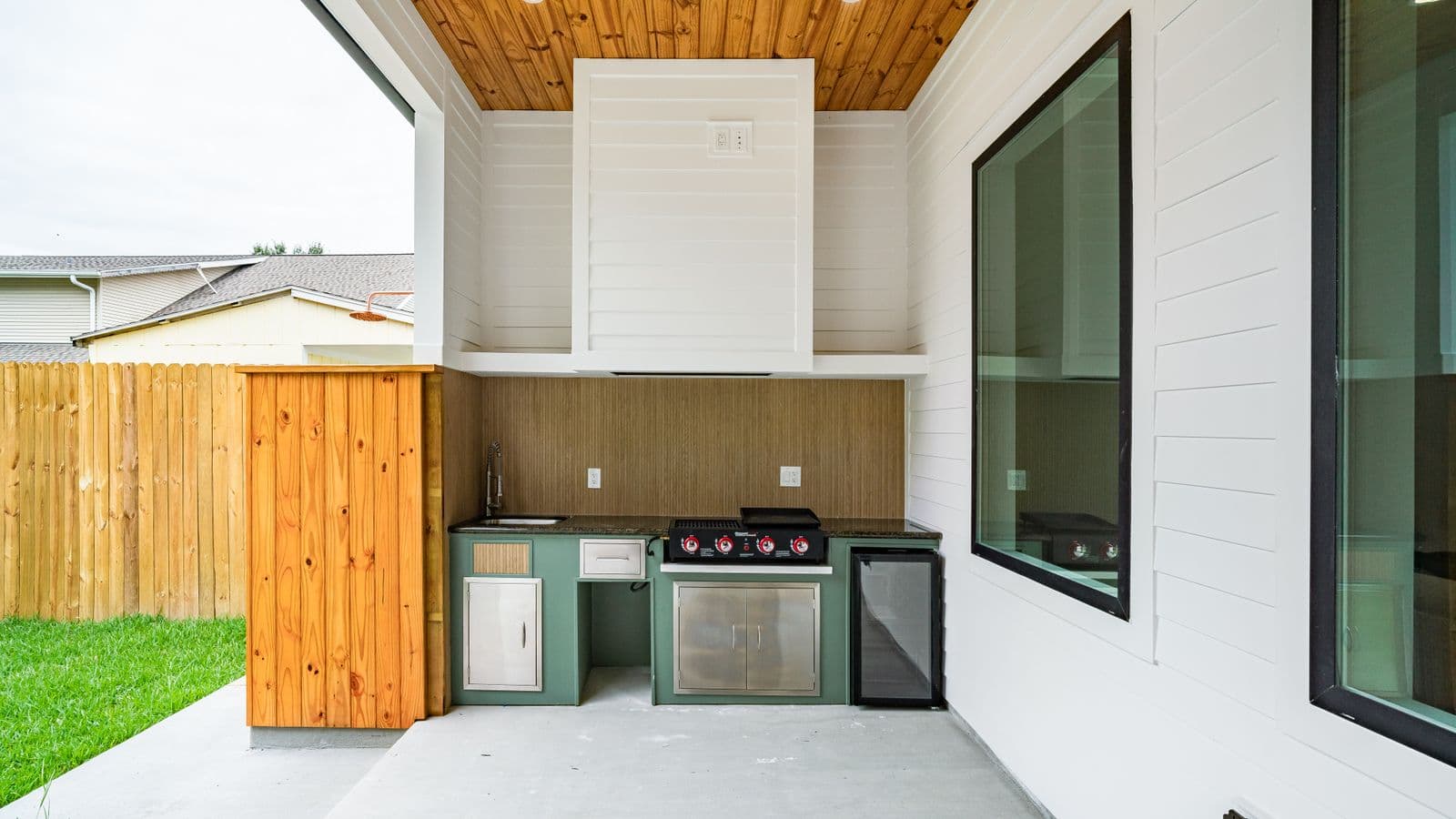
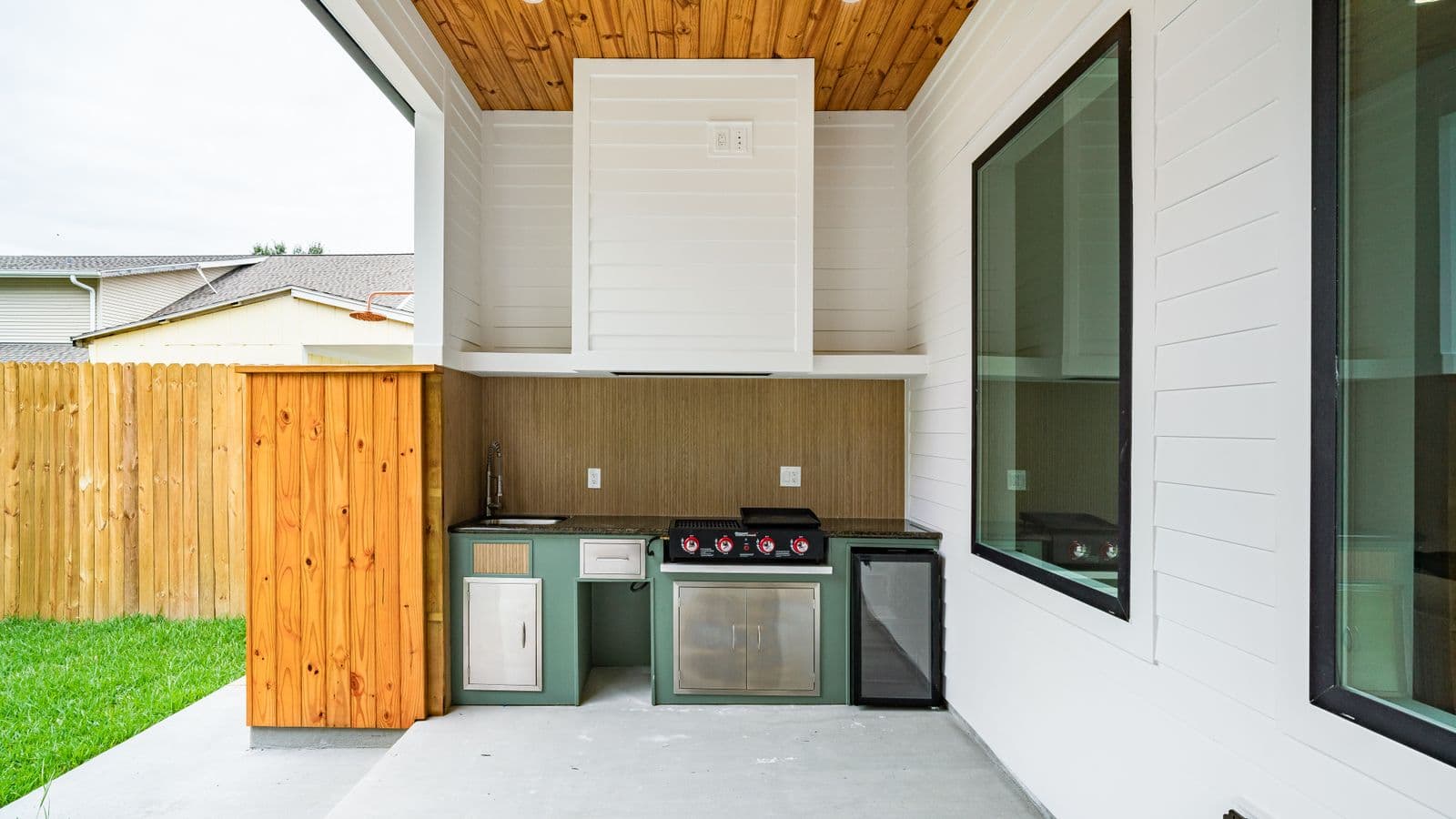
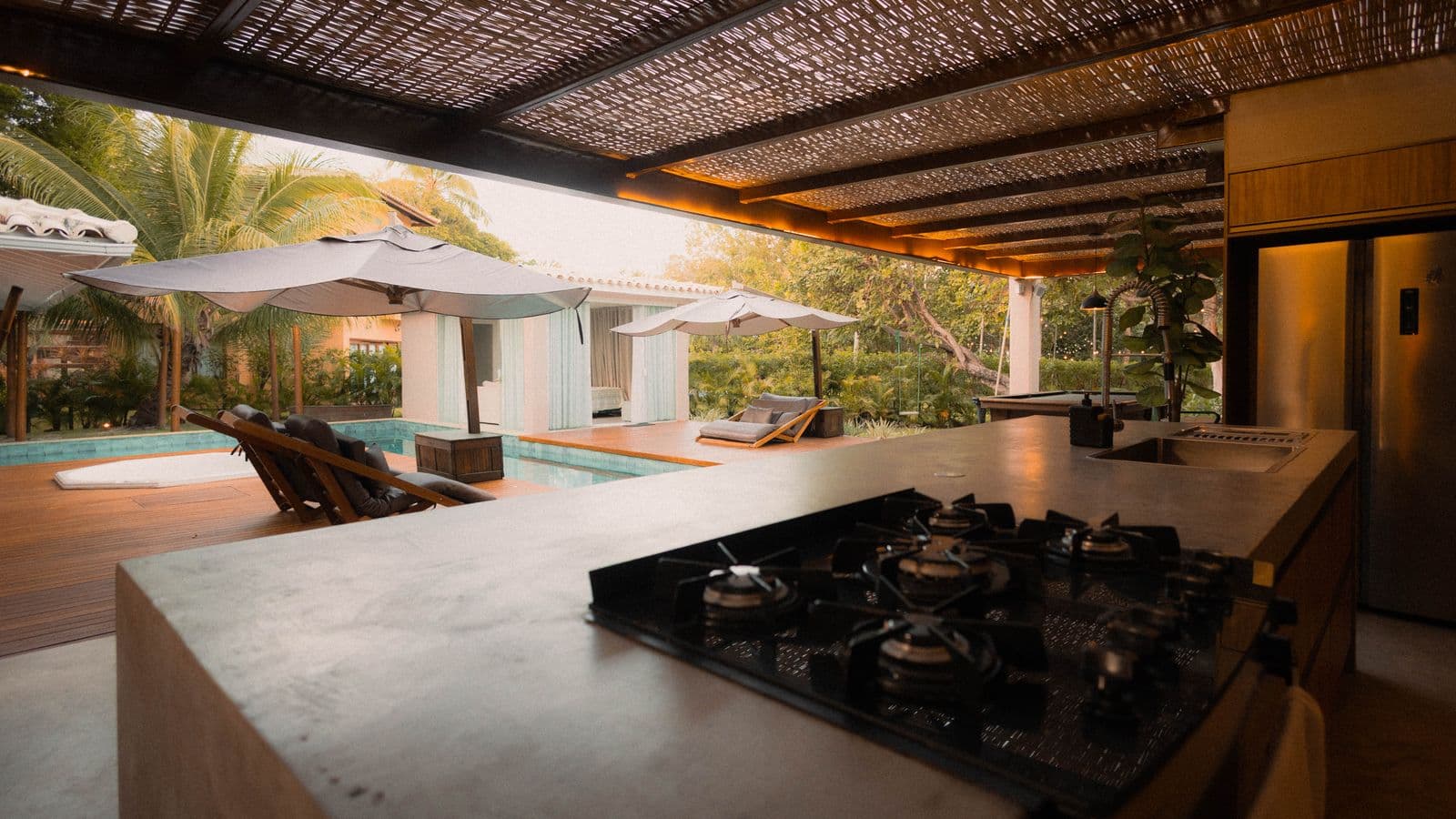
Outdoor Kitchen Counter Dimensions: The Expert Breakdown
Planning an outdoor kitchen is one of the most exciting projects a homeowner can undertake.
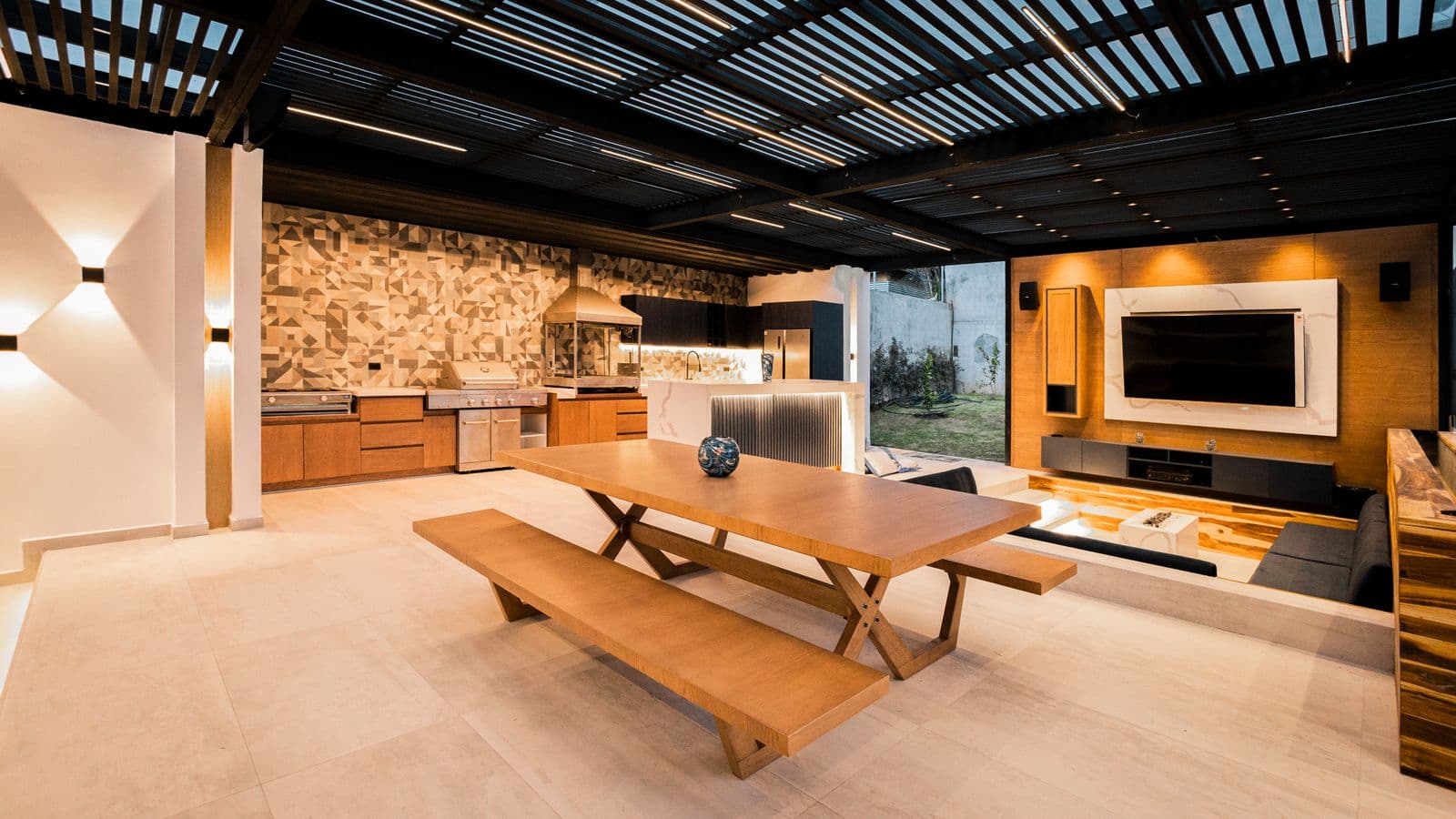
Planning an outdoor kitchen is one of the most exciting projects a homeowner can undertake. You can already picture it: the sizzle of the grill, the clinking of glasses, the laughter of friends and family. But then, the practical questions start to creep in, and one of the most fundamental—and most frequently miscalculated—is this: what are the dimensions for an outdoor kitchen counter? It seems simple, but this single detail can make or break the entire functionality and feel of your outdoor living space.
Our team has designed and built countless outdoor entertaining areas, and we've seen firsthand how getting the dimensions wrong can lead to a lifetime of subtle frustrations—a counter that’s just a bit too low, a workspace that’s too cramped, or a bar where guests can't comfortably sit. The right numbers aren't just about following a rulebook; they're about ergonomics, workflow, and creating a space that feels intuitively right. Let’s be honest, this is crucial. We're here to pull back the curtain on the industry standards and, more importantly, explain the professional nuances that transform a good outdoor kitchen into an impeccable one.
The Unspoken Rule: Why Standard Dimensions Matter (And When to Break Them)
First, let's start with the baseline. Most dimensions for outdoor kitchens are borrowed directly from their indoor counterparts, and for good reason. Decades of kitchen design have honed in on specific measurements that work for the vast majority of people and appliances. They're rooted in ergonomics—the science of designing for human comfort and efficiency. You don't want to be stooping to chop vegetables or reaching uncomfortably high for a spice rack.
But an outdoor kitchen isn't just an indoor kitchen without a roof. It’s a completely different beast. It has to contend with uneven ground from beautiful, natural stone Pavers SAN Diego, accommodate brawnier, more powerful appliances, and serve a social function that often surpasses that of an indoor kitchen. So while we use indoor standards as our starting point, our experience shows that thoughtful adjustments are not just recommended; they're essential. The three core dimensions we obsess over are height, depth, and length. Get these right, and everything else falls into place.
Countertop Height: The Foundation of Comfort and Function
Countertop height is arguably the most critical dimension for day-to-day comfort. Get this wrong, and you'll feel it in your back every time you use the space. The standard is surprisingly simple, but the variations are where the magic happens.
The industry standard for a kitchen counter height—both indoors and out—is 36 inches (3 feet) from the finished floor or patio surface. This is the ergonomic sweet spot for a person of average height to perform tasks like chopping, mixing, and prepping food without bending over or reaching up. It's the comfortable default. Simple, right?
But wait, there's more to understand. A popular feature in modern Outdoor Kitchens SAN Diego is a bi-level or two-tiered counter, which introduces a second height. A bar-top or seating area is typically set at 42 inches. This elevated surface creates a natural social hub, allowing guests to sit on bar stools and interact with the chef without being in the way of the primary prep zone. It also helps to visually separate the 'working' part of the kitchen from the 'relaxing' part. We've found this design to be exceptionally popular for homeowners who love to entertain.
Now, this is where it gets interesting, and it’s a detail we see DIY projects miss all the time: grill-specific height. Your built-in grill has a specific cooking surface height, and the goal is to have your adjacent countertops perfectly flush with it. You want a seamless, unbroken line. This creates a safer, more functional surface where you can easily slide heavy pans or platters of food off the grates without lifting them over a ledge. Since every grill model is different, this requires a truly custom approach. We build the base cabinet to a precise height so that when the countertop material is installed, its surface lands exactly level with the grill's flange. It's a small detail that makes a world of difference.
Countertop Depth: More Than Just Workspace
Countertop depth—the distance from the front edge to the back wall—is all about creating an adequate workspace. The standard depth is 24 inches. This number isn't arbitrary; it’s dictated by the standard size of under-counter appliances like outdoor refrigerators, ice makers, and cabinet drawers. A 24-inch depth ensures these units fit snugly without protruding awkwardly.
However, our team almost always recommends going deeper. We can't stress this enough. Pushing the depth to 28 or even 30 inches is a game-changer for outdoor kitchens. Why? First, it provides a substantially more generous prep area in front of you. You'll never complain about having too much counter space. Second, and more critically, that extra few inches at the back provides invaluable real estate for running utility lines—gas for the grill, electrical for outlets and lighting, and plumbing for a sink—without having to cram them into the cabinet box or force appliances to stick out. This approach, which we've refined over years of installations, delivers a much cleaner, more professional finish.
If your design includes bar seating, the depth of the overhang is a non-negotiable element for comfort. A skimpy overhang is a catastrophic design flaw. We consider 12 inches to be the absolute minimum, but we strongly advocate for a 15-inch overhang. This provides ample room for guests to tuck their knees underneath comfortably without having to sit sideways. Think about it: a 15-inch overhang allows someone to pull a bar stool in, lean forward on their elbows, and truly settle in. It’s the difference between a place people can sit and a place they _want_ to sit.
A Quick Comparison: Standard vs. Optimized Outdoor Counter Dimensions
To make it clearer, here’s a breakdown of the standard measurements versus the professional-grade dimensions our team at Modern Yardz typically recommends for a superior result.
| Dimension | Standard Measurement | Our Pro Recommendation | Key Benefit of Pro Recommendation |
|---|---|---|---|
| Prep Counter Height | 36 inches | 36 inches (or custom) | Ergonomic sweet spot for most users; can be adjusted for comfort. |
| Bar Counter Height | 42 inches | 42-44 inches | Creates a comfortable social hub and clear separation of zones. |
| Counter Depth | 24 inches | 28-30 inches | More prep space and easy routing for utilities behind appliances. |
| Bar Overhang | 10-12 inches | 15 inches (minimum 12) | Genuine comfort for seated guests, allowing ample knee space. |
| Toe Kick | Often omitted | 4" H x 3" D | Prevents stubbed toes and allows you to stand closer comfortably. |
The Length Equation: How Much Counter Space Do You Actually Need?
Unlike height and depth, there's no single 'standard' for counter length. It's entirely dependent on your available space, your budget, and the appliances you want to include. However, there is a professional formula we use based on the concept of 'landing zones.' A landing zone is a clear, open counter space next to an appliance or work area.
Here’s what we’ve learned: you need landing zones. They are not optional.
- The Grill Landing Zone: This is the most critical. You need at least 24 inches of open counter on one side of the grill and a minimum of 12 inches on the other. This gives you space for platters of raw food, spices, and tools on one side, and a safe, heat-resistant spot to place screaming-hot pans and finished food on the other. We’ve all seen someone try to juggle a hot grill grate with nowhere to put it. It’s a safety hazard.
- The Sink Landing Zone: If you have a sink, you’ll want at least 18 inches of clear space on both sides. This follows the classic 'dirty-to-clean' workflow: one side for stacking items to be washed, and the other for placing clean items to dry or be prepped.
- The 'Everything Else' Zone: Don't forget about other appliances. An outdoor refrigerator needs a small landing spot (at least 15 inches) to place items as you load or unload it. A pizza oven needs a substantial heat-proof area for launching and retrieving pies.
So, how do you calculate your minimum length? Start adding it up. For a simple setup with just a 36-inch grill and a 24-inch fridge, you’d need: (12" landing) + (36" grill) + (24" landing) + (24" fridge) + (15" landing) = 111 inches, or just over 9 feet of linear counter space. This practical math is a core part of our Landscape Design SAN Diego process, ensuring the final layout is as functional as it is beautiful.
Beyond the Big Three: Nuanced Dimensions That Make a Difference
Getting the height, depth, and length right is 80% of the battle, but the final 20% is in the details. These are the subtle dimensions that separate an average project from an exceptional one.
One of the biggest is walkway clearance. The space around your outdoor kitchen is just as important as the kitchen itself. We recommend a minimum of 36 inches of clear walkway space behind the counter. This allows a person to work at the counter while another can still pass by. But honestly, though, 48 inches is the gold standard. This wider berth feels more luxurious and is much safer, especially if the area is a major traffic path from the house to, say, the Pools AND Spas area.
Another critical, often moving-target objective is planning for appliance cutouts. You absolutely must have the exact manufacturer specifications for every single built-in appliance—grill, side burner, fridge, sink—_before_ a single block is laid. We mean this sincerely: guessing is a recipe for a catastrophic and costly mistake. A quarter-inch error can mean an appliance won't fit or will have unsightly gaps. This is why a detailed design phase is non-negotiable.
And let's talk about toe kicks. That recessed space at the bottom of your indoor kitchen cabinets? It serves a purpose. A standard toe kick is about 4 inches high and set back 3 inches. It allows you to stand closer to the counter without stubbing your toes, improving your posture and comfort. We believe it's a critical, non-negotiable element that should be included in any high-end outdoor kitchen build.
Material Thickness: The Overlooked Dimension
Here's a pro-level detail that often gets overlooked: the thickness of your chosen countertop material directly impacts the height of your base cabinets. A sleek porcelain slab might be 2 centimeters (about ¾ inch) thick, while a poured-in-place Concrete SAN Diego countertop could be 3 inches thick or more. A hefty slab of granite is typically 3 centimeters (about 1 ¼ inches).
To achieve that perfect final counter height of 36 inches, you have to work backward. For a 3cm granite top, the cabinets underneath must be built to 34 ¾ inches. For a 2-inch concrete top, the cabinets must be 34 inches. Our design team calculates these material allowances from the very beginning to ensure the final product is ergonomically perfect. It’s this level of foresight that prevents costly on-site adjustments and ensures a flawless finish, especially when integrating complex elements like Seat Retaining Walls that might form the back of the kitchen island.
Tying It All Together with a Cohesive Design
An outdoor kitchen doesn't exist in a vacuum. It’s the anchor of your backyard entertaining space. Its dimensions must not only work for the chef but also for the overall flow and harmony of your landscape. How does it connect to the patio? Is it shaded by one of our custom Patio Covers Pergolas SAN Diego? How will it be lit for evening gatherings?
This is where a holistic design approach becomes paramount. The kitchen's foundation needs to be perfectly level, whether it's built on a concrete slab or elegant pavers. The placement must consider prevailing winds to keep smoke away from guests. And the lighting plan is crucial; a combination of ambient and task lighting from a professional Landscape Lighting SAN Diego installation ensures the space is both safe and inviting after dark. It's about seeing the entire picture, from the foundational hardscaping to the final decorative touches.
The dimensions of an outdoor kitchen counter are more than just numbers; they are the blueprint for your future experiences. They dictate comfort, safety, and the effortless flow that makes entertaining a joy rather than a chore. Getting them right from the start is the most important investment you can make in your project. If you're ready to get these dimensions perfect for your space, it all starts with a conversation. BOOK MY FREE CONSULTATION and let our team help you design the outdoor kitchen you've always envisioned.
Ultimately, these guidelines are the framework for creating a truly exceptional space. They are the synthesis of ergonomic science and years of hands-on experience. By understanding not just the 'what' but the 'why' behind each measurement, you can create an outdoor kitchen that is perfectly tailored to your home, your family, and the countless memories you'll make there.
Start Your Free Design Consultation
Tell us about your project and we'll be in touch within 24 hours. No pressure, no obligation.
Common questions
- How tall should an outdoor kitchen counter be?
- The standard outdoor kitchen counter height is 36 inches (3 feet) from the finished patio surface, the ergonomic sweet spot for chopping and prepping without bending over. If you add a bar or seating area, that second tier is typically set at 42 inches so guests can sit on stools and interact with the chef.
- How deep should an outdoor kitchen countertop be?
- The standard depth is 24 inches, sized to fit under-counter appliances like outdoor fridges, ice makers, and drawers. Going deeper, to 28 or even 30 inches, gives a more generous prep area and invaluable room behind the appliances to run gas, electrical, and plumbing lines cleanly.
- How much overhang do I need for bar seating?
- Plan for at least a 12-inch overhang, though 15 inches is strongly recommended for comfortable bar seating. That extra room lets guests tuck their knees underneath, lean forward on their elbows, and truly settle in rather than sitting sideways. A skimpy overhang is considered a catastrophic design flaw.
- How much counter space do I need beside the grill?
- You need at least 24 inches of open counter on one side of the grill and a minimum of 12 inches on the other. The larger side holds platters of raw food, spices, and tools, while the smaller side gives a safe, heat-resistant spot to set down screaming-hot pans and finished food.
- How much clearance should there be behind the counter?
- Leave a minimum of 36 inches of clear walkway behind the counter so one person can work while another passes by. 48 inches is the gold standard, since the wider berth feels more luxurious and is safer, especially along a major traffic path from the house to the pool area.
Ready to design your dream yard?
Tell us about your project. We'll send back a real plan, not a templated quote.
Book My Free Consultation→