We've all been there. You’re at a friend’s house for a barbecue, and the host is juggling plates, tongs, and spices, making a dozen frantic trips between their lonely grill cart and the indoor kitchen. It works, kind of. But it's more of a satellite cooking mission than a seamless experience. This common scenario is precisely why the conversation around outdoor living has shifted so dramatically. People aren't just looking for a place to grill; they're craving a true extension of their home.
So, when we get asked, "what is considered an outdoor kitchen?" our answer goes far beyond that standalone grill. An outdoor kitchen isn't just an appliance you roll out from the garage. It’s a permanent, thoughtfully designed culinary space that integrates cooking, preparation, and entertaining into a cohesive and functional outdoor room. It’s about creating a destination, a hub of activity that brings the full convenience and capability of your indoor kitchen into the fresh air. It’s a foundational piece of a lifestyle, not just a piece of equipment.
The Real Definition: From Grill Station to Culinary Hub
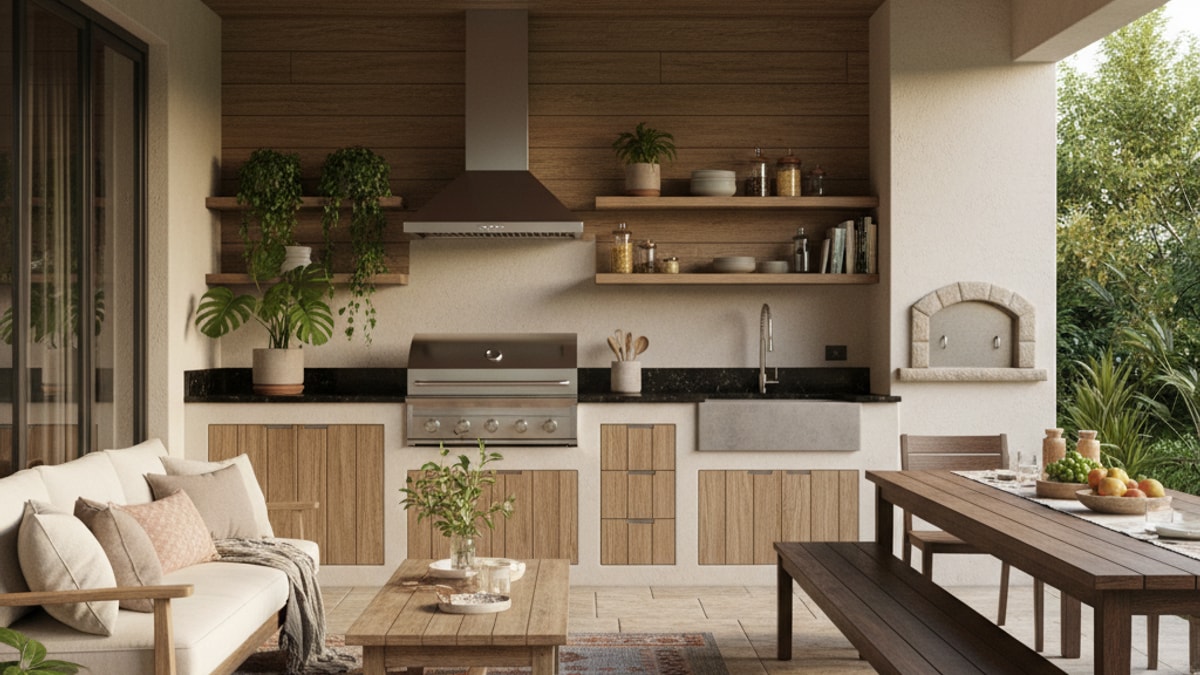
Let’s draw a line in the sand. A simple grill on a patio is a grilling station. It’s functional for its singular purpose, but it’s not a kitchen. The transition happens when you add permanence, infrastructure, and dedicated functionality. In our experience, a true outdoor kitchen has, at a minimum, three core elements: a built-in cooking appliance, dedicated counter space for prep, and integrated storage.
This is the baseline. This is where the chaos of running back and forth to the house begins to fade. The moment you can prep your ingredients, cook your meal, and have all your tools within arm's reach without ever opening your patio door, you've crossed the threshold. It’s a deliberate architectural installation. It’s planned, it’s built-in, and it’s designed to work with the flow of your entire backyard. This is the critical, non-negotiable element that separates a simple backyard setup from the sophisticated and highly functional spaces our team designs and builds.
It’s about intention. A true outdoor kitchen is conceived as part of a larger ecosystem, often a key feature in a comprehensive Landscape Design SAN Diego plan that considers traffic flow, seating, and ambiance.
The Unskippable Core: Components of Every Great Outdoor Kitchen
Before you start dreaming of wood-fired pizza ovens and built-in kegerators (and you absolutely should), it’s vital to get the fundamentals right. These are the building blocks that every functional outdoor kitchen is built upon. We can't stress this enough: skimping here will only lead to frustration down the road.
First, the heart of it all: the grill. This is usually the first decision and the biggest investment. We’re not talking about a cart model. For a true outdoor kitchen, you need a built-in grill head that drops into a custom-built island. This creates that seamless, high-end look and feel. You'll need to consider fuel type—natural gas plumbed directly to the unit is the most convenient, but propane and high-end charcoal or pellet smokers have their devout followers. Features like infrared searing burners and rotisseries can elevate your cooking game dramatically.
Next, and just as important, is counter space. This is the single biggest differentiator between a grilling station and a kitchen. Without adequate, durable counter space, you're still just balancing plates on a side table. We're talking about dedicated prep zones on either side of the grill. This is where you'll chop vegetables, season steaks, and plate your finished masterpieces. The material choice here is crucial for longevity. Our projects often utilize incredibly durable materials like poured-in-place concrete, which we can customize through our Concrete SAN Diego services, or natural stone like granite that can withstand the elements.
Finally, there's storage. Think about everything you need when you cook: tongs, spatulas, grill brushes, thermometers, serving platters, spices, and cleaning supplies. A proper outdoor kitchen incorporates weatherproof, stainless steel cabinetry. Drawers for utensils, cabinets for larger items, and perhaps even a pull-out trash bin keep the space organized and self-sufficient. No more frantic searches for the misplaced grill tongs. It’s all right there.
Elevating the Experience: From Functional to Fantastic
Once the core components are in place, the real fun begins. This is where you tailor the space to your specific lifestyle and how you love to entertain. These are the elements that transform a good outdoor kitchen into an unforgettable one.
A sink is a total game-changer. The simple ability to wash your hands, rinse vegetables, or begin cleanup without leaving the party is a luxury you won't know how you lived without. A plumbed sink with hot and cold water elevates the space to true indoor-kitchen-level convenience. It’s a complex addition requiring professional plumbing, but the payoff in functionality is immense.
Refrigeration comes in a close second. An outdoor-rated refrigerator means cold drinks are always within reach. No more coolers packed with melting ice. You can store marinades, side dishes, and condiments right where you need them. For the serious entertainer, a beverage center, wine cooler, or even a built-in kegerator can turn your patio into the neighborhood's favorite hangout spot.
Then you have the specialty cooking appliances. This is where personality shines through. Love pizza? A wood-fired or gas-powered pizza oven becomes an incredible social centerpiece. For the barbecue purist, a built-in smoker adds a whole new dimension of flavor. Side burners are also incredibly useful for heating sauces or boiling corn on the cob, preventing you from having to use your indoor stovetop. It’s about creating a space that can handle an entire meal, from appetizer to main course, completely outdoors. Our work in designing and building custom Outdoor Kitchens SAN Diego often involves integrating these unique appliances to perfectly match a client's culinary passions.
It’s a Room, Not Just an Island: Layout and Integration
An outdoor kitchen doesn't exist in a vacuum. It's the anchor of a larger outdoor room. The layout is absolutely critical to its success. You need to think like a kitchen designer, considering workflow and ergonomics. We often use the concept of work zones: a hot zone (grill, side burner), a cold zone (refrigerator), a wet zone (sink), and a dry zone (prep counters).
The most common layouts are linear, L-shaped, or U-shaped. A linear kitchen works well in smaller spaces, running along a wall or the edge of a patio. An L-shape is fantastic for creating a corner and defining the space, often allowing for a serving bar on one side. A U-shape creates a fully enclosed, highly efficient cockpit for the chef, with everything just a pivot away. This design often includes a bar with seating, making it the ultimate social hub.
But the layout extends beyond the kitchen island itself. How does it relate to the dining table? The lounge area? The pool? A successful design creates a natural flow between these spaces. You don't want the smoke from the grill blowing directly into your seating area, nor do you want a major walkway cutting right through the chef's workspace. That's why professional planning is so important. It’s about seeing the entire backyard as one cohesive living space, where the kitchen is perfectly integrated with beautiful Pavers SAN Diego patios, comfortable seating, and ambient lighting.
The Invisible Foundation: Structure and Utilities
Here’s what you don’t see, and honestly, it’s one of the most critical parts of the project. A beautiful outdoor kitchen built on a shoddy foundation will fail. Period. The structure needs to sit on a solid, level base, typically a reinforced concrete slab. This prevents shifting, cracking, and settling over time.
The island itself is typically constructed from a concrete masonry unit (CMU) block or a galvanized steel frame. Both are incredibly durable and non-combustible. This framework is then finished with a veneer of your choice—stucco, stone, brick, or tile—to match your home's aesthetic.
And then there are the utilities. This is not a DIY job. We’re talking about running underground gas lines for the grill, electrical conduits for outlets, refrigeration, and lighting, and plumbing lines for the sink and drains. Each of these requires licensed professionals to ensure safety and code compliance. Proper planning during the initial design phase is crucial to ensure all these lines are run efficiently and correctly before any hardscaping is installed. It's a meticulous process, but it's the only way to ensure a safe and functional final product.
Setting the Mood: Shelter, Light, and Ambiance
Your outdoor kitchen is a significant investment, and you want to be able to use it as often as possible. That means thinking about comfort and ambiance. An overhead structure is one of the best ways to enhance usability.
A solid roof or one of our custom Patio Covers Pergolas SAN Diego can provide essential shade from the hot sun and protection from light rain. It also helps to define the kitchen as a distinct 'room' within the landscape. A pergola can support climbing plants for a softer, more natural feel, while a solid roof allows for the installation of ceiling fans, recessed lighting, and infrared heaters, extending the usability of your kitchen well into the cool evenings and shoulder seasons.
Lighting is another make-or-break element. A well-lit outdoor kitchen is both safer and more enjoyable to use after dark. Our approach to Landscape Lighting SAN Diego involves creating layers of light. This includes task lighting directly over the grill and prep surfaces so you can see what you're doing, along with ambient lighting, like under-counter lights or sconces on nearby walls, to create a warm, inviting glow. You want enough light to cook safely but not so much that it feels like a stadium. It’s a delicate balance.
And don’t forget the social aspect. Integrating your kitchen with other gathering spots, like a comfortable seating area around one of our beautiful Fire Features, creates a multi-functional entertainment zone where guests can relax and chat with the chef.
Materials That Endure: A Comparison of Countertop Options
Choosing the right materials is a battle between aesthetics, budget, and brutal, unflinching durability. Outdoor materials are subjected to UV rays, temperature swings, moisture, and grease. They have to be tough. Nowhere is this more true than with countertops. Here’s a quick breakdown of some of the most popular choices our team works with:
| Feature |
Granite |
Poured Concrete |
Dekton/Neolith (Sintered Stone) |
Stainless Steel |
| Durability |
Very high; heat and scratch resistant. Can stain if not properly sealed. |
High; very heat resistant. Can develop hairline cracks but is incredibly strong. |
Extremely high; virtually indestructible. UV, scratch, heat, and stain proof. |
High; hygienic and heat proof. Can dent and show fine scratches over time. |
| Maintenance |
Requires sealing, typically once a year, to maintain stain resistance. |
Must be sealed regularly to protect against stains and moisture absorption. |
Very low maintenance. Non-porous surface cleans easily with soap and water. |
Needs frequent cleaning to avoid water spots and fingerprints. |
| Aesthetics |
Classic and natural. Each slab is unique with beautiful patterns and colors. |
Modern, industrial, and highly customizable with colors and finishes. |
Sleek, uniform, and contemporary. Available in a wide range of colors and patterns. |
Professional, commercial kitchen look. Clean and functional. |
| Cost |
High |
Moderate to High |
Very High |
High |
Our team has found that materials like sintered stone (Dekton, Neolith) are becoming increasingly popular for their near-zero maintenance and incredible resilience, though granite remains a timeless favorite. Poured concrete offers a fantastic level of customization for those seeking a truly unique, modern aesthetic.
So, what is considered an outdoor kitchen? It's the thoughtful combination of all these elements. It's a permanent structure with integrated utilities, durable countertops, and convenient storage. It's a well-designed layout that promotes social interaction and connects seamlessly with the rest of your outdoor living space. It’s an investment that pays dividends in lifestyle, creating a vibrant hub for making memories with family and friends for years to come.
It’s so much more than just a place to cook. It's where the heart of the home moves outdoors. If you're ready to explore what a true outdoor kitchen could look like in your own backyard, our team is here to help you bring that vision to life. Why not BOOK MY FREE CONSULTATION and we can start planning together?



.webp)
.webp)