There's a specific moment of dread every San Diego homeowner knows. You've just poured a cold drink, settled into your favorite chair, and the perfect coastal breeze is rolling in. Your patio—the one you've invested time and passion into creating—is finally your sanctuary. And then you hear it. The low, menacing buzz. A single wasp, then another, zipping aggressively around the table. Suddenly, your peaceful oasis feels more like a war zone.
It’s a uniquely frustrating experience. Here at Modern Yardz, we pour our hearts into designing and building stunning outdoor living spaces across San Diego County, from luxurious Services like custom patios and outdoor kitchens to serene poolscapes. We believe these spaces are extensions of your home, meant for relaxation and making memories. Seeing that experience ruined by persistent, territorial wasps is something our team is passionate about solving. This isn't just about swatting a few bugs; it's about reclaiming your investment and your peace of mind. And—let's be honest—it’s about knowing how to keep wasps away from your patio for good, not just for an afternoon.
Understanding the Enemy: Why Wasps Love Your Patio
Before we can talk about solutions, we have to understand the problem from the wasp's perspective. They aren't invading your barbecue just to be a nuisance (though it certainly feels that way). Their behavior is driven by three simple needs: food, water, and shelter. Your beautiful patio, unfortunately, often serves up all three on a silver platter.
Paper wasps, yellow jackets, and mud daubers are the most common culprits we see in Southern California. Each has slightly different habits, but their core attractions are the same. Yellow jackets are the feisty, aggressive ones that are after your proteins and sugars—the hot dogs on the grill, the open can of soda, the fruit salad. They are ground-nesters, often found in rodent burrows or wall voids. Paper wasps, on the other hand, build those distinctive open-comb, umbrella-shaped nests you find hanging from eaves, patio covers, and railings. They are generally less aggressive unless you get too close to their nest. Mud daubers are solitary and build nests from mud, often on the side of stucco or brick, and are far less of a threat, but their nests can be an eyesore.
Our experience shows that the biggest attractants are often overlooked. A tiny bit of spilled juice, a greasy spot on the grill, or crumbs left on the pavers can send a signal to a scout wasp, which then brings its entire family to the party. We've seen sprawling, impeccable outdoor kitchens become wasp hotspots simply because the trash can wasn't properly sealed. It's that simple. And it’s that frustrating.
They also need water. A dripping hose bib, condensation on a cold glass, a pet's water bowl, or the shimmering surface of your swimming pool—it’s all a welcome water source for a thirsty wasp. Finally, they need a safe place to build a home. Your house provides a formidable structure with countless nooks, crannies, and overhangs that are perfect for a nest. That gorgeous new pergola? To a queen wasp, it looks like a pre-approved construction site.
Phase One: Prevention and Proactive Deterrence
The absolute best strategy for dealing with wasps is to make your patio completely uninviting to them in the first place. This is the foundational work. It’s not as dramatic as taking down a nest, but it's far more effective in the long run. We can't stress this enough—an ounce of prevention is worth a pound of cure, especially when that cure involves angry, stinging insects.
It starts with rigorous scent and food management. This is a critical, non-negotiable element of keeping wasps at bay.
- Sanitation is Everything: After any outdoor meal, clean up immediately and thoroughly. Wipe down tables, sweep up crumbs from your pavers, and clean your grill. Don't leave food uncovered for any length of time. We recommend using sealed containers for everything, from salads to condiments.
- Secure Your Trash: Use a trash can with a tight-fitting lid. This is huge. An open or overflowing bin is a powerful beacon for yellow jackets. Make sure to clean the can itself regularly to remove any sticky residue.
- Rethink Your Drinks: Sugary drinks are wasp magnets. Use cups with lids and straws, or stick to less sugary options when you're outside for long periods. A simple can of soda left open is an open invitation for every yellow jacket in the neighborhood.
Next, you have to eliminate potential nesting spots. This requires you to think like a wasp looking for real estate. Walk around your home and patio area with a critical eye. Look for gaps under the eaves, cracks in the siding, unplugged holes where utility lines enter the house, and the undersides of railings and deck furniture. Seal these openings with caulk or expandable foam. It’s a tedious job, but it dramatically reduces the available real estate for nest-building. Our design team always considers these factors when planning structures like patio covers and retaining walls, ensuring we minimize vulnerabilities from the start.
Water management is the third pillar. Fix any leaky outdoor faucets or irrigation heads. Overturning empty pots or wheelbarrows that collect rainwater is a simple but effective step. If you have a pool, wasps will be drawn to it, but keeping the water moving with fountains or aerators can make it a less attractive landing spot. A well-designed landscape should have impeccable drainage, which helps with more than just plant health—it also reduces standing water that attracts pests.
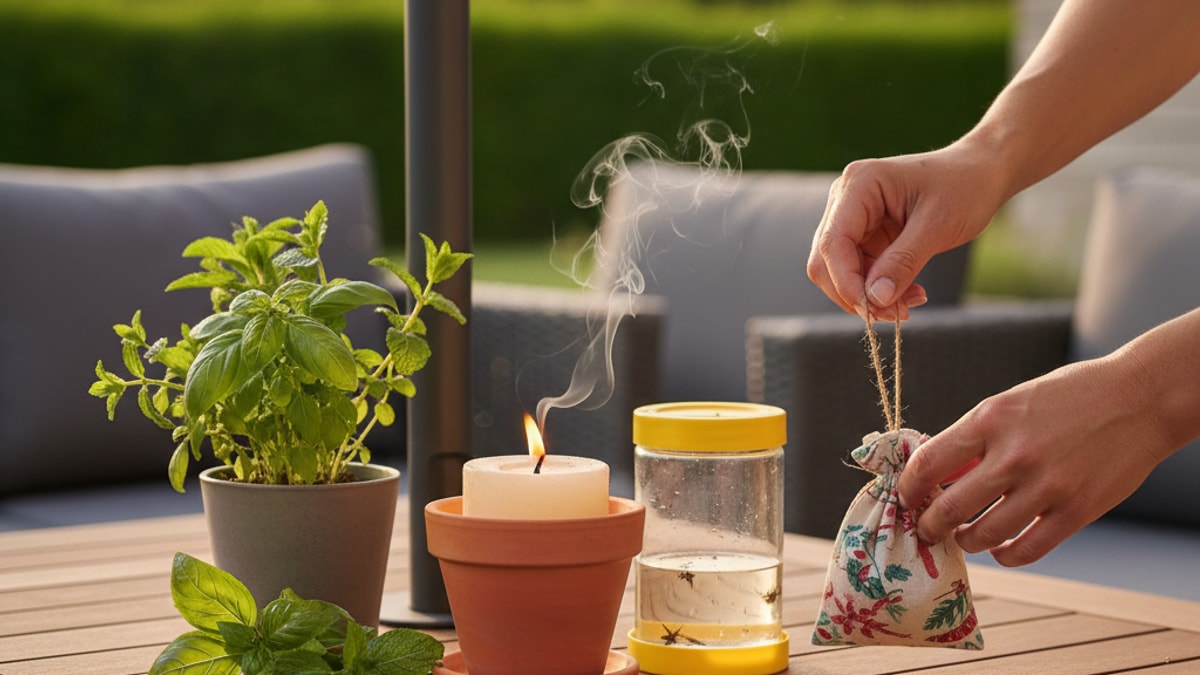
Finally, there's the world of natural repellents. While not a foolproof solution on their own, they are a fantastic layer in a multi-faceted defense. Some plants are known to be unappealing to wasps. Our landscape designers often incorporate plants like mint, thyme, eucalyptus, citronella, and marigolds into patio container gardens or bordering flower beds. The strong scents can help mask the smell of food and create a less welcoming environment. You can also create your own repellent sprays using essential oils like peppermint, clove, and geranium mixed with water and a little dish soap. Spritzing this around the perimeter of your patio, on outdoor furniture, and under eaves can be surprisingly effective. A popular DIY trick is the decoy nest—a simple paper bag crumpled to look like a nest. The theory is that wasps are territorial and will avoid building a new nest near an existing one. We’ve heard mixed reviews from clients, but it’s a simple, low-cost thing to try.
Creating a Wasp-Resistant Landscape Design
This is where we at Modern Yardz really get to the heart of the matter. A truly peaceful patio experience begins long before the first wasp shows up—it begins with thoughtful design. How your outdoor space is constructed can have a significant, sometimes dramatic, impact on how attractive it is to pests.
Patio covers and pergolas are a perfect example. They provide wonderful shade, but they can also become wasp apartment complexes if not designed and built correctly. We recommend using solid, smooth materials like vinyl or aluminum over rough, unfinished wood where possible. We also ensure that all joints are tight and that hollow support beams are properly capped and sealed. An open-rafter design might look rustic, but it provides a five-star hotel for paper wasps. A solid-roof patio cover, on the other hand, dramatically reduces overhead nesting spots.
Your choice of plants and their placement matters immensely. We love designing lush, vibrant gardens, but we're strategic about it. We avoid planting overly fragrant, sweet-smelling flowers or fruit-bearing trees right next to the seating and dining areas. Instead, we place those further out in the yard and, as mentioned, use repellent plants closer to the patio itself. It’s a simple shift in thinking that pays huge dividends.
Landscape lighting can also play a role. Traditional incandescent bulbs can attract a wide variety of insects. We often recommend and install LED lighting systems, which emit a different light spectrum that is far less attractive to bugs, including some of the insects that wasps prey on. Reducing the prey reduces the predators. You can find more of our thoughts on holistic design on our Blog.
Even the materials you choose for your hardscape can make a difference. Smooth, well-sealed concrete or tightly-fitted pavers are easier to clean and have fewer crevices for pests to hide in compared to, say, a rustic flagstone patio with wide, soil-filled gaps. When we build a patio, we're thinking not just about aesthetics but about long-term maintenance and enjoyment. And a huge part of that enjoyment is not having to constantly battle pests.
Thinking about a bigger project? If you're tired of piecemeal solutions and want to create an outdoor space that is beautiful, functional, and inherently less attractive to pests, that's what our team is here for. BOOK MY FREE CONSULTATION and we can talk about how smart design can solve more than just your aesthetic challenges.
A Quick Comparison of Wasp Deterrent Methods
Navigating the options can be overwhelming. Here's a straightforward breakdown our team put together to help you decide what's right for your situation.
| Method |
Effectiveness |
Cost |
Effort |
Safety Concerns |
| Natural Repellents |
Low to Moderate (Best as a supplementary layer) |
Low |
Moderate |
Low (check for allergies to essential oils) |
| Decoy Nests |
Low to Moderate (Anecdotal success) |
Very Low |
Low |
None |
| DIY & Commercial Traps |
Moderate to High (for reducing population) |
Low-Moderate |
Low-Moderate |
Low, but place away from high-traffic areas |
| Sanitation & Sealing |
High (Fundamental for long-term prevention) |
Low |
High |
Low |
| Professional Pest Control |
Very High (For active nests and infestations) |
High |
Very Low |
Moderate (involves chemicals, best left to pros) |
| Strategic Landscaping |
Very High (The ultimate preventative measure) |
Varies |
Varies |
Low (focuses on design, not chemicals) |
Phase Two: Active Removal and Trapping
Sometimes, despite your best preventative efforts, you're going to get wasps. A queen might find that one tiny spot you missed, or a neighbor’s unkempt yard could be generating a constant stream of them. When you're past prevention and into a full-blown invasion, it's time for active measures.
Let’s talk traps. Wasp traps—both store-bought and homemade—can be very effective at reducing the number of foraging worker wasps. The key is placement. This is the single biggest mistake we see homeowners make. They hang a trap right in the middle of their patio, which only serves to attract more wasps to the area you're trying to protect. It’s counterintuitive, but it's true. You need to place traps along the perimeter of your yard, 20-30 feet away from your patio, to intercept them before they get to your living space.
Now, for the most serious issue: dealing with a nest. This is where we need to be unflinchingly clear. Our team at Modern Yardz are experts in landscape architecture and construction, which you can learn more about on our About page, but we are not exterminators. And our strongest professional recommendation is to exercise extreme caution.
If you find a nest, first, identify it. A small, new paper wasp nest (the size of a quarter or half-dollar) with only a few wasps might be something a brave homeowner can handle. If you choose to do so, it must be done at night when the wasps are dormant. Wear protective clothing and use a spray specifically designed for wasps that can shoot from a safe distance. But honestly, even then, it's risky.
For any nest larger than that, for any nest in a hard-to-reach or enclosed space (like a wall), or for any ground nest of yellow jackets, do not attempt it yourself. We mean this sincerely—the risk of multiple stings, which can lead to a severe allergic reaction, is just too high. This is the time to call a professional pest control service. They have the right equipment, the right protective gear, and the experience to handle it safely and effectively. If you need a recommendation for a trusted local service, please Contact us, and we'd be happy to point you in the right direction.
Reclaiming your patio is about creating a space where you and your family feel safe and relaxed. Playing hero with a can of wasp spray against an established, angry colony is the exact opposite of that. It's just not worth it.
Your outdoor space should be a source of joy, not a source of stress. It’s the philosophy that drives every project we undertake here at Modern Yardz. From the initial design to the final paver, we're focused on creating lasting value and enjoyment for San Diego families. Getting a handle on pests like wasps is a huge part of that equation. It's about taking back control so you can simply sit back, relax, and enjoy the beautiful yard you've worked so hard for. For more ideas and to see how we've helped other homeowners create their dream spaces, follow us on our social media channels!



.webp)
.webp)