Stamped Concrete Patio Cost for a 20x20 Space: A Real Breakdown
So, you’re dreaming of a new outdoor space. A place to host summer barbecues, enjoy a quiet morning coffee, or just watch the kids play.
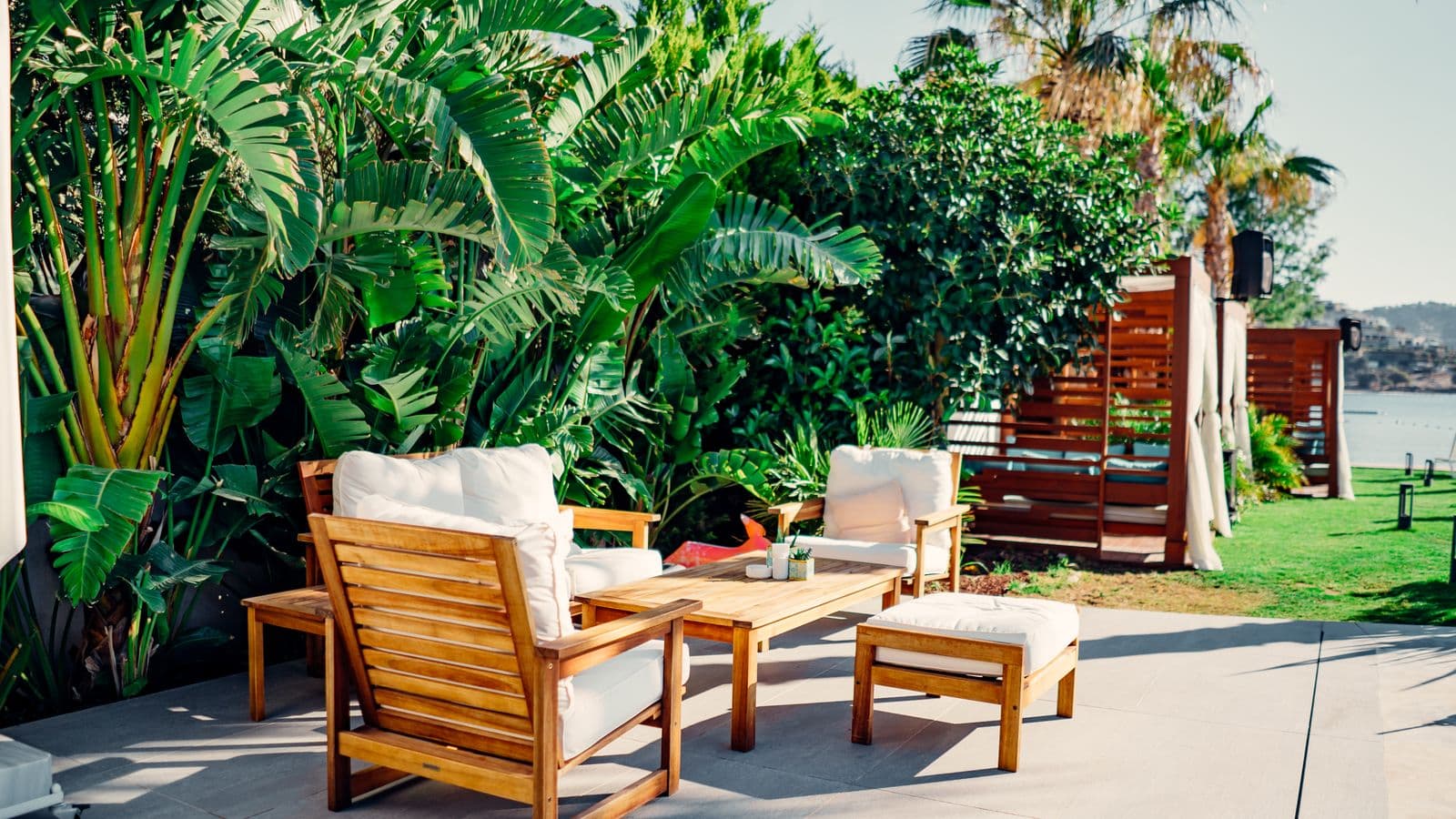
So, you’re dreaming of a new outdoor space. A place to host summer barbecues, enjoy a quiet morning coffee, or just watch the kids play. And a 20x20 stamped concrete patio—that’s 400 square feet of potential—sounds just about perfect. It’s a fantastic size, offering plenty of room for a dining set and a grill without completely taking over your yard. But then comes the big, unavoidable question that brings every homeowner’s dream back down to earth: how much does a 20x20 stamped concrete patio cost?
It’s the number one question our team at Modern Yardz gets from homeowners all across San Diego County, from Chula Vista to Oceanside. And let’s be honest—getting a straight answer online can be frustrating. You’ll see wildly different numbers, vague estimates, and articles that dance around the real cost drivers. We’re not going to do that. We believe an informed client is a happy client, so we’re pulling back the curtain to give you a genuine, expert breakdown based on the hundreds of patios we’ve designed and built right here in our community. This isn't a guess; it's what we see every day.
The Big Question: What's the Ballpark for a 20x20 Patio?
Alright, let’s get right to it. For a standard, professional installation of a 400-square-foot stamped concrete patio in the San Diego area, you can generally expect the cost to fall somewhere between $7,200 and $12,000. This typically works out to a range of $18 to $30+ per square foot.
That’s a pretty wide range, right? It might even feel a little frustrating. But here’s the critical truth—anyone who gives you a single, flat price without seeing your property is simply guessing. Our experience shows that the final price tag is a nuanced calculation based on a dozen different variables, some small and some that can dramatically shift the budget. The difference between an $18/sq ft job and a $30/sq ft job lies entirely in the details, and those details are what separate a patio that lasts a decade from one that cracks and fades in just a few years. We’ve seen both, and we can’t stress this enough: the details are everything.
Breaking Down the Core Costs: It's More Than Just Concrete
To really understand the final estimate, you need to see where the money goes. It’s not just a pile of concrete and a few hours of work. A high-quality, long-lasting patio is a multi-layered construction project with several distinct cost centers.
1\. Labor: The Heart of the Project This is almost always the largest portion of the budget, and for good reason. Stamped concrete is an art form that demands a skilled and experienced crew. You’re not just paying for muscle; you’re paying for precision. This includes:
- The Prep Crew: Experts in excavation, grading, and compacting the base. This is the unseen foundation, and if it’s done wrong, the entire patio will fail. Catastrophic failure, in some cases.
- The Concrete Finishers: These are the artisans. They have a very short window to pour, level, color, stamp, and detail the concrete before it cures. Their skill directly determines the quality of the final look.
- Project Management: The coordination of material delivery, crew schedules, and quality control.
2\. Materials: The Building Blocks Of course, the materials themselves are a significant cost. This isn’t just a bag of concrete from a big box store. We’re talking about a carefully orchestrated list of professional-grade components:
- Concrete: A specific mix (usually 3,500-4,000 PSI) delivered by a ready-mix truck.
- Base Material: Several tons of crushed rock or gravel (like Class II base) that must be spread and compacted to create a stable foundation.
- Reinforcement: Steel rebar or wire mesh is absolutely non-negotiable. It provides the tensile strength that helps prevent cracking and structural failure. We've been called to repair patios where this was skipped, and it’s never pretty.
- Forms: Lumber used to create the perimeter of the patio.
- Stamping Mats: These are heavy, expensive, and reusable tools that imprint the pattern. A contractor needs a large set to work efficiently on a 400 sq ft area.
- Color & Sealers: This includes color hardeners, antique release agents for highlights, and a high-quality final sealer to protect the surface.
3\. Site Preparation: The Unseen Giant This is the single biggest variable we encounter. What does the site look like _before_ we even start? A perfectly flat, empty, and accessible patch of dirt is the dream scenario. It’s also incredibly rare. More often, we’re dealing with:
- Excavation: We need to dig out 6-8 inches of soil across the entire 400 sq ft area to make room for the base material and the concrete slab. That’s a lot of dirt to move.
- Grading & Slope: Your patio _must_ be sloped correctly (usually a ¼ inch drop per foot) to ensure water drains away from your home’s foundation. Achieving this on an already sloped yard requires significant earth-moving.
- Demolition: Is there an old, cracked patio or a rotting wood deck there now? That needs to be demolished, broken up, and hauled away, which involves labor, equipment, and disposal fees.
- Access: This is huge. Can a concrete truck pull right up to the site? Or do we need to use a concrete pump or—in the most labor-intensive cases—wheelbarrows to move tons of wet concrete from the street to your backyard? This can add thousands to the final cost.
The Factors That Dramatically Shift Your Price Tag
Now we get into the choices that you, the homeowner, make. This is where you can dial the budget up or down. These are the elements that take a patio from standard to stunning, and the price reflects that level of customization and artistry.
Pattern & Texture Complexity Not all stamps are created equal. A simple, running bond pattern like an Ashlar Slate is relatively straightforward to apply. It’s popular, looks great, and is on the more affordable end of the spectrum. But if you’re dreaming of a more intricate design—say, a random stone pattern with a two-foot stamped cobblestone border and a central compass medallion—you’re talking about a completely different level of skill and time.
Our team has to meticulously place different stamps, use specialized texture skins for seamless blending, and hand-tool the joints between patterns. It’s a slower, more deliberate process. More time, more complexity, higher cost. Simple, right?
Color Choices and Application Color is what truly brings stamped concrete to life, but the method matters. Here’s what we’ve learned—the application technique has a huge impact on both the look and the budget.
- Integral Color: This is a pigment mixed into the concrete truck before it’s poured. It colors the entire slab through and through. The main benefit is that if you ever get a deep chip, the color is consistent. The downside? The color choices can be a bit more muted and earthy.
- Color Hardener: This is a powdered pigment that our crew broadcasts onto the surface of the wet concrete and works in with a trowel. It creates a much more vibrant, dense, and durable surface color. It’s an extra, labor-intensive step, so it costs more than integral color.
- Antiquing & Highlighting: This is the secondary color (the release agent) that settles into the low spots and grout lines of the stamp pattern, creating depth and a realistic, multi-toned look. This is what makes stamped concrete look like real stone. Virtually all high-end projects use this, and it’s a standard part of our process, but the complexity of the application can vary.
Finishing Touches and Add-Ons A 20x20 patio is rarely just a slab. It's the centerpiece of a larger outdoor living area. Integrating other features during the concrete phase is the smartest and most cost-effective way to build.
- Steps & Tiers: If your back door is elevated, you'll need steps. Forming and pouring concrete steps is a complex job that adds significant cost compared to a flat slab.
- Seat Walls & Retaining Walls: Adding a built-in seat wall around the edge of the patio is a popular upgrade. We can build these from concrete block and cap them to match the patio.
- Drainage Systems: For some properties, especially those with clay soil or grading challenges, we may need to install channel drains within the patio or French drains around the perimeter. This is a critical investment to prevent water issues down the road.
- Conduit for Utilities: Planning to add landscape lighting, an outdoor kitchen, or a sound system later? Now is the time to run electrical and gas conduits under the patio before the concrete is poured. It costs a little more now but saves you a fortune in retrospective work later.
Stamped Concrete vs. Other Patio Materials: A Cost Comparison
It’s always wise to understand your options. How does the cost of a 20x20 stamped concrete patio stack up against other popular materials? Our Services team works with all of them, so we can offer an unflinching comparison.
| Material | Average Cost / Sq. Ft. (Installed) | Pros | Cons |
|---|---|---|---|
| Stamped Concrete | $18 - $30+ | Highly customizable (patterns/colors), durable, relatively low maintenance, seamless surface. | Can crack over time, can be slippery when wet if not sealed properly, repairs can be difficult to match. |
| Interlocking Pavers | $25 - $45+ | Extremely durable, easy to repair (replace single pavers), huge variety of styles, permeable options available. | Can settle unevenly if base fails, weeds can grow in joints, higher initial cost. |
| Natural Stone (Flagstone) | $30 - $55+ | Unmatched natural beauty, extremely durable and long-lasting, unique look for every project. | Highest material and labor cost, uneven surface can be a challenge for furniture. |
| Wood Deck | $35 - $60+ | Great for sloped or uneven ground, warm and natural feel, can create multi-level spaces easily. | Requires regular maintenance (staining/sealing), susceptible to rot and insects, can have a shorter lifespan. |
Honestly, though, the best material is the one that fits your home's aesthetic, your lifestyle, and your budget. Stamped concrete offers a phenomenal sweet spot of design flexibility and value, which is why it remains one of our most requested installations.
The Hidden Costs Homeowners Often Forget
When you’re budgeting for a major project, it’s easy to focus on the main quote and forget about the ancillary expenses. Our team always tries to prepare homeowners for the full scope of the investment. Here are a few things to keep in mind:
- Landscape Repair: The area immediately surrounding your new patio will be a construction zone. Heavy equipment, wheelbarrows, and foot traffic can take a toll on your lawn and flower beds. You should budget for some landscape repair, whether it’s new sod, mulch, or a few replacement plants.
- Patio Furniture & Accessories: A beautiful new patio is just a stage. You’ll need the actors! The cost of a new dining set, umbrella, fire pit, or planters can add up quickly.
- Future Maintenance: Stamped concrete is low-maintenance, not _no_\-maintenance. To keep it looking vibrant and protected from the harsh San Diego sun, it needs to be cleaned and resealed every 2-4 years. This is a recurring cost to factor into the long-term value of your investment.
The Modern Yardz Process: Why a Design-Build Approach Matters
We've seen projects go wrong when homeowners hire separate designers and contractors who don't communicate effectively. That’s why our entire philosophy at Modern Yardz is built around an integrated design-build process. You can learn more about our approach on our About page, but here’s the gist of how we tackle a patio project.
It all starts when you BOOK MY FREE CONSULTATION. This isn't a sales pitch. It’s a genuine discovery session where one of our designers meets with you at your home. We listen to your vision, walk the property, and identify all those crucial variables—the access, the slope, the soil, the sun exposure. We talk about how you want to _live_ in the space.
From there, we develop a cohesive design that sees your patio not as an isolated slab, but as the heart of your entire outdoor environment. We think about plant placement, lighting, and how it connects to other elements of your yard. Once the design is perfect, we build it under that same contract. The designer who dreamed it up with you is the same one overseeing the crew that brings it to life. There are no communication gaps. No finger-pointing. Just a seamless journey from idea to reality.
This approach (which we've refined over years) delivers impeccable results because every detail is considered from the very beginning. We invite you to browse our Blog for inspiration and to see how this integrated process comes to life in real San Diego homes.
Ultimately, the cost of a 20x20 stamped concrete patio is an investment in your home’s value and your family’s quality of life. It’s about creating a space where memories will be made for years to come. Choosing the right partner—a team that is transparent, skilled, and dedicated to quality from the ground up—is the most important decision you’ll make. If you’re ready to explore what’s possible for your backyard, we’d be honored to start the conversation. Feel free to Contact us directly to get your questions answered.
A patio is more than a project; it's an extension of your home. It’s a place for connection. And getting it right starts with understanding the true cost and the immense value that a professional, well-executed installation brings. We’re here to help you navigate that journey.
Start Your Free Design Consultation
Tell us about your project and we'll be in touch within 24 hours. No pressure, no obligation.
Common questions
- How much does a 20x20 stamped concrete patio cost in San Diego?
- For a standard professional installation of a 400-square-foot stamped concrete patio in San Diego, expect roughly $7,200 to $12,000, which works out to about $18 to $30+ per square foot. The wide range depends on site conditions, pattern complexity, color method, and add-ons, so no honest contractor quotes a flat price without seeing your property.
- Is stamped concrete cheaper than pavers or natural stone?
- Yes. Stamped concrete is typically the most affordable option at $18 to $30+ per square foot installed. Interlocking pavers run $25 to $45+, natural stone flagstone $30 to $55+, and a wood deck $35 to $60+. Stamped concrete offers a strong sweet spot of design flexibility and value.
- How often does a stamped concrete patio need to be resealed?
- Plan to clean and reseal your stamped concrete patio every 2 to 4 years to keep it vibrant and protected from the harsh San Diego sun. Stamped concrete is low-maintenance, not no-maintenance, so factor this recurring cost into the long-term value of your investment.
- Do I need rebar in a stamped concrete patio?
- Yes, steel rebar or wire mesh is absolutely non-negotiable. It provides the tensile strength that helps prevent cracking and structural failure, and skipping it often leads to patios that need repair. A stable, compacted base of crushed rock, like Class II base, underneath is also critical; done wrong, the entire patio can fail.
- What makes a stamped concrete patio cost more?
- Site preparation is the single biggest variable, including excavation, grading, demolition of old surfaces, and whether a concrete truck can reach the site. After that, your choices drive the price: intricate stamp patterns, color hardener versus integral color, and add-ons like steps, seat walls, drainage systems, or utility conduit all push toward the higher end.
Ready to design your dream yard?
Tell us about your project. We'll send back a real plan, not a templated quote.
Book My Free Consultation→