How Much Does a 20x20 Paver Patio Cost? An Honest Breakdown
It’s the question we hear almost every day from homeowners across San Diego.
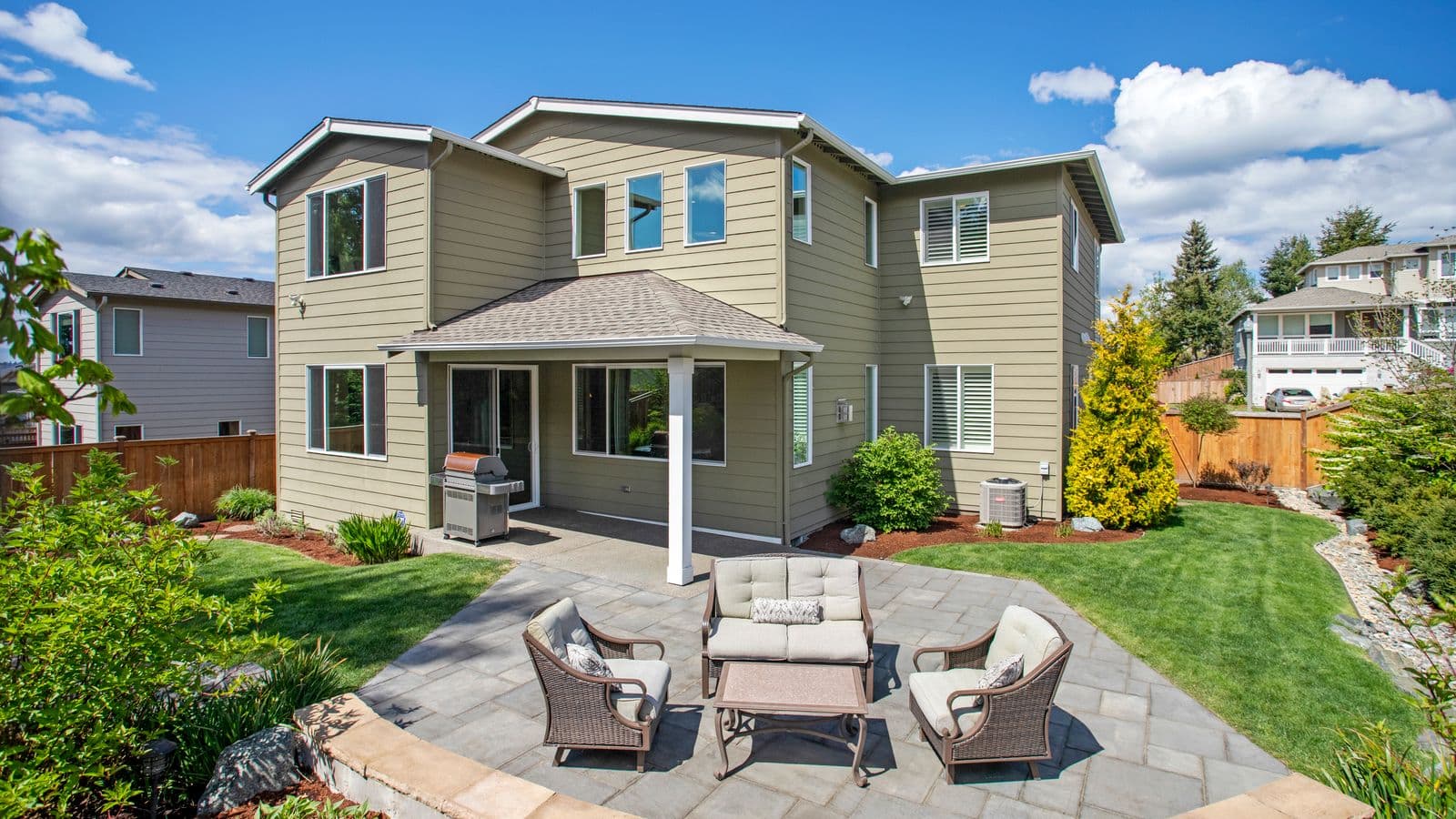
It’s the question we hear almost every day from homeowners across San Diego. You’ve envisioned it—the weekend barbecues, the quiet morning coffees, the perfect spot for the kids to play. You’ve settled on the size, a versatile 20x20 foot space, and now you’ve hit the big question: how much does a 20x20 paver patio cost?
If you’ve done any searching online, you’ve probably been met with a frustratingly wide price range and the classic answer: “It depends.†And while that’s true, it isn’t very helpful when you’re trying to build a real budget. Our team at Modern Yardz believes in transparency. We’re not here to give you vague answers; we’re here to pull back the curtain on the real numbers and the factors that drive them. This is the breakdown you’ve been looking for, based on our years of designing and building custom outdoor spaces right here in our community.
The Real Answer: What’s the Price Range?
Alright, let's get straight to it. For a professionally installed 20x20 (400 square foot) paver patio in the San Diego area, you can generally expect the cost to fall somewhere between $8,000 and $20,000, or even higher.
Whoa. That’s a massive range, right? It might even seem unhelpful at first glance. But that’s the reality of custom construction, and our job is to explain _why_ that gap is so sprawling. The final price tag isn’t just a number pulled from thin air; it’s a detailed calculation based on materials, labor, site conditions, and your specific vision. Think of it less like buying a product off a shelf and more like commissioning a piece of custom furniture. The difference between a simple, functional concrete paver patio on a flat, accessible lot and an intricate natural stone masterpiece on a sloped yard with retaining walls is, frankly, monumental.
This entire cost can be broken down into three primary categories: the pavers themselves (materials), the skilled labor to install them correctly (the biggest variable), and the unique challenges of your specific property (site prep). We’re going to dissect each one, so you can understand exactly where your money goes.
Deconstructing the Cost: Paver Materials
The most visible part of your patio is, of course, the pavers. Their cost per square foot is a foundational element of your budget. But it's not just about picking a color you like; the material choice has dramatic implications for aesthetics, durability, and your final invoice. We've found that homeowners are often surprised by how much this single decision can swing the total price.
Concrete Pavers: The Versatile Workhorse These are, by far, the most common choice, and for good reason. They are manufactured, which means they offer incredible consistency in color, shape, and size. They’re durable, versatile, and come in a staggering array of styles—from smooth, modern slabs to textured, rustic cobblestones. For most projects, they provide the best balance of cost and performance. A standard, high-quality concrete paver will typically run from $4 to $8 per square foot for the material alone.
Brick Pavers: Classic and Timeless Genuine clay brick pavers offer a classic, traditional look that never goes out of style. They hold their color exceptionally well over time because the color is baked through the entire brick, not just on the surface. They are incredibly strong but can be a bit more brittle than concrete pavers, and the cost is often slightly higher, usually in the $6 to $12 per square foot range. Their installation can also be a bit more meticulous.
Natural Stone Pavers: The Premium Choice This is where you enter the high end of the market. We’re talking about materials like flagstone, travertine, bluestone, or slate. Each piece is unique, quarried from the earth, offering an unparalleled, organic beauty. No two natural stone patios are ever exactly alike. This uniqueness and the labor-intensive quarrying process come with a premium price tag. Material costs can range from $10 to $30+ per square foot. They also require more skill to install due to their irregular shapes and thicknesses, which—as we'll see next—also increases labor costs.
Here’s a quick comparison our team often shares with clients:
| Paver Type | Material Cost (per sq. ft.) | Pros | Cons |
|---|---|---|---|
| Concrete Pavers | $4 - $8 | Huge variety, durable, cost-effective | Color can fade over time, can look uniform |
| Brick Pavers | $6 - $12 | Excellent color retention, classic look | More brittle, fewer style options |
| Natural Stone | $10 - $30+ | Unique beauty, extremely durable, premium feel | Highest cost, requires expert installation |
We can't stress this enough—don't just choose based on the material cost. A cheaper paver that requires more intricate cuts or a more demanding installation process can sometimes end up costing nearly as much as a more expensive paver that lays down quickly. It’s a delicate balance, and it’s one of the key areas where professional guidance makes a difference. You can explore some of the beautiful options on our Blog to get inspiration.
The Biggest Factor: Expert Labor and Installation
Here’s the honest truth our team has learned over decades of work: the materials are only one part of the equation. In most cases, labor and site preparation will account for 50-70% of your total project cost. This is the part you can’t see, but it’s the single most critical element for the longevity and beauty of your patio. A cheap installation will fail. Period.
A properly built paver patio is a complex, multi-layered system. It's not just throwing some stones on the ground. Here’s what professional labor costs actually cover:
- Demolition and Removal: Do you have an old, cracked concrete slab or a failing deck that needs to go? That has to be broken up, hauled away, and disposed of properly. This alone can add a significant amount to the initial cost.
- Excavation: This is where the real work begins. We have to dig out the area for your new patio, typically removing 6 to 10 inches of soil and grass across the entire 400 square feet. That’s a lot of dirt.
- Base Preparation (The Non-Negotiable Foundation): This is the absolute heart of a durable patio. We install and compact several inches of a crushed stone aggregate base, followed by a layer of bedding sand. A poorly prepared base is the number one reason patios sink, shift, and become uneven. Our team is meticulous here; we compact the base in layers to ensure it's rock-solid. This step—which is completely invisible in the finished product—is what separates a 5-year patio from a 30-year patio.
- Laying and Cutting: Each paver is laid by hand. For a 20x20 patio, that’s hundreds, sometimes thousands, of individual pieces. The edges of the patio and any curves require precise cuts with specialized saws. This is time-consuming, skilled work. The more complex the pattern (like a herringbone or basketweave), the more cuts and time are required.
- Edge Restraints: To keep the pavers from shifting outward over time, a durable edge restraint (often plastic or concrete) is installed around the entire perimeter.
- Jointing Sand and Compaction: Once the pavers are laid, polymeric sand is swept into the joints. This special sand contains a polymer that hardens when activated with water, locking the pavers together and preventing weeds from growing through.
- Sealing (Optional but Recommended): Applying a high-quality sealant protects the pavers from stains, enhances their color, and can make them easier to clean. We almost always recommend this for our San Diego clients to protect against the sun and outdoor elements.
When you ask, "how much does a 20x20 paver patio cost?" you’re really asking about the cost of this entire, labor-intensive process. Cutting corners on any of these steps, especially the base preparation, is a recipe for catastrophic failure down the road.
Site Conditions: Your Yard's Unique Challenges
No two backyards are the same. A project that’s straightforward at one home can be a logistical nightmare at another, and these unique site challenges have a real impact on the final price. This is where a professional assessment is invaluable—we can spot these issues from a mile away.
- Access: Can we get our equipment (like a small Bobcat for excavation) easily into your backyard? Or does all the dirt have to be moved out and all the material (we're talking tons of stone and sand) have to be moved in by wheelbarrow through a narrow side gate? Limited access can add hundreds, if not thousands, of dollars in pure labor time.
- Slope and Grading: Is your yard perfectly flat? Most aren't. If your yard has a significant slope, we’ll need to do extensive grading work to create a level surface for the patio. This might even require building a small retaining wall to hold back soil, which is a separate cost consideration. Proper drainage is also critical—we have to ensure water flows away from your home's foundation, not toward it.
- Soil Conditions: San Diego is known for having a lot of clay soil, which expands and contracts with moisture. This requires a deeper, more robust base than in areas with sandy, well-draining soil. We have to account for our local geology to build a patio that lasts.
- Utilities and Sprinklers: Are there underground utility lines, irrigation pipes, or drainage systems we need to work around or relocate? This adds complexity and time to the project.
Beyond the Basics: Features That Elevate Your Space (and Budget)
A 20x20 paver patio is a fantastic foundation, but it’s often just the start. Many homeowners want to integrate other features to create a complete outdoor living environment. These are fantastic additions, but it's crucial to budget for them separately.
Our Services extend far beyond just the patio floor. Popular additions include:
- Seat Walls: A low, built-in retaining wall around the edge of the patio provides permanent seating and a beautiful, defined look. This can easily add several thousand dollars to the project depending on the length and material.
- Fire Pits: Whether it’s a simple wood-burning pit or a more complex gas-powered feature, a fire pit becomes an instant gathering spot. Costs can range from $1,500 for a basic kit to over $10,000 for a custom-built gas feature.
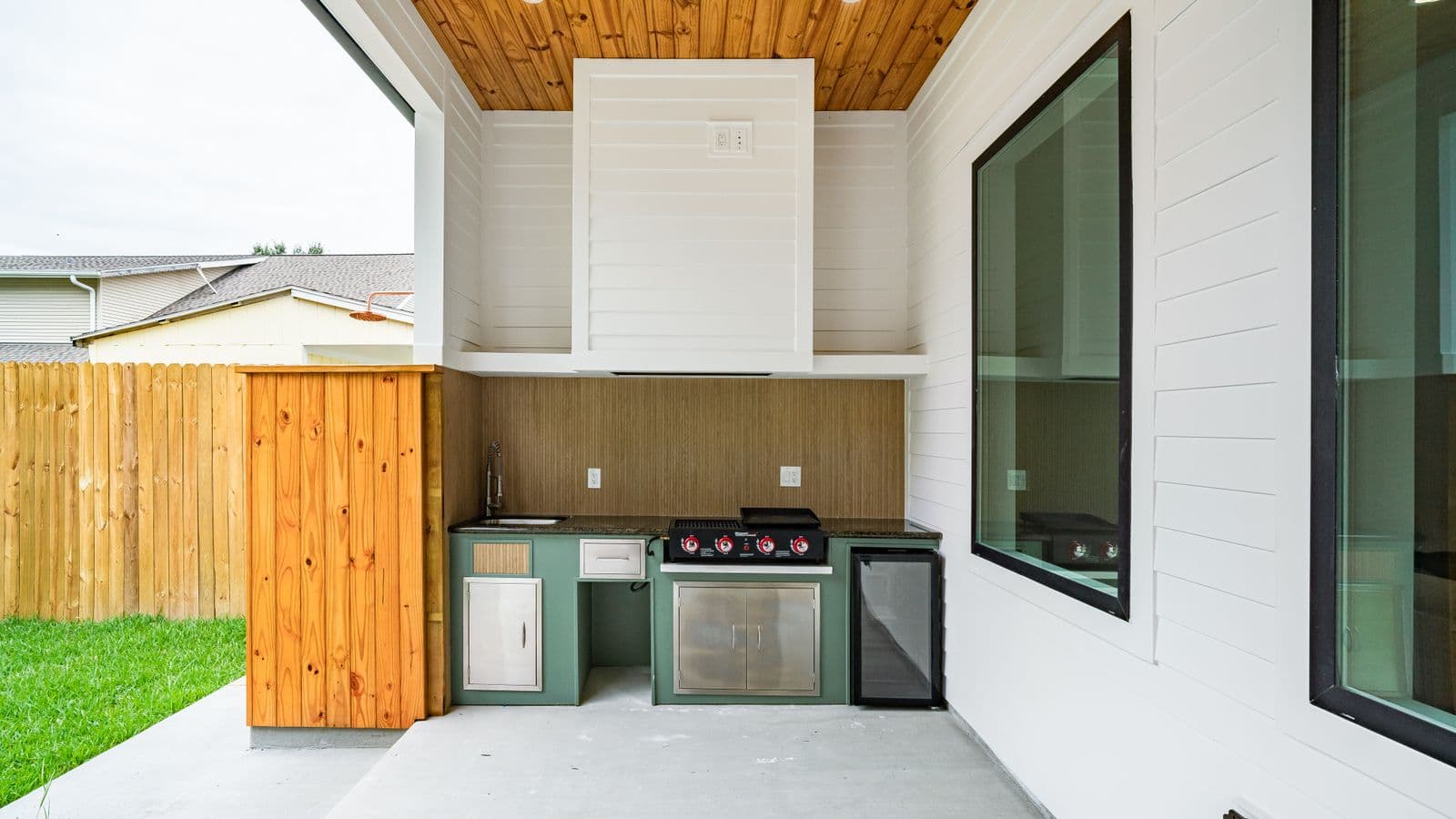
- Outdoor Kitchens: This is a major upgrade, involving structures, countertops, gas lines, and appliances. A simple grill island might start around $5,000, while a full-service kitchen can quickly exceed $20,000 or $30,000.
- Pergolas and Patio Covers: Adding shade is essential in Southern California. A structure to cover part or all of your patio is a separate project with its own significant cost.
- Landscape Lighting: Low-voltage lighting transforms the space at night, adding ambiance and safety. This is often a surprisingly affordable upgrade that makes a huge impact.
Thinking about these elements from the beginning is part of a holistic landscape design process. It’s much more cost-effective to, for example, run a gas line for a future fire pit while the ground is already excavated for the patio.
The DIY Question: Can You Do It Yourself?
We get it. The labor costs can be intimidating, and the temptation to save money by tackling the project yourself is strong. And—let’s be honest—for a small walkway or garden path, a handy homeowner can often achieve a decent result. But for a 400 square foot patio? We urge extreme caution.
The sheer physical labor is formidable. You’ll be excavating and moving approximately 8-10 cubic yards of soil (that’s over 10 tons) and bringing in a similar amount of base material. You’ll also need to rent (and learn how to use) heavy equipment like a plate compactor and a wet saw.
More importantly, the technical skill required for proper base preparation and grading is not something you can learn from a weekend video tutorial. A small mistake in the base compaction or the slope for drainage can lead to a wavy, sinking mess in just a year or two. The cost of having a professional team like ours come in to tear out and redo a failed DIY patio is often _higher_ than it would have been to just do it right the first time.
Our experience shows that professional installation is an investment in peace of mind and long-term value. It’s the difference between a patio you enjoy and a patio you constantly worry about.
So, when you consider the cost of a 20x20 paver patio, remember you're not just buying 400 square feet of stone. You're investing in a complex system, a durable foundation, and a beautiful extension of your home. It’s about creating a space where your family will make memories for years to come. Our team has built our reputation on doing this the right way, and you can learn more about our philosophy on our About page.
Ready to get a real, no-nonsense number for your specific project? That’s what we’re here for. We can walk your property, listen to your vision, and provide a detailed, transparent quote that makes sense. The first step is a simple conversation. We invite you to BOOK MY FREE CONSULTATION through our Contact page, and let’s start planning your perfect outdoor space.
We love sharing our completed projects and design ideas, so be sure to follow our journey on social media to see what’s possible for your own San Diego home. It’s a great way to gather inspiration before we chat!
Start Your Free Design Consultation
Tell us about your project and we'll be in touch within 24 hours. No pressure, no obligation.
Common questions
- How much of a paver patio's cost goes to labor?
- Labor and site preparation typically make up 50-70% of your total project cost, the single biggest variable. It covers demolition, excavation, laying and cutting each paver by hand, edge restraints, jointing sand, and optional sealing. Above all it covers base preparation, the invisible layer that separates a 5-year patio from a 30-year one.
- Which paver material is the most affordable?
- Concrete pavers are the most affordable and most common choice, running $4 to $8 per square foot for the material alone. They're manufactured for consistent color, shape, and size, and come in a huge variety of styles. For most projects they offer the best balance of cost and performance, though their color can fade over time.
- Is natural stone better than concrete pavers?
- Natural stone offers unique, organic beauty and extreme durability, but it sits at the premium end, $10 to $30+ per square foot versus $4 to $8 for concrete. Each piece is quarried and irregular, so it also demands more skill to install, which raises labor costs. Whether it's better depends on your budget and the look you want.
- Can I install a 20x20 paver patio myself?
- It's possible, but for a 400 square foot patio we urge extreme caution. You'd excavate and move roughly 8-10 cubic yards of soil (over 10 tons), rent and learn a plate compactor and wet saw, and master base preparation and grading. A small base or drainage mistake can create a sinking mess within a year or two, often costing more to redo than doing it right.
- How much does it cost to add a fire pit to my patio?
- A fire pit ranges from about $1,500 for a basic wood-burning kit to over $10,000 for a custom gas-powered feature, and it's budgeted separately from the patio. Other popular add-ons include seat walls (several thousand dollars), outdoor kitchens (a grill island starting around $5,000), pergolas, and landscape lighting, which is a surprisingly affordable upgrade.
Ready to design your dream yard?
Tell us about your project. We'll send back a real plan, not a templated quote.
Book My Free Consultation→