Every outdoor space, especially those with varying elevations, often relies on a fundamental, yet frequently overlooked, structural hero: the retaining wall. These robust barriers aren't merely aesthetic features; they're vital engineering components, tasked with battling the relentless forces of gravity, soil pressure, and water. When they falter, the consequences can range from unsightly cracks to catastrophic collapses, jeopardizing safety and property alike. Our team at Modern Yardz has seen it all, from minor shifts to dramatic failures, and we know firsthand the immense importance of knowing how to reinforce a retaining wall before it becomes a crisis.
Here's what we've learned: Proactive reinforcement is always better than reactive repair. In 2026, with increasing attention on property resilience and foundational integrity, understanding the comprehensive strategies for wall stabilization isn't just smart; it's absolutely essential for any homeowner or property manager. We're here to unpack the formidable challenges these walls face and provide a definitive roadmap on how to reinforce a retaining wall effectively and permanently.
Why Retaining Walls Fail: Understanding the Underlying Causes
Before we dive into how to reinforce a retaining wall, we need to understand why they fail. It's a critical, non-negotiable element of effective remediation. Retaining walls are constantly under immense pressure, and their stability hinges on a delicate balance of design, construction, and environmental factors. When this balance is disrupted, failure is inevitable.
One of the most common culprits is inadequate drainage. Water accumulating behind a wall saturates the soil, drastically increasing its weight and hydrostatic pressure. This added burden can push even well-built walls to their breaking point. We've seen situations where a wall that stood firm for years suddenly buckles after a particularly wet season because the original drainage system was either insufficient or had become clogged.
Another significant factor is poor design or construction. Perhaps the wall wasn't built with proper footings, or the materials chosen weren't appropriate for the soil type and load it was expected to bear. Sometimes, the initial compaction of the backfill soil wasn't thorough enough, leading to settling and uneven pressure. Our experience shows that cutting corners during the initial build is a guaranteed path to structural issues down the line. That's why we always emphasize meticulous Seat Retaining Walls construction from the outset.
Overloading is also a concern. If heavy structures, significant landscaping features, or even large trees are placed too close to the top of the wall without accounting for the added weight, it can introduce stresses the wall wasn't designed to handle. Seismic activity, while less frequent, can also play a role, as can repeated freeze-thaw cycles in colder climates, which cause soil expansion and contraction. Each of these factors contributes to the relentless assault on a retaining wall's integrity, making understanding how to reinforce a retaining wall a vital skill.
Spotting the Signs: Is Your Retaining Wall in Distress?
Catching problems early is paramount when considering how to reinforce a retaining wall. Don't wait until it's a full-blown collapse. We've compiled a list of tell-tale signs that indicate your retaining wall might be in distress and in dire need of attention:
- Leaning or Bulging: This is perhaps the most obvious sign. If your wall is no longer perfectly vertical, or if sections of it appear to be bowing outwards, it's a clear indication of excessive pressure. We can't stress this enough: a leaning wall is a failing wall.
- Cracks: Hairline cracks can be normal with age, but large, spreading, or stair-step cracks in masonry or concrete are serious. They suggest structural movement and instability. Pay particular attention to cracks that widen over time.
- Separation: Look for gaps opening between wall sections, or between the wall and the soil behind it. This separation indicates movement and a loss of structural cohesion.
- Water Weeping or Pooling: While some weep holes are designed for drainage, excessive water consistently flowing from the wall, or pooling at its base, points to serious drainage issues behind the structure. This significantly increases the likelihood you'll need to learn how to reinforce a retaining wall.
- Sinking or Shifting: The base of the wall should be stable. If you notice portions of the wall sinking into the ground, or individual blocks shifting out of alignment, the footing may be compromised.
- Efflorescence: A white, powdery substance on the wall's surface, efflorescence is mineral salt deposited by water evaporating from within the wall. It's a visual cue that water is constantly present and moving through the wall, which can weaken it over time.
If you observe any of these symptoms, it's time to act. Ignoring them won't make them disappear; it'll only lead to more costly and complex problems down the road. Our team often begins any discussion about how to reinforce a retaining wall with a thorough visual inspection, as these early indicators are invaluable.
The Professional Assessment: When to Call in the Experts
While some homeowners might feel tempted to tackle minor issues, knowing when to call in professionals for a structural assessment is a game-changer. Honestly, though, for anything beyond superficial cracks or minor cosmetic issues, a professional evaluation is absolutely critical. Modern Yardz offers comprehensive Landscape Design SAN Diego services that always begin with a thorough site analysis, including existing structures like retaining walls.
Our team brings an unflinching eye and years of collective experience to analyze the wall's current state, identify the root causes of its distress, and recommend the most effective strategies for how to reinforce a retaining wall. We'll assess the soil conditions, the existing drainage, the wall's construction, and the surrounding topography. Sometimes, what appears to be a simple lean is actually indicative of a much larger subsurface issue that only an expert can truly diagnose.
We utilize specialized tools and our deep understanding of engineering principles to determine the precise load bearing on the wall, the soil's properties, and the most viable long-term solutions. This isn't just about patching; it's about delivering a permanent fix. Our detailed assessment will lay out the precise plan for how to reinforce a retaining wall, ensuring structural integrity and peace of mind for you. It's a wise investment that protects your property value and, more importantly, safety.
Definitive Methods: How to Reinforce a Retaining Wall
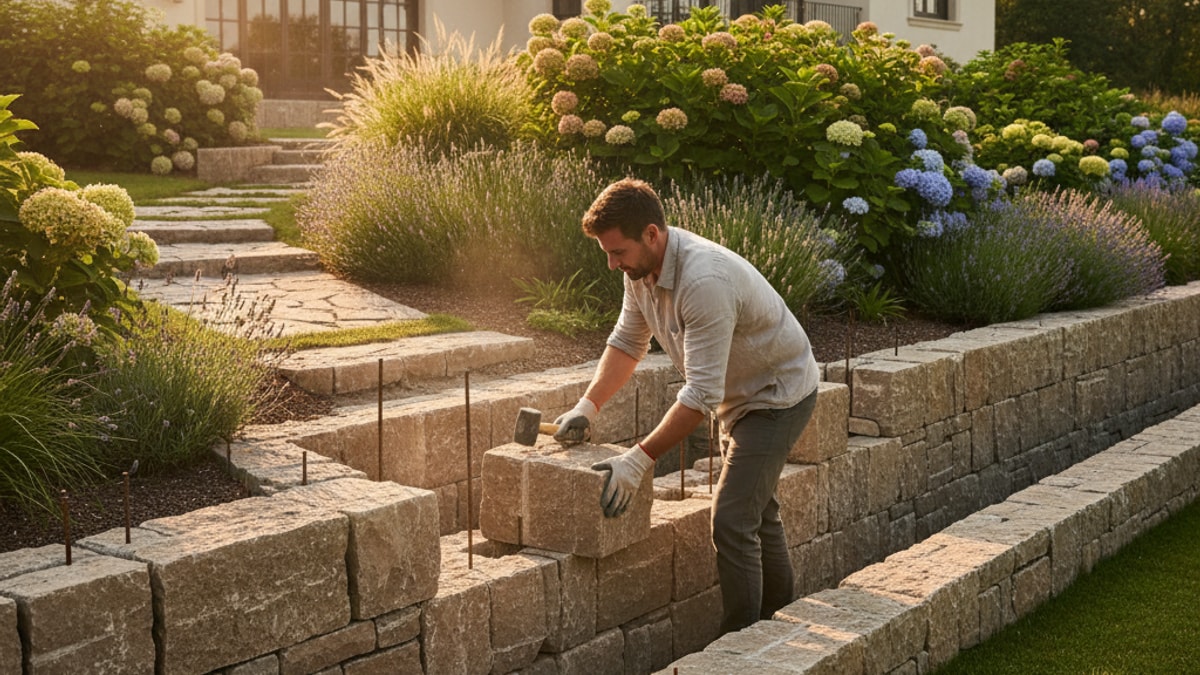
Now, let's get to the core of it: the actual methods we employ to reinforce a failing retaining wall. Our approach isn't one-size-fits-all; it's a nuanced selection based on the specific wall, its failure mode, and the surrounding environment. Here are the primary strategies we utilize:
Improve Drainage Behind the Wall
As we've discussed, water is often the primary antagonist. Improving drainage is frequently the first, and sometimes most impactful, step in knowing how to reinforce a retaining wall. This often involves:
- Installing a French Drain: A trench filled with gravel and a perforated pipe redirects water away from the wall's base. It's incredibly effective.
- Adding Weep Holes: These small openings in the wall allow trapped water to escape, relieving hydrostatic pressure. We'll assess the existing wall for appropriate placement.
- Utilizing Geotextile Fabric: Placed between the backfill and the wall, this fabric prevents soil particles from clogging drainage systems while allowing water to pass through. Our team considers this a critical, non-negotiable element for long-term drainage success.
Incorporate Deadman Anchors
Deadman anchors are a classic, highly effective method for how to reinforce a retaining wall, especially timber or segmental block walls. These are essentially anchors buried deep within the stable soil behind the wall, connected back to the wall face with tie-rods or cables. The buried 'deadman' acts as a counterweight, pulling the wall back into place and resisting forward movement. It's a bit like anchoring a ship, really. This method provides significant passive resistance against soil pressure, making it a formidable reinforcement technique.
Install Geogrid or Geotextile Reinforcement
For walls built with segmental blocks or even for existing walls where the backfill needs stabilization, incorporating geogrid or geotextile layers is a modern, highly effective strategy for how to reinforce a retaining wall. These synthetic mesh materials are laid horizontally within the soil layers behind the wall, extending deep into the stable ground. As the soil settles and compacts, the geogrid locks it together, creating a reinforced soil mass that acts as a coherent, stronger unit. This drastically increases the wall's resistance to overturning and sliding. It's a common technique we apply in many of our Seat Retaining Walls projects, ensuring maximum longevity.
Construct Buttresses or Pilasters
Buttresses are vertical support structures built perpendicular to the main wall, extending outwards from the face. Pilasters are similar but are integrated more seamlessly into the wall's aesthetic, often appearing as thickened columns. Both add significant lateral support, distributing the load over a wider area and resisting bowing or leaning. This method is particularly useful for longer, taller walls that show signs of buckling in the middle. We'll often incorporate these with Concrete SAN Diego construction for maximum strength and aesthetic integration.
Build a Companion Wall or Gabion Baskets
Sometimes, the best way to reinforce a retaining wall is to build another, stronger structure in front of it. A companion wall, often a smaller, more robust barrier, can be constructed at the base of the existing wall to provide additional support. Alternatively, gabion baskets – wire mesh cages filled with rocks – can be stacked against the failing wall. Gabion baskets are incredibly versatile, permeable (excellent for drainage!), and offer substantial mass to resist pressure. They're a practical, sometimes dramatic, solution that we've found delivers real results, especially in challenging environments.
Facelift and Structural Enhancement
For walls that are structurally sound but showing surface deterioration or minor cracking, a comprehensive facelift can also involve structural enhancement. This might mean applying a reinforced concrete overlay, strengthening the existing masonry with rebar and grout injection, or adding a new veneer that is anchored directly into the existing structure. This not only improves aesthetics but also adds a new layer of protective strength. This approach (which we've refined over years) delivers real results in extending the life of your outdoor structures.
Rebuilding: The Last Resort, Sometimes the Best Solution
If a wall is severely compromised, leaning significantly, or showing catastrophic failure, simply knowing how to reinforce a retaining wall might not be enough. In such cases, a complete rebuild is often the safest, most cost-effective long-term solution. While it's a more involved process, it allows us to correct all underlying issues, ensure proper drainage, use modern, robust materials, and adhere to current engineering standards. It's an opportunity to create a brand new, impeccably strong, and beautifully designed feature for your outdoor space. When considering extensive Landscape Design SAN Diego projects, we always evaluate existing structures for their viability for reinforcement versus complete replacement. Sometimes, it's just better to start fresh.
Choosing the Right Reinforcement Method
Deciding on the best way to reinforce a retaining wall isn't a simple matter. It involves a careful analysis of several factors. Our team takes into account the wall's existing condition, the type of soil, the slope of the land, the amount of pressure the wall is experiencing, and of course, your aesthetic preferences and budget. We prioritize long-term stability and safety above all else, ensuring that whatever method we choose, it provides a durable, reliable solution.
We'll walk you through the pros and cons of each viable option, explaining why we recommend a particular strategy for your specific situation. This collaborative approach ensures you're fully informed and comfortable with the plan moving forward. Here's a quick comparison of common methods:
| Reinforcement Method |
Best For |
Key Benefits |
Considerations |
| Improved Drainage |
Walls with hydrostatic pressure issues |
Prevents future damage, relatively non-invasive |
May require excavation, not a structural fix itself |
| Deadman Anchors |
Timber or segmental block walls |
Strong lateral support, hidden once installed |
Requires significant excavation behind the wall |
| Geogrid/Geotextile |
New construction or severe soil pressure |
Creates reinforced soil mass, very stable |
Extensive excavation and layering required |
| Buttresses/Pilasters |
Longer walls, visible bowing/leaning |
Adds substantial lateral strength, design element |
Can alter appearance, requires concrete work |
| Gabion Baskets |
Severely failing walls, drainage needs |
Excellent drainage, robust, natural look |
Bulky appearance, labor-intensive installation |
| Reinforced Concrete Overlay |
Deteriorated surfaces, minor structural flaws |
Aesthetic upgrade, adds strength, seals surface |
Requires skilled application, surface prep is key |
The Modern Yardz Difference: Expertise You Can Trust
When you're faced with a failing retaining wall, you need a partner with deep industry expertise. That's where Modern Yardz comes in. We don't just know how to reinforce a retaining wall; we understand the entire ecosystem of outdoor living spaces. From initial Landscape Design SAN Diego to the intricate construction of Patio Covers Pergolas SAN Diego and Outdoor Kitchens SAN Diego, our holistic approach ensures every element of your yard functions perfectly and lasts for years. We're not just building yards; we're building spaces where memories are made.
Our commitment to quality extends beyond simply fixing problems. We integrate robust solutions into a larger vision for your property, enhancing both functionality and beauty. Whether it's ensuring your new Pools AND Spas are supported by pristine retaining walls or making sure your Artificial Turf SAN Diego complements perfectly stable hardscaping, we handle every step of the process with care and precision.
We understand the crucial role that Seat Retaining Walls play in the overall stability and aesthetic of your property. Our team considers all aspects, from the foundation to the finish, to deliver results that exceed expectations. It's why we've become a trusted name for homeowners seeking durable, beautiful outdoor transformations. We pride ourselves on transparent communication, impeccable craftsmanship, and delivering solutions that truly last.
In 2026, property owners are more discerning than ever, demanding not just fixes but future-proof solutions. We deliver exactly that. Our expertise in how to reinforce a retaining wall is just one facet of our broader capability to create custom outdoor spaces that bring your vision to life. From robust Pavers SAN Diego installations to intricate Landscape Lighting SAN Diego schemes, we cover it all.
Ready to upgrade your backyard? Let’s design the outdoor space you’ve been dreaming of. Visit our website to learn more about our comprehensive services and see how we can transform your outdoor space into something extraordinary.
Long-Term Maintenance for Reinforced Walls
Knowing how to reinforce a retaining wall is only half the battle; maintaining it for the long haul is just as important. Once your wall has been reinforced, it's not a 'set it and forget it' situation. Regular inspections are critical. We recommend a visual check at least once a year, and definitely after any significant rainfall or seismic activity. Look for any new cracks, shifts, or drainage issues. Keep the area around the wall clear of debris, which can impede drainage.
Ensure that any vegetation planted near the wall has root systems that won't compromise its integrity. Certain trees and shrubs can cause problems over time, so careful plant selection is key to maintaining stability. We also advise checking weep holes and drainage systems periodically to ensure they aren't clogged with soil or leaves. A little proactive care goes a long way in preserving the longevity of your newly reinforced retaining wall. Our team can provide specific maintenance guidelines tailored to your wall's construction and environment, ensuring its resilience for many years to come.
Transform your outdoor space into something extraordinary. We're here to help make that a reality, starting with the foundational strength of your retaining walls. Our collective expertise means we're not just providing a service; we're delivering peace of mind and enduring beauty.



.webp)
.webp)