The sizzle of a gourmet meal, the clinking of glasses, the laughter of loved ones – an outdoor kitchen truly elevates the home experience. We've seen a dramatic surge in their popularity, especially as homeowners increasingly seek to extend their living spaces beyond traditional walls. But there's a formidable adversary to this outdoor bliss: relentless heat. As we navigate 2026, many homeowners are grappling with a core challenge: how to cool off an open outdoor kitchen effectively, transforming it from a sun-baked sweatbox into a genuinely comfortable culinary haven.
It's a question our team hears constantly. We're not just talking about minor discomfort; we're talking about temperatures that can make cooking outdoors feel like a grueling chore, even when the setting is otherwise idyllic. You've invested in a beautiful space, perhaps even a custom Outdoor Kitchens setup, and you deserve to enjoy every moment there without feeling the oppressive weight of the sun. Our goal here at Modern Yardz is to provide definitive, actionable strategies on how to cool off an open outdoor kitchen, drawing from years of hands-on experience and a deep understanding of outdoor living dynamics.
Strategic Shade Solutions: The First Line of Defense
When you're thinking about how to cool off an an open outdoor kitchen, the most immediate and impactful approach involves strategic shade. It seems obvious, right? But the nuances of effective shading are often overlooked. We're not just talking about throwing up a flimsy umbrella. We're talking about integrated, purposeful structures that block the sun's most aggressive rays throughout the day, ensuring a palpable difference in ambient temperature. Our experience shows that a well-designed shade structure can reduce surface temperatures by 10-15 degrees Fahrenheit, sometimes even more, a significant, sometimes dramatic shift in comfort.
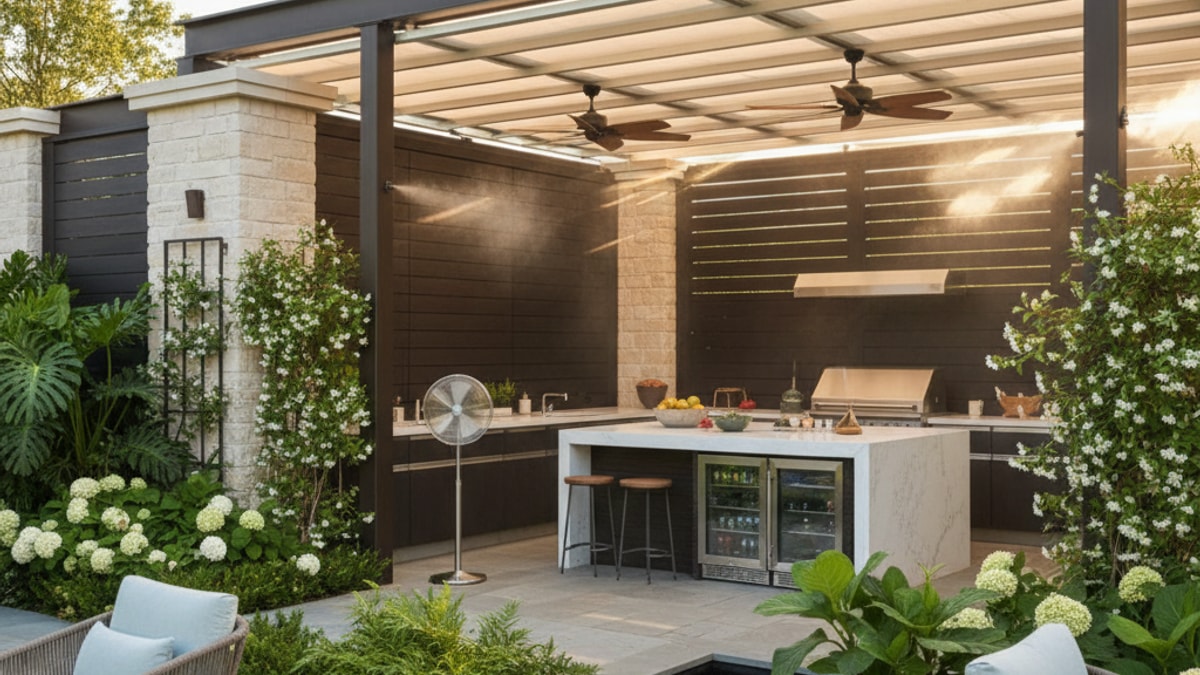
Consider a custom-built pergola or a robust patio cover. These aren't just aesthetic additions; they're critical, non-negotiable elements for thermal comfort. A Patio Covers Pergolas installation, for instance, offers a permanent, architectural solution. We've found that open-lattice pergolas, while beautiful, sometimes need additional layers like retractable canopies or shade sails to truly provide the necessary sun protection, especially during peak sun hours. This layered approach is something we often recommend. Solid patio covers, on the other hand, offer complete overhead protection, creating a truly shaded 'room' outdoors. We've seen clients transform sweltering spaces into cool oases with these kinds of installations. It’s about understanding the sun's path and designing for maximum interception. Honestly, though, this is where expert Landscape Design truly comes into its own; we factor in solar angles, prevailing winds, and even surrounding foliage to craft a shade strategy that works tirelessly for you.
Another option, often underestimated, is strategically planted trees or large, dense shrubs. While they take time to mature, their long-term benefits are substantial. Deciduous trees offer shade in summer and allow warming sun through in winter. It’s a natural, sustainable way to contribute to how to cool off an open outdoor kitchen, and it adds immense beauty and ecological value to your property. Our team considers the long game, not just immediate fixes, when designing truly comfortable outdoor spaces. Integrating living elements with architectural ones provides a holistic approach that pays dividends for years to come.
Harnessing the Power of Air Movement: Fans and Misters
Once you've tackled direct solar radiation, the next crucial step in how to cool off an open outdoor kitchen is enhancing air movement. Stagnant, hot air is your enemy. Even in shaded areas, a lack of air circulation can make the space feel oppressive. That's where fans and misters become indispensable. We're talking about more than just a portable box fan you might bring out for a picnic. We're talking about integrated, high-performance systems designed for continuous outdoor use.
Ceiling fans, specifically rated for outdoor use, are exceptionally effective. Mounted under a solid patio cover or a robust pergola, they create a steady, cooling breeze that can make a 10-degree difference in perceived temperature. We've installed countless outdoor ceiling fans, and the feedback is consistently positive. They distribute air efficiently, pushing hot air away and creating a more comfortable microclimate. For a truly professional setup, consider multiple fans strategically placed to ensure even air distribution across your cooking and dining areas. It’s a simple addition, but it's a game-changer.
Now, for a more aggressive cooling strategy, especially in drier climates, consider misting systems. These systems release a fine, almost imperceptible mist that cools the air through evaporative cooling. When tiny water droplets evaporate, they absorb heat from the surrounding air, dropping the temperature significantly. We've seen these systems reduce temperatures by up to 20 degrees on scorching days. They're particularly effective when paired with fans, as the air movement helps distribute the cooled, humidified air more widely. When you're serious about how to cool off an open outdoor kitchen, a well-designed misting system is an investment that truly delivers. Our team ensures these systems are installed discreetly and efficiently, integrating seamlessly into your outdoor aesthetic without becoming an eyesore. It’s all about enhancing comfort without compromising style. We mean this sincerely: comfort and aesthetics can, and absolutely should, coexist harmoniously in your outdoor living space.
Smart Materials and Surfaces: Reflecting the Heat Away
Believe it or not, the materials you choose for your outdoor kitchen surfaces and surrounding areas play a colossal role in the overall temperature. Dark, dense materials like certain types of stone or dark Pavers absorb and radiate a tremendous amount of heat, turning your patio into a veritable griddle. This heat then radiates upwards, contributing significantly to that stifling feeling. So, when considering how to cool off an open outdoor kitchen, think light, reflective, and permeable.
Our team always guides clients toward lighter-colored materials for countertops, flooring, and even wall cladding. Light-colored Concrete or light-hued natural stone for your outdoor kitchen's base and surrounding patio can make a massive difference. These materials reflect sunlight rather than absorbing it, keeping surface temperatures much lower. We've seen the stark contrast between a dark slate patio and a light travertine patio under the same sun; the difference in radiated heat is undeniable, often 15-20 degrees or more on the surface itself. That's the reality. It all comes down to smart material selection at the outset of any Landscape Design project.
Furthermore, consider permeable surfaces where appropriate. While not always feasible directly within the kitchen area, surrounding paths or dining areas can benefit from materials like decomposed granite or permeable pavers that allow water to drain through. This can prevent heat island effects by allowing some heat to dissipate into the ground, rather than being trapped and re-radiated. Even the choice of grill cover can impact heat absorption – lighter colors are always preferable for anything exposed directly to the sun. It's the small details that collectively create a vastly more comfortable environment. We can't stress this enough: thoughtful material choices are foundational to effective cooling.
Water Features and Evaporative Cooling
Water is inherently cooling, and incorporating water features into your outdoor kitchen design can offer a surprising thermal benefit, alongside their undeniable aesthetic appeal. This is another excellent strategy for how to cool off an open outdoor kitchen, particularly in dry climates where evaporative cooling is most effective. We're not suggesting you build a full-scale Pools AND Spas next to your grill (though that sounds amazing!), but smaller, well-placed elements can help.
Fountains, reflecting pools, or even strategically placed large urns with bubbling water can introduce a subtle, constant evaporative effect. As the water evaporates, it draws heat from the surrounding air, lowering the ambient temperature. It's a gentle, natural process that contributes to a more refreshing atmosphere. We've found that even a modest fountain near the dining area of an Outdoor Kitchens can make a noticeable difference in comfort, especially when a light breeze carries the cooled, humidified air through the space. Plus, the soothing sounds of moving water are incredibly relaxing, adding another layer of enjoyment to your outdoor retreat.
For a more intentional approach, consider outdoor cooling towers or evaporative coolers. These devices work on the same principle as misters but are designed to cool larger volumes of air more actively. They draw in hot, dry air, pass it over water-saturated pads, and then release significantly cooler, humidified air. While they require a bit more space and power, they can be remarkably effective in reducing the temperature of an entire outdoor living zone. Our team can help assess if such a solution is suitable for your specific layout and climate, ensuring it integrates seamlessly into your overall Landscape Design vision. These are robust solutions for serious heat challenges.
Ventilation and Airflow: Clearing the Heat
Even with shade and active cooling, an outdoor kitchen generates its own heat, primarily from the grill itself. If this heat isn't effectively vented, it can quickly negate other cooling efforts. This brings us to another critical aspect of how to cool off an open outdoor kitchen: proper ventilation. While open-air kitchens benefit from natural airflow, direct exhaust for high-heat cooking appliances is still paramount.
An overhead range hood, specifically designed for outdoor use, is a non-negotiable component for serious grill masters. It pulls heat, smoke, and cooking odors directly away from the cooking surface and the surrounding area. Without it, that intense heat from your burners and grill surface just radiates outwards, making your immediate cooking zone unbearable. We've seen homeowners try to skip this, only to find their beautiful outdoor kitchen becomes a sauna during meal prep. It's simply not worth the discomfort.
Furthermore, consider the overall layout of your outdoor kitchen in relation to prevailing winds. Our team always factors in natural wind patterns during the Landscape Design phase. Positioning your kitchen to catch a natural breeze can significantly aid in dissipating heat and smoke. Sometimes, even subtle changes in orientation or the placement of structural elements can dramatically improve airflow. It's about working with nature, not against it, to create a comfortable, functional outdoor space. We work to ensure every element, from the largest structure to the smallest detail, works in concert to achieve optimal comfort and enjoyment for you and your guests.
Understanding Key Cooling Methods: A Comparison
When we discuss how to cool off an open outdoor kitchen, it's clear there isn't a single magic bullet. Instead, it's a layered approach, combining various strategies for maximum effect. Here's a quick comparison of the primary methods we've explored, helping you weigh the pros and cons for your specific needs. Our team regularly evaluates these options for clients, customizing solutions to fit unique spaces and budgets.
| Method |
Primary Benefit |
Best For |
Cost Range (Approx.) |
Maintenance Level |
Notes |
| Patio Covers/Pergolas |
Direct Sun Blockage |
Permanent shade, architectural integration |
Medium to High |
Low |
Excellent for year-round shade. Can be combined with fans or misters. Crucial for structural heat reduction. |
| Outdoor Fans |
Air Circulation, Perceived Cooling |
Any shaded area, under covers/pergolas |
Low to Medium |
Low |
Creates immediate comfort. Best when paired with shade. |
| Misting Systems |
Evaporative Cooling, Temperature Drop |
Dry climates, intense heat |
Medium |
Medium |
Highly effective in reducing ambient temperature. Requires clean water supply. |
| Strategic Planting |
Natural Shade, Aesthetic Value |
Long-term cooling, ecological benefits |
Low to Medium |
Medium |
Takes time to mature. Offers dynamic shade through seasons. Integrates beautifully into natural landscapes. |
| Light-Colored Materials |
Heat Reflection |
Preventing surface heat absorption |
Low (design choice) |
Low |
A foundational design choice that prevents heat buildup. Essential for flooring, countertops, and walls. |
| Water Features |
Subtle Evaporative Cooling |
Aesthetic appeal, minor ambient cooling |
Low to Medium |
Medium |
Best as a supplementary cooling method. Adds ambiance. |
| Outdoor Range Hoods |
Heat/Smoke Exhaust |
Direct removal of cooking heat/fumes |
Medium |
Low |
Essential for gas grills and high-heat cooking. Prevents heat buildup directly at the source. |
Long-Term Vision: Integrated Design for Enduring Comfort
Achieving lasting comfort in your outdoor kitchen isn't just about adding a fan or a misting system. It's about a comprehensive, integrated Landscape Design approach. We've seen too many piecemeal solutions that fall short, providing only temporary relief. Our team believes in designing outdoor spaces where every element works together, from the initial layout to the final finishing touches. This holistic perspective is paramount when considering how to cool off an open outdoor kitchen for the long haul.
For example, when we design Outdoor Kitchens, we're not just placing appliances. We're considering sun exposure throughout the day, prevailing wind patterns, material heat absorption, and the strategic placement of shade structures like Patio Covers Pergolas. We're thinking about how water features might enhance evaporative cooling and how Landscape Lighting can extend the usability of the space into cooler evenings. It's a complex puzzle, but one our experts excel at solving.
In 2026, homeowners are looking for more than just functionality; they want spaces that truly enhance their lifestyle, spaces they can enjoy year-round. That means addressing comfort challenges head-on during the design phase. We're committed to creating outdoor environments that are not only beautiful but also supremely comfortable and functional. This approach (which we've refined over years) delivers real results, allowing you to maximize your outdoor living experience without battling the elements. Ready to Upgrade Your Backyard? Let’s Design the Outdoor Space You’ve Been Dreaming Of.
The investment in a well-cooled outdoor kitchen is an investment in your home's value and your family's enjoyment. Don't let the heat deter you from savoring those incredible outdoor meals and memories. With the right strategies and thoughtful design, your open outdoor kitchen can become the most coveted spot in your home, a true oasis of culinary delight and relaxation, even on the warmest days.
FAQs on Cooling Outdoor Kitchens
Q: What's the most effective way to cool an outdoor kitchen in a very hot, dry climate?
A: In hot, dry climates, our team recommends a combination of robust shade structures, like a solid patio cover, paired with a high-quality misting system or evaporative cooler. The dry air allows evaporative cooling to be incredibly efficient, dropping temperatures dramatically. Don't forget powerful outdoor-rated fans to circulate that cooled air.
Q: Can planting trees really help how to cool off an open outdoor kitchen?
A: Absolutely. Strategically planted deciduous trees can provide excellent shade during the hot summer months, significantly reducing direct sun exposure and ambient temperatures. They do take time to mature, but the long-term benefits for both comfort and property value are immense. We often integrate them into our Landscape Design plans.
Q: Are outdoor ceiling fans truly effective, or are they just for show?
A: Outdoor ceiling fans are genuinely effective, especially when installed under a solid overhead structure like a patio cover or pergola. They create a consistent, cooling breeze that can lower the perceived temperature by several degrees, making the space much more comfortable. We've found them to be a critical component for air movement.
Q: What materials should I choose for my outdoor kitchen to help keep it cool?
A: Opt for lighter-colored, reflective materials for countertops, flooring, and surrounding surfaces. Light-hued Pavers or Concrete and light-toned natural stone will absorb less heat from the sun compared to darker materials, preventing excess heat radiation. This is a foundational design choice for thermal comfort.
Q: How important is ventilation for the grill in an outdoor kitchen's cooling strategy?
A: Proper ventilation for your grill is paramount, even in an open outdoor kitchen. An outdoor-rated range hood directly above your cooking surface pulls away intense heat, smoke, and odors, preventing them from lingering and making the immediate cooking area uncomfortably hot. It's a non-negotiable for serious outdoor cooking.
Q: Can water features really make a difference in how to cool off an open outdoor kitchen?
A: Yes, water features can contribute to cooling through evaporative effects, especially in drier climates. While not as impactful as direct shade or misting systems, a well-placed fountain or reflecting pool can introduce subtle humidity and a refreshing ambiance, helping to slightly lower ambient temperatures. It's a nice supplementary measure.
Q: What's the best way to combine different cooling methods for maximum effect?
A: The most effective approach is a layered strategy: start with robust overhead shade (like a Patio Covers Pergolas), then add active air movement with outdoor fans. Supplement with misting systems in dry areas, choose light-colored materials, and ensure proper grill ventilation. Our team specializes in integrating these elements seamlessly.
Q: Does the orientation of my outdoor kitchen matter for cooling?
A: Absolutely. The orientation of your Outdoor Kitchens relative to the sun's path and prevailing winds is a crucial design consideration. Positioning it to minimize harsh afternoon sun exposure and to catch natural breezes can significantly improve comfort. We always factor this into our initial Landscape Design plans.
Q: Are there any new cooling technologies for outdoor kitchens in 2026 I should know about?
A: While core principles remain, we're seeing advancements in smart controls for fans and misters, allowing for automated temperature regulation, and more energy-efficient evaporative coolers. Integrated smart home systems are also making it easier to manage all your outdoor comfort elements from one interface. The emphasis is on efficiency and seamless control.
Q: What's the initial step if I want to cool down my existing outdoor kitchen?
A: The best first step is to assess your current shade situation. If you lack adequate overhead protection, that's usually the most impactful area to address first. Consider adding a Patio Covers Pergolas or a robust shade sail. From there, you can layer on air movement solutions like fans and misters. We're here to help you evaluate your specific needs and develop a tailored plan.
Q: How much maintenance do outdoor cooling systems typically require?
A: Most outdoor cooling systems, like fans and misters, require relatively low maintenance. Fans need occasional cleaning, and misting systems benefit from periodic nozzle cleaning to prevent mineral buildup, especially in hard water areas. We design our systems for durability and ease of care, ensuring long-term performance with minimal fuss.
Q: Can I use Landscape Lighting to help with cooling?
A: While Landscape Lighting doesn't directly cool the space, it significantly extends the usability of your outdoor kitchen into the cooler evening hours. By creating a beautifully lit and inviting ambiance, you're encouraged to use the space when natural temperatures are more comfortable. It enhances the overall outdoor experience, making evening use more appealing.
Q: Is it possible to integrate cooling elements into a small outdoor kitchen?
A: Absolutely. Even small outdoor kitchens can benefit significantly from cooling elements. Compact outdoor fans, strategically placed retractable shade sails, and even small, wall-mounted misting lines can make a huge difference in comfort for more intimate spaces. It's all about intelligent design and maximizing the functionality of every square foot.
Q: What role does professional design play in effectively cooling an outdoor kitchen?
A: Professional Landscape Design is crucial. Our experts consider every variable—sun angles, wind patterns, material science, and integrated systems—to create a cohesive cooling strategy tailored to your unique space. We ensure all elements work together efficiently and aesthetically, avoiding costly trial-and-error and delivering optimal comfort from day one. Transform Your Outdoor Space Into Something Extraordinary.
We understand the desire for an exceptional outdoor living experience. It's why we pour our collective expertise into every Outdoor Kitchens and Landscape Design project, ensuring that your vision for an outdoor oasis doesn't evaporate with the rising temperatures. The perfect outdoor kitchen isn't just about the grill or the countertops; it's about the entire environment, making it a place where you genuinely want to be, comfortably, for hours on end.



.webp)
.webp)