The allure of outdoor living has never been stronger, especially as we navigate 2026 with an increased appreciation for home and hearth. Imagine searing steaks under the open sky, hosting memorable gatherings, or simply enjoying a quiet morning coffee amidst the gentle hum of your own private oasis. For many, the ultimate expression of this lifestyle is a thoughtfully designed outdoor kitchen. And when it comes to combining durability, aesthetic versatility, and a touch of classic charm, pavers stand out as an undeniable material choice.
Here at Modern Yardz, our team has seen a significant, sometimes dramatic shift in how homeowners envision their exterior spaces. It's not just about a grill anymore; it's about a fully integrated culinary experience. We're talking about a space that’s both functional and beautiful, a true extension of your indoor living. If you’re considering an upgrade, understanding how to build an outdoor kitchen with pavers is a critical, non-negotiable element of your planning. We’re here to walk you through every nuanced, formidable step of the process, sharing the collective expertise we've honed over years of transforming backyards.
Why Pavers Are the Unflinching Choice for Outdoor Kitchens
Before we dive into the nitty-gritty of how to build an outdoor kitchen with pavers, let's talk about why this material often becomes our top recommendation. Honestly, though, it comes down to a few key advantages that are hard to ignore. Pavers, unlike poured Concrete SAN Diego (which has its own fantastic applications, mind you), offer incredible flexibility in design. You're not limited to a single slab; instead, you're working with individual units that can be arranged in countless patterns, colors, and textures. This means your outdoor kitchen can truly reflect your personal style, whether you're aiming for rustic charm, contemporary sleekness, or something in between.
Durability is another massive factor. Pavers are engineered to withstand the elements – sun, rain, temperature fluctuations – without cracking or significant wear. This is especially important for an area that'll see heavy use and constant exposure. We've found that properly installed Pavers SAN Diego can last for decades with minimal maintenance, which is a huge benefit in the long run. They're also permeable, allowing water to drain through joints, which can help prevent pooling and reduce runoff, a consideration that's increasingly important in modern landscape design. When you commit to how to build an outdoor kitchen with pavers, you're investing in a resilient, long-lasting structure.
The Crucial Planning and Design Phase
Every impeccable outdoor space begins with meticulous planning. This isn't just about sketching out where the grill goes; it's about envisioning the entire flow, functionality, and aesthetic of your new Outdoor Kitchens SAN Diego. Our team can't stress this enough: failing to plan is planning to fail, especially when you're tackling something as intricate as how to build an outdoor kitchen with pavers. We start by asking our clients about their lifestyle. How often will you use it? What kind of cooking do you enjoy? Will it be primarily for entertaining or daily family meals? These questions guide the initial layout and appliance selection.
Site selection is paramount. You'll want a spot that's convenient to your main house but also offers a pleasant ambiance. Consider sun exposure, prevailing winds (nobody wants smoke blowing into their guests' faces), and proximity to existing utility lines. Our Landscape Design SAN Diego specialists excel at optimizing these factors, ensuring the design works with your existing yard, not against it. We'll help you visualize the space, perhaps integrating it with a new patio or a stunning Pools AND Spas area. This comprehensive approach, which we've refined over years, delivers real results, ensuring your outdoor kitchen fits seamlessly into your overall outdoor living vision. Before you even think about laying that first paver, you'll need a clear, detailed blueprint.
Laying the Foundation: Base Preparation for Longevity
Here's what we've learned: the longevity and stability of your outdoor kitchen, especially one built with pavers, hinges entirely on the quality of its foundation. You simply cannot skimp on base preparation. This is the grueling road warrior hustle of the entire project, but it's critical. First, you'll need to excavate the area to the proper depth, typically around 8-12 inches, allowing for base material and the pavers themselves. Ensuring a slight slope for drainage – usually a quarter-inch per linear foot – is absolutely vital to prevent water from pooling around your structure, which can lead to shifting or damage over time.
Once excavated, the area needs to be compacted. Our team uses professional-grade plate compactors to achieve a dense, stable sub-base. Then, we lay down a layer of geotextile fabric. This isn't just an optional extra; it's a critical, non-negotiable element. It prevents the base material from mixing with the underlying soil, maintaining stability and preventing weed growth. On top of this, we spread a generous layer of crushed gravel or road base, typically 6-8 inches thick, compacting it in lifts (smaller layers) to ensure maximum density. This multi-layered, meticulously compacted base is what will support the weight of your entire outdoor kitchen, providing an unwavering platform for how to build an outdoor kitchen with pavers that will stand the test of time.
Constructing the Paver Structure: Walls and Counters
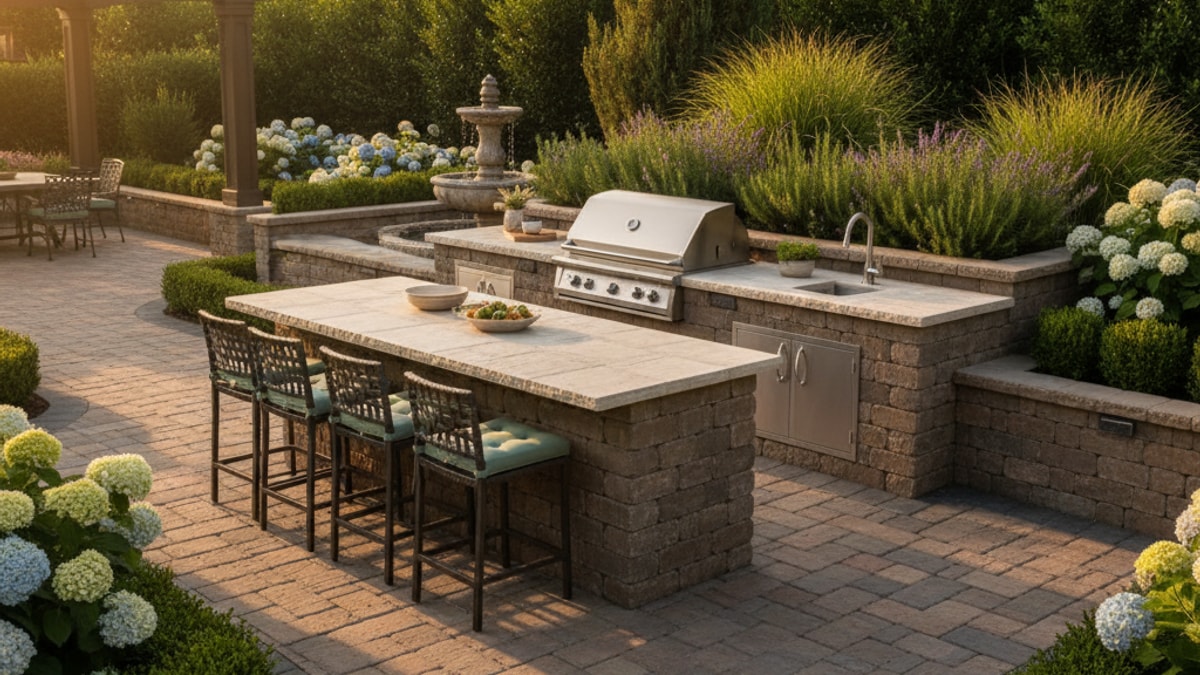
Now, this is where it gets interesting, and you truly start to see your vision take shape. With a solid base established, you're ready to start building the structural elements of your outdoor kitchen using your chosen pavers. This involves laying courses of pavers, much like building with bricks, to form the walls and supports for your countertops and appliances. We recommend using a high-quality, polymer-modified sand in the paver joints to lock everything into place and enhance durability. For structural integrity, especially for taller walls or those supporting heavy appliances, it's often wise to use concrete footings or a reinforced concrete block core within your paver walls.
Precision is key here. Every paver needs to be level and plumb, ensuring a professional, clean finish. Our experience shows that using string lines and a long level consistently will save you immense headaches down the line. We can't stress enough the importance of proper bonding patterns – staggering joints for strength and visual appeal. This isn't just about aesthetics; it's about creating a structurally sound unit. When you're thinking about how to build an outdoor kitchen with pavers, remember that the quality of this step dictates the overall integrity of your entire outdoor culinary space. It's a challenging, often moving-target objective, but incredibly rewarding when done right.
Comparison of Common Paver Types for Outdoor Kitchens
Choosing the right paver is a significant decision that impacts both the look and longevity of your outdoor kitchen. Here's a quick comparison to help you weigh your options:
| Paver Type |
Key Characteristics |
Pros |
Cons |
| Concrete Pavers |
Most common, wide variety of shapes, sizes, colors. |
Affordable, highly durable, vast design options, easy to replace. |
Can fade over time, may require sealing to prevent staining. |
| Natural Stone Pavers |
Flagstone, bluestone, granite, travertine. Unique textures. |
Luxurious appearance, incredibly durable, slip-resistant, retains value. |
More expensive, heavier (requires stronger base), color variation can be high. |
| Brick Pavers |
Classic, rustic look. Made from fired clay. |
Timeless aesthetic, good slip resistance, natural earth tones. |
Limited color palette, can be prone to efflorescence, may chip over time. |
| Permeable Pavers |
Designed with wider joints for water infiltration. |
Excellent drainage, environmentally friendly, reduces runoff. |
Slightly higher installation cost, requires specific base materials, larger joints. |
Integrating Utilities: The Invisible Network
An outdoor kitchen isn't truly functional without the right utilities. This means gas lines for grills and side burners, water lines for sinks, electrical outlets for mini-fridges and blenders, and, of course, proper drainage. Planning for these services happens early in the design phase, long before you even consider how to build an outdoor kitchen with pavers. You'll need to work with licensed professionals – electricians and plumbers – to ensure everything is up to code and, more importantly, safe. Trying to cut corners here is a catastrophic mistake we've unfortunately seen happen.
Our team always emphasizes the importance of routing these lines discreetly within your paver structure. We're talking about running conduit for electrical wires and proper piping for gas and water, all protected from the elements and everyday wear. This ensures a clean, uncluttered look that doesn't detract from the beauty of your paver work. Remember, access points for maintenance are also crucial. You'll want to design in removable sections or panels to allow for future servicing without dismantling the entire structure. This meticulous attention to the unseen details is what truly elevates a good outdoor kitchen to a great one. It's comprehensive, honestly. We mean this sincerely: it runs on genuine connections, both literally and figuratively.
Countertops, Appliances, and Finishing Touches
With the paver structure complete and utilities roughed in, it's time for the exciting part: selecting your countertops and appliances. For countertops, durability and weather resistance are paramount. Materials like granite, quartz, concrete, or even high-quality stainless steel are popular choices, each offering distinct aesthetic and functional properties. We often recommend materials that complement the color and texture of your chosen Pavers SAN Diego, creating a cohesive, visually appealing space. Our team can guide you through these selections, ensuring they stand up to the outdoor environment and your culinary demands.
When it comes to appliances, the market in 2026 offers an incredible array of outdoor-rated options – from built-in grills and smokers to refrigerators, ice makers, and even pizza ovens. We advise investing in high-quality, marine-grade stainless steel appliances for maximum longevity and performance. Integrating these seamlessly into your paver framework requires precise measurements and careful installation. Don't forget the final, crucial elements like Landscape Lighting SAN Diego (essential for evening use!), a stylish Patio Covers Pergolas SAN Diego for shade, or perhaps a cozy Fire Features or Outdoor Fire PIT Chula Vista nearby to complete the ambiance. These elements are what truly transform a functional area into a captivating outdoor living room. Seriously, they make all the difference when you learn how to build an outdoor kitchen with pavers.
Maintaining Your Paver Outdoor Kitchen
Even the most robust outdoor kitchen built with pavers requires a degree of care to maintain its pristine condition and ensure its longevity. It's not a set-it-and-forget-it scenario, but the maintenance is generally quite manageable. Regular cleaning is key. Our team recommends a gentle wash with a mild detergent and water, perhaps with a stiff brush for stubborn spots. For more intensive cleaning, or to remove grease stains from cooking, there are specialized paver cleaners available that won't harm the material or the polymeric sand in the joints.
Sealing your pavers is another critical step, one we often perform during the initial installation or recommend as a follow-up a few months later. A high-quality paver sealer will enhance the color, protect against staining, and inhibit weed growth in the joints. We recommend reapplying sealer every 2-3 years, depending on the sealer type and the amount of traffic and exposure your outdoor kitchen receives. And another consideration: keep an eye on those paver joints. If you notice sand washing out, it's a good idea to sweep in some fresh polymeric sand to maintain the integrity of your structure. This proactive approach ensures your investment remains beautiful and functional for many years, truly maximizing the value of knowing how to build an outdoor kitchen with pavers.
The Modern Yardz Advantage: Beyond Just Building
At Modern Yardz, we don't just build outdoor kitchens; we craft experiences. We understand that knowing how to build an outdoor kitchen with pavers involves far more than just laying stone. It requires a holistic vision, an unflinching commitment to quality, and a deep understanding of both design principles and practical construction techniques. Our full-service approach means we handle every step, from the initial Standard Design Package all the way through construction and the final touches. We believe that your outdoor space should be an authentic reflection of your aspirations, a place where memories are made and cherished.
We've found that homeowners often appreciate our nuanced perspective on integrating various elements. For instance, pairing an outdoor kitchen with stunning Seat Retaining Walls can create defined zones for cooking and dining, while intelligent Artificial Turf SAN Diego can provide a low-maintenance, vibrant green backdrop. We take pride in our local roots and decades of expertise, ensuring that every project, whether it's a complex outdoor kitchen or a simple fire pit, is executed with precision and care. While many options in the market take a one-size-fits-all approach, we've built our solution specifically around custom outdoor spaces. That's the key difference, honestly. We're here to help you transform your outdoor space into something extraordinary. This approach (which we've refined over years) delivers real results, ensuring your outdoor kitchen fits seamlessly into your overall outdoor living vision. We mean this sincerely: it runs on genuine connections.
FAQ: Your Paver Outdoor Kitchen Questions Answered



.webp)
.webp)