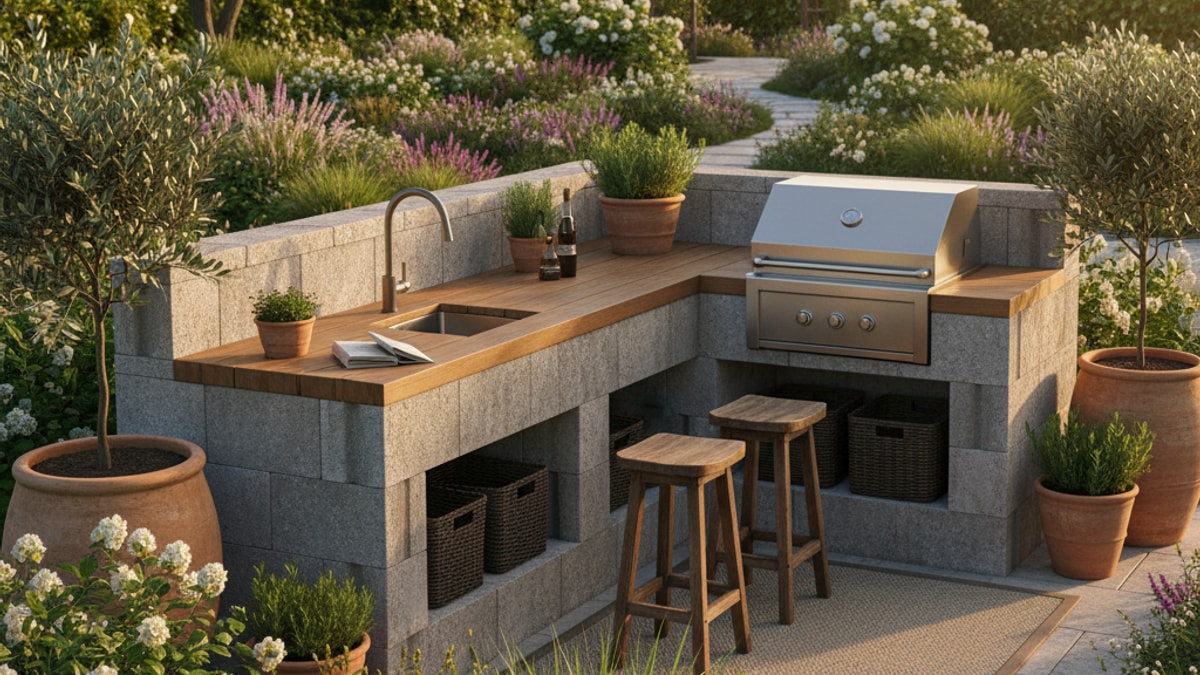
The allure of an outdoor kitchen has only intensified as we move further into 2026. Homeowners are seeking ways to extend their living spaces, blurring the lines between indoor comfort and the refreshing embrace of the outdoors. It's not just about grilling anymore; it's about creating a dedicated culinary and entertainment zone that elevates your entire property. And honestly, when it comes to durability, cost-effectiveness, and design flexibility, it's hard to beat the venerable concrete block.
Here at Modern Yardz, we've seen countless visions come to life, from sprawling outdoor oases to intimate al fresco dining nooks. We understand the intrinsic value of a well-executed outdoor space. That's why we're diving deep into the definitive guide on how to build an outdoor kitchen with concrete blocks, ensuring you're equipped with the knowledge to craft a lasting, beautiful addition to your home. This isn't just theory; it's practical, hands-on insight honed by years of transforming backyards.
Why Concrete Blocks are Your Best Bet for an Outdoor Kitchen
When we talk about foundational materials for any outdoor structure, concrete blocks, often called CMUs (Concrete Masonry Units), consistently rise to the top. They're formidable, offering an almost unflinching resilience against the elements that many other materials simply can't match. This makes them a critical, non-negotiable element for a structure exposed to varying weather conditions year-round. We've found that their inherent strength and thermal mass are particularly advantageous for enduring the rigors of an active cooking environment. Think about it: heat from grills, spills, relentless sun, perhaps even a rogue sprinkler—concrete blocks take it all in stride.
Beyond their brawn, concrete blocks offer remarkable design versatility. You're not restricted to a utilitarian aesthetic; far from it. We've seen projects where the raw, industrial look of concrete is embraced, and others where it serves as a robust canvas for stunning veneers like natural stone, stucco, or even decorative tiles. This adaptability means your outdoor kitchen can seamlessly integrate with your existing Landscape Design SAN Diego, whether your style is ultra-modern, rustic, or traditionally elegant. When considering how to build an outdoor kitchen with concrete blocks, this flexibility is a huge win, allowing for truly custom, personalized spaces.
Durability, as we've noted, is paramount. Unlike wood, concrete blocks won't rot, warp, or succumb to insect infestations. They're non-combustible, which is obviously a significant safety advantage when you're working with open flames and high heat. Our experience shows that with proper construction, a concrete block outdoor kitchen can last for decades, requiring minimal maintenance. That's a serious return on investment, especially in 2026 where homeowners are increasingly prioritizing long-term value and sustainability in their outdoor projects. We also appreciate their availability and relative affordability compared to some other structural options. It's a pragmatic choice, really.
Planning Your Outdoor Culinary Oasis: The Blueprint for Success
Before you even think about laying that first block, meticulous planning is your golden ticket. This phase is where we often see the most significant, sometimes dramatic, shifts in a project's trajectory. It’s absolutely crucial. What kind of Outdoor Kitchens SAN Diego do you envision? Is it a simple grilling station, or a full-service setup complete with a sink, fridge, and perhaps even a pizza oven? Consider the flow of your existing outdoor space. Where will people gather? How will you move between the kitchen, dining area, and other zones like your Pools AND Spas or a cozy Fire Features?
Key Considerations for Your Outdoor Kitchen Design:
- Location, Location, Location: Proximity to your indoor kitchen for convenience, but far enough away to avoid smoke entering your home. Consider prevailing winds. Access to utilities (gas, water, electricity) is paramount, as running these lines can add complexity and cost. We can't stress this enough: utility access dictates much of the viable placement.
- Size and Layout: Sketch out your ideal footprint. Will it be a straight run, an L-shape, or a U-shape? Think about the 'work triangle' principle, even outdoors. You'll want your grill, sink, and prep areas to be easily accessible to one another. This is where a detailed Landscape Design SAN Diego truly shines, as it integrates the kitchen seamlessly into your broader outdoor vision.
- Appliance Selection: This is a big one. What appliances are non-negotiable? A built-in grill is standard, but what about side burners, a refrigerator, an ice maker, or even a warming drawer? Appliance dimensions will dictate your cabinet openings. Our team has found that choosing your primary appliances early simplifies the entire structural design process, especially when you're figuring out how to build an outdoor kitchen with concrete blocks that will accommodate everything precisely.
- Countertop Material: Beyond aesthetics, think durability and maintenance. Granite, concrete, tile, and stainless steel are popular choices. Each has its pros and cons regarding heat resistance, staining, and upkeep. We often guide clients through this decision, weighing their lifestyle against material characteristics.
- Storage: Where will you keep grilling tools, dishes, and other essentials? Built-in cabinets, drawers, or open shelving? Concrete blocks can easily form the structure for these, which is a key advantage when you're planning how to build an outdoor kitchen with concrete blocks effectively.
Getting this planning phase right sets you up for a smooth, successful build. We recommend taking your time here, even consulting with professionals for Outdoor Kitchens SAN Diego to ensure no critical detail is overlooked.
Essential Tools and Materials for Your Concrete Block Kitchen
Alright, you've got your plan. Now, let's talk about the arsenal you'll need. Building with concrete blocks isn't rocket science, but it does require the right tools and materials to ensure structural integrity and a professional finish. Here's what we recommend having on hand:
Tools:
- Safety Gear: Gloves, safety glasses, hearing protection (non-negotiable, truly).
- Measuring & Layout: Tape measure, chalk line, level (torpedo, 2-foot, and 4-foot), string line, batter boards, speed square.
- Masonry Tools: Trowels (pointing, brick, margin), brick hammer, cold chisel, jointing tool, wheelbarrow, mixing tub (or concrete mixer for larger projects).
- Cutting & Shaping: Angle grinder with diamond blade (for cutting blocks), possibly a wet saw for precision cuts.
- Miscellaneous: Shovel, tamper, rebar cutter, utility knife.
Materials:
- Concrete Blocks (CMUs): Standard 8x8x16-inch blocks are common, but consider cap blocks, corner blocks, and half blocks for a cleaner finish. Estimate your quantity carefully; it's better to have a few extra.
- Mortar Mix: Type S or Type N mortar is typically recommended for structural masonry. Pre-mixed bags make it easier.
- Rebar: Essential for reinforcing the block structure, especially for taller sections or those supporting heavy countertops. Vertical and horizontal reinforcement is often critical.
- Concrete: For the foundation slab. Our Concrete SAN Diego experts often advise on the best mix for local conditions.
- Gravel/Crushed Stone: For the sub-base of your foundation.
- Vapor Barrier: Heavy-duty plastic sheeting for under the slab.
- Countertop Material: As decided in your planning phase.
- Veneer/Finish Material: Stucco, stone veneer, tile, etc.
- Anchors/Fasteners: For securing appliances and countertops.
Having everything organized before you start will save you a tremendous amount of time and frustration. We've seen projects stall simply because a critical tool was missing. Preparation, as they say, prevents poor performance.
Laying the Foundation: The Unseen Hero
This step, often undervalued, is the absolute bedrock of your entire outdoor kitchen. You simply can't skip or skimp on a solid foundation, especially when building an outdoor kitchen with concrete blocks. Without it, you're inviting cracks, settling, and structural failure down the line. We mean this sincerely: a stable foundation ensures longevity.
- Site Preparation: Clear the area of any vegetation, rocks, or debris. Dig down to virgin soil, removing any loose fill. The depth will depend on local frost lines and your specific design, but generally, you'll want to go at least 6-8 inches deep for your gravel base and concrete slab. We always recommend checking local building codes for specific requirements.
- Excavation and Grading: Ensure the area is level. Use stakes and string lines to mark out the exact footprint of your kitchen. A slight slope away from any permanent structures is advisable for drainage.
- Gravel Base: Lay down 4-6 inches of compacted gravel or crushed stone. This provides excellent drainage and a stable base for your slab. Compact it thoroughly with a plate compactor or hand tamper. This layer is a game-changer for stability.
- Vapor Barrier and Rebar: Install a heavy-duty vapor barrier over the compacted gravel. This helps prevent moisture from wicking up into your concrete. Lay down a grid of rebar, spaced typically 12-18 inches apart, elevated slightly off the vapor barrier using rebar chairs. This reinforcement is critical for slab strength. For more complex foundation needs, our Concrete SAN Diego team can provide invaluable guidance.
- Pouring the Concrete Slab: Pour your concrete, ensuring it's level and smooth. Use a straightedge or screed board to level it, and a bull float to smooth the surface. Allow the concrete to cure properly, which usually takes several days, keeping it moist to prevent rapid drying and cracking. This is a process that can dramatically impact the finished product.
Remember, your foundation needs to be strong enough to support not just the concrete blocks, but also the heavy appliances, countertops, and any veneer you plan to add. This isn't just about how to build an outdoor kitchen with concrete blocks; it's about building it right, from the ground up.
Constructing the Concrete Block Structure
With your robust foundation in place, it's time for the truly satisfying part: watching your outdoor kitchen take shape, course by course. This is where the vision starts to materialize. We've found that patience and precision are your most valuable assets here.
- First Course (Dry Run): Before mixing any mortar, lay out your first course of concrete blocks dry on the foundation. This allows you to fine-tune your layout, mark where blocks need to be cut, and ensure everything fits perfectly. Adjust as needed. This dry run is an often-overlooked step that saves immense headaches later.
- Mixing Mortar: Follow the manufacturer's instructions for mixing your mortar. Consistency is key—you want a workable mix that's not too wet (which makes it hard to manage) or too dry (which makes it difficult to spread and bond). We always say, 'practice makes perfect' when it comes to mortar consistency.
- Laying the First Course (The Bed Joint): Apply a thick, even bed of mortar (about 1/2 inch) along your layout lines. Carefully set your first block into the mortar, ensuring it's level and plumb. Tap it gently with the handle of your trowel if needed. Continue laying the first course, checking for level and alignment frequently. Scrape off any excess mortar that squeezes out.
- Subsequent Courses: Apply mortar to the top of the previous course (bed joint) and to the ends of the blocks (head joints). Stagger your blocks in a running bond pattern, similar to brickwork, ensuring vertical joints are offset by half a block. This interlocking pattern is critical for structural integrity. Always check for level, plumb, and alignment as you go. We recommend using a string line stretched between corner blocks as a guide for straightness.
- Incorporating Reinforcement: If your design calls for rebar, insert vertical rebar into the cores of the blocks, filling the cores with concrete or grout for added strength. Horizontal rebar can be laid into the mortar joints for additional reinforcement, particularly over openings for appliances. This isn't just an 'extra step'; it's a structural necessity for a resilient build.
- Creating Openings: As you build up the walls, create openings for your appliances (grill, refrigerator, sink, access doors). Frame these openings with blocks, ensuring they're sized precisely for your chosen units. You'll likely need to cut some blocks to achieve these dimensions. A lintel (a horizontal support beam) made of steel or precast concrete will be necessary over wider openings to support the blocks above. When you understand how to build an outdoor kitchen with concrete blocks and integrate appliances, the results are truly seamless.
- Utilities Integration: Plan for conduit and piping as you build. It's far easier to run electrical lines for outlets or lighting (perhaps even Landscape Lighting SAN Diego for evening ambiance) and gas lines for your grill during construction than to retrofit them later. We can't stress this enough; future-proofing your utilities is a massive time and cost saver. Consult with licensed professionals for all utility hookups.
- Capstone or Countertop Support: Once your walls reach the desired height, you'll need to prepare for your countertop. This might involve a final course of cap blocks for a finished edge, or pouring a concrete slab directly on top of the block walls as the base for your chosen countertop material. The method here depends heavily on your chosen countertop and its weight.
Working methodically, checking your work constantly, and not rushing will ensure a straight, strong, and durable structure. That's the key to how to build an outdoor kitchen with concrete blocks that stands the test of time.
Finishing Touches: From Raw Block to Refined Beauty
Once the basic concrete block structure is complete, the real transformation begins. This is where your outdoor kitchen sheds its utilitarian skin and emerges as a true showpiece. It's an exciting phase, honestly, seeing the vision come to life in such a dramatic way.
1. Countertop Installation:
Your countertop is both a functional work surface and a major aesthetic component. The choice you made during the planning phase now comes to fruition. Whether it's granite, poured Concrete SAN Diego, tile, or stainless steel, ensure it's properly supported and securely fastened to your block structure. For heavy materials like granite, professional installation is often recommended. We've found that a well-chosen countertop can really define the character of the entire kitchen, making it a critical, non-negotiable element of the overall design.
2. Veneer and Facing:
This is where the concrete blocks disappear, replaced by your chosen finish material. Options are virtually limitless:
- Stucco: A popular, cost-effective choice that offers a smooth, clean finish. It's incredibly versatile and can be colored to match almost any palette.
- Stone Veneer: Natural or manufactured stone veneer provides a luxurious, high-end look. It's applied directly to the concrete blocks with mortar. Our team often advises clients on selecting the right stone to complement their Pavers SAN Diego or other hardscaping elements.
- Tile: Ceramic, porcelain, or natural stone tiles can create unique patterns and add vibrant color. They're durable and relatively easy to clean.
- Wood or Composite Paneling: For a warmer, more contemporary feel, panels can be attached to furring strips secured to the blocks. Just ensure they're rated for outdoor use and weather resistance. This can be a significant, sometimes dramatic, shift in aesthetic.
Regardless of your choice, proper preparation of the block surface (e.g., applying a scratch coat for stucco or a bonding agent) is essential for adhesion and longevity. We can't stress this enough: the finish needs to be as durable as the structure underneath.
3. Appliance Installation and Hookups:
This is the moment of truth for your chosen appliances. Carefully install your grill, refrigerator, sink, and any other components into their designated openings. This often involves precise measurements and careful maneuvering. CRITICAL: All gas, water, and electrical hookups MUST be performed by licensed professionals. This isn't a DIY step; it's a matter of safety and compliance with building codes. Our team often coordinates with these specialists to ensure a seamless process. Getting this right is a fundamental part of how to build an outdoor kitchen with concrete blocks safely and effectively.
4. Lighting and Accessories:
Don't forget the details! Integrated Landscape Lighting SAN Diego can dramatically enhance usability and ambiance, extending your entertaining hours well into the evening. Consider task lighting over prep areas and accent lighting to highlight architectural features. Other accessories like storage drawers, trash pull-outs, and even built-in sound systems can elevate the functionality and enjoyment of your outdoor kitchen. We've found that these thoughtful additions truly make a space feel complete.
Durability Comparison: Concrete Blocks vs. Other Options
When we're advising clients on how to build an outdoor kitchen with concrete blocks, we often get questions about how they stack up against other popular materials. It's a valid query, and one we're happy to address with a clear, unflinching look at the facts. In 2026, choices abound, but not all are created equal in terms of longevity, maintenance, and overall value. This comparison helps illustrate why we frequently recommend concrete blocks for their formidable attributes.
| Feature |
Concrete Blocks |
Steel Framing |
Wood Framing |
Pre-fabricated Kits |
| Durability |
Excellent; fireproof, rot/pest resistant, weather-hardy. |
Very good; rust-resistant (if galvanized), stable. |
Fair; prone to rot, pests, warping, fire risk. |
Varies by material; usually good for specific components. |
| Cost |
Moderate; material costs are low, labor can vary. |
Moderate to High; materials more expensive, quicker build. |
Low; materials are cheapest, but short lifespan. |
High; convenience premium, limited customization. |
| Customization |
Excellent; highly flexible for shape, size, and finish. |
Good; flexible framework, but requires specific cladding. |
Good initially, but long-term issues limit options. |
Limited; fixed designs and sizes. |
| Maintenance |
Low; primarily focused on the finish material. |
Low; inspect for rust (rare with proper finish). |
High; requires regular sealing, painting, pest checks. |
Low to Moderate; depends on kit materials. |
| Fire Resistance |
Excellent; non-combustible. |
Good; non-combustible, but heat can warp. |
Poor; highly combustible. |
Varies; typically good for appliance enclosures. |
| DIY Friendliness |
Moderate; requires masonry skills, tools. |
High; often bolt-together, lighter. |
High; common carpentry skills. |
High; often modular, assembly required. |
As you can see, concrete blocks present a compelling argument for those prioritizing a permanent, resilient structure. While a steel frame offers good durability, its cost can be prohibitive for some, and wood, while initially cheaper, presents a relentless, often losing battle against the elements over time. Pre-fabricated kits offer convenience, but they often lack the bespoke, integrated feel we strive for in our Outdoor Kitchens SAN Diego projects. When you consider how to build an outdoor kitchen with concrete blocks, you're investing in a solution that combines robust performance with significant aesthetic potential.
Long-Term Care and Enjoyment of Your Outdoor Kitchen
Building an outdoor kitchen with concrete blocks is a testament to solid construction, but even the most formidable structures benefit from a little ongoing care. Our team always emphasizes that proactive maintenance is the easiest way to ensure your investment continues to deliver joy for years to come. That's the reality. It all comes down to a few simple practices.
First, regular cleaning is paramount. Spills and grease splatters are inevitable in any kitchen, outdoor or not. Wiping down surfaces and cleaning your grill after each use prevents unsightly buildup and potential staining, especially on porous countertop materials. For your concrete block base, particularly if it's stucco or stone veneer, a gentle wash with a hose and soft brush occasionally will remove dirt and grime. Avoid harsh chemicals, as they can damage finishes.
Periodically inspect your structure. Look for any signs of cracking in the mortar joints or veneer, though with proper construction, these should be minimal. Check appliance connections (gas, water, electrical) to ensure they're secure and free from leaks or corrosion. If you have a Patio Covers Pergolas SAN Diego nearby, ensure its integrity, too, as it offers protection. Small issues caught early are always easier and less costly to fix than neglected problems that escalate.
During colder months, if your climate experiences freezing temperatures, consider winterizing your water lines to prevent pipes from bursting. Covering your grill and other sensitive appliances can also extend their lifespan and protect them from harsh weather. We've found that a little foresight goes a long way in preserving the pristine condition of your outdoor culinary space. Investing in quality covers for your appliances is a small expense that yields significant protective dividends.
Finally, the most important aspect of long-term care is simply enjoying your outdoor kitchen! It's been built to be used, to gather friends and family, and to create unforgettable memories. Whether you're hosting a lively summer barbecue or enjoying a quiet morning coffee, your concrete block outdoor kitchen is designed to be a central hub of your outdoor living experience. This approach (which we've refined over years) delivers real results in homeowner satisfaction. That's why we're so passionate about helping homeowners understand how to build an outdoor kitchen with concrete blocks that truly becomes an extension of their lifestyle.
Ready to Upgrade Your Backyard? We believe that every outdoor space has untapped potential. Transforming your yard into a functional, beautiful extension of your home is what we do best. Let's design the outdoor space you've been dreaming of.
Frequently Asked Questions About Building with Concrete Blocks
Can I really build an outdoor kitchen with concrete blocks myself?
Yes, absolutely. While it's a significant project requiring careful planning and some basic masonry skills, many homeowners successfully undertake building an outdoor kitchen with concrete blocks as a DIY endeavor. We always recommend thorough research, detailed plans, and patience for the best results.
How long does it typically take to build an outdoor kitchen with concrete blocks?
The timeline varies dramatically based on the complexity of your design, your experience level, and how much time you can dedicate. A simple grilling station might take a few weekends, while a full-service kitchen could take several weeks or even months. Our team finds that proper planning can significantly streamline the process.
What's the best type of concrete block to use for an outdoor kitchen?
Standard 8x8x16-inch concrete masonry units (CMUs) are the most common and versatile choice. You'll also want to consider cap blocks for finished edges and possibly half blocks or corner blocks for cleaner construction. We always advise selecting blocks rated for exterior use.
Do I need a concrete slab foundation, or can I build directly on dirt?
No, you absolutely need a proper concrete slab foundation. Building directly on dirt will lead to settling, cracking, and structural failure over time. A reinforced concrete slab provides the stable, level base essential for the longevity of your outdoor kitchen.
How do I ensure my outdoor kitchen is level and plumb?
Consistent use of a level, string lines, and a plumb bob throughout the building process is critical. Regularly check each course of blocks as you lay them. We recommend doing a dry run of your first course to ensure accurate measurements and layout.
What are the best countertop options for a concrete block outdoor kitchen?
Popular choices include granite, poured concrete, tile, and stainless steel. Each offers different aesthetics and durability. Consider factors like heat resistance, maintenance, and how well it complements your chosen finish material.
How do I run utilities (gas, water, electricity) to my outdoor kitchen?
It's crucial to plan for utilities during the initial design phase and integrate conduit and piping as you build the block structure. All utility hookups, including gas lines for your grill or electrical for outlets, must be performed by licensed professionals to ensure safety and code compliance.
What kind of finish materials can I use over concrete blocks?
Concrete blocks are incredibly versatile. You can apply stucco for a smooth finish, natural or manufactured stone veneer for a rustic or luxurious look, or various outdoor tiles. You can even leave some blocks exposed for an industrial aesthetic, though most opt for a veneer for aesthetic enhancement.
Is it difficult to cut concrete blocks for custom shapes or openings?
Cutting concrete blocks requires the right tools, primarily an angle grinder with a diamond blade or a wet saw for precise cuts. It's a manageable task, but safety gear (eye and ear protection, gloves) is essential. Take your time and measure twice, cut once.
How do I protect my outdoor kitchen from the elements in 2026?
While concrete blocks are incredibly durable, protecting your appliances with covers is highly recommended. For climates with freezing temperatures, winterize water lines. Consider incorporating a Patio Covers Pergolas SAN Diego for shade and additional weather protection.
Can I build an outdoor kitchen with a built-in smoker or pizza oven?
Absolutely! Concrete blocks are an excellent material for constructing the base and surrounds for built-in smokers or pizza ovens due to their heat resistance and structural integrity. Just ensure proper ventilation and follow appliance-specific installation guidelines.
How important is ventilation for an outdoor kitchen grill?
Ventilation is critical, even outdoors. While not as enclosed as an indoor kitchen, ensuring proper airflow around your grill helps dissipate heat, smoke, and grease. Some high-end grills require specific venting systems. Always follow the manufacturer's recommendations for your specific grill.
What if I'm not confident in my DIY skills for this project?
That's perfectly understandable! Building a substantial structure like an outdoor kitchen can be daunting. We recommend consulting with experienced professionals for Outdoor Kitchens SAN Diego. Our team offers comprehensive Landscape Design SAN Diego and build services to bring your vision to life without the stress of DIY.
How much does it cost to build an outdoor kitchen with concrete blocks?
Costs vary widely based on size, chosen appliances, countertop materials, and whether you DIY or hire professionals. Concrete blocks themselves are quite affordable, making the base structure cost-effective. We've found that most of the budget goes towards appliances, finishes, and professional utility hookups.
Are there specific building codes I need to be aware of?
Yes, absolutely. Local building codes can vary significantly. You'll likely need permits for new construction and definitely for gas, electrical, and plumbing installations. We strongly advise checking with your local building department before starting any construction to ensure compliance and avoid costly rework.
Building an outdoor kitchen with concrete blocks isn't just a project; it's an investment in your lifestyle, a commitment to creating enduring memories right in your own backyard. It's about crafting a space where culinary adventures unfold under the open sky, a place for gathering, laughter, and delicious food. We've dedicated ourselves to helping homeowners realize these outdoor dreams, understanding that a well-built space brings immeasurable joy and value. Let's design the outdoor space you've been dreaming of, ensuring it's not only beautiful but also built to last for generations.



.webp)
.webp)