An outdoor kitchen isn't just an addition to your backyard; it’s a fundamental transformation of your lifestyle. It's about bringing the heart of your home—the kitchen—out into the open air, creating a hub for entertainment, relaxation, and incredible food. But the journey from a simple patch of grass to a sizzling grill station can feel formidable. We get it. The question of how to build an outdoor kitchen island is one we hear constantly, and in 2026, the options and technologies have never been more exciting or, frankly, more complex.
Our team at Modern Yardz has spent years designing and constructing these beautiful, functional spaces. We've seen what works, what doesn't, and where homeowners often stumble. This isn't just about stacking bricks and dropping in a grill. It's about thoughtful design, durable materials, and a deep understanding of how you'll actually use the space. We're here to pull back the curtain and share our professional process for how to build an outdoor kitchen island that not only looks stunning but stands the test of time.
The Blueprint: Planning Your Outdoor Kitchen Island
Before a single tool is lifted, the most critical work happens on paper. Rushing this stage is the number one mistake we see. A well-thought-out plan saves you catastrophic headaches and budget overruns later. Let’s be honest, this is crucial. The first real step in learning how to build an outdoor kitchen island is envisioning its role in your life.
Start with location. Where will it live? You need to consider prevailing winds (you don't want smoke blowing back into the house or onto your guests), sun exposure, and proximity to your indoor kitchen. How far are you willing to walk for a forgotten bottle of ketchup? It sounds trivial, but it matters. The flow between your indoor and outdoor spaces should feel seamless. We also think about the overall yard layout. A project of this scale should complement, not compete with, your existing landscape. This is where a holistic Landscape Design SAN Diego plan becomes invaluable, ensuring every element works in harmony.
Next, think about size and layout. An island can be a simple linear counter or a sprawling U-shaped entertainment hub with bar seating. The key is creating functional zones: a hot zone (grill, side burners), a cold zone (refrigerator, ice bin), a wet zone (sink), and a dry zone (prep space, storage). A common mistake in figuring out how to build an outdoor kitchen island is not leaving enough counter space. We recommend at least 24 inches of clear counter on either side of the grill. You need a place to put down a tray of raw burgers and another for the perfectly cooked ones. Simple, right? But it's so often overlooked.
Choosing Your Foundation: Frame & Base Construction
This is where your island takes physical shape. The structure needs to be absolutely unflinching—it’s supporting thousands of pounds of appliances and countertops while being exposed to the elements year-round. You have two primary options for the frame: welded steel studs or concrete masonry units (CMUs), also known as cinder blocks. The path you choose here is a foundational decision in how to build an outdoor kitchen island.
Our team has found that galvanized steel framing offers incredible precision and flexibility. It's lighter than block, which can be a factor if you're building on an existing structure, and it makes running utility lines (gas, electric, water) much cleaner. However, it requires specific tools and skills to assemble correctly. CMU construction, on the other hand, is rock-solid and fireproof. It’s a more traditional method and offers immense durability. The downside? It's heavy, labor-intensive, and less forgiving if you need to make adjustments.
No matter which frame you choose, it needs a proper footing. You can't just build this on top of the grass. An outdoor kitchen island requires a solid, level base, which usually means a reinforced concrete slab. If you have an existing patio made of high-quality Pavers SAN Diego, it might be sufficient, but we always recommend an inspection to ensure it can handle the concentrated weight. Often, the best solution is to pour a dedicated Concrete SAN Diego foundation for the island itself, ensuring it will never shift or settle. This is a critical, non-negotiable element of how to build an outdoor kitchen island that will last for decades.
Material Framing Comparison: Steel vs. CMU Block
| Feature |
Galvanized Steel Studs |
Concrete Masonry Units (CMU) |
| Weight |
Lightweight, easier to handle. |
Extremely heavy, requires significant labor. |
| Durability |
Highly durable, resistant to rot and insects. |
Virtually indestructible, fireproof. |
| Flexibility |
Excellent for custom shapes, curves, and precise appliance cutouts. |
More rigid, best for linear and angled designs. |
| Labor |
Faster to assemble with the right tools (metal chop saw, self-tapping screws). |
Slower, requires mortar mixing and masonry skills. |
| Cost (2026) |
Material costs can be higher, but labor may be lower. |
Material costs are generally lower, but labor is higher. |
| Utility Runs |
Easy. Open-stud design simplifies running gas, electric, and water lines. |
More difficult. Requires planning for channels or drilling through blocks. |
Utilities: The Unseen Heroes of Your Island
This is the part of the project where you absolutely cannot cut corners. Getting utilities to your island—gas for the grill, electricity for the refrigerator and lights, and water for the sink—is a job for licensed professionals. We can't stress this enough. Improperly installed gas lines are a catastrophic risk, and faulty electrical wiring in an outdoor, wet environment is just as dangerous. Understanding the requirements for these systems is a core component of knowing how to build an outdoor kitchen island safely.
Before you even begin framing, you need a utility plan. Where will the lines run from the house? Will they be buried? You'll need to check local building codes for trench depth requirements. For electricity, you'll need GFCI (Ground Fault Circuit Interrupter) outlets for all outdoor receptacles. This is a safety feature that can shut off the power instantly if it detects a short, preventing electric shock. Think about how many outlets you'll need. A refrigerator, a rotisserie, maybe a blender for margaritas, and don't forget task lighting. Planning this out now saves you from running ugly extension cords later. The complexity of utilities is a huge factor in the overall challenge of how to build an outdoor kitchen island, and it's where professional help really pays off.
For plumbing, you’ll need a water supply line and a drain line. The drain can be a real challenge. Tying into your home's main sewer line is the best but most invasive option. In some cases, a dry well or a French drain might be a viable alternative for sink drainage, depending on your local codes and soil conditions. This decision has a significant impact on the project's scope and budget. Honestly, though, getting this right is what separates a high-end build from a problematic one.
Selecting Your Appliances: The Heart of the Kitchen
Now for the fun part. The appliances are what turn your island from a simple counter into a true outdoor kitchen. The grill is the centerpiece, but the 2026 market offers so much more. We're seeing a huge trend toward versatility. Homeowners want more than just a grill—they want side burners for searing steaks or simmering sauces, power burners for wok cooking or large pots, and even integrated pizza ovens.
Here's what we've learned: you must choose your appliances before you finalize your frame design. Every built-in appliance comes with a spec sheet detailing the exact cutout dimensions required for its installation. Framing the island and then trying to find a grill that fits is a recipe for disaster. Get your grill, your refrigerator, your access doors, and your sink first. Have them on-site. Then, you can build the frame around them for a perfect, custom fit. This is the professional workflow for how to build an outdoor kitchen island.
Think about quality and materials. Outdoor appliances live a tough life. Look for units made from 304-grade stainless steel, which offers the best corrosion resistance. Consider the features you'll actually use. A rotisserie kit is fantastic, but if you'll never use it, it's wasted money. Smart grills with app-controlled temperature monitoring are becoming more common in 2026, offering incredible precision for those who are serious about their barbecue. Don't forget storage! Stainless steel access doors and drawer units are essential for keeping your tools, spices, and cleaning supplies protected and organized. The right combination of appliances is what makes your journey of how to build an outdoor kitchen island truly rewarding.
Cladding & Countertops: Defining Your Style
Once the frame is built and the appliances are in place, it’s time to give your island its personality. The cladding (the material on the vertical faces) and the countertops define the aesthetic and tie the island into the rest of your home and landscape.
For the base, you have a wealth of options. Stacked stone veneer is incredibly popular for its rugged, natural look. Stucco can be tinted to match your home's exterior for a seamless, integrated feel. Tile offers endless design possibilities, from modern porcelain to rustic terracotta. We’ve also seen beautiful results with Ipe or other tropical hardwoods for a warm, contemporary look, though they require more maintenance. Your choice here should be guided by both your style and your climate. Every material has its own demands, and that's a key consideration when you're deciding how to build an outdoor kitchen island.
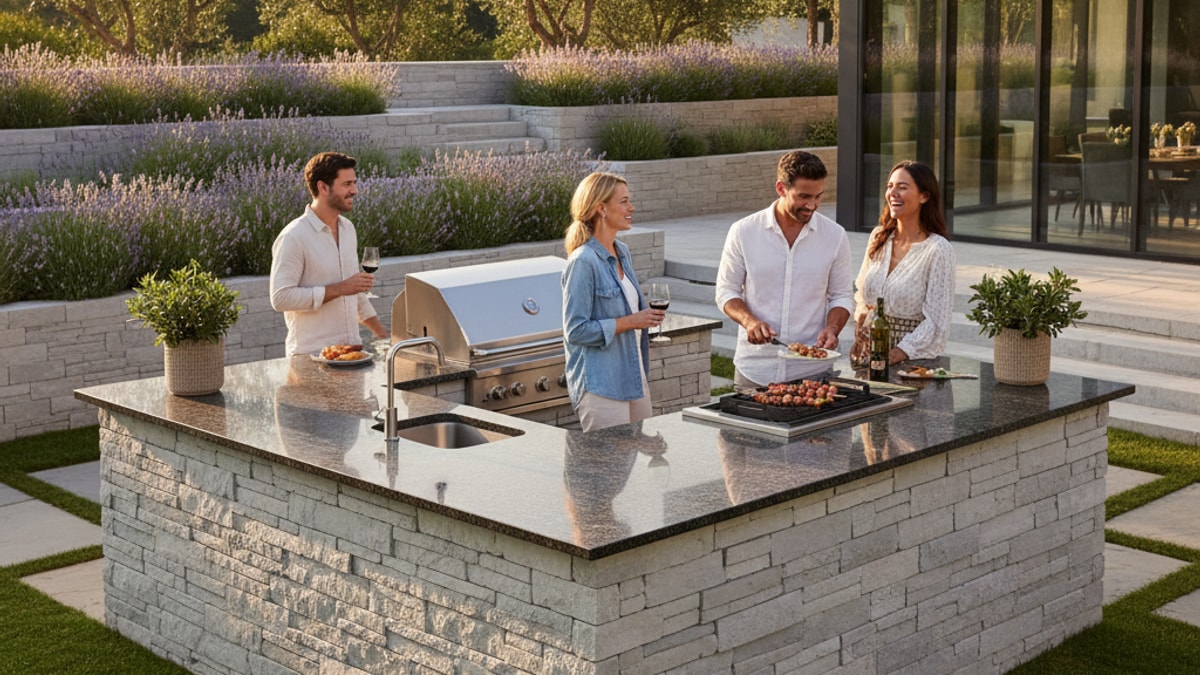
For countertops, durability is the name of the game. They need to withstand intense sun, rain, temperature swings, and the occasional spilled red wine. Granite remains a top choice for its natural beauty and resilience. Poured-in-place concrete countertops offer a modern, industrial aesthetic and are completely customizable. Quartzite, a natural stone that's even harder than granite, is another fantastic, albeit premium, option. We generally advise against using materials like quartz (the engineered kind) outdoors, as the resins can yellow and degrade with prolonged UV exposure. Our team has deep experience with Outdoor Kitchens SAN Diego, and we can guide you toward the materials that offer the best balance of beauty and long-term performance. This is one of the most visible decisions in the process of how to build an outdoor kitchen island.
Finishing Touches That Make a Difference
Your island is built. It's functional. Now, let's make it exceptional. The finishing touches are what elevate an outdoor kitchen from good to unforgettable. And a major one is lighting.
Good lighting is not a luxury; it's a necessity for both safety and ambiance. You need task lighting directly over the grill and prep areas so you can see what you're doing after the sun goes down. Undercounter LED strip lighting can create a beautiful, soft glow and highlight the texture of your island's cladding. Integrating a comprehensive Landscape Lighting SAN Diego scheme ensures the kitchen feels like a natural part of the entire backyard experience, not just a bright spot in the dark. How you light the space is just as important as how to build an outdoor kitchen island itself.
Seating is another huge consideration. A two-tiered island with a bar-height counter is perfect for creating a social atmosphere where guests can chat with the cook. If your island is part of a larger patio, you might integrate it with built-in Seat Retaining Walls to create a cohesive and comfortable lounge area. Think about amenities, too. A built-in sound system, an outdoor-rated TV, or even ceiling fans and heaters integrated into a nearby patio cover can extend the usability of your space through different seasons and times of day. It’s these thoughtful details that complete the picture.
Building an outdoor kitchen island is a significant undertaking, but it's also one of the most rewarding home improvement projects you can tackle. It creates a destination in your own backyard—a place for connection, celebration, and creating memories. Ready to Upgrade Your Backyard? The process requires careful planning, the right materials, and a bit of sweat, but the result is a feature you'll enjoy for years to come. By focusing on a solid plan and not cutting corners, you'll master how to build an outdoor kitchen island that becomes the true centerpiece of your outdoor life.



.webp)
.webp)