Common Luxury Landscaping Mistakes to Avoid in 2026
Avoid costly errors in your outdoor project. Discover the common luxury landscaping mistakes to prevent and ensure a stunning, durable landscape.
What are the most common luxury landscaping mistakes?
The most damaging luxury landscaping errors share a common root: decisions made too early without enough information, or too late without enough coordination. Homeowners invest heavily in premium materials and custom features, then watch the project underperform because drainage was ignored, plants were chosen for appearance alone, or contractors worked in isolation without a unified plan.
The mistakes below cover every major failure point, from the first site visit through long-term maintenance. Recognizing them before construction begins is the difference between a property that appreciates and one that requires expensive rework within a few seasons.
The most frequent high-end landscaping issues at a glance:
- Starting construction before a complete master plan is approved
- Ignoring soil conditions, grading, and drainage requirements
- Choosing materials based on appearance rather than climate performance
- Selecting plants without accounting for mature size, microclimate, or seasonal interest
- Underestimating the true cost of integrated outdoor living amenities
- Fragmenting the project across multiple contractors with no single coordinator
- Treating lighting, irrigation, and utility infrastructure as afterthoughts
- Neglecting privacy, acoustic comfort, and four-season usability
- Following trends rather than building a timeless design language
- Skipping sustainability practices that protect the property long-term
1. Skipping the master plan and treating landscaping as a final add-on
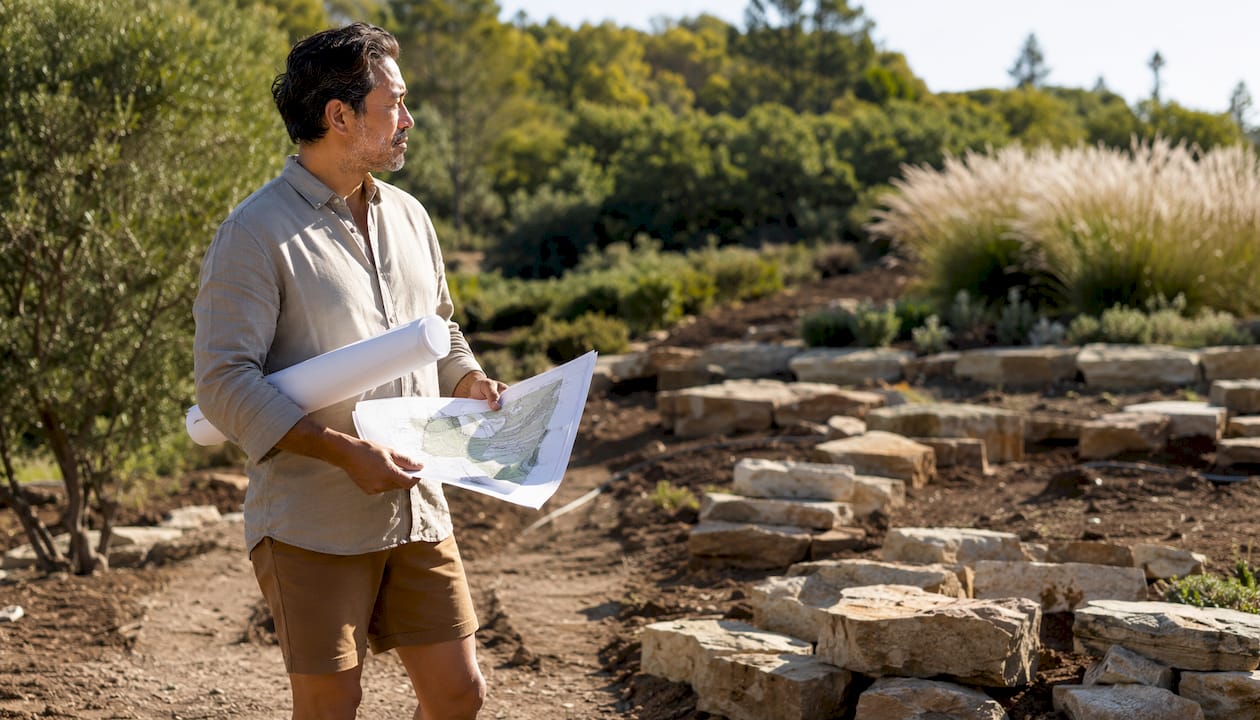
Treating landscaping as a last phase is the single most expensive mistake in luxury residential projects. By the time a designer is brought in after the home is framed or finished, critical decisions about door placements, utility locations, grade transitions, and sightlines have already been locked in. The result is a pool that doesn't relate to the architecture, sliding doors that open to awkward transitions, and drainage problems that require expensive walls to correct.
Luxury outdoor environments need to be designed in parallel with the home, not after it. When landscape architects collaborate during the schematic design phase, they can influence ceiling heights for covered outdoor living, coordinate utility placements, and resolve grade decisions before they become costly constraints.
Sequential, separate purchases produce disjointed spaces that feel assembled rather than designed. A dining terrace installed first, a pergola added later, lighting retrofitted afterward — each element may be well-made, but the overall composition lacks the coherence that defines a truly luxury environment.
Planning mistakes that compound costs:
- No scaled drawing, no circulation plan, and no defined zones for dining, lounging, or pool access
- Choosing materials before layout and functional spaces are resolved
- Forgetting irrigation sleeves, lighting conduit, and utility access during hardscape installation
- Hiring separate trades without one overall coordinator
Pro Tip: A unified master plan developed before construction begins reduces costly change orders and creates flow between indoor and outdoor spaces. At Modern Yardz, every project starts with 2D architectural plans and photo-realistic 3D renderings the homeowner approves before a shovel breaks ground.
2. Ignoring site conditions: soil, grading, and drainage
Poor drainage is the leading cause of landscape failure. A patio or planting bed that looks flawless in a rendering can become a water-pooling problem if the grade is wrong. According to EPA guidance and building science standards, the ground around a home should slope away from the foundation to ensure proper drainage and prevent water damage. When that slope is missing or reversed, water pools against the house, kills plant roots, and erodes the soil that everything else depends on.
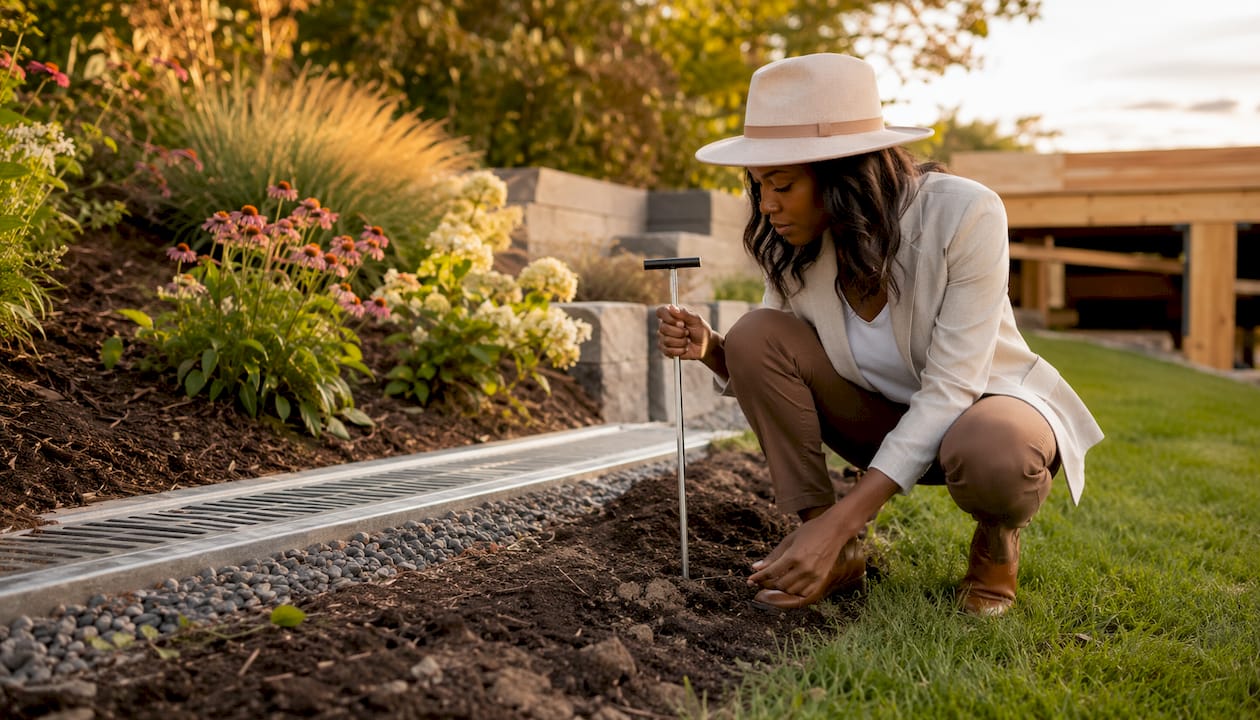
Improper grading and poor drainage are the leading causes of structural failure in residential landscapes, including foundation water intrusion. In San Diego, coastal salt air and clay-heavy soils in neighborhoods like Rancho Santa Fe and Carmel Valley add further complexity. A site visit that includes soil testing, grade mapping, and drainage assessment is not optional on a luxury project. It is the foundation everything else is built on.
Prioritizing aesthetics over material performance compounds drainage problems. Natural stone selected purely for visual appeal may prove porous or prone to staining when exposed to regional stressors like sun intensity, salt air, and temperature swings. The fix is always more expensive than the prevention.
Site condition mistakes to avoid:
- Patios sloped toward the home rather than away from it
- Pool decks without adequate drain channels
- Downspouts discharging into foundation planting beds
- Garden beds that pond near walls or retaining structures
- Turf installed over compacted clay without a drainage layer
Key fact: Drainage problems account for the most common landscape failures; proper slope and drainage planning prevent soil erosion, plant death, and structural damage that can cost far more to remediate than to prevent.
3. Choosing plants for appearance rather than site performance
Wrong plant, wrong place is one of the most consistent landscaping design pitfalls in luxury gardens. A plant that looks stunning in a nursery catalog may struggle from its first season if it isn't matched to the actual sun exposure, soil type, wind conditions, and water availability of the specific spot where it's placed.
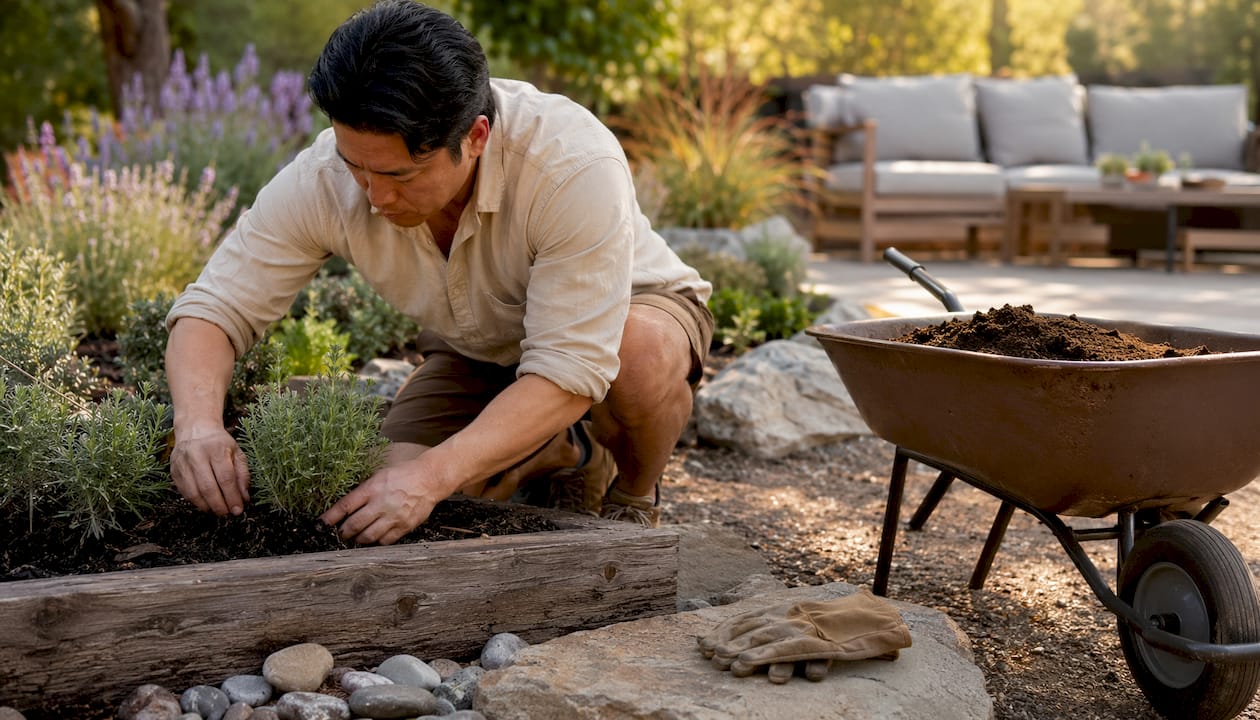
Overplanting is equally common. Placing plants too close together creates competition for water and nutrients, leads to crowding as specimens mature, and ultimately produces a yard that feels cluttered rather than curated. A plant's mature size at five or ten years must be part of the selection conversation, not an afterthought.
Four-season design is where many luxury gardens fall short. A planting scheme built around peak summer color may look sparse in winter, unruly by late summer, or structurally hollow when deciduous specimens drop their leaves. The most enduring luxury gardens use layered planting with evergreen structure, seasonal interest at multiple points in the year, and species that respond well to San Diego's specific coastal and inland microclimates.
Plant selection questions worth asking before installation:
- Does this species tolerate the soil drainage conditions in this specific bed?
- Will mature root systems interfere with pavers, pool plumbing, or the foundation?
- Does this plant require more water than the irrigation zone can deliver efficiently?
- Will it provide visual interest in winter, not just spring and summer?
- Is it fire-smart and appropriately spaced for the property's fire zone requirements?
Native and drought-tolerant species offer a practical advantage in San Diego beyond water conservation. They tend to establish faster, require less intervention once mature, and hold up better through the dry season without supplemental irrigation.
4. Neglecting maintenance planning and irrigation system design
A luxury landscape that isn't designed for realistic maintenance will deteriorate faster than a modest one. Homeowners often focus on how a space will look at completion rather than how it will perform two or three years in. Irrigation planning is where this gap shows up most clearly.
Irrigation should be designed before hardscape is installed. Once patios, driveways, and walkways are in place, adding mainlines or valve wiring requires cutting through finished surfaces. Typical irrigation planning mistakes include no mainline layout, no sleeves under hardscape, too few valve zones, and mixing full-sun lawn areas with low-water plants on the same zone. Uneven watering produces brown patches, runoff, and plant stress that undermine the entire investment.
Lawn care errors compound the problem. Soil compaction under turf prevents water from penetrating to root depth, leading to shallow root systems that dry out quickly. Drainage issues under artificial turf, including low spots that pond and weak edging that lifts, are equally common when installation is rushed or the base preparation is inadequate.
Maintenance oversights that reduce landscape longevity:
- No drip irrigation for planting beds, relying instead on overhead spray that wastes water
- Irrigation zones that don't account for varying sun exposure and plant water needs
- Artificial turf installed without proper compaction or a drainage layer beneath
- No plan for seasonal pruning, fertilization, or soil amendment after installation
- Outdoor kitchen and water feature plumbing not coordinated with irrigation infrastructure
Planning for irrigation, lighting, and maintenance at the design phase is one of the clearest separators between a luxury project that holds its value and one that requires repeated remediation.
5. Underestimating costs and fragmenting project execution
Landscape design-build is a full construction effort involving permitting, detailed site planning, and engineering. Homeowners who approach it as a series of separate purchases, one contractor for the pool, another for the patio, a third for planting, typically end up managing the coordination themselves. That role leads to major mistakes and extra costs.
Fragmented projects with multiple contractors routinely miss coordination on irrigation, utilities, and infrastructure. The pool plumbing gets laid exactly where the outdoor kitchen needs a gas line. The patio base is poured before irrigation sleeves are installed. These conflicts require expensive rework that a single coordinated team would have prevented entirely.
Site constraints like narrow access and mature tree roots increase labor costs in ways many homeowners don't anticipate when reviewing initial proposals. A proposal that looks lower in cost may simply be less defined, leaving those site-specific variables as undisclosed variables that surface as change orders mid-construction.
Modern Yardz operates as a single design-build firm with California Contractor License #1082881, managing consultation, 2D plans, 3D renderings, permitting, material procurement, and full construction under one roof. With 2,900+ completed projects and a 5.0-star rating across San Diego County, the firm's model eliminates the coordination failures that fragment most luxury projects. You can explore how the design-build model works in detail before committing to a project approach.
Budgeting and execution mistakes that inflate final costs:
- Allocating outdoor living budgets based on standard landscaping assumptions rather than luxury construction realities
- Accepting a "free design" that functions as a sales tool rather than a construction document
- Failing to account for permitting timelines, which can add weeks or months before construction begins
- Not locking layout and primary materials before construction starts, leading to mid-project changes
Pro Tip: Free designs are sales vehicles, not construction tools. A proper design phase for a large-scale backyard transformation can take three to twelve months in planning and engineering alone. Rushing that phase is the single biggest cause of expensive change orders.
6. Getting outdoor lighting design wrong
Lighting is one of the most common regrets in luxury outdoor projects, and one of the hardest elements to retrofit cleanly. If conduit and wiring paths aren't planned during construction, adding lighting later means cutting into finished hardscape or disturbing completed planting beds. The cost of that retrofit is almost always higher than doing it right the first time.
Poor lighting placement creates its own problems even when the infrastructure exists. Glare from overly bright fixtures makes outdoor dining uncomfortable. Underlit steps create safety hazards. Mismatched fixture styles across a property undermine the visual coherence that defines a luxury environment. The goal is lighting that flatters the architecture, defines zones, and creates a sense of depth and warmth after dark.
A well-executed lighting plan covers path lights, step lights, wall-wash fixtures, tree uplighting, pool-area lighting, and task lighting near outdoor kitchens or grilling zones. Each zone serves a different function, and the fixture selection, color temperature, and placement should reflect that. Warm white LEDs in the 2700K–3000K range tend to complement natural stone and travertine far better than cooler tones, which can make premium materials look clinical.
7. Failing to integrate outdoor living spaces cohesively
Outdoor spaces fail most visibly when they look good in isolation but don't connect to each other or to the home. A pool that doesn't relate to the architecture, an outdoor kitchen positioned too far from the interior kitchen, a fire feature placed without regard for seating sightlines — these are the signs of a project assembled feature by feature rather than designed as a whole.
True integration requires coordinating sightlines from interior rooms, matching material palettes between indoor and outdoor surfaces, and ensuring that the outdoor environment enhances rather than competes with the home's architecture. That level of coordination demands early collaboration between the landscape team and the architectural team, not a handoff after the home is complete.
Functional flow matters as much as visual coherence. Dining areas placed in relentless afternoon sun, lounges exposed to prevailing wind, and terraces without shade or privacy all limit how often the space gets used. A luxury outdoor environment should be genuinely comfortable across the full range of San Diego's climate, from warm summer evenings to cooler coastal mornings in January and February.
The outdoor living space design process should define how people move through the space, where views are directed, how each zone connects to the next, and what practical infrastructure sits beneath it all. Without that structure, even individually beautiful elements can work against one another.
8. Neglecting sustainability and water-wise practices
Sustainability in luxury landscaping isn't about compromise. It's about building an outdoor environment that performs well for decades without requiring constant intervention or excessive resource consumption. In San Diego, where water costs are real and drought conditions recur, ignoring water-wise design is both a financial and a practical mistake.
Drought-tolerant and native species reduce irrigation demand significantly once established, and they tend to look better through dry periods than thirsty exotic species that require constant supplemental water. Permeable paving systems, bioswales, and properly designed drainage channels reduce stormwater runoff, protect the soil structure, and keep water on the property where it can be absorbed rather than lost to the street.
Soil health is the foundation of a sustainable landscape. Skipping soil amendment before planting, or installing turf over compacted subgrade, produces a system that fights itself. Healthy soil retains moisture, supports root development, and reduces the need for chemical inputs over time. Building that foundation correctly at the start is far less costly than trying to correct it after the landscape is established.
9. Chasing trends instead of building a timeless design
Trend-driven design ages quickly, and in luxury residential landscaping, that aging is expensive. A paving pattern or planting palette that feels current today may look dated within five years, prompting a costly refresh that a more considered design would have avoided entirely.
The most enduring luxury gardens are built around architectural coherence rather than seasonal trends. Material choices, structural forms, and planting palettes that respond to the home's existing language and the property's natural character hold their value far longer than designs assembled from whatever is popular in a given year. Travertine, natural stone, and clean geometric hardscape forms have remained relevant across decades precisely because they respond to the architecture rather than competing with it.
One of the more common mistakes in luxury gardens is using too many materials in a single project. Multiple paver colors, competing wall stone textures, varied gravel types, and mismatched edging details make a yard feel busy rather than refined. Restraint in material selection, combined with precision in execution, consistently produces a more premium result than complexity for its own sake.
10. Overlooking privacy and noise control
Privacy is a functional requirement in luxury outdoor living, not a decorative option. A beautifully designed terrace that sits exposed to neighboring sightlines or road noise will be used far less than one that feels genuinely private. Yet privacy planning is frequently left out of early design conversations and then addressed inadequately with off-the-shelf fencing that doesn't match the quality of the build.
Effective privacy in a luxury context uses layered strategies: dense evergreen planting at strategic heights, architectural walls or screens that match the home's material palette, and pergola structures that define the overhead plane without fully enclosing the space. In San Diego neighborhoods like La Jolla and Del Mar, where properties sit close together on premium land, this kind of thoughtful screening is what separates a space that gets used daily from one that feels exposed.
Acoustic comfort follows the same logic. A property near a busy road or a neighbor's outdoor entertaining area benefits from water features that provide ambient sound, dense planting that absorbs noise, and structural elements that redirect airflow. These aren't afterthoughts. They belong in the master plan from the first design session.
Privacy and acoustic strategies worth incorporating early:
- Evergreen hedging species selected for mature height, density, and low water needs
- Architectural screen walls in natural stone or stucco that match the home's exterior
- Louvered pergola systems that provide overhead definition without full enclosure
- Water features positioned to provide ambient sound near seating areas
- Planting density on property boundaries that addresses both visual and acoustic screening
11. Skipping pre-construction planning for infrastructure
The infrastructure beneath a luxury landscape, sub-base construction for pavers, hydrostatic pressure management behind retaining walls, utility integration for lighting and outdoor kitchens, is invisible in the finished product but determines whether that product lasts. Homeowners who focus exclusively on visible elements often discover that inadequate electrical planning prevents them from powering their outdoor kitchen properly, or that poor drainage requires tearing up newly installed natural stone to install French drains.
Protecting existing features and the home's interior during construction requires careful manual labor that increases both timeline and cost. This is a factor many homeowners don't account for when reviewing initial proposals. Narrow side yards, mature tree root systems, and the need to protect finished interior surfaces all force smaller equipment, more hand labor, and more careful sequencing.
The correct construction sequence matters as much as the design itself. Grading and utilities come first, then hardscape, then irrigation, then planting, then lighting and finishing details. Installing plants before grading is complete, or finishing hardscape before utility sleeves are in place, creates expensive rework that a properly sequenced project avoids entirely. A detailed landscape design process that maps this sequence before construction begins is one of the clearest indicators of a firm that understands what luxury construction actually requires.
For homeowners planning a major outdoor transformation, a landscape project planning workbook can help clarify scope, sequence, and infrastructure requirements before the first design conversation.
Ready to avoid these mistakes on your San Diego property?
Modern Yardz has completed numerous luxury landscape projects across San Diego County, from La Jolla and Coronado to Rancho Santa Fe and Carmel Valley. Every project begins with a thorough site evaluation, 2D architectural plans, and photo-realistic 3D renderings you approve before construction starts. One team, one point of contact, minimal subcontractor handoffs, and proper contractor licensing ensure project quality backing every build.
Whether you're planning a custom pool and full outdoor living transformation or a focused hardscape upgrade, the process starts with a conversation. Schedule your free consultation with Modern Yardz and see your project in 3D before committing to a single material or square foot of construction.
Key Takeaways
Avoiding common luxury landscaping mistakes requires integrated planning, site-specific engineering, and a single coordinated team managing every phase from design through construction.
| Point | Details |
|---|---|
| Master plan first | Design the full outdoor environment before construction begins to prevent costly retrofits and disjointed results. |
| Drainage is foundational | The ground must slope away from the foundation by about 0.5 inches per foot for a minimum of 10 feet to prevent structural damage. |
| Match materials to climate | Select paving, stone, and planting for long-term performance in San Diego's coastal and inland conditions, not appearance alone. |
| One team, one plan | Fragmented multi-contractor projects miss infrastructure coordination; a single design-build firm prevents these failures. |
| Infrastructure before aesthetics | Utility conduit, irrigation sleeves, and drainage systems must be installed before hardscape is finished, not retrofitted after. |
Recommended
Start Your Free Design Consultation
Tell us about your project and we'll be in touch within 24 hours. No pressure, no obligation.
Ready to design your dream yard?
Tell us about your project. We'll send back a real plan, not a templated quote.
Book My Free Consultation→