Design Build Model Landscaping Explained for Homeowners
Discover how the design build model landscaping explained can transform your outdoor space with seamless integration, fewer miscommunications, and better...
The design-build model in landscaping is defined as a single-contract delivery method where one team handles both the architectural design and physical construction of your outdoor space. Most homeowners and property developers encounter this term while comparing it to the traditional bid-build approach, where a separate designer hands plans to a separate contractor. The design-build model eliminates that handoff entirely. One team holds full accountability from the first site visit through the final walkthrough, which means fewer miscommunications, tighter budget control, and a finished project that actually matches what you approved on paper. For complex outdoor living projects involving pools, hardscape, outdoor kitchens, and grading, this integrated approach is not just convenient. It is structurally superior.
How does the design-build model work in landscaping projects?
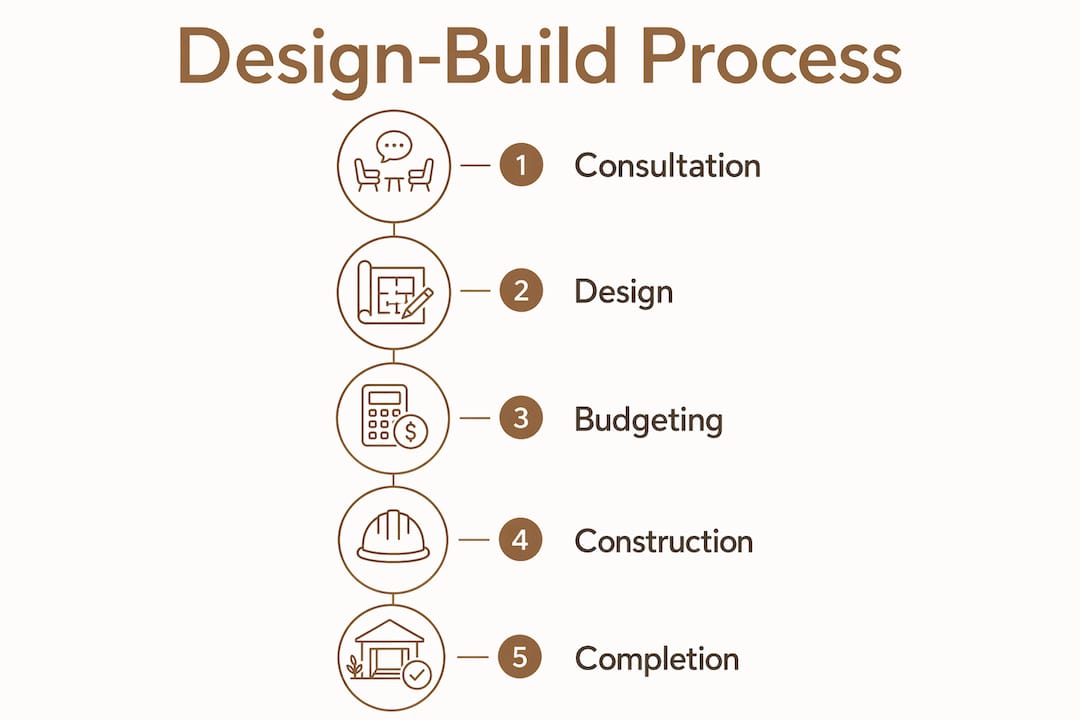
The design-build process follows a defined sequence of overlapping phases, each building directly on the last. Understanding landscape architecture in this context means recognizing that design decisions and construction logistics are made together, not in isolation.
Here is how a typical project unfolds:
- Site evaluation and assessment. The team walks the property to assess grading, drainage patterns, soil conditions, slope angles, and existing utilities. Site evaluation is the most critical phase for preventing budget creep, because subsurface issues discovered after construction begins cost significantly more to address than those identified upfront.
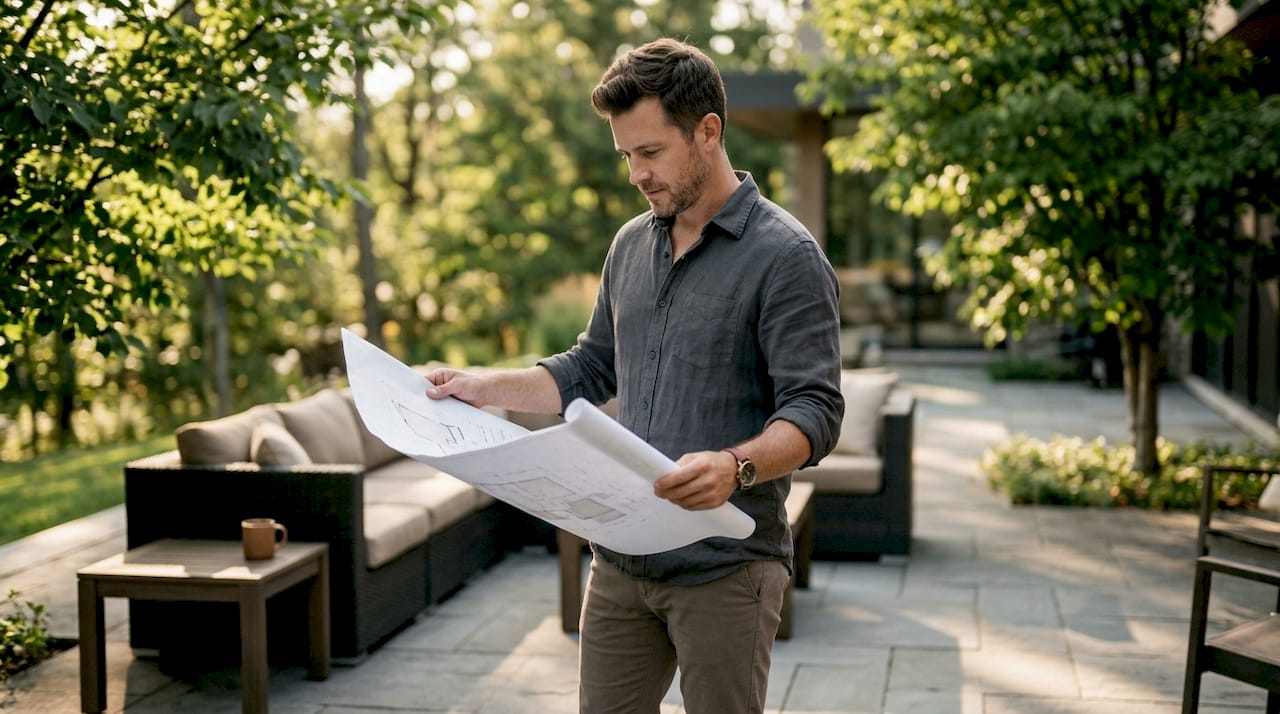
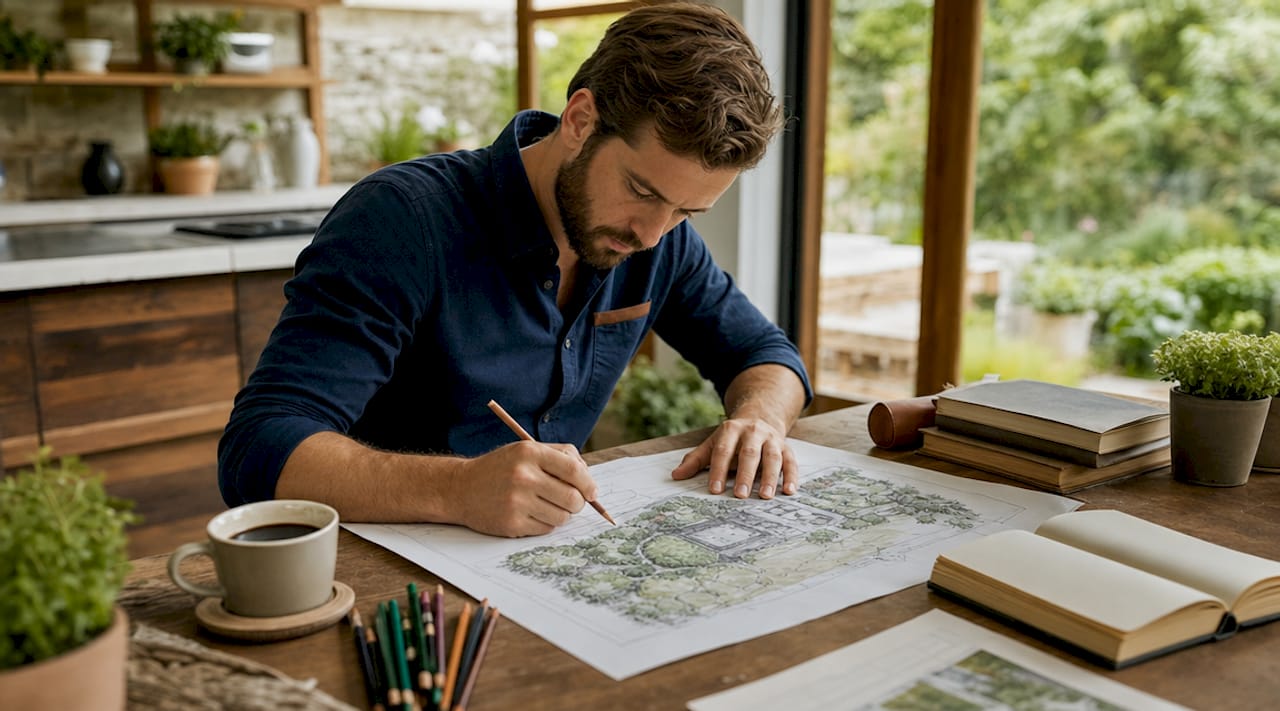
- Conceptual design and 3D rendering. The design team translates site data and your vision into 2D architectural plans and photo-realistic 3D renderings. You see exactly what the finished space will look like before a single shovel breaks ground. This step eliminates the guesswork that causes expensive revisions later.
- Material selection. Materials are chosen in coordination with the construction team, not after the fact. This matters because a designer working independently may specify travertine pavers or natural stone without knowing current lead times, installation requirements, or how those materials interact with the site's drainage conditions.
- Permit acquisition and regulatory compliance. The design-build firm manages all permit applications, engineering submissions, and municipal approvals. In San Diego County, pool construction, retaining walls over four feet, and certain grading projects all require permitted plans. Having one team manage this prevents the delays that occur when designers and contractors point fingers at each other over incomplete documentation.
- Overlapping design and construction phases. Unlike bid-build, where construction cannot begin until design is fully complete and approved, design-build timelines typically range from 4 to 12 weeks depending on project complexity, partly because early construction phases can begin while final design details are still being refined.
- Final inspection and walkthrough. The same team that designed the space walks you through it at completion, verifying that every detail matches the approved rendering and that all systems, drainage, irrigation, lighting, and pool equipment, function correctly.
Pro Tip: Ask your design-build firm to show you the 3D rendering alongside photos of completed projects using the same materials. This confirms their rendering accuracy and gives you a realistic preview of the finished result.
What are the key benefits of design-build vs. traditional bid-build?
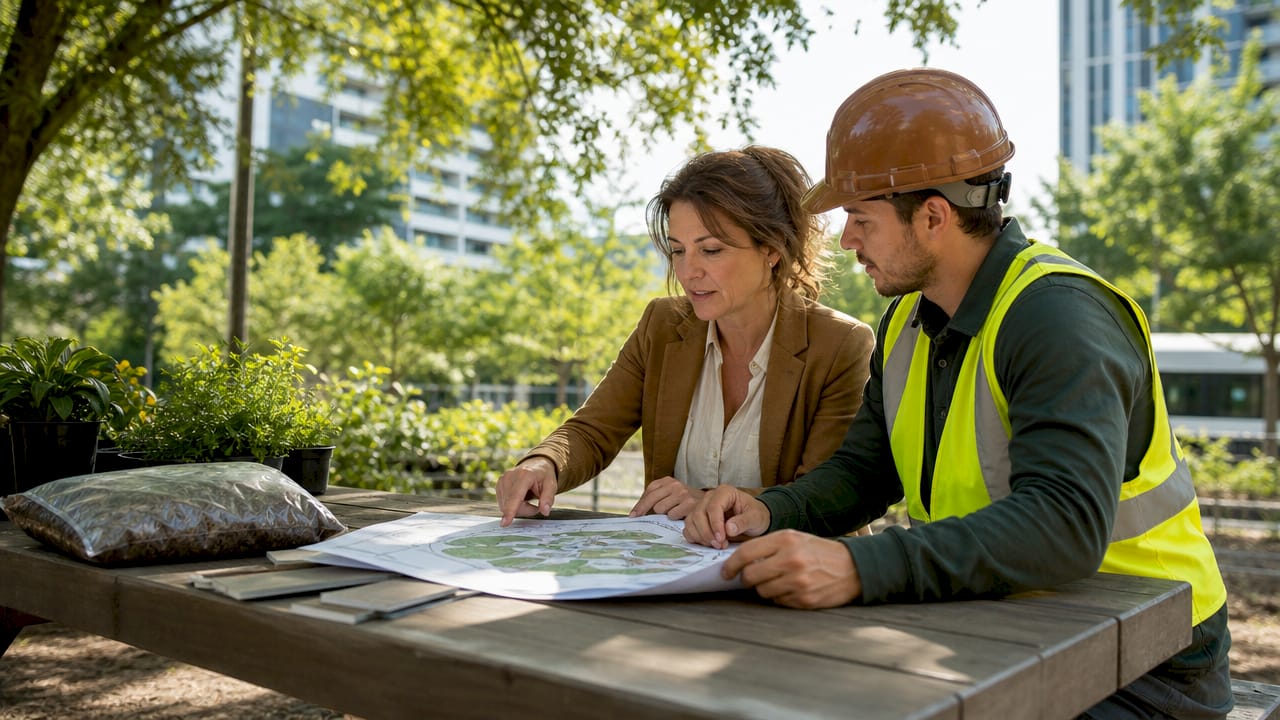
The bid-build model creates a structural gap between the people who create the vision and the people who execute it. That gap is where most landscaping projects go wrong. Here is a direct comparison of how the two approaches differ across the factors that matter most to homeowners and property developers.
| Factor | Design-build | Bid-build |
|---|---|---|
| Point of contact | Single team, single contract | Separate designer and contractor |
| Budget alignment | Integrated from day one | Gaps common between design cost and build cost |
| Communication | Direct, no translation layer | Designer and contractor interpret each other's work |
| Timeline | Phases overlap, faster delivery | Sequential phases, longer overall timeline |
| Change orders | Fewer, resolved internally | More frequent, often disputed between parties |
| Site complexity | Proactively managed by one team | Risk of blame-shifting between parties |
The practical benefits of the design-build model go beyond the table above. Consider these specific advantages:
- Single point of responsibility. Homeowners hiring separately as designer and contractor often become the de facto project manager, mediating disputes and absorbing delays caused by miscommunication between two independent parties.
- Early budget alignment. When the builder is involved during design, material costs, labor requirements, and site-specific challenges are factored into the budget before plans are finalized. This reduces the costly redesign cycles that inflate total project costs in bid-build scenarios.
- Design intent preserved through construction. The one-team philosophy ensures shared project history and site knowledge, so the finished environment matches the 3D rendering rather than a contractor's interpretation of someone else's plans.
- Better handling of complex site conditions. Projects involving grading, retaining walls, and drainage require engineering decisions that affect both design and construction. A unified team resolves these proactively rather than discovering conflicts mid-build.
Design-build projects also tend to carry comparable or lower total costs for the same scope, because integrated budgeting and fewer redesign cycles reduce waste across the project lifecycle.
When is design-build the right choice for your outdoor project?
The design-build model delivers the most value on projects where complexity is high and the cost of miscommunication is significant. Not every landscaping project requires it. A straightforward lawn replacement or basic planting refresh can be handled by a single contractor without a formal design-build structure. But the following scenarios strongly favor the integrated approach:
- Significant site engineering. Projects involving slopes, drainage corrections, retaining walls, or grading changes require engineering decisions that directly affect design. Design-build reduces on-site modifications by an estimated 15 to 20 percent on complex grading and drainage projects by resolving these constraints during design rather than after construction begins.
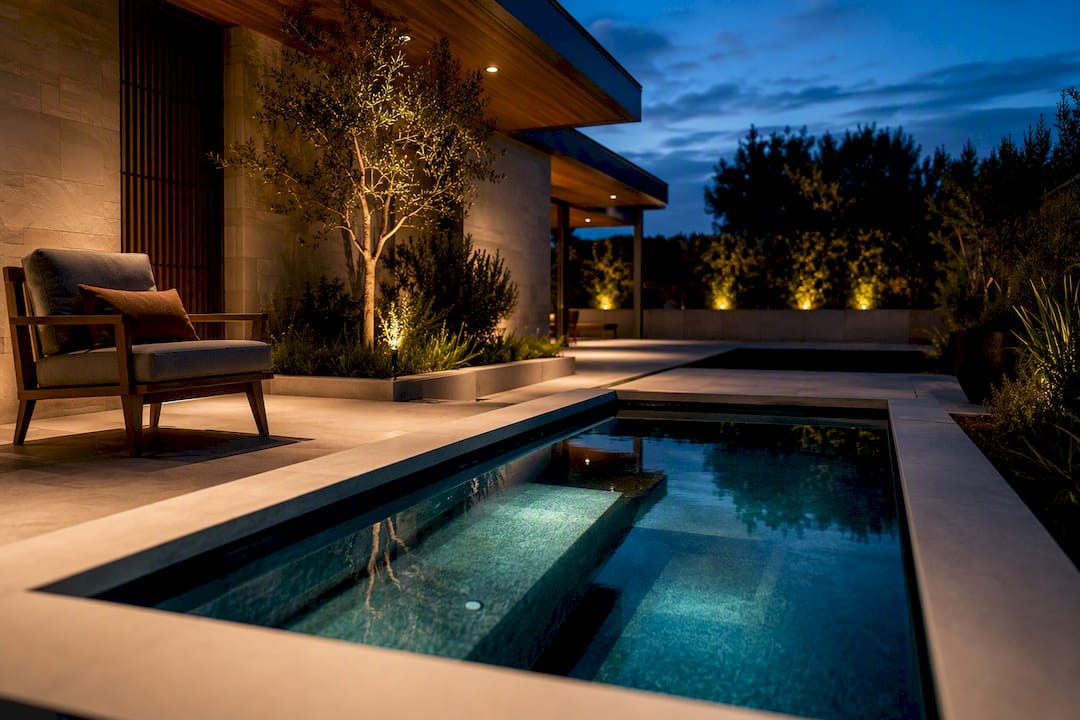
- Multi-feature outdoor living environments. When your project combines a custom pool, outdoor kitchen, paver patio, pergola, and landscape lighting into one cohesive space, tight integration from the outset is what prevents those features from looking and functioning like isolated additions rather than a unified environment.
- Homeowners who want one phone number. If you do not want to manage two or three separate contracts, coordinate schedules between independent parties, or absorb the risk of disputes between your designer and your contractor, design-build is the correct structure for your project.
- Projects where 3D visualization matters. High-investment outdoor spaces, particularly those in the $80,000 to $300,000 range, require the homeowner to see and approve the design before construction begins. Design-build firms with in-house rendering capability deliver this as a standard part of the process.
Pro Tip: Before hiring any firm, ask specifically whether the same team that designs your project also builds it. Many companies market themselves as design-build but subcontract the construction phase. That is not design-build. That is design-then-bid.
How to plan and manage a successful design-build landscaping project
Choosing the right firm is the most consequential decision in the entire process. Once you have selected a qualified design-build team, the following steps define how to collaborate effectively from start to finish.
- Define your vision, budget, and timeline before the first consultation. Arrive at your initial meeting with a clear sense of how you use your outdoor space, what features matter most, and what your realistic investment range is. Design-build firms can work within defined parameters, but vague briefs produce vague designs.
- Prioritize the site evaluation. Do not skip or rush this phase. A thorough site assessment, covering soil composition, drainage flow, existing utilities, and slope measurements, is what allows the design team to create plans that will actually work on your specific property.
- Understand permitting requirements upfront. In San Diego County, pools, retaining walls, and certain hardscape projects require permits. Your design-build firm should handle all permit applications, but you should understand which elements of your project require approval and what the typical timeline looks like in your municipality.
- Respect the construction sequence. Proper sequencing means grading and drainage come first, followed by structural hardscaping, then pools and water features, then planting and irrigation, and finally lighting and finishing details. Deviating from this order to accelerate a specific phase creates structural problems that are expensive to correct.
- Stay actively involved without micromanaging. Review renderings carefully, ask questions during design reviews, and attend key milestones such as the post-grading inspection and the pre-pour concrete review. Trust your team's expertise on technical decisions, but stay engaged on aesthetic choices and material selections.
- Conduct a thorough final walkthrough. Walk every square foot of the completed project with your project lead. Verify that drainage flows correctly, all lighting zones function as designed, irrigation coverage is complete, and every surface finish matches the approved specification.
Key takeaways
The design-build model is the most effective delivery method for complex landscaping projects because it eliminates the translation gap between design intent and construction execution.
| Point | Details |
|---|---|
| Single-contract accountability | One team owns both design and construction, removing blame-shifting and miscommunication. |
| Early budget alignment | Builder involvement during design prevents costly redesigns and scope creep before construction starts. |
| Sequencing is non-negotiable | Grading and drainage must precede hardscaping, which must precede planting, to protect long-term integrity. |
| Site evaluation drives everything | Identifying subsurface issues before construction begins is the primary cost-control mechanism in any project. |
| Complexity justifies the model | Multi-feature projects combining pools, patios, kitchens, and grading deliver the highest return on design-build investment. |
Why I think most homeowners underestimate what they are actually managing
After working through hundreds of outdoor living projects, the pattern I see most consistently is this: homeowners who hire a designer and a contractor separately believe they are saving money. They are not. What they are actually doing is taking on the role of general contractor without the training, the site knowledge, or the leverage to resolve conflicts when the two parties disagree.
The non-obvious cost in bid-build is not the redesign fee or the change order. It is the three weeks lost while the designer and contractor debate who is responsible for a drainage issue that a unified team would have resolved in a single conversation. On a $150,000 project, three weeks of delay has real financial consequences, particularly if you are coordinating around a specific event or season.
What I have found is that the homeowners who get the best outcomes are the ones who evaluate their project's complexity honestly before choosing a delivery method. If your project involves grading, a pool, and multiple hardscape features, the design-build structure is not a premium. It is the baseline requirement for a project that finishes on time, on budget, and looks exactly like what you approved. The integrated design-build approach is not about convenience. It is about structural accountability from day one.
— David
Transform your outdoor space with Modernyardz
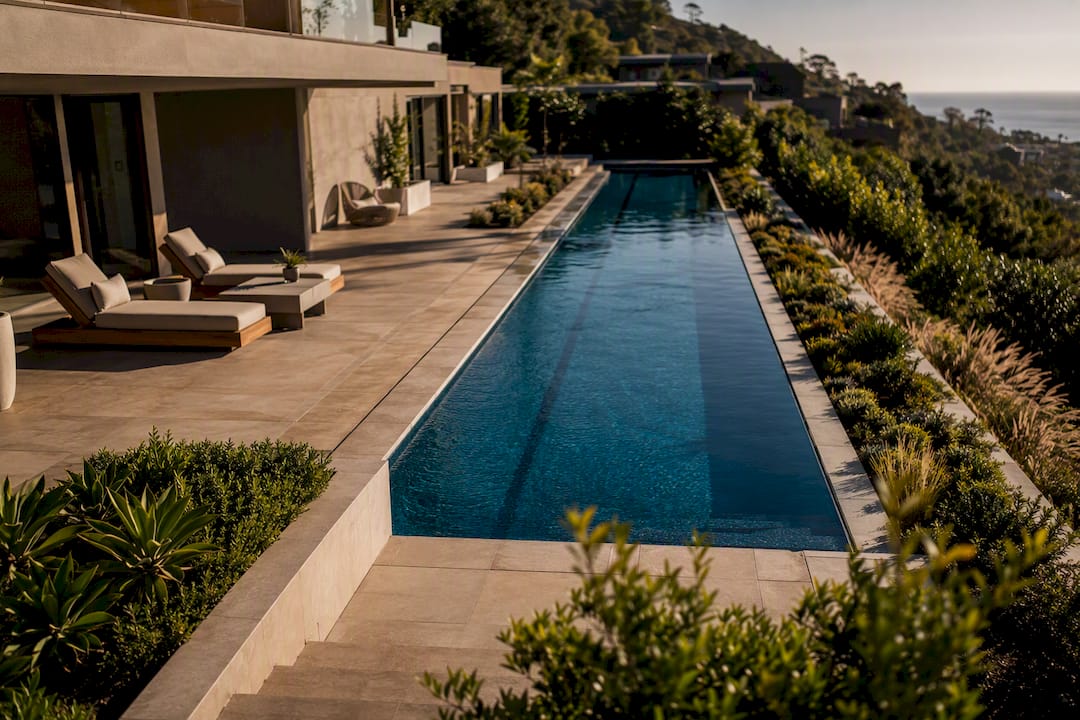
Modernyardz is San Diego's premier luxury landscape design-build firm, with 49 years of experience and 2,900 completed projects across San Diego County. Every project, from custom infinity-edge pools and travertine paver systems to fully equipped outdoor kitchens and architectural pergolas, is designed and built by one integrated team under a single contract. You get photo-realistic 3D renderings before construction begins, one point of contact from consultation through final walkthrough, and zero subcontractors managing your vision. If your outdoor living project involves real complexity, Modernyardz is built for exactly that. Book a consultation to start your project with a team that owns every phase.
FAQ
What is the design-build model in landscaping?
The design-build model in landscaping is a project delivery method where a single firm holds responsibility for both the design and construction of your outdoor space under one contract. This eliminates the communication gap between separate designers and contractors that causes most project delays and budget overruns.
How does design-build differ from the traditional bid-build approach?
In bid-build, a designer creates plans independently and contractors bid on executing them, creating a structural gap between design intent and construction reality. In design-build, the same team creates the plans and builds the project, so budget, materials, and site conditions are aligned from the start.
Is design-build more expensive than hiring separately?
Design-build projects carry comparable or slightly lower total costs for the same scope because integrated budgeting and fewer redesign cycles reduce waste. The biggest misconception is that hiring separately saves money, but homeowners often absorb hidden costs in delays, disputes, and project management time.
What types of projects benefit most from design-build?
Projects involving grading, drainage, retaining walls, custom pools, and multi-feature outdoor living environments benefit most from the design-build structure. These project types require engineering decisions that affect both design and construction simultaneously, which a unified team handles more effectively than two independent parties.
How long does a design-build landscaping project take?
Construction timelines typically range from 4 to 12 weeks depending on project complexity, scope, and permitting requirements. Projects requiring pool construction, significant grading, or structural hardscaping will sit toward the longer end of that range.
Recommended
Start Your Free Design Consultation
Tell us about your project and we'll be in touch within 24 hours. No pressure, no obligation.
Ready to design your dream yard?
Tell us about your project. We'll send back a real plan, not a templated quote.
Book My Free Consultation→