
Custom Fire Pit Builder
in San Diego
Gas, Wood-Burning & Sculptural
What is a custom fire pit builder in San Diego?
A custom fire pit builder in San Diego is a licensed contractor that designs and builds a site-built fire pit — gas, wood-burning, or sculptural — integrated into the surrounding hardscape, with a correctly sized gas line, a listed burner, proper drainage, and the clearances the fuel type calls for. Modern Yardz is a California-licensed landscape design-build firm (CSLB #1082881, Landscaping) that builds fire pits as part of an overall landscape project, handling the masonry, the gas permit, and the inspection under one contract.
Why Choose Modern Yardz
for Custom Fire Pit
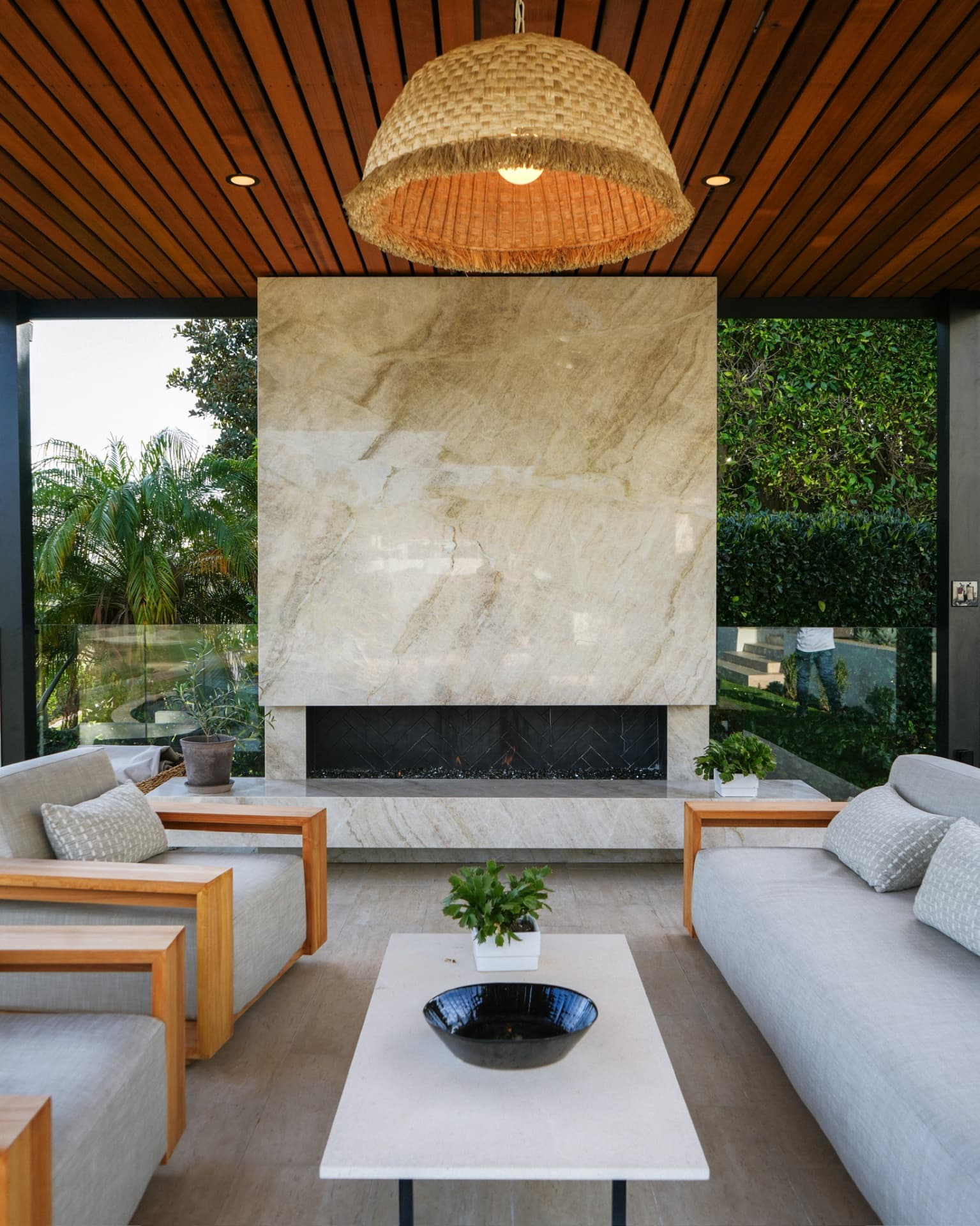
Modern Yardz designs and builds custom fire pits across San Diego — the gathering point that turns a patio into somewhere people actually stay. Natural stone and concrete pits with integrated seating walls, sculptural copper and steel bowls, and clean gas builds sized for the space rather than pulled off a shelf.
A fire pit is a 360-degree object, and that's the whole point of it. Everyone faces in, nobody's back is to the group, and the profile stays low enough to keep a view corridor open — which on a coastal lot is usually the deciding factor between a pit and a fireplace.
The permitting reality is more nuanced than most pages admit, in both directions. The City of San Diego's Information Bulletin 201 says some gas-burning fire pits do not require a building or combination permit — but that is not a free pass, because the Municipal Code is explicit that a building-permit exemption is not an exemption from plumbing or electrical permits. In practice: the pit itself often needs no building permit, the gas line serving it always needs one, and an integrated seating wall over three feet tall triggers its own. We confirm the scope with Development Services per project instead of guessing.
We build across San Diego County — La Jolla, Del Mar, Coronado, Carmel Valley, Rancho Santa Fe, Encinitas, and inland through Poway and Rancho Bernardo — and the exposure changes the build. Salt air near the water, wind on a bluff, and fire-zone rules inland are genuinely different constraints.
Gas Fire Pits
Natural gas and propane pits with electronic ignition, adjustable flame, and smart controls — instant on, no smoke, no ash, and nothing to carry out. We install listed burners and build to the manufacturer's stated clearances.
Wood-Burning Fire Pits
Classic wood-burning pits in natural stone, concrete, or steel — and they are legal here. San Diego's air district expressly exempts recreational fires burning clean dry wood, provided the fire doesn't create a nuisance.
Natural Stone & Masonry
Full-masonry pits in travertine, flagstone, and natural stone, detailed to match the hardscape rather than sit on top of it.
Sculptural Bowls
Concrete, copper, and steel bowls as standalone focal points, or paired to frame an entry, a view, or the end of a pool.
Integrated Seating Walls
Curved or linear seating walls wrapping the pit — built-in, weatherproof, and dimensioned for actual comfort. Note that a wall retaining more than three feet needs its own building permit; we design and permit it accordingly.
Drainage That Works
Burner pans drain through the bottom, which means the enclosure underneath has to drain too. We build in a weep and gravel path so the pit sheds water instead of holding it — the single most common failure in a retrofit build.
Smart Ignition
Remote, timer, and smart-home control on gas pits. Press once, gather round, and turn it off from the same phone when the evening ends.
Gas Under One Contract
Correctly sized gas runs, permitted and inspected as part of the landscape contract — a scope CSLB's Building Official Information Guide sets out for licensed landscape contractors.
From Concept to Completion
Fire Pit Consultation
We walk the space and settle the real questions: how many people it has to seat, gas or wood, where the wind comes from, what the pit must not block, and how far the gas has to travel from the meter.
3D Visualization
Renderings put the pit in context — pavers, seating, planting, sightlines from the house — so scale and placement are decided on screen rather than in concrete.
Permits & Gas
We confirm the permit scope with Development Services for your lot, pull the gas permit, and schedule inspection as part of the landscape contract.
Masonry & Construction
Footing, enclosure, drainage, burner, and finish — built to the burner manufacturer's clearances and signed off by us.
Testing & Walkthrough
Full system test, safety review, and a walkthrough covering operation, media care, and what to rinse if you're near the water.
Start Your Free Design Consultation
Tell us about your project and we'll be in touch within 24 hours. No pressure, no obligation.
See it in 3D before we build it
Every custom fire pit project starts as a photo-realistic 3D model, so you can walk through the finished space and change it before anything is poured or planted. This is one of those walkthroughs.
A freeform lagoon pool ringed with boulder outcrops and a spillway edge, flagstone decking, a raised spa, an outdoor kitchen and a fire pit lounge — shown lit after dark.
See all 3D design walkthroughsRecent Custom Fire Pit Projects

Custom Fire Pit FAQ
Custom fire pits in San Diego typically range from $5,000 to $25,000+ depending on size, material, and gas line requirements. Simple gas fire pits start around $5,000–$10,000. Custom natural stone or concrete fire pits with integrated seating walls run $12,000–$22,000. Larger architectural builds with premium materials and smart ignition can exceed $25,000. These are our own completed-project ranges rather than national averages, and Modern Yardz provides a detailed quote after the free design consultation.
It's genuinely nuanced, and both common answers are wrong. The City of San Diego's Information Bulletin 201 states that some gas-burning fire pits do not require a building or combination permit — so 'every fire pit needs a permit' is false. But the Municipal Code is equally explicit that a building-permit exemption is not an exemption from plumbing or electrical permits, and new gas piping isn't on the short list of exempt plumbing work — so 'a gas fire pit needs no permit at all' is false too. The honest answer: the pit itself often needs no building permit, the gas line always needs a plumbing/gas permit, and an integrated seating wall retaining over three feet needs a building permit of its own. We confirm the exact scope with Development Services per project.
Yes — and this is the most misreported fact in San Diego outdoor-living content. The San Diego Air Pollution Control District's Rule 101 expressly exempts recreational, ceremonial, and cooking fires, provided clean dry fuel is used (wood or charcoal, or gas) and the fire isn't set so as to create a nuisance. San Diego has no residential wood-burning curtailment program at all. The 'no-burn days' and 'Check Before You Burn' rules people cite belong to a different air district covering Los Angeles and the Inland Empire — they are not San Diego's. One real local rule does apply: the City prohibits open burning, including recreational fires, during a Red Flag Warning or Fire Weather Watch.
It depends on what kind of fire it is, and the widely quoted 25 feet is usually misapplied. In the California Fire Code, 25 feet governs a recreational fire — defined as an open fire not contained in a fireplace, grill, or barbecue pit, no more than three feet across and two feet high. A fire in an approved container is 15 feet. Crucially, that section covers open burning only: a listed gas fire pit isn't governed by it at all, and instead follows its listing and the manufacturer's installation instructions. Note too that those distances are measured to structures and combustibles, not to property lines — property-line setbacks are a zoning question we confirm for your lot.
Gas suits most San Diego properties: instant ignition, adjustable flame, no smoke drifting into a neighbor's window, no ash to shovel, and it can be lit for twenty minutes on a weeknight. Wood is the choice when the smell and the crackle are the point, and it stays legal here — with two caveats worth knowing up front: smoke is still subject to the nuisance rule, and no open burning is allowed during a Red Flag Warning. We build both, and the honest tiebreaker is how often you'll actually light it.
Natural gas if a line can reach the pit, because you never think about it again; propane where there's no gas service or the run is impractical. Two things worth knowing. First, burners are listed separately for each fuel and ship with fuel-specific orifices — a natural gas burner cannot simply be run on propane. Second, propane vapor is heavier than air and will settle into low-lying spaces, which is why a propane tank enclosure needs low ventilation designed in rather than sealed up. We size and price both during design.
We handle it as part of the landscape contract. CSLB's Building Official Information Guide states that a licensed landscape contractor may obtain permits and contract for gas line work when it is part of or incidental to an overall landscaping project — which is exactly what a fire pit build is. The pit, the hardscape around it, and the gas run sit under one contract with one company accountable at inspection. We don't offer standalone gas work.
Either — the burner manufacturer decides. Lava rock and tempered fire glass are both standard, and the right choice is whatever that burner is listed and instructed to use: media affects flame pattern and heat distribution, so it isn't purely cosmetic. What we won't do is fill a pit with whatever stone is lying around. Use the specified media and the burner behaves the way it was tested to.
Yes, and it's the detail most retrofits miss. Burner pans drain through the bottom, so if the enclosure beneath has nowhere to send that water, the pit becomes a bucket — rotting the burner and staining the stone. We build in weep holes and a gravel path from the start. San Diego's rain arrives in short heavy bursts, so a pit that drains slowly effectively doesn't drain.
A standalone gas fire pit typically installs in 1 to 2 weeks from approved design, including the gas line work. Full masonry fire pits with integrated seating walls run 3 to 5 weeks, since footings and masonry cure on their own schedule. Combined with surrounding hardscape — pavers, a seating area, a pergola — the full outdoor room typically takes 4 to 8 weeks. Permit and inspection timing is the one variable we can't compress, so we start it first rather than last.
Explore related specialties
Luxury Fire Feature Builder
Want a fireplace instead? Masonry outdoor fireplaces, linear fire troughs, and fire-and-water features.
Paver Installer & Hardscape
The patio and seating area the pit is set into.
Luxury Outdoor Kitchen Builder
Cook, eat, and gather in one outdoor room — kitchen and fire pit designed together.
Backyard Design & Remodel
Whole-backyard design and build, with the fire pit placed from the first sketch.
Go deeper on the details
Ready for Your
Custom Fire Pit Project
in San Diego?
Schedule your complimentary design consultation. We'll visit your property, walk your space, and show you exactly what's possible.