
Luxury Landscape vs Standard Landscaping: Key Differences
Discover the luxury landscape vs standard landscaping difference. Explore how design, materials, and costs create distinct outdoor experiences.
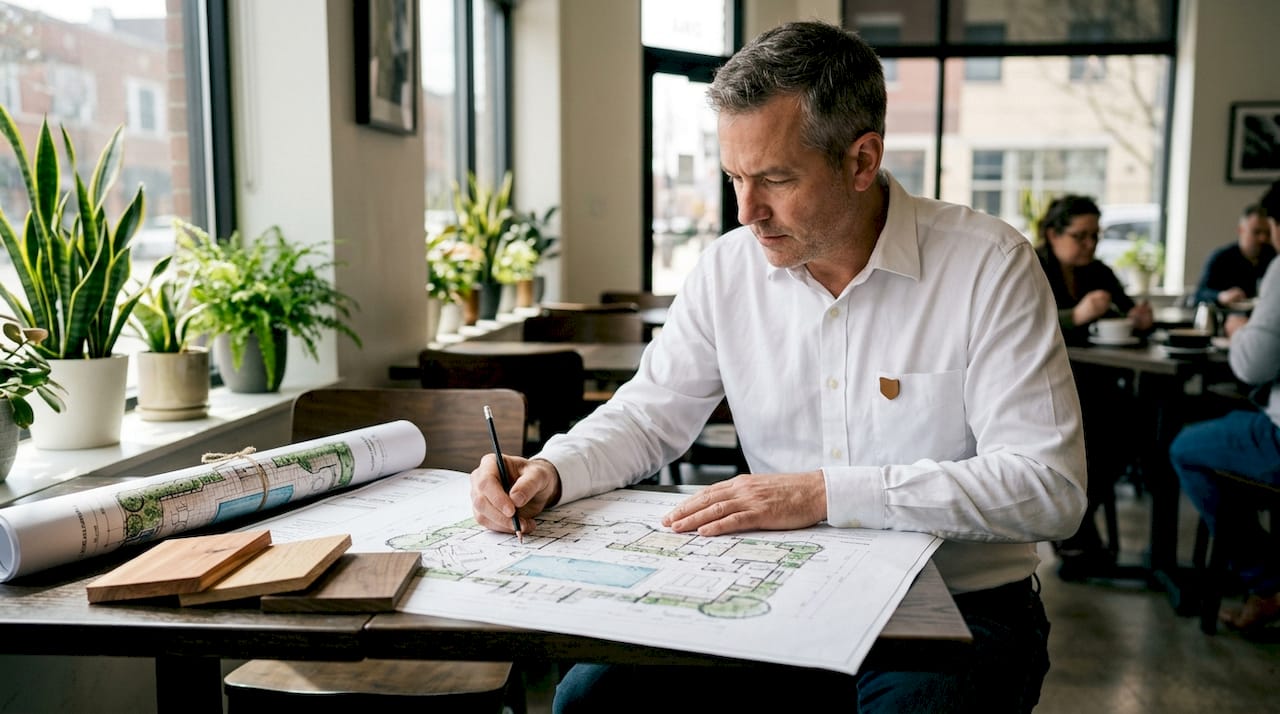
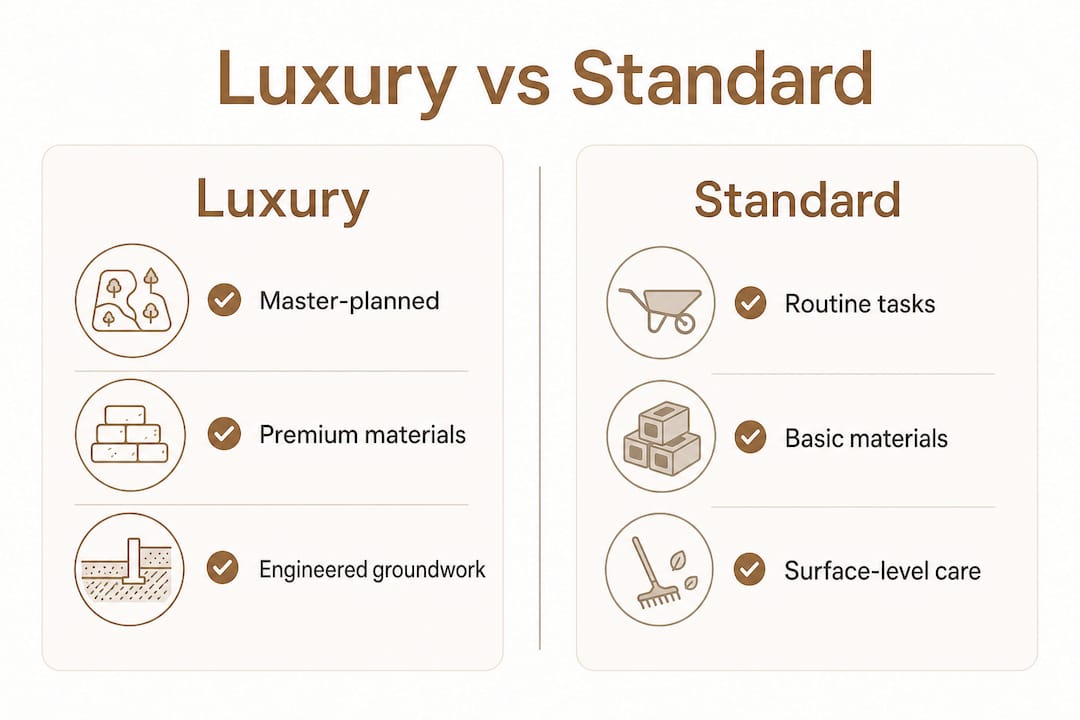
Luxury landscaping is defined as a comprehensive, master-planned outdoor environment built with premium materials, engineered infrastructure, and cohesive architectural design, as distinct from standard landscaping, which centers on routine maintenance and basic planting. The luxury landscape vs standard landscaping difference is not simply a matter of budget. It reflects two fundamentally different philosophies: one treats the yard as a living space to be designed and built with intention, the other treats it as a surface to be maintained. Standard landscaping costs typically run $300–$2,000 annually for routine upkeep, while luxury projects start at $25,000 and scale well beyond that with engineered groundwork and multiphase master plans. Modern Yardz, operating under California Contractor License #1082881 with 2,900+ completed projects across San Diego County, works exclusively in the luxury segment, where every project begins with a 3D rendering before a shovel breaks ground.
What are the key features that separate luxury from standard landscaping?
The most visible difference in landscaping styles is materials. Luxury projects use natural stone, travertine pavers, commercial-grade outdoor kitchen components, and architectural pergola systems. Standard landscaping typically relies on poured concrete, basic sod, and off-the-shelf planting.
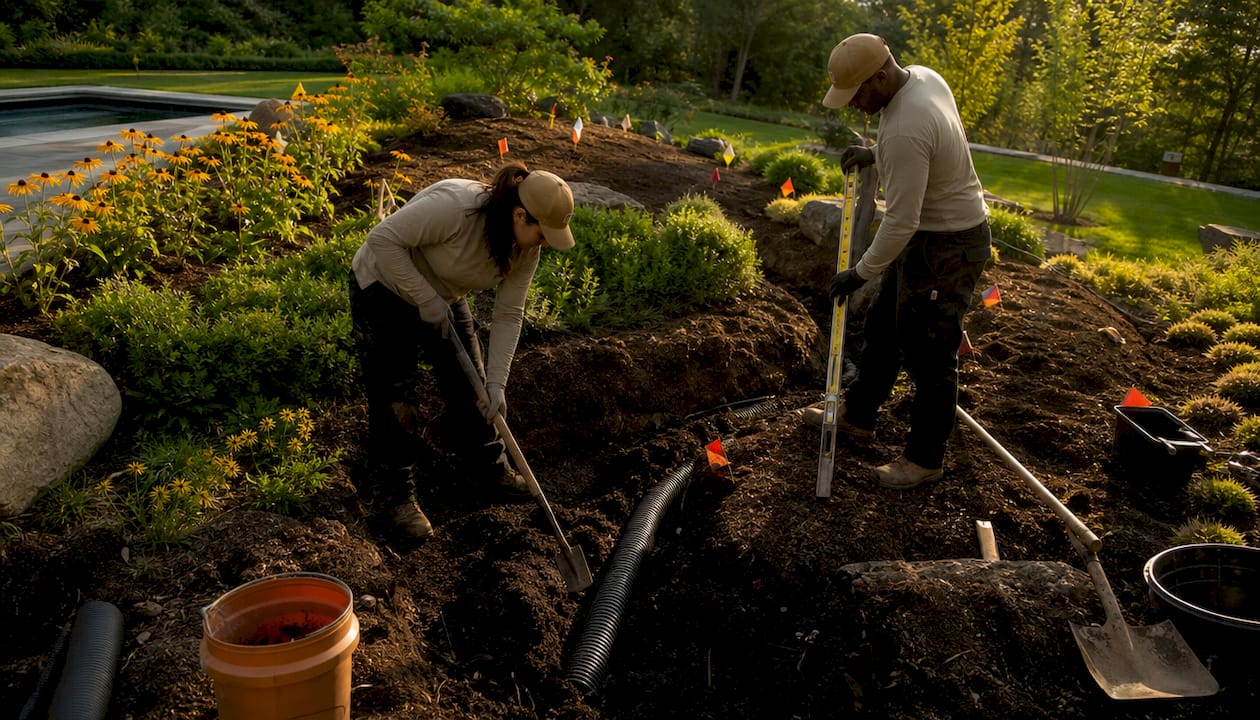
The less visible difference is what lies beneath. Luxury projects require engineered groundwork including drainage systems, soil preparation, and sub-base engineering. These elements are invisible once the project is complete, but they determine whether a $150,000 outdoor space holds up for 30 years or starts failing in five. Standard installs rarely include this level of preparation.
Integrated systems separate luxury yards further. Landscape lighting, automated irrigation, fire features, and outdoor audio are planned from the start in a luxury project, not added as afterthoughts. Lighting planned in the initial design avoids costly retrofit work and produces a far more cohesive result. Wiring run after hardscape is laid is both expensive and visually disruptive.
Key features that define luxury landscaping:
- Master planning: A cohesive site plan that governs every material, plant, and structure choice from day one
- Premium materials: Natural stone, travertine, PebbleTec pool finishes, and architectural-grade metalwork rather than commodity substitutes
- Engineered groundwork: Drainage, grading, and sub-base preparation built to last decades, not just pass a visual inspection
- Integrated systems: Lighting, irrigation, and fire features designed into the plan, not bolted on after construction
- Long-term maintenance plans: Luxury landscapes require detailed upkeep that preserves design intent, not just mowing and blowing
Standard landscaping focuses on routine tasks: lawn care, seasonal planting, basic irrigation repair, and surface-level updates. These services are necessary and valuable, but they do not produce an outdoor living environment. They maintain a yard. Luxury landscaping builds a destination.
Pro Tip: Before any project begins, ask your contractor to show you the drainage and grading plan. If they cannot produce one, the project is not being built to luxury standards, regardless of the materials on the surface.
How do cost and ROI compare between luxury and standard landscaping?
The financial case for luxury landscaping is stronger than most homeowners expect. Standard lawn care delivers a 217% immediate ROI, making it one of the highest-returning home maintenance activities available. That figure reflects the low cost of maintenance relative to curb appeal gains. Luxury landscaping operates on a different scale: a professionally designed and built outdoor environment can increase total home value by 15%–30%, particularly on properties where the yard was previously underdeveloped.
Luxury design services alone range from $5,000 for a conceptual layout to $50,000 or more for a complex estate master plan. Construction costs for a full outdoor living transformation at Modern Yardz range from $25,000 for a focused hardscape upgrade to $300,000 or more for a complete resort-caliber environment with a custom pool, outdoor kitchen, pergola, and integrated lighting. These are not commodity purchases. They are architectural investments.
| Cost category | Standard landscaping | Luxury landscaping |
|---|---|---|
| Annual maintenance | $300–$2,000/year | $2,000–$10,000+/year |
| Design fees | Minimal or none | $5,000–$50,000+ |
| Construction investment | $1,000–$15,000 | $25,000–$300,000+ |
| Home value impact | Curb appeal gains | 15%–30% market value increase |
| Longevity | 3–10 years typical | 20–30+ years with proper maintenance |
Foundation work including grading and drainage contributes substantially to the cost of luxury projects. Homeowners sometimes view this as an unnecessary expense. The reality is the opposite: skipping engineered groundwork is the single most common reason luxury-looking yards fail structurally within a decade.
"The cost of luxury landscaping is not in the visible finishes alone. It is in the invisible infrastructure that makes those finishes last. Drainage, grading, and sub-base preparation are where the real investment lives."
What design principles define luxury landscaping that standard projects lack?
Luxury landscape design is built on spatial discipline. The principles that separate a masterfully designed yard from a well-maintained one are restraint, proportion, and spatial hierarchy. True luxury design uses deliberate negative space and material restraint to create harmony, rather than filling every corner with features or plants. More is not more in luxury design. Clarity is.
The following design principles define the luxury approach:
- Spatial hierarchy: Every outdoor space has a primary zone, secondary zones, and transition areas. A luxury design defines these clearly. A standard yard treats all space as equal, which produces visual noise.
- Restraint of materials: A narrow, consistent material palette signals luxury. Mixing five different paving materials across one yard signals the opposite.
- Plant palette discipline: Repeating a small selection of species in deliberate groupings creates rhythm and harmony. Planting whatever is available at the nursery produces clutter.
- Proportion and scale: Structures, planting beds, and open space must be scaled to the home and the site. A pergola that is too small for the patio it covers looks like an afterthought.
- Architectural alignment: The outdoor design should extend the language of the home's architecture. A contemporary home with a rustic, eclectic yard creates visual conflict that no amount of expensive plants can resolve.
"Luxury is not about adding more. It is about having the confidence to leave space empty, to repeat a single material, and to let the proportions do the work."
Standard landscaping rarely engages with these principles. It addresses what is present, not what the space could become. A curated outdoor lifestyle environment requires a designer who thinks in terms of spatial relationships, not just plant selection and hardscape coverage.
How does the design-build model improve luxury landscaping outcomes?
The design-build model integrates planning, engineering, and construction under one team. This is the operational difference that separates consistently excellent luxury outcomes from projects that look good on paper but fail in execution. Integrated design-build teams vet feasibility, permitting, drainage, and materials against the live budget throughout the process, preventing unbuildable plans and costly field decisions.
Segmented services, where one firm designs and another builds, introduce structural risk. The designer does not know what the builder will encounter in the ground. The builder does not fully understand the design intent. Miscommunication produces scope changes, and scope changes produce cost overruns that exceed 20% of the original contract value on complex projects. That is not a hypothetical. It is a documented pattern in segmented luxury construction.
Modern Yardz operates as a single-team design-build firm from the first consultation through the final walkthrough. One point of contact manages consultation, 2D architectural plans, photo-realistic 3D renderings, permitting, material procurement, and full construction. No subcontractors interpret the vision. No handoffs dilute it.
Key advantages of the design-build approach:
- Budget control: Design decisions are made with real construction costs in hand, not theoretical estimates
- Timeline reliability: One team coordinates all trades, eliminating the scheduling gaps that plague multivendor projects
- Drainage and groundwork precision: The team that designs the drainage plan also installs it, with no translation errors
- Vision integrity: The 3D rendering the homeowner approves is what gets built, because the same team is responsible for both
Pro Tip: Ask any prospective contractor whether their designer and their construction crew work for the same company. If the answer is no, you are accepting the risk of a segmented process on a luxury project.
Key Takeaways
Luxury landscaping delivers lasting value through engineered groundwork, design restraint, and integrated construction, while standard landscaping maintains surfaces without building outdoor living environments.
| Point | Details |
|---|---|
| Core difference | Luxury landscaping is master-planned and built; standard landscaping is maintained and updated. |
| Hidden infrastructure | Drainage, grading, and sub-base engineering are the invisible foundation of every durable luxury project. |
| ROI distinction | Standard lawn care returns 217% immediately; luxury landscapes add 15%–30% to total home market value. |
| Design discipline | Restraint, spatial hierarchy, and a consistent material palette define luxury design over feature quantity. |
| Design-build advantage | One integrated team eliminates the miscommunication and cost overruns common in segmented services. |
What I have learned about what luxury landscaping actually means
I have reviewed hundreds of outdoor projects across San Diego, and the most common mistake I see is homeowners equating luxury with complexity. They assume more features, more plants, and more materials equal a more luxurious result. The opposite is almost always true.
The yards that read as genuinely luxurious share one quality: restraint. They use two or three materials consistently. They leave open space where a lesser designer would fill it. They repeat a plant species until it creates rhythm rather than introducing a new species every ten feet. That confidence in simplicity is harder to execute than it looks, and it is the clearest signal that a skilled designer was involved.
The second thing I have learned is that the foundation work is where the real investment lives. A yard with travertine pavers laid over improperly graded soil will crack, shift, and drain poorly within a few years. The same travertine laid overengineered sub-base and a properly designed drainage system will look identical on day one and still look correct in 2040. You cannot see the difference in a photo. You feel it over time.
For homeowners planning a significant outdoor project, my practical advice is this: phase the project if you need to, but never phase the planning. Commission the full master plan first. Know where the drainage goes, where the lighting runs, and where the pool equipment sits before you build anything. A phased project built from a complete plan produces a coherent result. A project built in phases without a plan produces a yard that looks like it was designed in phases.
The landscape design process is where the long-term value is established. Homeowners who invest in that process before breaking ground consistently end up with better outcomes, fewer surprises, and properties that hold their value in San Diego's competitive real estate market.
— Thomas Jackson
Modern Yardz: San Diego's luxury design-build team
Modern Yardz has completed 2,900+ projects across San Diego County under California Contractor License #1082881, maintaining a 5.0-star Google rating across every one of them. Every project runs through a single integrated team: consultation, 3D renderings, permitting, and full construction with no subcontractor handoffs and no miscommunication. The firm works exclusively in the luxury segment, building custom pools, outdoor kitchens, premium paver systems, pergolas, and fire features using natural stone, travertine, and commercial-grade components. If you are ready to see what your property could become, the luxury landscape design team at Modern Yardz offers a free consultation to qualified San Diego homeowners.
FAQ
What is luxury landscaping, exactly?
Luxury landscaping is a master-planned, design-build process that produces a complete outdoor living environment using premium materials, engineered infrastructure, and cohesive architectural design. It is distinct from standard landscaping, which focuses on routine maintenance and basic planting.
How much does luxury landscaping cost compared to standard landscaping?
Standard landscaping maintenance typically costs $300–$2,000 per year. Luxury landscaping projects start at $25,000 for focused hardscape upgrades and reach $300,000 or more for full outdoor living transformations including custom pools, kitchens, and integrated systems.
Does luxury landscaping increase home value?
Professionally designed luxury landscapes can increase total home market value by 15%–30%, particularly on properties where the outdoor space was previously underdeveloped or neglected.
Why does drainage matter so much in luxury landscaping?
Drainage and sub-base engineering are the invisible foundation of every durable luxury project. Without proper grading and drainage, premium surface materials like travertine and natural stone will shift, crack, and fail regardless of their quality.
What is the design-build model and why does it matter for luxury projects?
The design-build model places planning, engineering, and construction under one integrated team. This eliminates the miscommunication and cost overruns that occur when separate firms design and build the same project, producing more precise execution and better budget control.
Recommended
Start Your Free Design Consultation
Tell us about your project and we'll be in touch within 24 hours. No pressure, no obligation.
Ready to design your dream yard?
Tell us about your project. We'll send back a real plan, not a templated quote.
Book My Free Consultation→

