Pool Resurfacing in San Diego: Cost, Finishes, and Timing
Pool resurfacing in San Diego usually means removing a worn plaster finish and applying new plaster, quartz, or pebble. HomeGuide puts the national average at $6,000 to $15,000 for about 1,000 square feet of pool surface, and San Diego projects often run higher once tile, coping, and draining are added. Expect one to two weeks of work, and drain to the sewer, never the storm drain.
Key takeaways:
- Resurface when the finish is rough, stained, etched, or delaminating, or when you can see the gunite shell beneath.
- HomeGuide's national average is $6,000 to $15,000 for roughly 1,000 square feet of interior surface; tile, coping, and equipment upgrades add to that.
- Plaster is the least expensive finish; quartz and pebble aggregates cost more but last longer and hide stains better.
- In the City of San Diego, pool water cannot go into the storm drain unless it is fully dechlorinated and meets strict conditions; most crews route it to the sanitary sewer with city approval.
- Plan for one to two weeks from drain to refill, plus a careful start-up chemistry period.
Pool resurfacing in San Diego is one of the most common pool projects we see, because San Diego pools get used most of the year and our sun and water chemistry wear finishes faster than many homeowners expect. At Modern Yardz, we design and build custom pools and complete backyards, and a worn finish is often the moment homeowners decide to rethink the whole pool area.
This guide covers when to resurface, what each finish costs and how it performs, how the job works, and the San Diego rules for draining a pool.
How do you know your pool needs resurfacing?
When the finish stops protecting the shell or stops looking good. The most common signs:
- Rough texture that snags swimsuits or scrapes feet.
- Etching and pitting, usually from water chemistry that was too acidic over time.
- Stains and discoloration that do not come out with brushing or chemical treatment.
- Delamination, where patches of plaster sound hollow or flake away.
- Visible gunite or gray patches showing through the finish.
- Cracks in the finish, which can be cosmetic or a sign of shell movement that needs a closer look.
If you see cracks wider than a hairline, or water loss you cannot explain, have the shell and plumbing checked before resurfacing. A new finish over a leaking or moving shell will not last.
How much does pool resurfacing cost in San Diego?
HomeGuide estimates the national average at $6,000 to $15,000 for about 1,000 square feet of pool surface, per its pool resurfacing cost guide. San Diego labor and disposal costs usually push projects toward the middle or upper end of that range, and most homeowners add work while the pool is empty.
What moves the price:
| Factor | Effect on cost |
|---|---|
| Pool size and shape | More surface area and complex shapes cost more |
| Finish type | Plaster costs least; quartz and pebble cost more |
| Removing the old finish | Bond coat or full chip-out adds labor |
| Waterline tile | Replacing tile at the same time is common and adds cost |
| Coping | New stone or precast coping is a separate line item |
| Draining and disposal | Sewer discharge and permits affect cost and schedule |
| Equipment upgrades | Pumps, filters, and automation are often done together |
If the pool is more than 20 years old, it is often worth comparing resurfacing alone against a broader redesign with a custom pool builder, since tile, coping, and decking may all be near the end of their life at once.
Which pool finish is best: plaster, quartz, or pebble?
Plaster is the budget choice, quartz is the middle ground, and pebble is the most durable.
- White plaster (marcite): The classic smooth finish. Lowest cost, but the most prone to staining and etching, and it shows wear soonest.
- Colored plaster: Same material with pigment. Looks great new, but color can fade or mottle unevenly.
- Quartz aggregate: Plaster blended with quartz granules. Harder and more stain-resistant than plaster, with a slightly textured feel and more color options.
- Pebble aggregate: Small smooth pebbles set in cement. The longest-lasting finish of the three and the best at hiding stains, with a natural, textured look. Costs the most.
- All-tile: Glass or porcelain tile throughout. A luxury finish with the longest life and the highest cost; often chosen for modern and infinity-edge pools.
For most San Diego homeowners who plan to stay in the home, quartz or pebble is worth the premium. Pebble's darker colors also give the water a deep blue or lagoon tone that suits our coastal light.
How does pool resurfacing work, step by step?
The job usually takes one to two weeks from draining to refill.
- Drain the pool following local discharge rules (see below).
- Prepare the surface by removing loose finish, chipping out delaminated areas, and cleaning.
- Repair cracks, tile, and plumbing fittings while everything is exposed.
- Apply a bond coat if the old finish is staying, so the new material adheres.
- Apply the new finish in one continuous pass for a seamless surface.
- Refill immediately, without stopping, to avoid lines in the finish.
- Start-up: brush daily and balance chemistry carefully for the first few weeks while the finish cures.
The start-up period matters as much as the application. Poor chemistry in the first month is one of the most common reasons a new finish stains or etches early.
What are San Diego's rules for draining a pool?
Do not drain chlorinated or salt water into the street or storm drain. The City of San Diego's pools and spas fact sheet says pool water can go into the sanitary sewer through an on-site sink or sewer lateral cleanout with approval from the Public Utilities Department. Discharging to the storm drain is allowed only if the water is fully dechlorinated, has a pH between 7 and 8, is at ambient temperature, and contains no algae, salt, or suspended solids.
The penalties are serious. The city's 2016 pools, spas, and fountains guidance states that illegal discharges of pool water, filter backwash, or materials such as plaster and gunite to the storm drain can bring penalties of up to $10,000 per day per incident. That includes the plaster dust and chips from a resurfacing job, which must be contained and disposed of properly.
If you live outside the City of San Diego, such as in Escondido or Carlsbad, your city or water district has its own rules. Your contractor should know them and handle the discharge plan.
Should you add tile, coping, or a new deck while the pool is empty?
Usually yes, because the pool will never be easier to work on. Waterline tile is often cracked or stained by the time the finish wears out, and coping stones can loosen. Replacing them at the same time avoids draining twice.
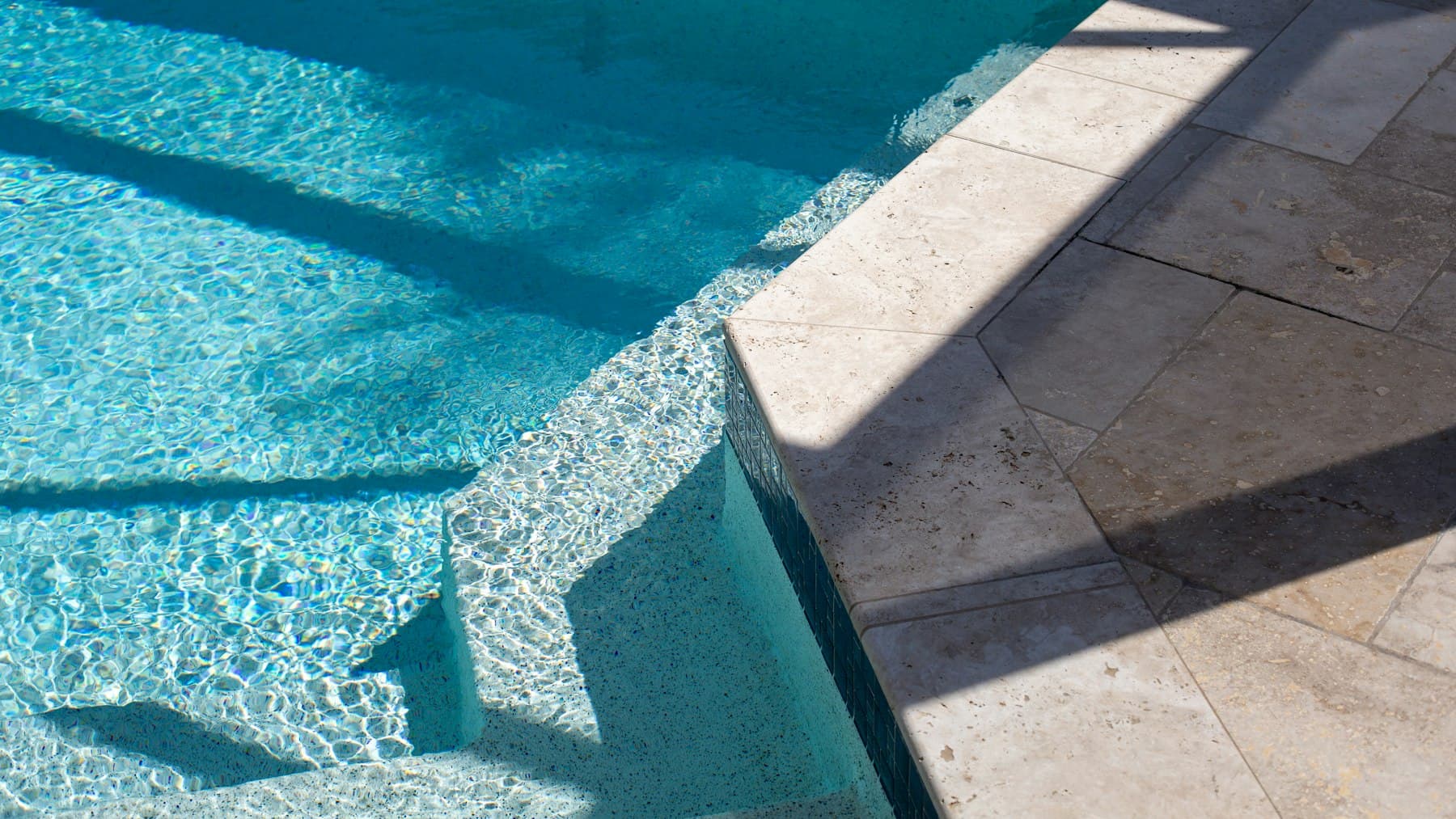
It is also a natural moment to rethink the deck. Upgrading to travertine pavers or a cooler deck surface, adding landscape lighting, or improving drainage around the pool can transform the space for a modest addition to the project. Our guide to pool coping options covers the edge materials in detail.
How long does a new pool finish last?
It depends on the finish and, above all, on water chemistry. Plaster wears fastest, quartz lasts longer, and pebble and tile last the longest. Keeping pH, alkalinity, and calcium hardness in range, brushing regularly, and avoiding acid washes extends any finish. Saltwater pools need extra attention to calcium scaling; see our comparison of saltwater versus chlorine pools.
Rethinking the whole pool area?
If your pool area needs more than a new finish - a new deck, coping, lighting, or a full redesign - Modern Yardz designs and builds custom pools and complete backyards across San Diego County, with a 3D rendering and a line-item cost before work begins. Call 619-775-9554 or explore our pool design and build services.
Start Your Free Design Consultation
Tell us about your project and we'll be in touch within 24 hours. No pressure, no obligation.
Common questions
- How much does it cost to resurface a pool in San Diego?
- HomeGuide's national average is $6,000 to $15,000 for about 1,000 square feet of pool surface. San Diego projects often run toward the higher end, and adding new tile, coping, or equipment increases the total.
- How long does pool resurfacing take?
- Most projects take one to two weeks from draining to refill, depending on prep work, repairs, and weather. The finish then needs careful brushing and water balancing for several weeks while it cures.
- Can I drain my pool into the street in San Diego?
- Not if the water contains chlorine, salt, algae, or debris. The City of San Diego allows draining to the sanitary sewer through a cleanout with Public Utilities approval, and to the storm drain only when the water is fully dechlorinated and meets strict conditions.
- Is pebble or plaster better for a pool?
- Pebble costs more but lasts longer and hides stains better than plaster. Plaster is the budget option and shows wear sooner. Quartz sits between them on cost and durability.
- How often does a pool need resurfacing?
- It depends on the finish and water chemistry. Plaster needs resurfacing soonest, while quartz, pebble, and tile last progressively longer. Consistent water balance is the biggest factor in how long any finish lasts.
Ready to design your dream yard?
Tell us about your project. We'll send back a real plan, not a templated quote.
Book My Free Consultation→