What Is Outdoor Living Space Design? A Homeowner's Guide
Discover what outdoor living space design is and how it can transform your yard into a functional, valuable extension of your home.
Outdoor living space design is the process of planning and building a dedicated outdoor area with defined zones, stable surfaces, and weather protection to serve specific lifestyle functions. The industry term for this practice is "outdoor room design," and it treats your yard with the same spatial logic applied to interior architecture. Done correctly, it transforms an underused backyard into a functional extension of your home that adds measurable property value and daily quality of life. This guide covers the core principles: zoning strategy, microclimate management, material selection, and a sequenced planning process that prevents costly mid-project changes.
What is outdoor living space design and how does it differ from a basic patio?
Outdoor living space design is defined as the intentional creation of outdoor rooms with stable surfaces, purposeful zoning, and structural elements that support leisure, dining, and entertaining. A basic patio is a surface. An outdoor living space is a system of surfaces, structures, and furnishings that work together to serve specific human activities.
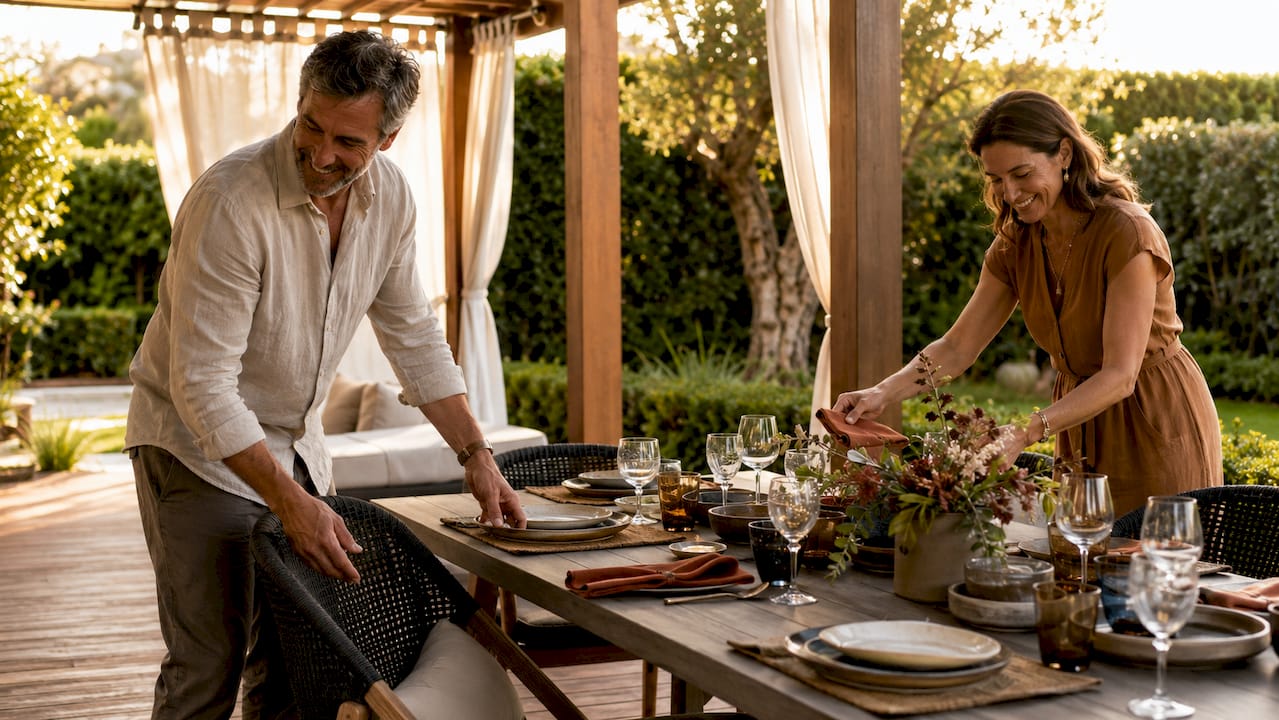
The distinction comes down to spatial intent. A casual furniture arrangement on concrete is not a designed outdoor living space. A designed space has defined boundaries, a deliberate floor material, vertical elements that create enclosure, and overhead structures that provide scale and protection. Think of the difference between a folding chair on a driveway and a travertine-paved lounge area anchored by a louvered pergola and bordered by a low stone seating wall.
Outdoor living spaces take several physical forms, each suited to different site conditions and budgets:
- Patios: Ground-level hardscape areas using stone, travertine, concrete, or porcelain pavers. The most common starting point for a designed outdoor space.
- Decks: Elevated wood or composite platforms that work well on sloped lots or where grade changes make a patio impractical.
- Screened porches: Enclosed structures that extend the indoor-outdoor connection while providing protection from insects and light weather.
- Multi-level combinations: Two or more connected zones at different grades, often used on larger properties to separate dining from lounge or pool areas.
The material choice for the base floor sets the tone for everything above it. Natural stone and travertine read as permanent and architectural. Composite decking reads as warm and residential. Stamped concrete offers a middle ground at a lower price point. Each choice carries different maintenance requirements, thermal properties, and visual weight.
How to effectively plan zones and layout flow in outdoor living space design
Zoning is the practice of dividing your outdoor space into purposeful areas, each designed for a specific activity, connected by intuitive circulation paths. Zoning reflects how people move, gather, and rest in a space, which means layout decisions must start with human behavior, not with furniture catalogs or material samples.
The four primary zones found in most well-designed outdoor living environments are:
- Lounge zone: Seating arranged for conversation and relaxation. Typically anchored by a sofa, chairs, and a coffee table on a defined rug or paver section. This zone benefits from shade overhead and enclosure on at least two sides.
- Dining zone: A table and chairs sized for your typical guest count, positioned close to the cooking zone for practical service flow. Lighting above the table is non-negotiable for evening use.
- Cooking and service zone: An outdoor kitchen, built-in grill station, or prep counter. This zone generates heat and requires ventilation clearance. It should connect directly to the dining zone without requiring guests to cross through the lounge.
- Fire and warmth zone: A fire pit, outdoor fireplace, or fire feature that serves as the social anchor for evening gatherings. This zone works best at the perimeter of the space, drawing people toward it rather than competing with the lounge.
The number of zones matters as much as their content. Two to four primary zones is the practical limit for most residential properties. More than four zones creates circulation confusion, fragments the visual experience, and makes furniture selection nearly impossible.
Transitions between zones require as much thought as the zones themselves. Hard separation fragments the garden experience. Soft transitions, achieved through changes in paver pattern, a step in grade, a low planting border, or a shift in material texture, maintain cohesiveness while still signaling a change in function.
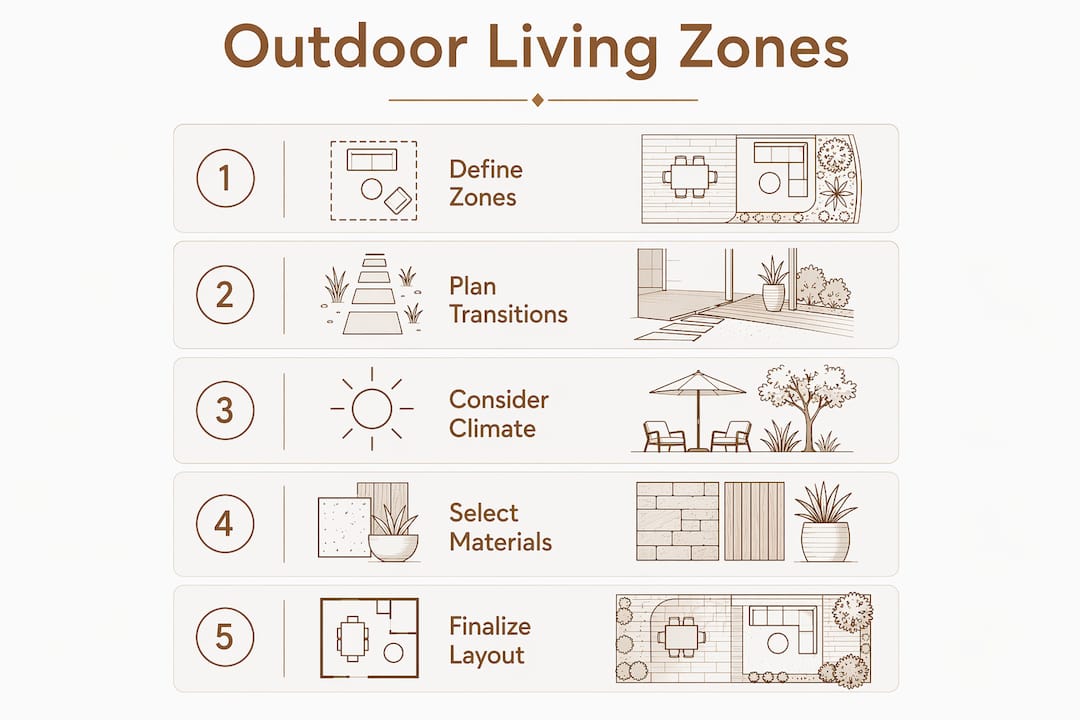
Pro Tip: Before committing to any layout, mock up your zones using outdoor furniture, garden hoses, or painter's tape on the ground. Walk through the space as if you were hosting a dinner party. You will immediately identify circulation problems that no floor plan drawing would reveal.
What role does climate and microclimate management play in outdoor living space design?
Climate management is the factor most homeowners underestimate and most designers prioritize. Shade location and wind direction must be resolved before you select a single piece of furniture or finalize a zone layout. A lounge area positioned in full western sun becomes unusable by 3 p.m. in summer. A dining zone exposed to prevailing coastal winds turns every dinner into a battle with napkins.
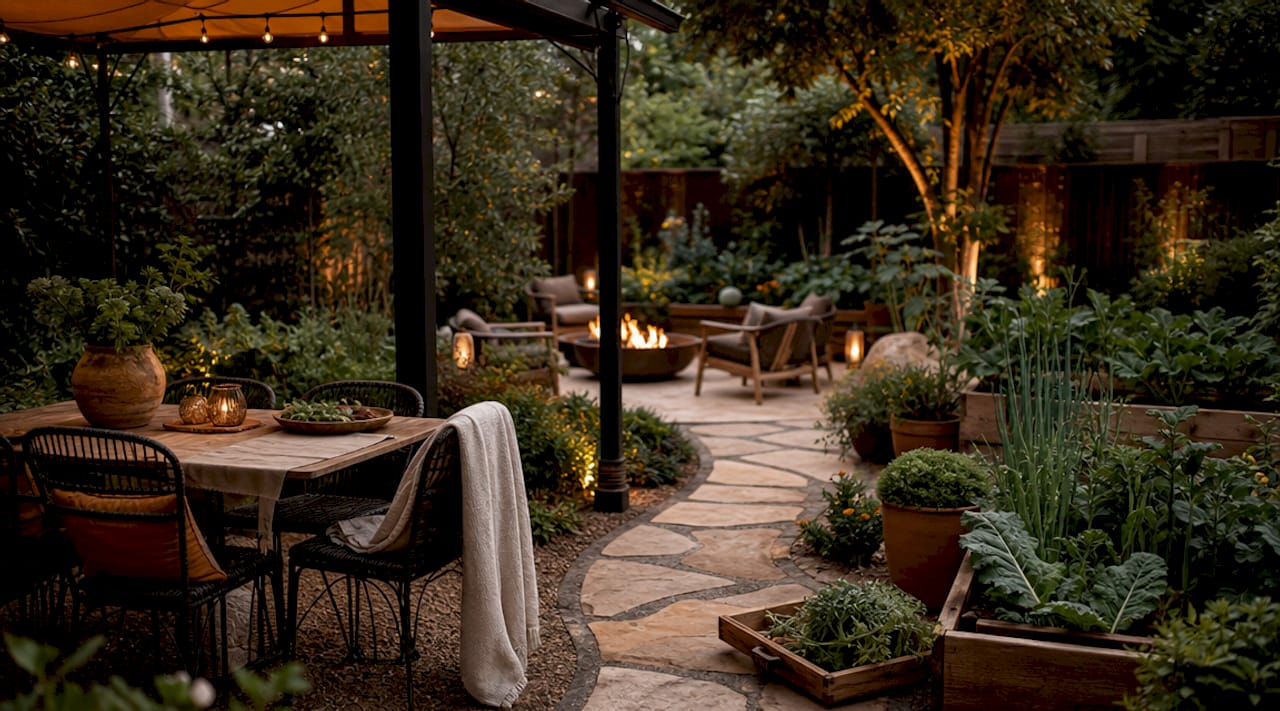
Research on outdoor thermal comfort, including studies applying the Universal Thermal Climate Index (UTCI), confirms that microclimate design interventions directly determine whether an outdoor space is usable across seasons or only on perfect weather days. This means shade structures, wind barriers, and heat retention features are not amenities. They are functional requirements.
The primary climate management tools available to you are:
- Shade structures: Louvered pergolas with automated slats offer the most flexibility, allowing you to open for winter sun and close for summer shade. Fixed alumawood patio covers provide consistent protection. Shade sails and umbrellas work for smaller zones or temporary solutions.
- Wind barriers: Masonry walls, glass panel screens, dense hedging like Ficus nitida or Italian cypress, and lattice screens all reduce wind velocity. The most effective barriers are positioned perpendicular to the prevailing wind direction.
- Solar gain management: In San Diego's climate, south-facing spaces benefit from deciduous trees or retractable shade that allows winter sun to warm the space while blocking summer heat.
- Radiant heat features: Outdoor fireplaces and fire bowls extend evening usability by 2 to 3 hours on cool nights. Overhead infrared heaters mounted to pergola beams provide targeted warmth without the visual weight of a fire feature.
Resort-style outdoor environments combine shade, wind protection, and lighting to achieve all-season usability. That combination is what separates a space you use three months a year from one you use twelve.
Pro Tip: Photograph your yard at 8 a.m., noon, and 4 p.m. on a sunny day. The shadow patterns in those photos tell you exactly where shade structures are needed and where natural shade already exists. Do this before your first design meeting.
How do materials, structure, and lighting create a comfortable outdoor living space?
The physical components of an outdoor living space operate on three planes: the base (floor), the vertical plane (walls and enclosure), and the overhead plane (roof and structure). Without vertical and overhead enclosure, even a beautifully furnished outdoor space feels exposed and temporary. All three planes must be addressed for a space to function as a true outdoor room.
Here is how common materials compare across the key performance factors:
| Material | Durability | Heat retention | Maintenance | Best use |
|---|---|---|---|---|
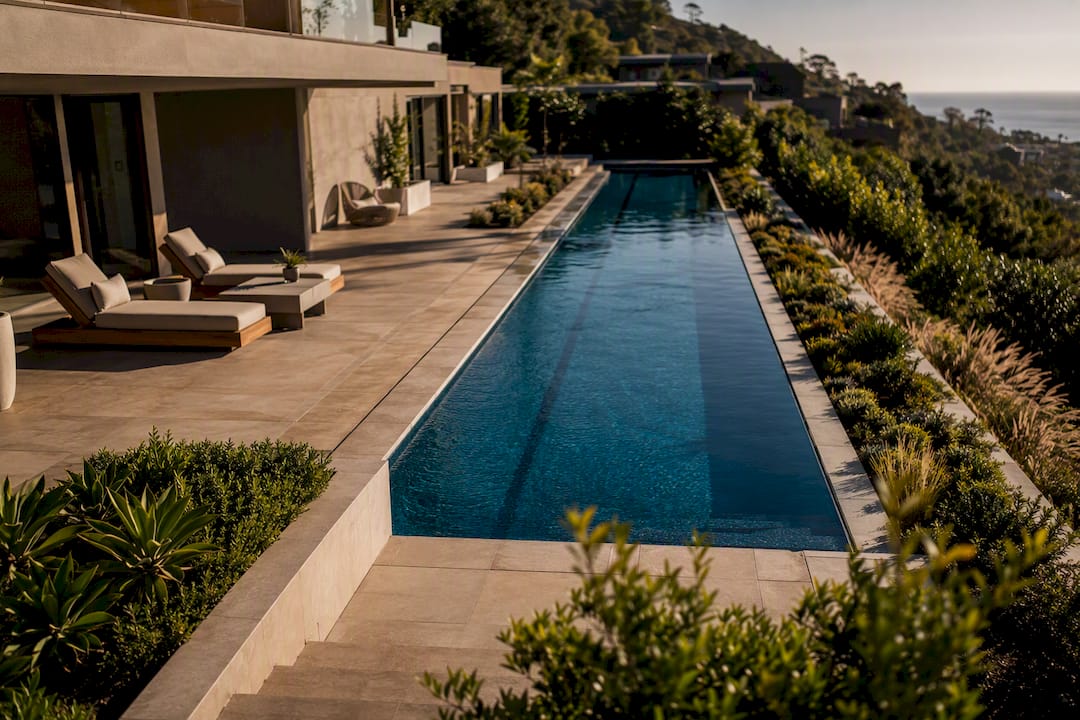
| Travertine pavers | Very high | Low (stays cool) | Low | Pool decks, patios |
| Natural stone | Very high | Moderate | Low | Patios, feature walls |
| Composite decking | High | Moderate | Very low | Elevated decks |
| Stamped concrete | Moderate | High | Moderate | Budget patios, driveways |
| Porcelain pavers | Very high | Low | Very low | Modern aesthetic patios |
Vertical elements define the edges of your outdoor room. Low seating walls in natural stone or concrete block serve double duty as additional seating during large gatherings. Perimeter planting with structured hedges or ornamental grasses creates a sense of enclosure without the visual weight of a solid wall. Perimeter planting and overhead structures function as psychological anchors that make a space feel cozy and intentional rather than exposed.
Overhead structures provide both shelter and scale. A custom louvered pergola over a lounge zone immediately transforms the area from an open yard into a defined room. The structural presence of a pergola also gives you a mounting surface for lighting, fans, heaters, and speakers.
Lighting operates in three layers that work together:
- Ambient lighting: String lights, overhead fixtures, or soffit-mounted LEDs that provide general illumination across the zone.
- Task lighting: Directed light over the dining table, grill station, and prep surfaces. Custom LED landscape lighting integrated into paver borders and planting beds adds precision without glare.
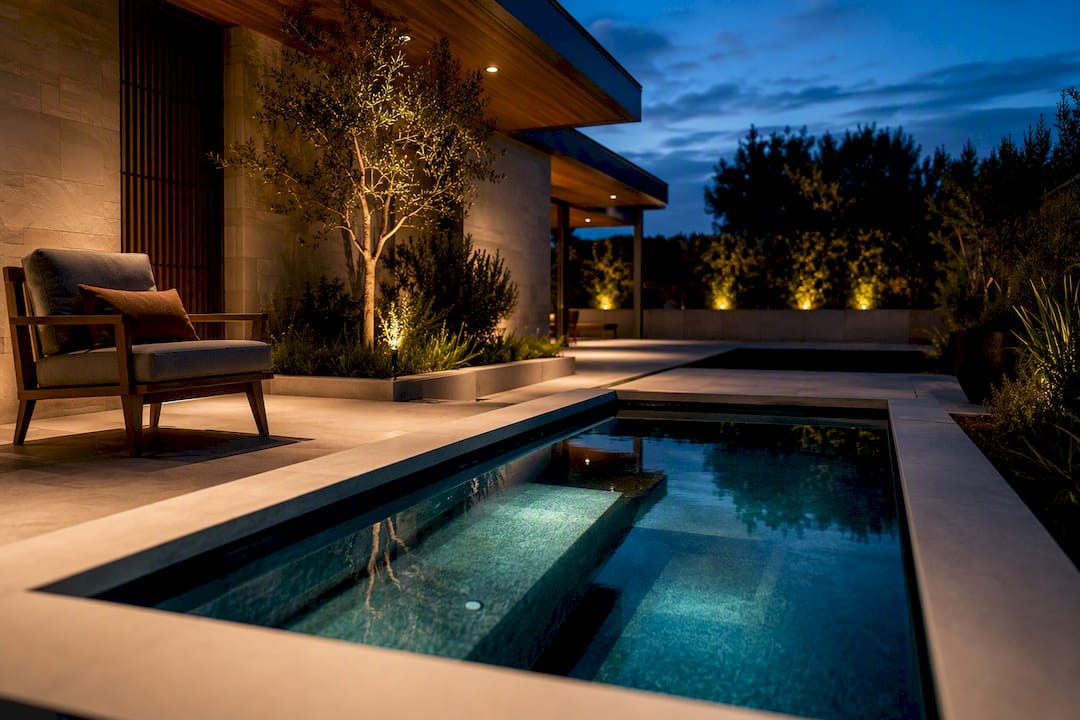
- Accent lighting: Uplighting on specimen trees, wall washing on stone features, and underwater lighting in pools or water features that create visual depth after dark.
What is a practical planning process for an outdoor living project?
A sequenced design-build process prevents the most expensive category of outdoor project mistakes: mid-construction changes. Changing a zone layout after pavers are set costs two to four times what it would have cost to adjust the plan before the first shovel broke ground.
The correct sequence for an outdoor living project planning checklist is:
- Define the use cases. List every activity you want the space to support: morning coffee, weekend entertaining, children's play, evening dining, pool use. Rank them by frequency.
- Map the layout and flow. Establish where each zone sits relative to the house entry points, the pool if applicable, and the primary view lines. Align outdoor spatial axes with interior room axes where possible to create visual continuity.
- Resolve microclimate factors. Determine shade requirements, wind exposure, and heating needs before selecting materials or furniture.
- Select base materials. Choose flooring materials that suit the climate performance requirements identified in step three, then select vertical and overhead materials that complement the base.
- Design the lighting plan. Lighting is most cost-effective when conduit and wiring are installed during construction, not retrofitted afterward.
- Sequence the construction. Build in this order: grading and drainage, hardscape, structural elements (pergolas, walls), plumbing and electrical rough-in, landscape, then lighting and finishing details.
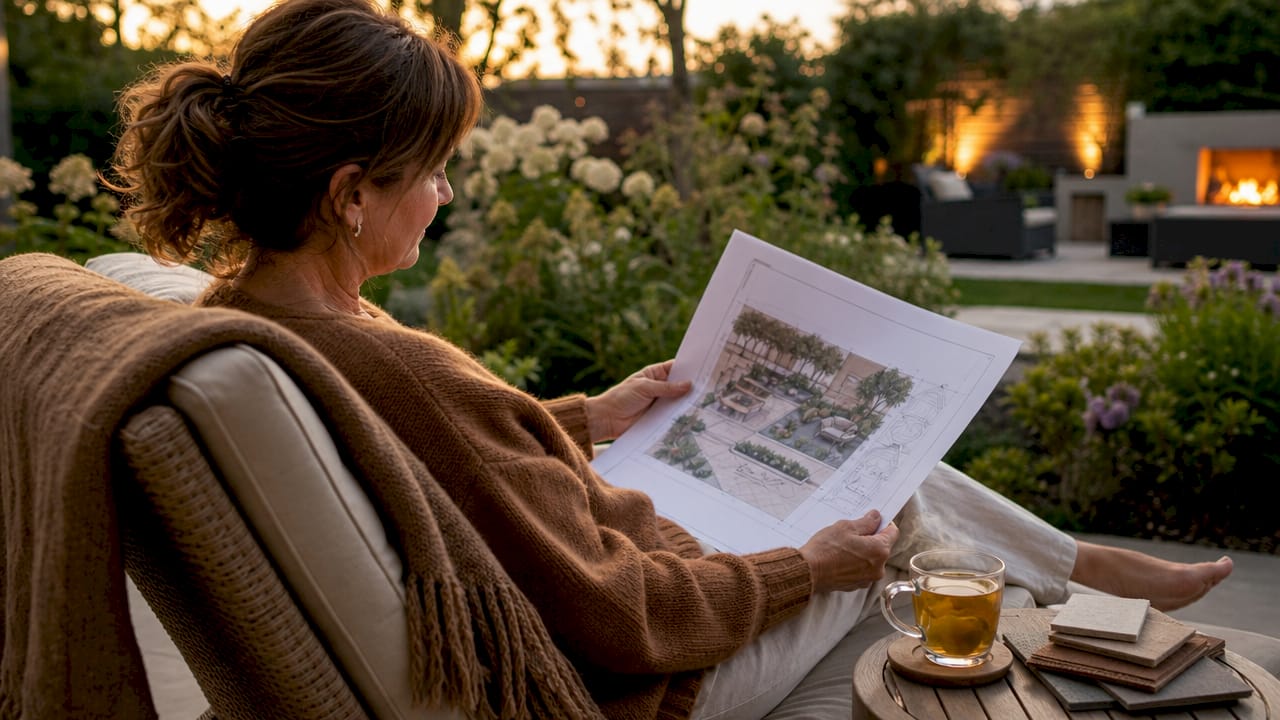
Pro Tip: Create a one-page planning document that lists your zones, primary materials, and climate solutions before your first contractor meeting. Contractors who receive a clear brief deliver more accurate bids and fewer change orders.
Key takeaways
Outdoor living space design succeeds when zoning, microclimate management, and material selection are resolved in sequence before construction begins.
| Point | Details |
|---|---|
| Define zones before materials | Establish lounge, dining, cooking, and fire zones based on how you actually use the space. |
| Limit zones to 2-4 | More than four zones creates circulation problems and fragments the visual experience. |
| Resolve climate factors first | Shade location and wind direction must be decided before furniture placement or material selection. |
| Use all three spatial planes | Base, vertical, and overhead elements together create the enclosure that makes a space feel like a room. |
| Sequence the build correctly | Grading and drainage first, hardscape second, structures third, lighting last prevents costly rework. |
Why behavior-driven design outperforms aesthetics-first thinking
I have seen homeowners spend $80,000 on a stunning outdoor kitchen and travertine patio that they use four times a year. The materials are flawless. The layout is the problem. The cooking zone faces away from the seating area, so whoever is grilling is excluded from every conversation. The lounge sits in direct afternoon sun with no shade structure. The fire pit is positioned so close to the dining table that guests cannot use both zones simultaneously.
Every one of those mistakes was made at the planning stage, not the construction stage. The homeowners chose materials and aesthetics before they mapped how they actually move through and use a space. That is the single most common and most expensive error in outdoor living design.
The approach that consistently produces spaces people actually live in starts with behavior. Where do you enter the yard from the house? Where do guests naturally congregate? What time of day do you use the space most? Those answers determine zone placement. Zone placement determines material selection. Material selection determines the construction sequence. Aesthetics emerge from that logic, not the other way around.
Incremental upgrades also outperform the "do everything at once" approach for most homeowners. A well-designed hardscape and pergola installed in year one gives you a functional outdoor room immediately. A pool, outdoor kitchen, or fire feature added in year two integrates cleanly because the spatial logic was already established. Trying to design all of it simultaneously without a clear master plan produces spaces that feel assembled rather than designed.
— David
How Modernyardz builds luxury outdoor living environments in San Diego
Modernyardz has completed 2,900+ projects across San Diego County since 1975, operating exclusively in the luxury segment with a design-build model that covers consultation, 3D rendering, permitting, and construction under one team. If you are ready to create a luxury outdoor space that integrates zoning, climate management, and premium materials into a cohesive environment, Modernyardz manages every phase from first sketch to final walkthrough. Their portfolio includes custom pools, outdoor kitchens, louvered pergolas, fire features, and full hardscape systems built with travertine, natural stone, and architectural-grade components. Book a consultation to see your project in photo-realistic 3D before any construction begins.
FAQ
What is the definition of outdoor living space design?
Outdoor living space design is the process of planning a functional outdoor area with defined zones, stable flooring, and structural elements that support specific activities like dining, lounging, and entertaining. It treats the yard as a series of purposeful rooms rather than open, undifferentiated space.
How many zones should an outdoor living space have?
Two to four primary zones is the recommended range for most residential properties. More than four zones creates circulation problems and makes the space feel fragmented and difficult to furnish.
What materials work best for outdoor living space floors?
Travertine and natural stone pavers are the top-performing options for durability, heat management, and visual quality. Composite decking suits elevated platforms, while porcelain pavers offer a low-maintenance modern alternative.
When should I plan shade and wind protection for an outdoor space?
Shade location and wind direction must be resolved before selecting furniture or finalizing zone layouts. These microclimate decisions directly determine whether the space is usable year-round or only on ideal weather days.
Does outdoor living space design increase property value?
A well-executed outdoor living environment is one of the highest-returning investments in San Diego real estate, particularly when it includes permanent structures like pergolas, outdoor kitchens, and custom pools built with premium materials.
Recommended
Start Your Free Design Consultation
Tell us about your project and we'll be in touch within 24 hours. No pressure, no obligation.
Ready to design your dream yard?
Tell us about your project. We'll send back a real plan, not a templated quote.
Book My Free Consultation→