Hardscape vs Softscape: Backyard Balance Guide
Discover the perfect hardscape vs softscape backyard balance to transform your outdoor space. Learn how to create harmony and functionality!
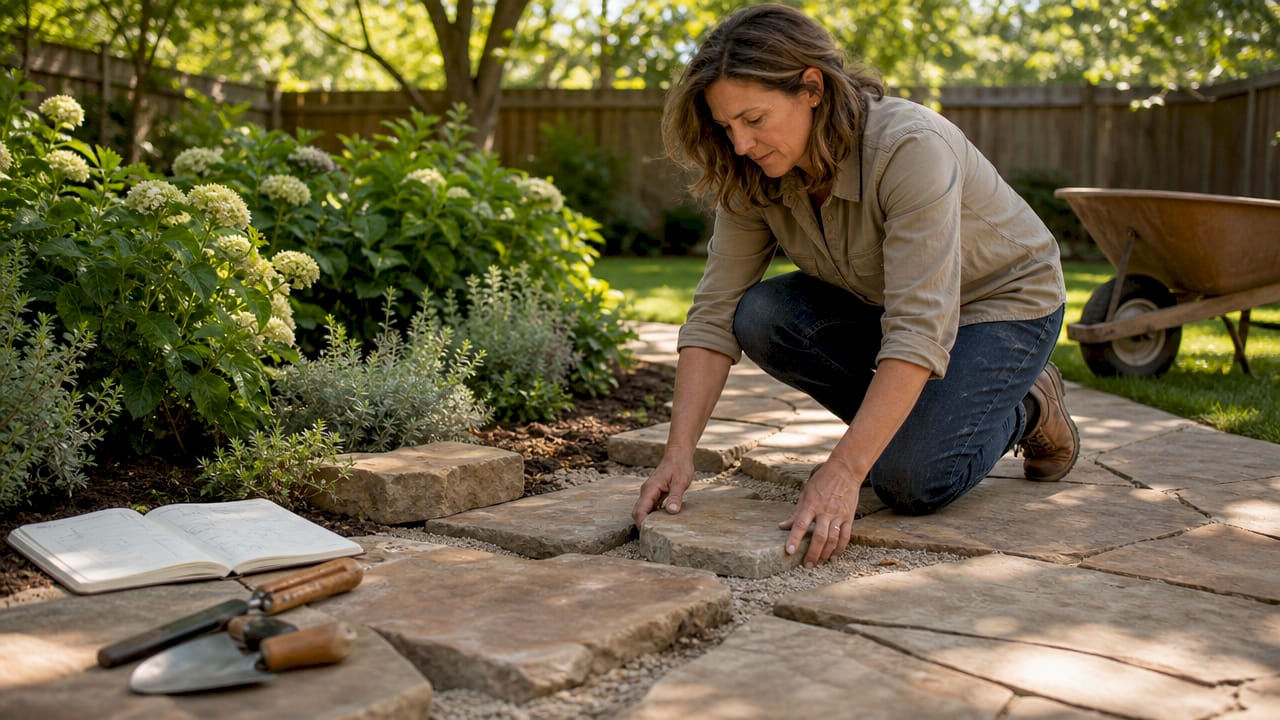
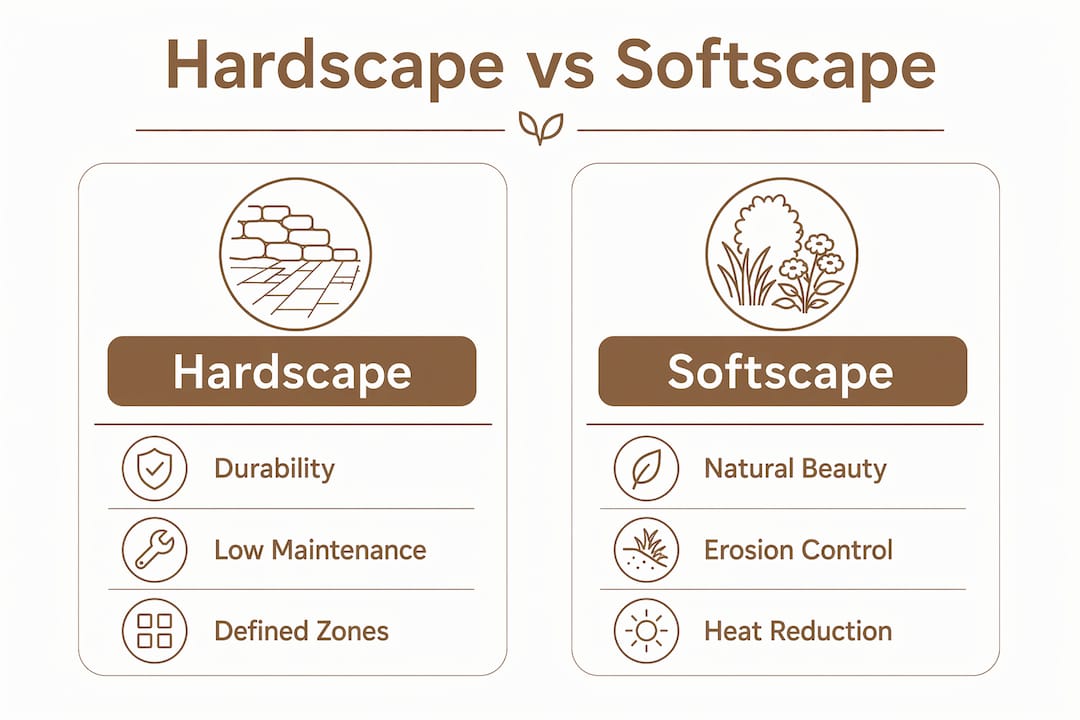
Hardscape is defined as the permanent, structural elements of your outdoor space, including patios, walkways, retaining walls, pergolas, and outdoor lighting, while softscape covers every living component: lawn, shrubs, trees, flower beds, groundcover, and mulch. Getting the hardscape vs softscape backyard balance right determines whether your yard functions as an outdoor living space or simply exists as unused square footage. A yard dominated by concrete feels stark and generates heat. A yard without structure becomes overgrown and impractical. The most successful backyard designs treat these two categories as partners, not competitors, with each reinforcing the other's strengths.
What is the ideal hardscape vs softscape ratio for your backyard?
No single ratio works for every homeowner, but current landscaping guidance identifies three practical starting points based on lifestyle and maintenance preferences.
| Ratio (Hardscape/Softscape) | Best for | Maintenance level |
|---|---|---|
| 60–70% / 30–40% | Entertaining, low-maintenance yards | Low |
| 50% / 50% | Mixed-use family spaces | Moderate |
| 30–40% / 60–70% | Garden-focused, plant-heavy yards | High |
A 60/40 split favoring hardscape suits homeowners who entertain frequently and want minimal lawn care. Think travertine patio, a built-in outdoor kitchen, and a pergola with drought-tolerant border plantings. A 50/50 split works well for families who want both a functional patio zone and room for kids to play on grass. A 40/60 split in favor of softscape fits dedicated gardeners who want planting beds, trees, and groundcover as the dominant visual experience, with hardscape paths and walls providing structure.
One factor many homeowners overlook is local regulation. Some municipalities place direct limits on how much of a landscaped area can be lawn. For example, certain Utah cities limit lawn to 35% of a landscaped area, which directly affects how you allocate softscape. San Diego's water-conscious building environment similarly encourages drought-tolerant planting over traditional turf, which shifts the calculus toward hardscape and low-water groundcover.
Pro Tip: Start with a 50/50 split as your baseline, then adjust after living in the space for one full season. You will quickly learn whether you need more paved surface for entertaining or more planting area for privacy and shade.
How to design your backyard layout with hardscape and softscape
The most reliable design workflow is to install hardscape first as the structural skeleton of your yard, then layer softscape around and between those fixed elements. Reversing this sequence creates costly rework: plants get damaged during paver installation, irrigation lines get cut, and grading changes undermine established root systems.
Here is a practical sequence for planning your layout:
- Define use zones first. Identify where you want to sit, cook, walk, and play. Mark these areas on a simple sketch before selecting any materials.
- Install hardscape to create outdoor rooms. A patio defines a dining zone. A retaining wall creates a raised planting bed or seating ledge. Walkways connect zones and guide foot traffic.
- Plan drainage before laying any surface. Grade hardscape to direct water away from the home's foundation and toward planted areas or drainage channels.
- Layer softscape at multiple heights. Ground-level turf or groundcover, mid-height shrubs, and canopy trees create visual depth. A flat plane of grass with no vertical variation reads as unfinished.
- Repeat materials and plant species. Using the same travertine paver in the patio and the walkway, or repeating a specific ornamental grass in multiple beds, creates visual cohesion across the yard.
Visual hierarchy and harmony in landscape design means arranging hardscape as the dominant structural framework and distributing softscape from dominant anchor plants down to subordinate groundcover. This prevents the "mish-mash" look that results when every plant and every surface competes for attention equally.
Pro Tip: Treat your backyard like a series of interior rooms. Each zone should have a clear purpose, a defined floor (paver, turf, or gravel), and at least one vertical element such as a pergola, wall, or tall shrub grouping to give the space a sense of enclosure.

Environmental and practical benefits of balancing hardscape and softscape
The ratio you choose has direct environmental consequences, not just aesthetic ones. Excess hardscape increases heat retention and stormwater runoff, creating what urban planners call heat island effects at the residential scale. Excess softscape without structural definition leads to overgrowth, erosion on slopes, and a yard that feels unusable rather than lush.
| Factor | Too much hardscape | Too much softscape |
|---|---|---|
| Heat | Absorbs and radiates heat, raises surface temps | Provides cooling shade and evapotranspiration |
| Drainage | Increases runoff, risk of flooding | Absorbs water but erodes without structure |
| Maintenance | Low upkeep, periodic sealing or repair | High upkeep, pruning, irrigation, weeding |
| Usability | High, defined functional zones | Low without hardscape to define spaces |
| Aesthetics | Can feel cold and industrial | Can feel overgrown and unmanaged |
One of the most practical tools for managing the drainage consequences of hardscape is permeable paving. Permeable paving reduces runoff by allowing water to infiltrate through the surface into a prepared base layer rather than sheeting off into gutters or neighboring properties. Non-porous surfaces can increase rainwater runoff by up to 50%, which matters significantly in San Diego where graded lots and clay-heavy soils already limit natural absorption. The key detail most homeowners miss: permeable paving only performs as intended when the entire system, including the sub-base layers, is built to spec. Surface material alone does not deliver drainage performance.
Softscape provides the counterbalance. Trees and shrubs absorb water through root systems, reduce soil erosion on slopes, and lower ambient temperatures through shade and transpiration. A yard with well-placed canopy trees can be measurably cooler than a fully paved equivalent, which matters for outdoor comfort during San Diego summers.
Common mistakes homeowners make when balancing hardscape and softscape
Most backyard redesign regrets trace back to a small set of repeatable errors. Recognizing them before you commit to a plan saves significant time and money.
- Over-paving the yard. A yard that is 80% or more hardscape loses the environmental benefits of softscape entirely. It generates heat, sheds water fast, and feels unwelcoming. Even in low-maintenance designs, plant borders and canopy trees are worth the upkeep.
- Planting too close to hardscape. Tree roots and aggressive shrubs planted within two feet of pavers, walls, or foundations will eventually lift, crack, or undermine those structures. Always account for mature plant size, not the size at purchase.
- Skipping drainage planning. Improperly graded hardscape causes water to pool against foundations, erode planted areas, and damage the hardscape base over time. Drainage is not an afterthought. It is part of the structural design.
- Choosing plants without considering mature size. A shrub that looks proportional at 18 inches will overwhelm a patio edge at six feet. Scale your plant selection to the finished space, not the nursery pot.
- Treating softscape as decoration rather than structure. Softscape layered at various heights creates spatial definition just as hardscape does. A row of tall ornamental grasses along a fence line functions as a privacy screen. A groundcover planting between pavers softens the hardscape and reduces heat absorption.
Pro Tip: Before redesigning, spend two weeks observing how you actually use your yard. Note where you walk, where you avoid, and where you wish you had more shade or seating. That observation data is more reliable than any design trend.
How to sustain and maintain the balance over time
A well-designed backyard does not stay balanced without attention. Both hardscape and softscape require ongoing care, and the ratio that worked when you installed it may need adjustment as plants mature, your lifestyle changes, or San Diego's climate conditions shift.
Key maintenance practices to keep your backyard in balance:
- Inspect hardscape annually. Check pavers for shifting, settling, or cracking. Resand joints in paver systems every two to three years. Seal natural stone and travertine on the manufacturer's recommended schedule to prevent staining and surface degradation.
- Monitor plant growth against hardscape edges. Trim roots and branches that encroach on paved surfaces, walls, or drainage channels. Replace plants that have outgrown their space with species better suited to the scale.
- Refresh softscape seasonally. Swap out annual color plantings in spring and fall. Refresh mulch in planting beds once a year to retain moisture, suppress weeds, and maintain a clean visual edge against hardscape.
- Reassess your ratio every three to five years. A family that added children may need more lawn. Empty nesters may want to convert lawn to a larger patio or planting garden. Balance in landscape design is proportional placement over time, not a fixed formula set once and forgotten.
- Call a professional for structural repairs. Settling retaining walls, failed drainage systems, and cracked paver bases require proper diagnosis before repair. Surface patching without addressing the underlying cause creates recurring problems.
The homeowners who maintain the best-looking yards over a decade are not the ones who spent the most at installation. They are the ones who built a realistic maintenance plan into the original design and stuck to it.
Key takeaways
A successful backyard requires both hardscape structure and softscape life, with the ratio calibrated to your lifestyle, maintenance capacity, and drainage conditions.
| Point | Details |
|---|---|
| Start with hardscape structure | Install patios, paths, and walls first to define zones before adding plants. |
| Match ratio to lifestyle | Use 60/40 for low maintenance, 50/50 for mixed use, 40/60 for garden focus. |
| Plan drainage from the start | Grade all hardscape surfaces away from the foundation and toward planted areas. |
| Account for mature plant size | Select softscape species based on their full-grown dimensions, not nursery size. |
| Reassess every few years | Adjust your hardscape and softscape balance as your lifestyle and plants evolve. |
What 49 years of San Diego projects taught me about backyard balance
The most common request we hear at Modernyardz is some version of "I want it to feel more natural." What homeowners usually mean is that their yard feels too hard, too exposed, or too disconnected from the house. But when we dig into the actual problem, it is rarely a shortage of plants. It is a shortage of structure.
A yard without defined hardscape zones does not feel natural. It feels unfinished. Plants without a framework to anchor them read as overgrowth, not greenery. The fix is almost always to add a patio edge, a low seat wall, or a gravel path, and then let the softscape fill in around it. Once the structure exists, even modest planting looks intentional.
The other pattern I see consistently: homeowners underestimate how much a yard changes over five years. The travertine patio you installed looks perfect at year one. By year five, the olive tree you planted six feet away has roots pushing under the edge pavers. The bougainvillea you trained up the pergola post has engulfed the beam. Balance is not a one-time decision. It is an ongoing relationship between the fixed and the living parts of your yard.
My honest recommendation: spend as much time planning the softscape as you do selecting the hardscape materials. Most homeowners do the opposite. They agonize over paver color and pergola style, then pick plants quickly at the end of the project. That sequence produces yards that look great in photos and feel wrong to live in.
— David
How Modernyardz can help you design a balanced backyard
Modernyardz has completed more than 2,900 projects across San Diego County, and every one starts with a design phase before a single material is ordered. Our luxury landscape design process includes 2D architectural plans and photo-realistic 3D renderings so you can see exactly how your hardscape and softscape will interact before construction begins. We handle travertine and natural stone paver installation, pergolas, outdoor kitchens, fire features, drainage engineering, and full planting design under one roof with one team. No handoffs, no miscommunication. If you are ready to build a backyard that works as well as it looks, book a consultation with our team and we will show you what your property is capable of.
FAQ
What is the difference between hardscape and softscape?
Hardscape refers to the permanent, non-living structural elements of a yard, including patios, walkways, retaining walls, pergolas, and outdoor lighting. Softscape covers all living elements such as lawn, trees, shrubs, flower beds, and groundcover.
What ratio of hardscape to softscape should I use?
A 60/40 hardscape-to-softscape split suits low-maintenance entertaining yards, a 50/50 split works for mixed-use family spaces, and a 40/60 split favors garden-focused designs. The right ratio depends on your lifestyle, maintenance tolerance, and local water regulations.
Should hardscape or softscape be installed first?
Hardscape should always be installed first. It defines the functional zones of the yard and establishes drainage grades. Installing softscape before hardscape risks damaging plants and irrigation during construction and often requires costly rework.
How does hardscape affect drainage in my backyard?
Non-porous hardscape surfaces can increase stormwater runoff by up to 50% if not properly graded and drained. Permeable paving systems and directing runoff toward planted borders reduce this risk, but the full sub-base system must be built to spec for permeable paving to perform correctly.
How often should I reassess my backyard's hardscape and softscape balance?
Reassess your balance every three to five years. Plants grow, lifestyles change, and hardscape materials require periodic maintenance. What worked at installation may need adjustment as canopy trees mature, family needs shift, or you add new outdoor living features.
Recommended
Start Your Free Design Consultation
Tell us about your project and we'll be in touch within 24 hours. No pressure, no obligation.
Ready to design your dream yard?
Tell us about your project. We'll send back a real plan, not a templated quote.
Book My Free Consultation→