Affordable Zone 0 Fire-Safe Landscaping in San Diego (2026 Guide)
California's Zone 0 rule (AB 3074) requires a 5-foot non-combustible buffer around the home. Most high-impact upgrades cost $0–$500. Priority list with real San Diego pricing for 2026.
California's Zone 0 rule under AB 3074 requires homeowners in high fire-risk areas to keep the first 5 feet around the home clear of combustible materials. Enforcement is phasing in through 2026, with new construction in State Responsibility Areas and Very High Fire Hazard Severity Zones already on the hook. The good news: most of the highest-impact upgrades cost $0 to $500. Clearing flammable debris is free. Swapping wood mulch for gravel runs $50–$250 per 10-foot strip. Ember-resistant vent retrofits cost $20–$80 per vent. The big-ticket items — concrete walkways, replaced fence sections, new firebreaks — start around $1,500 and climb. This guide walks the priority list: what to tackle this weekend, what to budget for next year, and when to bring in a pro.
Modern Yardz has hardened Zone 0 perimeters across San Diego County under California Contractor License #1082881. Every property is different, but the order of operations rarely changes.
What is California's Zone 0 rule, and does it apply to my San Diego home?
Zone 0 — the "ember-resistant zone" — is the 0-to-5-foot buffer immediately surrounding your house. The rule comes from AB 3074, signed in 2020, with regulations developed by the California Board of Forestry and Fire Protection. Enforcement is phased: new construction in fire-prone areas first, then existing homes.
Your San Diego home is typically in scope if it's:
- In a State Responsibility Area (SRA) — most unincorporated rural and foothill land in San Diego County
- In a Very High Fire Hazard Severity Zone (VHFHSZ) — many neighborhoods in inland San Diego, including parts of Scripps Ranch, Rancho Bernardo, Poway, Alpine, and Ramona
- Required to comply by your insurer or HOA — many California insurers now demand Zone 0 compliance regardless of formal jurisdiction
If you're unsure, check your address on the CAL FIRE Fire Hazard Severity Zone Viewer. Insurance non-renewals are increasingly tied to Zone 0 compliance, so even homeowners outside formal jurisdictions are getting pulled in.
What's the cheapest, highest-impact Zone 0 upgrade I can do this weekend?
Free. Clearing the 5-foot perimeter of flammable debris. This is the single highest-leverage move you can make:
- Rake leaves, pine needles, and bark out of the 5-foot buffer
- Clear gutters and the roofline of debris (top ember-ignition source)
- Move firewood, propane tanks, and outdoor furniture cushions out of the zone
- Pull dead branches off the side of the house
- Remove patio mats, doormats, and welcome signs made of natural fiber within 5 feet of the foundation
These actions cost nothing but a Saturday afternoon. They eliminate the most common ignition path in wildland-urban interface fires: wind-blown embers landing in fuel within feet of the structure. Most home losses in CAL FIRE post-incident reports trace back to ember intrusion, not direct flame contact.
What does it cost to swap mulch for non-combustible ground cover?
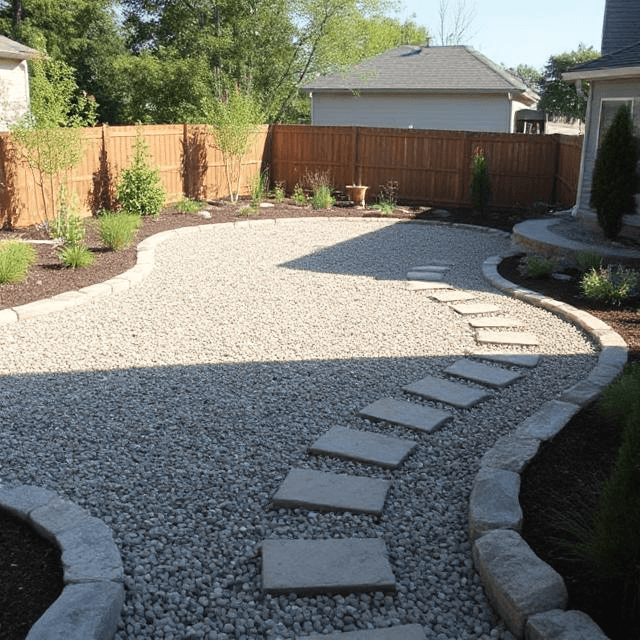
Wood mulch is the most flammable material homeowners commonly install in Zone 0. Replace it with gravel, decomposed granite (DG), or river rock for an immediate firebreak.
Typical pricing in San Diego (2026):
- 3/4-inch crushed gravel: $50–$120 delivered per cubic yard (covers ~80–100 sq ft at 3 inches deep)
- Decomposed granite: $40–$95 per cubic yard
- River rock or cobble: $80–$200 per cubic yard depending on size and color
- Pre-cut stone borders or steel edging: $4–$12 per linear foot
- Weed barrier fabric: $0.30–$0.80 per sq ft
For a 10×10-foot strip along one side of the house, expect $150–$350 in materials, plus a few hours of labor. Pro install for the same area runs $400–$900, including weed barrier and edging. We typically recommend gravel-only in the first 5 feet and using DG, pavers, or larger stone in the 5–30 foot zone.
Are ember-resistant attic vents worth installing?
Yes — and they're often the highest-leverage hardening upgrade after debris clearing. Wind-blown embers entering attic vents are a leading cause of home ignition in California wildland-urban fires.
- Ember-resistant vent retrofits: $20–$80 per vent (DIY) or $50–$150 per vent installed
- Whole-house retrofit (typical home, 6–10 vents): $200–$1,200 installed
- Combine with chimney spark arrestor inspection: $100–$300 if not already in place
Look for vents listed under California Building Code Chapter 7A as ember-resistant — Brandguard, Vulcan, and O'Hagin are common brands. Some California insurers offer discounts for homes with documented Chapter 7A-rated vents.
Do I need to remove all plants from the 0–5 foot zone?
The current direction of the regulation is: no flammable plants in Zone 0. The list of what counts as "non-flammable" is still being finalized, but the safe interpretation is to remove most landscape plantings within the 5-foot buffer and replace with hardscape.
What works in Zone 0:
- Hardscape: gravel, pavers, stone, concrete, decomposed granite
- Container plantings on non-combustible bases — many fire safe councils permit potted succulents and well-watered ornamentals in metal or stone containers
What does not work:
- Wood chip or bark mulch
- Ornamental grasses (highly flammable when dry)
- Junipers, eucalyptus, manzanita — high oil content, ember-prone
- Wood fences attached to the house
For most San Diego homes, this means pulling foundation plantings and replacing with a gravel apron plus a few potted succulents. Material cost is typically $300–$1,500 per side of the house depending on width.
What about my wood fence attached to the house?
Attached wood fences are one of the most common Zone 0 violations — they act as a fuse, carrying flame from the yard directly to the structure.
Three options, ranked by cost:
- Cut back the first 5 feet of fence that touches the house and replace with non-combustible (metal post + hardware cloth or concrete masonry) — $300–$900
- Replace the full fence section in Zone 0 with metal, vinyl, or block — $800–$2,500 depending on length and style
- Add a non-combustible "buffer panel" between fence and house — $200–$600 if the fence is otherwise sound
Many San Diego homeowners don't realize their wood gate against the side wall is the single highest-risk ember-trap on their property. Fixing this one detail moves the needle more than most $5,000 hardscape projects.
When should I hire a pro versus DIY?
DIY this weekend: debris clearing, mulch swap, vent screen replacement, container plant relocation, weeding, perimeter raking.
Hire a pro when the project involves:
- Removing established plantings near foundation drainage
- Building hardscape that requires permits — concrete pads, paver patios, retaining walls in Zone 0 (the exemptions are set out in San Diego Municipal Code §129.0203)
- Replacing fence sections — especially if shared with a neighbor
- Coordinated landscape redesign that touches Zone 0, Zone 1 (5–30 ft), and Zone 2 (30–100 ft) together
- Insurance-required compliance documentation
We typically structure Zone 0 projects in phases. Phase 1 — debris and mulch — homeowner does it, free or $200. Phase 2 — gravel apron, vent retrofit, fence cutback — pro install, $1,500–$5,000. Phase 3 — full hardscape redesign — $5,000–$25,000+ depending on scope. You don't have to do all three at once.
What rebates or financing exist for California Zone 0 work?
California has been adding programs as enforcement ramps. As of 2026:
- California Wildfire Mitigation Program (CWMP) — pilot grants for low-income homeowners in high-risk counties. San Diego County is included in pilot areas.
- Local Fire Safe Councils — most San Diego sub-regions (Greater San Diego Fire Safe Council, Mountain Empire Fire Safe Council) run cost-share grants for defensible space
- Insurance discounts — most major California insurers offer 5–15% premium reductions for documented Zone 0 compliance, ember-resistant vents, and Class A roofing
- Utility rebates — SDG&E and some local fire districts run targeted rebates for vent retrofits and fence replacements
Keep receipts and photos. The homeowner who documents their work upfront usually saves more on insurance over five years than the upgrades cost in the first place.
How Modern Yardz approaches Zone 0 hardening
We're a design-build firm — same team designs, permits, and installs. For Zone 0 projects, we walk the property with the owner, photograph the existing conditions, and write a phased plan that prioritizes ember-vector elimination first, then gravel/hardscape, then optional aesthetic upgrades. Every quote is line-itemed.
For most San Diego homes, our Zone 0 hardening packages land in three buckets:
- Compliance-focused: $1,500–$3,500. Gravel apron, ember vents, fence cutback, foundation planting removal.
- Compliance + aesthetic upgrade: $4,500–$9,000. Adds paver walkway, decorative borders, container plant scheme, low-voltage path lighting.
- Full Zone 0 + Zone 1 redesign: $10,000–$25,000+. Complete defensible space landscape — hardscape, fire-resistant plant palette, irrigation, integrated drainage.
We pull permits when required, coordinate inspections, and provide compliance documentation for insurance.
Zone 0 priority checklist — start here
Run this order. Don't skip steps to chase the bigger projects.
- This weekend, free: Clear debris, gutters, dead vegetation. Move flammables out of the 5-foot zone.
- Next $200: Replace mulch with gravel along the highest-risk side of the house (typically the prevailing-wind side).
- Next $500: Retrofit attic vents with Chapter 7A ember-resistant models.
- Next $1,000–$2,000: Cut back attached wood fencing and replace with non-combustible.
- Next $1,500–$5,000: Pull all foundation plantings and install full gravel/hardscape apron.
- Optional $5,000+: Full landscape redesign integrating Zone 0, Zone 1, and Zone 2.
Want a Zone 0 audit and a phased plan that fits your budget? Book a free consultation — we'll walk the property, photograph the ember vectors, and send a written line-item plan within 48 hours.
For related work, see our landscape design, concrete, and seat and retaining walls services.
Start Your Free Design Consultation
Tell us about your project and we'll be in touch within 24 hours. No pressure, no obligation.
Common questions
- What does Zone 0 mean under California's AB 3074?
- Zone 0 is the 5-foot ember-resistant buffer immediately around your home. AB 3074 requires it kept clear of combustible materials — wood mulch, attached wood fences, flammable plants. Enforcement phases in through 2026 in State Responsibility Areas and Very High Fire Hazard Severity Zones.
- What's the cheapest Zone 0 upgrade I can do today?
- Free: clear all debris, leaves, pine needles, and dead vegetation from the 5-foot perimeter. Move firewood, propane tanks, and natural-fiber doormats out of the zone. This single action eliminates the top ember-ignition pathway.
- How much does it cost to replace mulch with gravel in Zone 0?
- $150–$350 in materials for a 10×10-foot strip (gravel + weed barrier + edging). Pro install runs $400–$900 for the same area. Crushed gravel is $50–$120 per cubic yard delivered in San Diego in 2026.
- Are ember-resistant attic vents worth installing?
- Yes — wind-blown embers entering vents are a leading cause of home ignition in California wildfires. Vents cost $20–$80 each DIY, or $50–$150 each installed. Whole-house retrofit on a typical 6–10 vent home runs $200–$1,200.
- Does my wood fence attached to the house need to come down?
- Yes for the first 5 feet where it touches the house — that section is a flame fuse straight to the structure. Cut back and replace with metal, vinyl, or masonry: $300–$900 for the cutback, $800–$2,500 for a full Zone 0 fence section.
- Are there rebates for Zone 0 fire-safe landscaping in San Diego?
- Yes. The California Wildfire Mitigation Program offers pilot grants in high-risk counties. Local Fire Safe Councils run cost-share programs. Most major insurers offer 5–15% premium discounts for documented Zone 0 compliance, ember-resistant vents, and Class A roofing.
- Can I keep any plants in Zone 0?
- The current safe interpretation is no flammable in-ground plants in the 5-foot buffer. Container plantings on non-combustible bases — metal or stone containers, well-watered succulents — are typically permitted by Fire Safe Councils. The final California regulation list is still being finalized.
- Do I need a permit for Zone 0 hardscape work in San Diego?
- Most gravel apron and mulch swap work is permit-exempt. Concrete pads, retaining walls, and paver patios over 200 sq ft typically require permits. We pull permits as part of every project that needs one.
- How long does a typical Zone 0 hardening project take?
- DIY mulch swap and debris clearing: a weekend. Pro vent retrofit and gravel apron: 1–2 days. Full Zone 0 redesign with fence replacement and foundation planting removal: 3–7 days. Phased projects can stretch over months as budget allows.
- Can I do Zone 0 work myself, or do I need a contractor?
- DIY works for debris clearing, mulch swap, vent screen replacement, and container plant relocation. Hire a pro for fence replacement, hardscape with permits, foundation drainage, and any work that touches insurance compliance documentation.
- Will Zone 0 upgrades increase my property value?
- Documented Zone 0 compliance is becoming a competitive advantage in San Diego real estate. Homes with proof of compliance often appraise 1–3% higher and command insurance premiums 5–15% lower than non-compliant comps in the same risk zone.
- How do I check if my San Diego home is in a Zone 0 enforcement area?
- Check the CAL FIRE Fire Hazard Severity Zone Viewer for your address. Most of San Diego's eastern and northern neighborhoods (Scripps Ranch, Poway, Alpine, Ramona, Rancho Bernardo) fall in Very High Fire Hazard Severity Zones. Insurer requirements may apply even outside formal jurisdictions.
Ready to design your dream yard?
Tell us about your project. We'll send back a real plan, not a templated quote.
Book My Free Consultation→