
Backyard Landscape Drainage Solutions That Actually Work
Discover effective backyard landscape drainage solutions to prevent water damage and keep your outdoor spaces usable. Find the right fit today!
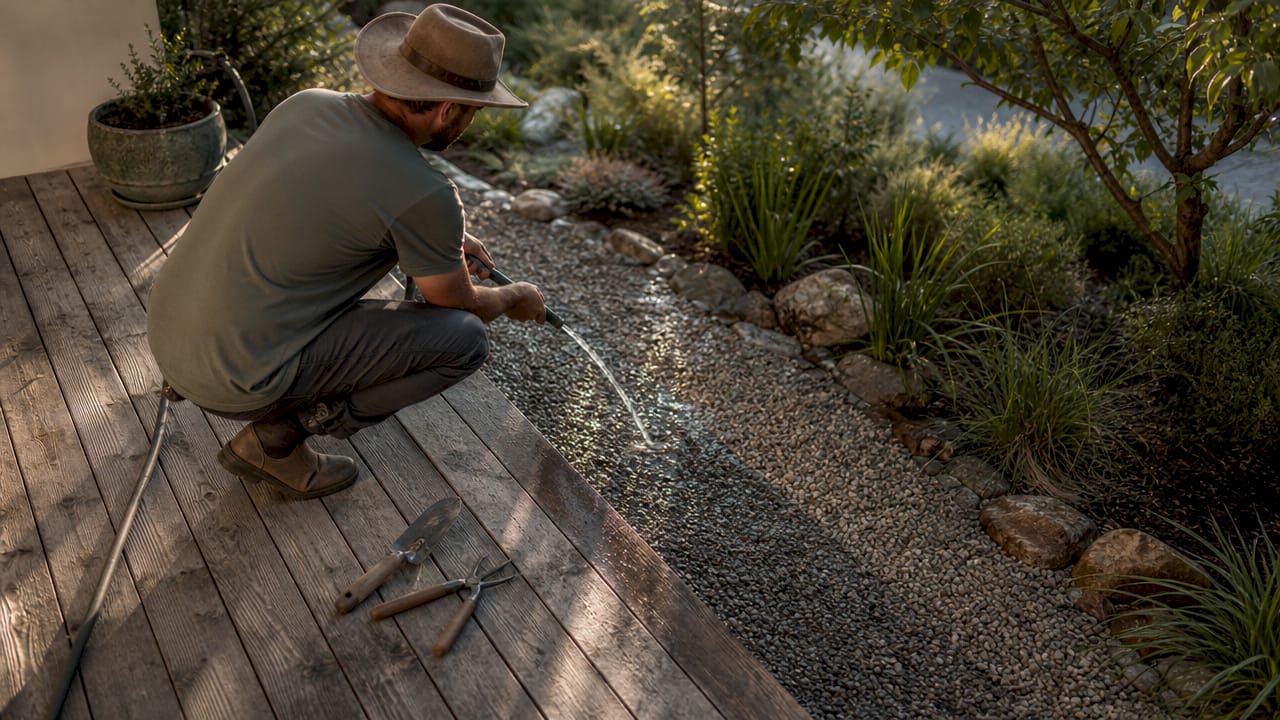
Backyard landscape drainage solutions are defined as engineered systems that redirect, collect, or absorb excess water to prevent property damage and preserve the usability of outdoor spaces. Poor drainage is one of the most destructive forces a luxury property can face. Standing water that persists for more than 24–48 hours signals a systemic problem, not a temporary inconvenience. Left unaddressed, it causes foundation erosion, kills mature plantings, buckles hardscape, and creates liability. The right solution depends on your yard's soil type, topography, and how water actually moves across the surface during a storm. French drains, surface grading, channel drains, and rain gardens each solve a different problem. Choosing the wrong one wastes money and often makes the situation worse.
1. Grading and regrading for optimal water flow
Proper soil grading is the first line of defense in any yard drainage system. The standard slope recommendation is a 1–2% grade directing water away from structures, which means the ground drops roughly 1–2 inches for every 10 feet of horizontal distance. That slope sounds minor, but it is the difference between water flowing toward your foundation and water flowing away from it.
Regrading is feasible as a DIY project when the area is small, the soil is workable, and the correction needed is less than a few inches. Larger corrections, especially near foundations or retaining walls, require professional assessment. Digging or reshaping soil near a house foundation carries real risk. Improper excavation technique can damage waterproof membranes or cause soil settling that leads to structural problems.
Key grading considerations:
- Slope must direct water toward a legal discharge point, not toward a neighbor's property or a structure
- Clay-heavy soils compact easily and may require amendment before regrading holds its shape
- Regraded areas need stabilization through sod, ground cover, or mulch to prevent erosion
- Existing hardscape, pool decks, and paver systems may need to be lifted and reset after regrading
Pro Tip: Walk your yard during a moderate rainstorm and watch exactly where water pools and which direction it flows. That observation tells you more than any dry-day assessment and prevents mismatched interventions.
2. French drains: the gold standard for subsurface water management
A French drain is a subsurface trench filled with gravel and a perforated pipe wrapped in filter fabric that intercepts groundwater and redirects it to a safe outlet. It is the most widely used solution for saturated soils, particularly in clay-heavy yards where water cannot percolate fast enough. French drains require a 1% slope along the pipe run to maintain consistent flow toward the outlet.
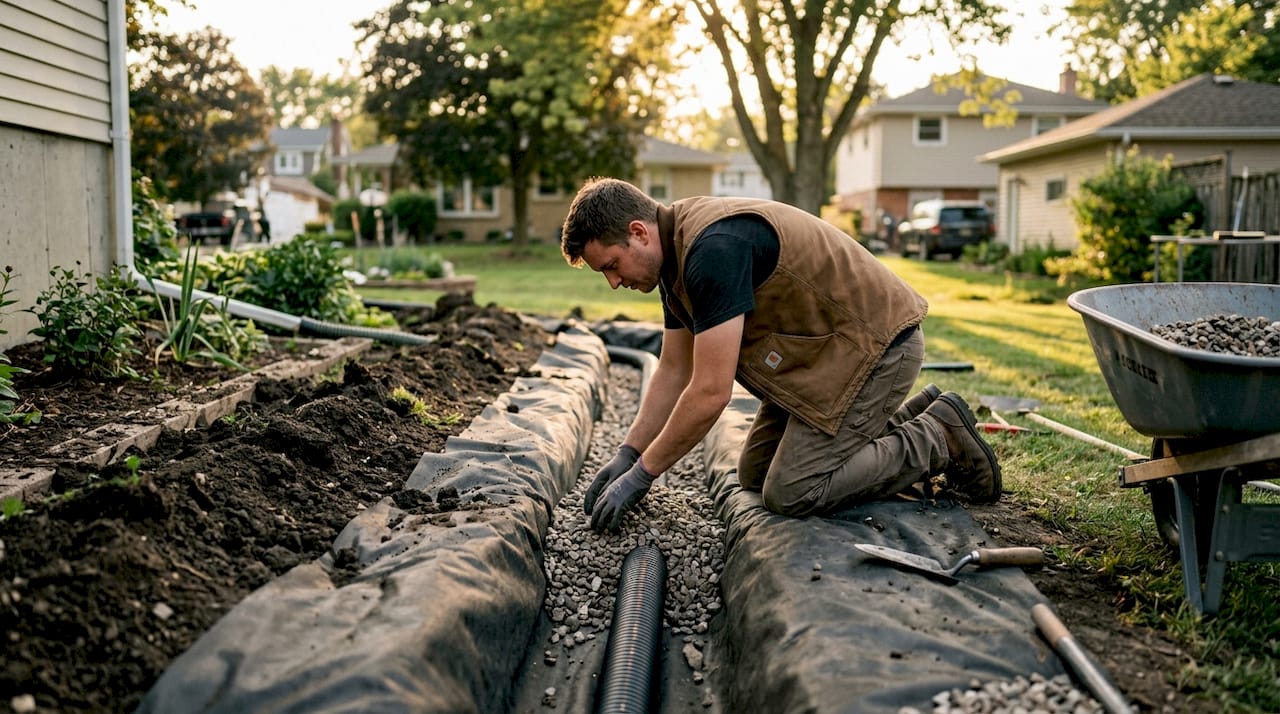
Construction quality determines whether a French drain lasts or fails within a few seasons. Filter fabric and gravel layers of at least 4 inches on all sides are required to prevent fine soil particles from clogging the pipe in clay conditions. Skipping the fabric or using undersized gravel is the most common installation mistake.
Professional French drain installation typically runs $1,500–$5,000 depending on trench length, depth, and outlet complexity. That cost reflects the labor intensity of trenching, gravel placement, pipe installation, and surface restoration.
Critical installation details:
- Use a non-woven geotextile filter fabric rated for soil type
- Gravel must be clean, washed stone, not crushed limestone, which can compact and restrict flow
- Pipe perforations face down, not up, to collect rising groundwater rather than surface water
- Outlet placement is non-negotiable. Discharging water toward frozen zones or neighboring properties creates hazards and legal exposure
Pro Tip: Before breaking ground, confirm your discharge point is legal under local municipal code. Many San Diego neighborhoods have specific rules about where stormwater can be directed. A permitted outlet protects you from neighbor disputes and city fines.
3. Surface drainage options: channel drains, catch basins, and swales
Surface drainage systems collect water before it has a chance to pool or penetrate. They are the right tool when water accumulates on hardscape, in low spots near downspouts, or in areas where the ground simply cannot absorb rainfall fast enough.
Channel drains are linear grates installed flush with patio or driveway surfaces. They require a 1–2% slope across the surface feeding into them to function correctly. Without that slope, water bypasses the drain entirely. Channel drains connect to underground pipes that carry water to a discharge point.
Catch basins are box-shaped inlets installed at the lowest point in a yard or at the base of a downspout. They capture concentrated flows and connect to the same underground pipe network as channel drains. Extending downspouts directly into a catch basin is a frequently overlooked fix that prevents localized erosion and pooling near the foundation.
Swales and dry creek beds move surface water across the yard through a shallow, graded channel. A swale is the preferred solution when water visibly flows on the surface and the yard has enough space for a natural diversion path. Dry creek beds serve the same function while adding a designed landscape feature that reads as intentional rather than utilitarian.
| Method | Best use case | Key requirement |
|---|---|---|
| Channel drain | Patios, driveways, pool decks | 1–2% surface slope toward grate |
| Catch basin | Low spots, downspout areas | Connects to underground pipe |
| Swale | Open yards with visible surface flow | Space and consistent grade |
| Dry creek bed | Surface flow with aesthetic priority | Graded channel with stone lining |
Outlet placement applies to all three methods. Drainage projects fail most often when the outlet discharges water into an unsafe or improper location. Plan the endpoint before you plan the inlet.
4. Eco-friendly options: rain gardens and permeable surfaces
Rain gardens and permeable hardscape address drainage by increasing the ground's capacity to absorb water rather than redirecting it elsewhere. They are particularly well-suited to San Diego's Mediterranean climate, where intense winter rains follow long dry periods and soil infiltration rates drop sharply.
A rain garden is a shallow, planted depression positioned to receive runoff from a downspout, patio, or lawn. It is planted with deep-rooted, water-tolerant native species that can handle both saturation and dry periods. The plants slow water movement, and their root systems open channels in the soil that accelerate infiltration. Rain gardens work best in spots that receive concentrated flow from a single source, not in areas with sheet flow across a large surface.
Permeable pavers and gravel surfaces allow water to pass through the hardscape layer and infiltrate the soil below. For luxury applications, permeable travertine and open-joint natural stone systems deliver the same visual quality as solid-surface paving while managing stormwater management at the surface level. This approach reduces runoff volume and supports groundwater recharge, which matters in a water-sensitive region like Southern California.
Maintenance considerations for eco-friendly drainage:
- Rain garden plants need establishment irrigation for the first season before they become self-sustaining
- Permeable paver joints require occasional clearing to prevent sediment buildup that blocks infiltration
- Both systems perform best when combined with a secondary drainage method for high-volume storm events
- Native plant selection should account for both wet-season saturation and dry-season drought stress
5. Planning drainage into your luxury landscape from the start
Incorporating drainage during the design phase reduces costs and preserves aesthetics compared to retrofitting drainage after construction is complete. This is the single most important planning principle for any luxury outdoor project.
Adding drainage after a patio, pool deck, or paver system is installed means tearing up finished work. That costs more than doing it right the first time, and the repair seams are rarely invisible. A complete landscape design plan accounts for drainage routing before a single paver is set or a pool shell is poured.
The most effective drainage designs use a layered approach combining subsurface interception with surface collection. A French drain handles groundwater saturation. A channel drain handles surface runoff from hardscape. A catch basin handles concentrated flow from downspouts. Each system addresses a different water behavior, and together they provide coverage that no single method can deliver alone.
Planning checklist for drainage integration:
- Conduct a soil percolation test to determine infiltration rate before selecting a method
- Map stormwater flow paths across the full property, not just the problem area
- Confirm all outlet locations comply with San Diego County stormwater regulations
- Coordinate drainage pipe routing with irrigation, lighting conduit, and pool plumbing to avoid conflicts
- Use 3D design renderings to visualize drainage grades before construction begins
Regional soil and climate conditions heavily influence which drainage methods perform reliably. San Diego's clay-heavy coastal soils and the sharp contrast between wet and dry seasons make layered drainage planning a necessity, not an option. The design-build model ensures drainage engineering and landscape architecture are developed by the same team, eliminating the coordination gaps that cause drainage failures on projects where design and construction are handled separately.
Key takeaways
The most effective backyard drainage strategy combines subsurface and surface methods selected for your specific soil type, topography, and stormwater flow patterns.
| Point | Details |
|---|---|
| Match method to water behavior | Observe water movement during rain before selecting French drains, swales, or surface drains. |
| French drain slope is non-negotiable | A minimum 1% grade along the pipe run is required for consistent flow and long-term function. |
| Outlet planning comes first | A legal, safe discharge point matters more than the drainage method itself. |
| Layer your systems | Combining subsurface and surface drainage provides coverage no single method can achieve alone. |
| Design drainage before you build | Retrofitting drainage after hardscape installation costs more and compromises finished aesthetics. |
Drainage is an architectural decision, not an afterthought
The most common mistake I see on luxury properties is treating drainage as a problem to solve after the yard is built. A homeowner invests $150,000 in a pool, travertine deck, and outdoor kitchen, and six months later water is pooling against the foundation because no one planned the grades before construction started. The fix costs a fraction of what it would have cost to do it right the first time, but it still means tearing up finished work.
The second misconception is that one solution handles everything. A French drain solves saturated soil. It does not solve surface runoff from a patio during a heavy storm. A channel drain handles that surface flow, but it does nothing for groundwater pressure against a retaining wall. Layered systems are not a luxury. They are the only approach that actually works across the range of conditions a San Diego yard experiences between october and march.
What I find most interesting is how often drainage becomes the deciding factor in whether a luxury landscape holds its value over time. A beautifully designed hardscape and softscape environment degrades quickly when water is not managed correctly. Pavers shift. Retaining walls lean. Plantings die. The drainage infrastructure underneath is what makes the visible investment last.
The homeowners who get this right treat drainage the same way they treat structural engineering. They plan it first, they engineer it properly, and they do not cut corners on outlet placement or filter fabric. That discipline is what separates a yard that looks great for twenty years from one that needs a retrofit in three.
— Thomas Jackson
Modern Yardz: drainage engineering built into every project
Modern Yardz has completed 2,900+ luxury landscape projects across San Diego County under California Contractor License #1082881, maintaining a perfect 5.0-star rating by treating drainage as a foundational element of every design, not an add-on. Every project begins with 2D architectural plans and photo-realistic 3D renderings that map drainage grades, pipe routing, and outlet placement before construction starts. One team handles consultation through final walkthrough with zero subcontractor handoffs. If your property in La Jolla, Del Mar, Carmel Valley, or Rancho Santa Fe has a drainage problem, or if you want to build a luxury outdoor environment that handles water correctly from day one, schedule a free consultation with Modern Yardz.
FAQ
What is a backyard drainage solution?
A backyard drainage solution is any engineered method that redirects, collects, or absorbs excess water to prevent pooling, erosion, and property damage. Common methods include French drains, surface grading, channel drains, catch basins, and rain gardens.
How do I know which drainage method my yard needs?
Observe your yard during a rainstorm to determine whether water pools on the surface, flows across it, or saturates the soil from below. Each behavior points to a different solution: surface pooling calls for grading or catch basins, flowing water calls for a swale or channel drain, and saturated soil calls for a French drain.
How much does professional yard drainage installation cost?
Professional installations range from $100 to $5,000+ depending on the method and complexity. Simple fixes like extending downspouts cost far less than a full French drain system, which typically runs $1,500–$5,000 for a residential yard.
Can drainage be added after a patio or pool is already built?
Drainage can be retrofitted, but it requires removing and resetting finished hardscape, which adds significant cost and rarely produces invisible repairs. Planning drainage before construction is always the more cost-effective and aesthetically sound approach.
Do French drains work in clay soil?
French drains work in clay soil when built correctly. They require a non-woven geotextile filter fabric and at least 4 inches of clean washed gravel on all sides of the perforated pipe to prevent clay particles from clogging the system over time.
Recommended
Start Your Free Design Consultation
Tell us about your project and we'll be in touch within 24 hours. No pressure, no obligation.
Ready to design your dream yard?
Tell us about your project. We'll send back a real plan, not a templated quote.
Book My Free Consultation→

